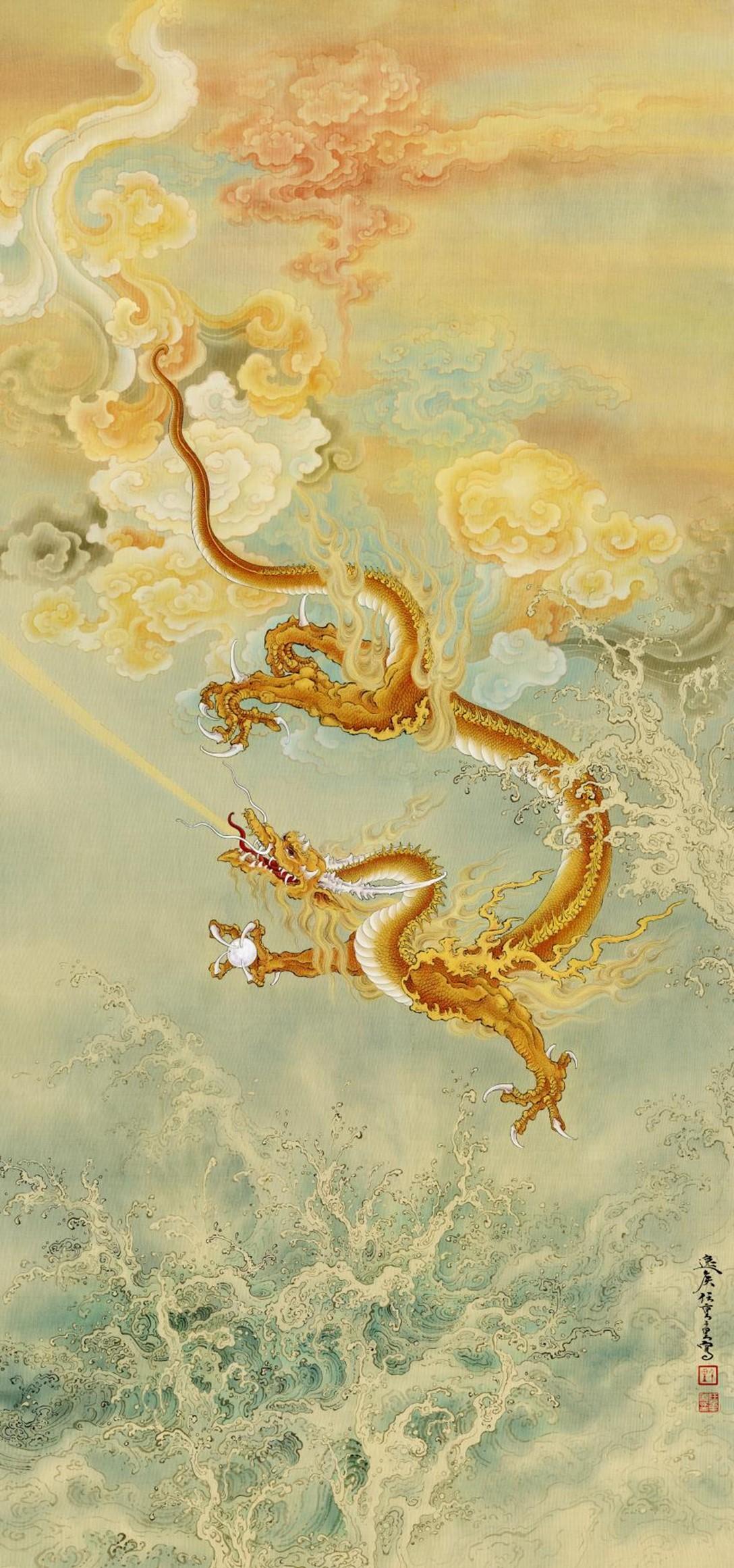
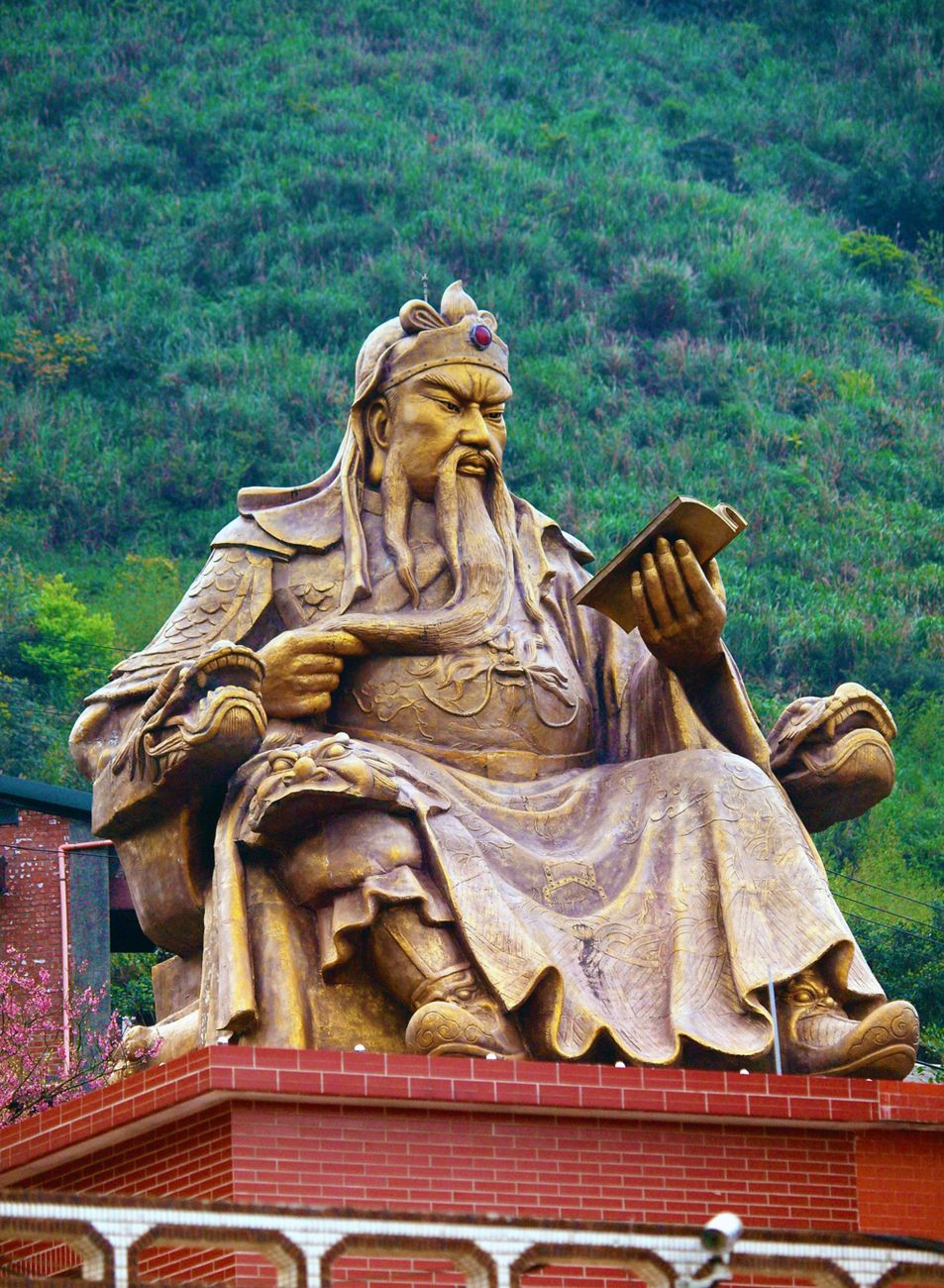
The Stone in Her Heart

The Stone in Her Heart

There was once an old woman named Suda who lived in a small village near Sāvatthī.

She was known as a gentle woman.

She fed stray animals.

She gave rice to hungry children.

She helped her neighbors when they were sick.

And whenever someone came to her door asking for help, she rarely turned them away.

But there was one thing Suda could not give.

Forgiveness.

Many years earlier, when she was still a young woman, her only son had left the village after a terrible argument.

He had spoken harsh words to her.

She had answered with harsher ones.

Before he left, he turned toward her and said,

“Perhaps I would be better off without you.”

Suda never forgot those words.

Her son never returned.

At first, she waited.

Then she became angry.

Then she became bitter.

Eventually, she told herself that she no longer cared.

But every year, on the day he had left, she would sit alone outside her house and remember.

She remembered his voice.

She remembered his face.

She remembered the last words they had spoken.

And beneath all the anger was something she did not want to admit.

She missed him.

Years passed.

Suda grew old.

Her hair became white, and her hands became thin and trembling.

One afternoon, she heard that the Buddha was staying near Sāvatthī.

She decided to go and listen to him.

Perhaps, she thought, there was something he could teach her about the heaviness in her heart.

When she arrived, the Buddha was sitting beneath a tree surrounded by monks and laypeople.

Suda bowed and sat quietly.

The Buddha looked at her for a moment.

“You have come carrying something heavy,” he said.

Suda was startled.

She looked down at her empty hands.

“I carry nothing, Venerable Sir.”

The Buddha smiled gently.

“Not in your hands.”

Suda lowered her eyes.

For a long time, she said nothing.

Then the tears came.

She told the Buddha about her son.

She told him about the argument.

She told him about the words they had spoken.

And finally she said,

“I have tried to forgive him, but I cannot.”

The Buddha listened.

Then he asked,

“Where is your son now?”

“I don’t know.”

“Do you know whether he is alive?”

“No.”

“Do you know whether he remembers those words?”

Suda shook her head.

“No.”

The Buddha was silent.

Then he asked,

“And how many years have you carried his words in your heart?”

Suda thought for a moment.

“Almost forty.”

The Buddha looked at her with compassion.

“Then tell me, Suda. Who has suffered from those words for forty years?”

She opened her mouth, but no answer came.

The Buddha continued softly.

“Your son spoke those words once.”

Suda’s eyes filled with tears.

“But you have spoken them to yourself every day.”

The words struck her deeply.

She had never thought of it that way.

She had believed that she was keeping the memory because she could not forgive her son.

But perhaps she had been keeping the wound alive herself.

The Buddha picked up a small stone from the ground.

“Suda, imagine that you have been holding this stone in your hand for forty years.”

He placed the stone in her palm.

“At first, it may seem small.”

He closed her fingers around it.

“But after one year, your hand would ache.”

Suda nodded.

“After ten years, your arm would become tired.”

She nodded again.

“And after forty years?”

Suda looked at the stone.

“My hand would be exhausted.”

The Buddha gently opened her fingers.

“Would the stone have become heavier?”

“No.”

“Then why would you be suffering more?”

Suda stared at him.

“Because I never put it down.”

The Buddha nodded.

“Exactly.”

A long silence followed.

The leaves above them moved softly in the afternoon breeze.

Suda began to cry.

“But if I forgive him,” she said, “does that mean what he did was acceptable?”

“No.”

“Does it mean I was not hurt?”

“No.”

“Does it mean I must forget?”

“No.”

Suda looked at him.

“Then what does forgiveness mean?”

The Buddha’s voice was quiet.

“It means you no longer choose to carry the suffering.”

Suda closed her eyes.

For forty years, she had believed that holding onto her anger kept her connected to her son.

But perhaps it had only kept her connected to the moment when they had both been wounded.

The Buddha continued:

“Forgiveness does not change the past.

It does not erase the words that were spoken.

It does not make wrong into right.

It simply means that the past no longer has permission to destroy your present.”

Suda wept openly now.

“I wanted him to know how much he hurt me.”

“I understand.”

“I wanted him to come back and apologize.”

“I understand.”

“But what if he never does?”

The Buddha looked at her kindly.

“Then you must decide whether your peace will depend upon an apology that may never come.”

Suda became very still.

The question entered her heart like a bell.

She suddenly realized that she had been waiting forty years for someone who might never return to give her permission to be at peace.

She had placed the key to her happiness in another person’s hands.

The Buddha placed the stone back into her palm.

“Now,” he said, “you may choose.”

Suda looked at the stone.

For a moment, she remembered her son’s face as a young man.

Not the angry face from their final argument.

The face from years before.

The little boy who had once fallen asleep against her shoulder.

The child who had held her hand while crossing the river.

The young man who had once brought her flowers because he thought she looked sad.

She remembered that he had not always been the person who hurt her.

He had also been the person she loved.

And perhaps both things could be true.

He had hurt her.

And she had loved him.

She did not have to erase one truth to accept the other.

Slowly, Suda opened her hand.

She placed the stone on the earth.

For a moment, nothing happened.

The sky did not change.

The trees did not move.

There was no great miracle.

But something inside her became lighter.

She took a long breath.

Then another.

And for the first time in forty years, she whispered:

“My son, wherever you are, I hope you are safe.”

The Buddha said nothing.

He did not need to.

Suda remained beneath the tree until sunset.

When she finally stood to leave, she felt different.

Her son had not returned.

Her past had not changed.

The words had not been erased.

But the stone was no longer in her hand.

Years later, people in the village would remember Suda as a remarkably peaceful old woman.

Whenever someone came to her carrying anger toward another person, she would tell them:

“I once carried a stone for forty years because I believed putting it down meant I had forgiven someone who had hurt me.”

Then she would smile.

“But I eventually learned that forgiveness was not a gift I gave to him.”

“It was a gift I gave to myself.”

And whenever someone asked whether she ever stopped missing her son, she would shake her head.

“No.”

Then she would look toward the evening sky.

“I still miss him.”

A tear would sometimes appear in her eye.

“But now I can miss him without being angry.”

She would pause.

“And that is the difference.”

The Buddha teaches us that everything we cling to can become a source of suffering.

Sometimes we cling to possessions.

Sometimes to memories.

Sometimes to anger.

Sometimes to the words someone said to us years ago.

And sometimes we cling to a wound because we believe that letting go means saying that the wound did not matter.

But letting go does not mean that it did not matter.

It means that you matter, too.

You deserve to live beyond the moment that hurt you.

You deserve to laugh again.

You deserve to love again.

You deserve to sleep peacefully.

You deserve to wake up without carrying yesterday into today.

And sometimes the person who hurt you may never apologize.

They may never understand what they did.

They may never come back.

But your healing does not have to wait for them.

The past cannot be changed.

But the heart can change its relationship with the past.

So if there is someone whose name still makes your heart heavy, remember Suda.

You do not have to forget.

You do not have to pretend it did not hurt.

You do not even have to invite that person back into your life.

But perhaps, when you are ready, you can place the stone down.

Not for them.

For you.

Because sometimes forgiveness is not about saying,

“What you did was okay.”

Sometimes forgiveness is simply saying,

“What you did hurt me, but I will not let that pain decide the rest of my life.”

And then, with tears in your eyes and compassion in your heart,

you finally let the stone fall.

Link: https://wisdomtea.org/2026/09/10/the-stone-in-her-heart/
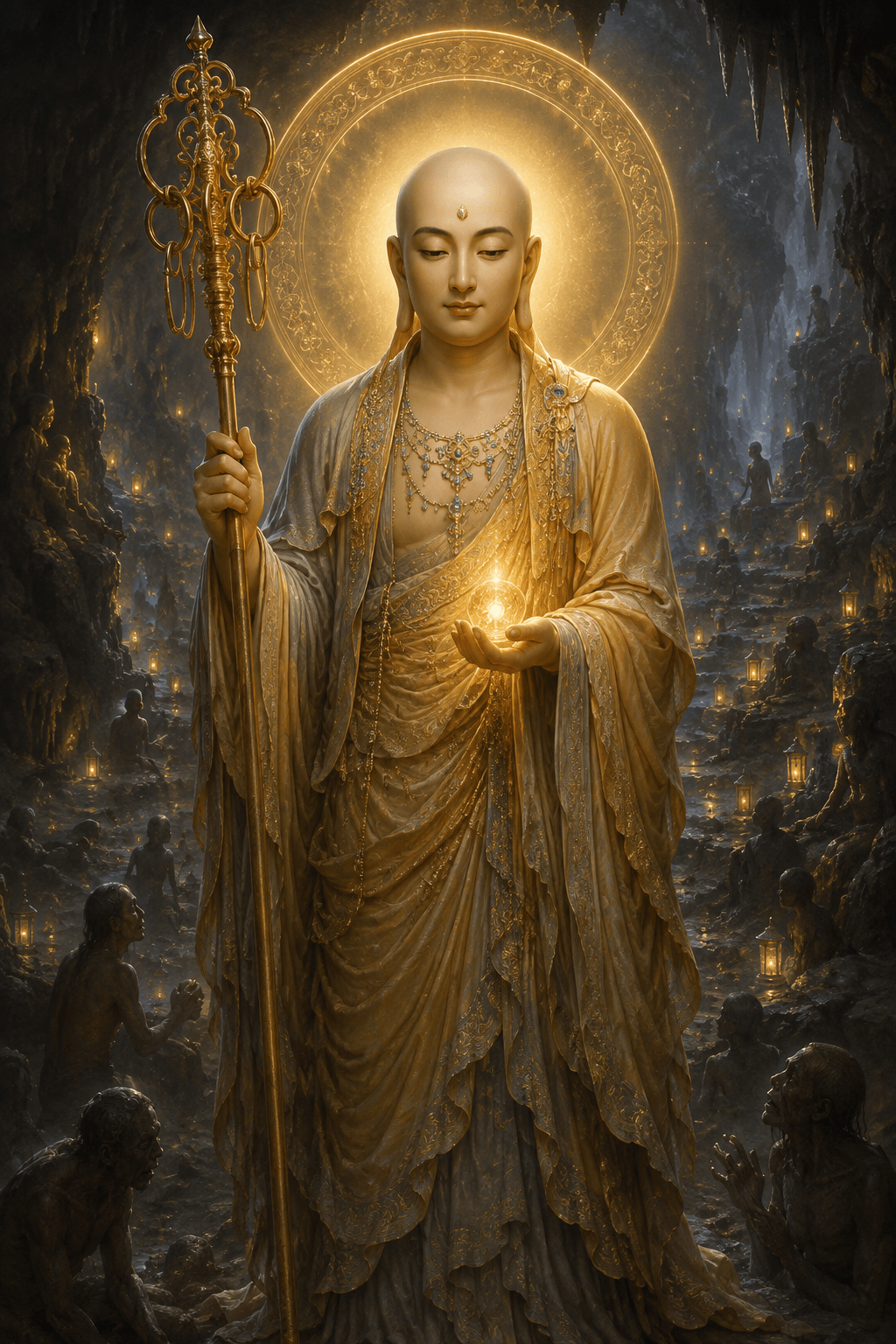
The Lantern Beneath the Earth

The Lantern Beneath the Earth

Deep beneath the surface of the world, where sunlight never reaches and echoes carry the weight of forgotten sorrows, there is a realm known as the Chamber of Shadows.

It is a place where beings wander lost, burdened by grief, regret, and karmic confusion. No ordinary light can penetrate its darkness.

Yet one lantern burns there.

Its flame is gentle, golden, and unwavering—a single point of warmth in an ocean of darkness. The lantern belongs to Kṣitigarbha Bodhisattva, the guardian of beings in the hell realms, the Bodhisattva who made the great vow:

“Until the hells are empty, I will not become a Buddha.”

One evening, a young spirit named Lian stumbled into the Chamber of Shadows.

She had carried fear for so long that she believed it had become part of her body. Her steps were heavy, her breath was thin, and her heart felt like a locked door.

She wandered through the darkness until she saw the lantern.

Kṣitigarbha Bodhisattva sat beside it, calm as a mountain and warm as spring soil. His robe shimmered like moonlight upon still water. When he looked at Lian, she felt seen—not judged, not measured, but simply seen.

“Why is it so dark here?” Lian asked.

“Because beings forget their own light,” Kṣitigarbha replied. “But darkness is never a punishment. It is simply a place waiting to be illuminated.”

Lian sank to her knees.

“I don’t know how to find my light.”

Kṣitigarbha gently placed the lantern between them.

“Then let us find it together.”

The flame flickered, and the chamber began to change.

The shadows peeled away like mist, revealing memories Lian had buried deep within herself—moments of kindness she had offered, forgiveness she had given, and courage she had shown when she thought she had none.

She saw herself as a child, offering her last steamed bun to a stray dog shivering in the rain.

She saw herself comforting a friend who had lost a parent.

She saw herself forgiving someone who had hurt her deeply, even though her own heart was still aching.

Each memory glowed faintly, like stars emerging at dusk.

“These are yours,” Kṣitigarbha said.

Lian stared at the memories in wonder.

“Your light was never gone,” he continued. “It was only hidden.”

Lian lowered her head.

“But I’m afraid,” she whispered.

“Fear is a visitor,” Kṣitigarbha said. “It knocks, but it does not own the house.”

For a long moment, Lian remained still.

Then, slowly, she reached toward the lantern.

The flame stretched gently toward her hand. It was warm, but it did not burn.

As her fingers touched the light, something extraordinary happened.

The flame flowed into her like warm water, filling her chest, her throat, and her eyes.

A soft radiance began to shine from within her.

The chamber brightened.

The shadows retreated.

Other wandering beings paused in the darkness. One by one, they turned toward Lian, drawn not only to Kṣitigarbha’s lantern but also to the new light shining from within her.

Some approached cautiously.

Others simply stood and watched.

For the first time in countless years, their faces became visible.

Kṣitigarbha smiled.

“Now you understand.”

Lian looked at him.

“When one being finds their light,” he said, “the whole realm becomes brighter.”

Lian looked around the chamber. The darkness was still there, but it no longer seemed endless.

She turned toward Kṣitigarbha.

“Will you stay here forever?”

The Bodhisattva looked upon the countless beings wandering beyond the lantern’s glow.

“As long as there is even one being who feels lost,” he said, “I will remain.”

Lian was silent for a moment.

Then she bowed deeply.

“Namo Kṣitigarbha Bodhisattva.”

The Bodhisattva returned her bow.

“And may your light guide others,” he said, “just as mine guided you.”

The lantern flame rose higher.

Its golden light spread through the chamber, touching walls that had known only darkness. One by one, the wandering spirits began to discover small sparks within themselves.

A forgotten kindness.

A moment of courage.

A sincere apology.

An act of forgiveness.

A memory of love.

Each spark became a flame.

And each flame became another lantern.

Soon, the Chamber of Shadows was no longer completely dark.

It had become a place where lost lights were rediscovered.

Lian looked upon the growing radiance and finally understood the Bodhisattva’s teaching.

Light does not become smaller when it is shared.

It becomes greater.

And somewhere deep beneath the world, Kṣitigarbha Bodhisattva continued to sit beside his lantern, watching over those who had lost their way.

He did not ask who deserved the light.

He did not ask who had wandered the farthest into darkness.

He simply kept the lantern burning.

For as long as even one being remained lost, compassion would remain.

And as long as compassion remained, there would always be a light waiting in the darkness.

Link: https://wisdomtea.org/2026/09/03/the-lantern-beneath-the-earth/

The Monk Who Tried to Hold Fire

The Monk Who Tried to Hold Fire

Long ago, in the cool foothills beneath the Himalayas, there stood a monastery surrounded by towering pine trees and clear mountain streams. Travelers often said that the forest itself seemed to breathe with peace, and that even the wind slowed as it passed through its ancient gates.

Among the monks lived a young novice named Tissa.

He was earnest in his practice and sincere in his devotion to the Buddha, yet his heart was not at rest.

Whenever he sat in meditation, memories of the world returned to him like restless birds. He remembered the laughter of festivals, the fragrance of sweet blossoms, the admiration of friends, and the comforts of his former home. Though he had shaved his head and donned the saffron robe, these memories still whispered to him.

“Perhaps,” he wondered, “there is no harm in holding on to just a little.”

Ashamed of these thoughts, Tissa sought out the venerable Sariputta.

“Venerable sir,” he asked, “why do these desires still return? I know they bring suffering, yet part of me still longs for them.”

Sariputta looked kindly at the young monk.

“Come with me.”

Without another word, he led Tissa deep into the forest until they reached a clearing where villagers had recently burned fallen branches. The fire had died down, but many glowing coals remained, bright as rubies beneath a blanket of gray ash.

Sariputta picked up a long stick and gently stirred the embers.

Their crimson light glowed even brighter.

“Tissa,” he asked, “what do you see?”

“I see fire, venerable sir.”

“Would you hold one of those coals in your hand?”

The novice immediately shook his head.

“No, Venerable. It would burn me.”

Sariputta smiled.

“Suppose the coal were covered in gold.”

“I still would not hold it.”

“What if it promised to make you wealthy?”

“I would refuse.”

“What if everyone around you praised your courage for holding it?”

Tissa laughed softly.

“The fire would still burn.”

Sariputta nodded.

“Exactly.”

He sat beside the dying fire.

“The world teaches us to chase beautiful forms, pleasing sounds, delightful tastes, comforting touch, and endless praise. They often appear harmless, just as these glowing coals appear beautiful in the fading light.”

He paused.

“But craving does not ask whether something is beautiful.”

“It asks only whether we will grasp it.”

The young monk looked again at the embers.

Their glow was strangely inviting.

For a brief moment he understood why a child might reach toward them.

Sariputta continued.

“When the Buddha compared sensual desire to burning charcoal, he was not condemning beauty itself.”

“The mountains are beautiful.”

“The moon is beautiful.”

“A lotus blossom is beautiful.”

“Beauty is not the danger.”

“The danger is believing that possessing beauty will satisfy a thirst that has no end.”

As evening approached, the mountain air grew colder.

Sariputta reached toward one glowing coal with the stick and rolled it into the open.

“What happens if no one touches it?”

“It slowly cools,” Tissa answered.

“And what happens if someone grasps it tightly?”

“They suffer.”

“Who caused the suffering?”

“The one who grasped it.”

Sariputta nodded again.

“The fire did not chase anyone.”

“They reached for it.”

Those words settled into Tissa’s heart more deeply than any sermon.

That night, as he sat beneath a pine tree, memories arose once again.

He remembered music.

He remembered delicious food.

He remembered praise from those who admired him before he became a monk.

For the first time, he did not wrestle with the memories.

He simply watched them appear.

He smiled gently.

“Like glowing coals,” he whispered.

Without grasping them, the memories faded on their own.

Day after day he practiced in this way.

When pleasant thoughts appeared, he recognized them without chasing them.

When unpleasant thoughts appeared, he no longer feared them.

Little by little, the fires that had once ruled his heart began to lose their fuel.

Months later, the Buddha visited the monastery.

The monks gathered beneath the shade of towering sal trees to hear him teach.

Looking upon the assembly, the Buddha said,

“Imagine a traveler crossing a desert who mistakes burning charcoal for precious jewels.”

“He fills both hands with them, believing himself fortunate.”

“But with every step, his pain increases.”

“The wise traveler does not curse the charcoal.”

“He simply opens his hands.”

Silence filled the grove.

Even the birds ceased their songs.

The Buddha continued,

“So it is with craving.”

“It is not the world that binds us.”

“It is our grasping.”

“When grasping ends, freedom begins.”

Tissa bowed until his forehead touched the earth.

At last he understood.

The path was not about rejecting the world with anger.

It was about meeting the world with wisdom.

To see beauty without clinging.

To experience pleasure without becoming its servant.

To welcome joy without fearing its passing.

Years later, travelers came from distant kingdoms seeking guidance from the monk who had become known for his calm and gentle smile.

Many asked him the secret of his peace.

He would simply lead them to the monastery’s old fire pit, where only cool gray ashes remained.

Pointing to the silent hearth, he would say,

“Once I believed peace could be found by finding the perfect fire.”

Then he smiled.

“I discovered that peace began the moment I stopped trying to hold it.”

And those who truly understood his words found themselves loosening the grip they had long held on the burning coals of their own desires.

For the greatest fire is not the one that burns in wood.

It is the one that burns within the heart.

And the greatest victory is not extinguishing the fire of the world—

but learning, through wisdom, never to grasp it.

Link: https://wisdomtea.org/2026/08/06/the-monk-who-tried-to-hold-fire/

The Dragon of Wisdom and the Eight Winds

The Dragon of Wisdom and the Eight Winds

Long after Guan Yu had laid down his weapons of conquest and vowed to protect the Buddha’s Dharma under the guidance of Skanda Bodhisattva, there came a season of great peace.

The monasteries flourished. Bells echoed through the mountains each dawn, monks chanted the sutras beneath ancient pines, and countless pilgrims climbed the winding paths seeking refuge in the Buddha, the Dharma, and the Sangha.

Yet the wise knew that peace in the world did not always mean peace in the heart.

Far beyond the highest clouds lived an ancient dragon known as the Dragon of Wisdom. Unlike dragons that guarded jewels or ruled the storms, this dragon protected a treasure far greater—the wisdom that frees beings from suffering.

For countless ages, he had watched the hearts of gods and humans alike. He knew that the greatest enemies of enlightenment were not demons with swords or monsters with claws, but the invisible forces that stirred the mind itself.

One quiet evening, as Guan Yu finished his meditation before a humble temple, a golden light descended from the heavens.

From within the light emerged the Dragon of Wisdom.

His scales shimmered like polished emeralds, his eyes shone with infinite compassion, and every breath carried the fragrance of lotus blossoms.

Guan Yu respectfully bowed.

“Venerable Dragon, what brings you here?”

The dragon smiled.

“Guan Yu, your courage is known throughout heaven and earth. You have conquered mighty warriors and protected countless temples. But today you must face the battle that every practitioner must eventually fight.”

Guan Yu placed a hand upon the hilt of the Green Dragon Crescent Blade.

“I fear no enemy.”

The dragon gently shook his head.

“This enemy cannot be defeated by steel.”

With one graceful sweep of his tail, eight brilliant streams of wind began circling the mountaintop.

Each glowed with a different color, each carrying its own mysterious power.

“The Buddha taught that these are the Eight Worldly Winds. They blow through every human life. Because beings chase some and flee others, they remain bound to suffering.”

The first wind drifted forward like warm spring air.

It whispered one word.

“Gain.”

In an instant, magnificent palaces rose from the earth.

Golden treasures filled every hall. Noble kings offered Guan Yu priceless jade and silk. Thousands bowed before him, calling him the greatest protector who had ever lived.

For a brief moment, joy arose within his heart.

Then he remembered the Buddha’s teaching.

“Gain has arisen,” he said softly. “It is impermanent. It cannot remain forever.”

The golden palaces dissolved into mist.

The second wind blew cold across the mountain.

“Loss.”

Everything disappeared.

His armor vanished.

The temples crumbled.

The pilgrims no longer remembered his name.

For a moment, sorrow touched his heart.

Then he reflected.

“Loss has arisen. It too is impermanent.”

The sorrow passed like snow melting beneath the morning sun.

The third wind lifted him onto a magnificent throne.

“Status.”

Emperors sought his counsel.

Scholars praised his wisdom.

His name was spoken with reverence throughout every kingdom.

Yet Guan Yu remained seated in quiet mindfulness.

“Honor rises, and honor fades.”

The throne vanished.

The fourth wind darkened the sky.

“Disgrace.”

False accusations spread across the land.

Friends doubted him.

Many who once honored him now turned away.

Still he remained calm.

“Disgrace is also impermanent.”

The shadows disappeared.

The fifth wind became a storm of angry voices.

“Censure.”

People mocked him.

They questioned his intentions.

They criticized every decision he made.

Guan Yu listened without anger.

“Harsh words arise and pass away.”

The voices dissolved into silence.

The sixth wind sang with the sweetness of celestial music.

“Praise.”

Everywhere he walked, people celebrated his virtue.

They declared him wiser than kings and stronger than dragons.

Some even wished to worship him above all others.

Guan Yu lowered his head.

“All goodness comes from following the Buddha’s path. Praise belongs to the Dharma, not to me.”

The songs faded into the breeze.

The seventh wind carried heavenly fragrance.

“Pleasure.”

Beautiful gardens appeared.

Crystal streams flowed beneath flowering trees.

Celestial musicians filled the air with melodies unlike any heard on earth.

Perfect comfort surrounded him.

Guan Yu smiled peacefully.

“Pleasure is pleasant, but it too changes.”

The heavenly paradise vanished like a reflection upon still water.

At last the eighth wind arrived.

It was heavy and cold.

“Pain.”

Old wounds from countless battles returned.

His body ached.

Every breath became difficult.

Each step demanded great effort.

Yet Guan Yu neither resisted nor complained.

He simply observed.

“Pain has arisen. It is conditioned. It will also change.”

Though the pain remained for a time, it no longer ruled his mind.

The Dragon of Wisdom nodded with quiet joy.

“You have seen the Eight Worldly Winds as they truly are.”

Guan Yu looked down into the valley below.

There he saw countless people struggling.

Some rejoiced when they gained wealth.

Others despaired when they lost it.

Some became proud when honored.

Others were crushed by disgrace.

Many smiled when praised.

Many became angry when criticized.

They chased pleasure whenever it appeared.

They fled from pain whenever it arrived.

Their hearts rose and fell like leaves carried by the wind.

“Why do these winds cause so much suffering?” Guan Yu asked.

The dragon answered,

“The Buddha taught that gain and loss, status and disgrace, censure and praise, pleasure and pain come to every person. The difference is not in whether they arise, but in how they are understood.”

“The untrained mind believes these conditions define happiness. It welcomes what it likes and resists what it dislikes. In clinging and resisting, suffering grows without end.”

“But the wise disciple reflects, ‘This has arisen. It is impermanent. It is subject to change.’ Seeing clearly, the heart does not cling to gain or despair over loss. It is not intoxicated by praise nor wounded by blame. It enjoys pleasure without attachment and endures pain without hatred.”

As the dragon spoke, the eight winds slowly merged into a single clear breeze.

The mountain became perfectly still.

Guan Yu closed his eyes.

He saw that gain and loss were like passing clouds.

Status and disgrace were like echoes fading across distant valleys.

Praise and censure were like sounds carried upon the wind.

Pleasure and pain were like waves rising and falling upon the sea.

None endured.

None possessed a lasting self.

None could bind a mind that understood their true nature.

When Guan Yu opened his eyes, the Dragon of Wisdom had transformed into a radiant pearl that shone with brilliant golden light.

The pearl floated gently into Guan Yu’s heart.

From that day forward, those who came before Guan Yu’s image noticed a remarkable serenity upon his face.

Whether the temple was crowded with worshippers or stood empty…

Whether offerings were plentiful or scarce…

Whether people honored him or forgot his name…

His expression remained unchanged.

The monks understood the silent teaching.

A true guardian of the Dharma is protected not merely by strength, but by wisdom.

For the Buddha taught that the Eight Worldly Winds blow through every life.

The ordinary person is carried away by them, rejoicing in gain and despairing in loss, delighting in praise and fearing blame, chasing pleasure and fleeing pain.

But the wise see each experience as it truly is—impermanent, changing, and incapable of providing lasting happiness.

Because they neither cling nor resist, their hearts remain peaceful.

Like a great mountain that is unmoved by the fiercest winds, they abide in wisdom and compassion.

And in that unshakable peace lies the Dragon of Wisdom’s greatest treasure—the freedom that carries one beyond sorrow, beyond fear, beyond becoming, to the Further Shore.

Link: https://wisdomtea.org/2026/07/23/the-dragon-of-wisdom-and-the-eight-winds/

Guan Yu and the Dragon of Wisdom

Guan Yu and the Dragon of Wisdom

Long after Guan Yu had laid down his mortal body and was honored as a Dharma Protector, peace returned to many lands. Temples flourished, monks chanted the sutras, and the bells of awakening echoed through mountains and valleys.

Yet beneath the tranquil world, another danger was quietly growing.

It was not an army of soldiers.

It was ignorance.

From the shadows arose a dark mist known as the Cloud of Delusion. It drifted through villages and kingdoms, filling people’s hearts with greed, anger, and pride. Friends became enemies. Families quarreled over wealth. Rulers sought power without compassion. Even sincere practitioners found their minds clouded with doubt.

The Buddhas and Bodhisattvas looked upon the suffering with great compassion.

Within the sacred Dragon Gate of Heaven dwelt an ancient dragon named Longzhi, the Dragon of Wisdom. His scales shimmered like emerald jade, and each breath carried the fragrance of lotus blossoms after the rain. He was older than mountains and quieter than still water.

Unlike dragons who commanded storms and thunder, Longzhi guarded something far more precious—the Pearl of Clear Wisdom.

It was said that whoever looked upon the pearl with a pure heart could see through illusion and understand that all beings were connected by compassion.

But the dragon had made a solemn vow.

“The Pearl shall never be given to one who seeks power. It shall only reveal itself to one who has conquered the self.”

The heavenly assembly asked,

“Who among the guardians is worthy to seek the Dragon of Wisdom?”

Without hesitation, all eyes turned toward Guan Yu.

Clad in green robes and crimson armor, Guan Yu bowed before the Buddhas.

“If it serves the Dharma,” he said, “I shall go.”

With a single step, he crossed rivers of clouds and climbed the Celestial Jade Mountains until he reached the Dragon Gate.

There, Longzhi emerged from a sea of mist.

His eyes shone like twin moons.

His voice rolled across the mountains.

“Guan Yu, Guardian of Righteousness… Why have you come?”

“I seek not power,” Guan Yu replied.

“I seek the wisdom to help all beings free themselves from suffering.”

The dragon remained silent.

Then he smiled.

“Many have spoken those words. Few have lived them.”

The dragon did not challenge Guan Yu with combat.

Instead, he tested his heart.

For seven days, Guan Yu walked through seven visions.

In the first, he was offered an empire greater than any king had ruled.

He bowed and walked away.

In the second, he was promised eternal fame.

He smiled and continued walking.

In the third, every enemy he had ever faced knelt before him in fear.

He lifted them to their feet and forgave them.

In the fourth, he saw his own victories carved into mountains of gold.

The wind erased every name.

He understood that glory fades.

In the fifth, he stood alone beneath countless stars.

He realized that even the greatest hero is only one traveler in the endless universe.

In the sixth, he saw every living being—rich and poor, human and animal, friend and stranger—sharing the same wish:

To be free from suffering.

Compassion filled his heart like an endless river.

At last came the seventh vision.

There was no dragon.

No mountain.

No heaven.

Only a still pool reflecting his own face.

As Guan Yu gazed into the water, his crimson face slowly disappeared.

His armor vanished.

His great blade dissolved into light.

Even his name faded away.

Nothing remained but quiet awareness.

When the vision ended, Longzhi bowed his great head.

“You have learned the final lesson.”

“Wisdom begins where the self ends.”

The dragon opened his claws.

The Pearl of Clear Wisdom floated into the air.

Its light spread across the heavens like a thousand rising suns.

But Guan Yu did not take it.

Instead, he said,

“The pearl belongs to all beings.”

Longzhi laughed, and the mountains echoed with joy.

“Because you would not possess it…”

“…you have become worthy of carrying its light.”

The pearl dissolved into countless rays that entered Guan Yu’s heart.

From that day forward, his Green Dragon Crescent Blade no longer shone merely with the brilliance of polished steel.

It glowed with the light of wisdom.

Wherever Guan Yu appeared, confusion gave way to clarity.

Hatred softened into understanding.

Fear transformed into courage.

People believed he defeated evil spirits with his mighty blade.

But the wise knew a deeper truth.

He conquered darkness because he first conquered the darkness within himself.

It is said that on quiet nights, when temple bells ring across the mountains and mist curls among ancient pines, an emerald dragon may still be seen circling the moon.

Those who glimpse the dragon are reminded that true strength is not found in victory over others.

True strength is found in mastering one’s own heart.

And somewhere beneath the dragon’s silent flight walks Guan Yu, Dharma Protector, carrying not only the blade of righteousness, but the light of wisdom for all who seek the path.

Link: https://wisdomtea.org/2026/07/02/guan-yu-and-the-dragon-of-wisdom/

The Quiet Path of My Father

The Quiet Path of My Father

The children always remembered the way their father moved through the house in the early morning — not rushing, not dragging, but walking with a quiet steadiness, as if each step were placed with intention. The soft shuffle of his feet, the gentle clearing of his throat, the way he paused at the doorway to look at the sky before beginning the day — all of it felt like a small ceremony, a reminder that life was something to be met with presence.

He never taught them compassion through words. He taught it through the way he lived.

When a neighbor’s roof began to leak during the winter rains, he didn’t sigh or complain about the inconvenience. He simply gathered his tools, wiped the mist from his glasses, and said, “Come with me. Let’s see how we can help.” The children watched him climb the ladder slowly, carefully, as if he were ascending a sacred path. The cold wind tugged at his jacket, the shingles were slick beneath his hands, but he worked with a calm focus that made the moment feel almost holy. When he patched the leak and the dripping finally stopped, he smiled — not because he wanted praise, but because someone’s burden had become lighter.

Another time, when an elderly man’s car refused to start in the heat of summer, their father knelt beside the engine with the same tenderness he used when holding a newborn. The children stood nearby, watching the sweat bead on his forehead as he listened to the engine’s uneven breaths. “Machines speak too,” he told them softly. “You just have to listen with patience.” When the engine finally roared back to life, the old man’s eyes filled with relief. Their father simply nodded, wiped his hands on a rag, and whispered, “May your road be smooth.”

The children didn’t understand it then, but he was teaching them the Dharma in the language of everyday life. He was showing them how to see suffering without turning away, how to offer help without expecting anything in return, how to move through the world with a heart that stayed open even when life was heavy.

As they grew older, they began to feel the weight of those lessons in their own bones.

One became a teacher who stayed after school to help students who felt invisible. She remembered the way her father listened — fully, without judgment — and she tried to offer her students that same refuge. Another became a nurse who held trembling hands in the quiet hours of the night. He remembered how his father breathed slowly, steadily, even when the work was hard, and he learned to be a calm presence for others. The youngest created a community program that helped families rebuild their lives. She remembered the way her father patched roofs and revived engines, and she understood that healing often begins with the smallest acts of care.

They didn’t choose these paths because their father told them to. They chose them because they had lived their whole lives watching him turn compassion into action, moment by moment, breath by breath.

Years passed. The children grew into adults who carried their father’s teachings in the way they spoke, the way they listened, the way they offered themselves to the world. And their father, now older, watched them with a quiet pride that softened his eyes.

On Father’s Day, they gathered around him. His hair had turned silver, his hands were rough from decades of work, but his presence was still steady — like a lantern that had guided them through every dark season.

“Dad,” the eldest said, her voice trembling, “everything we do… everything we’ve become… it’s because of you.”

He shook his head gently, the way he always did when he felt gratitude but didn’t want praise.

“I only showed you the path,” he whispered. “You walked it yourselves.”

But the children knew the truth.

He had given them more than shelter. More than guidance. More than love.

He had given them a way of seeing the world — a way rooted in compassion, patience, and the belief that every act of kindness sends ripples far beyond what the eye can see.

And as they sat with him that Father’s Day, surrounded by the warmth of everything he had nurtured, they realized something too:

The seeds he planted had grown into a forest — a living testament to the quiet, powerful love of a father who taught not through words, but through the gentle, unwavering example of a life lived with an open heart.

Link: https://wisdomtea.org/2026/06/18/the-quiet-path-of-my-father/

The Flicker of Screens

The Flicker of Screens

In a quiet neighborhood on the edge of a busy city, there lived a young man named Daniel. Every morning before the sun rose, the glow of his phone lit his face before daylight ever touched his room. Before his feet touched the floor, his eyes had already wandered through headlines, messages, advertisements, photographs, arguments, and endless streams of other people’s lives.

His mind was never still.

At work, he listened to music through one earbud while answering emails. During lunch, he watched short videos while half-hearing his coworkers speak. At night, he lay in bed scrolling through images until sleep overcame him like a thief. Even dreams felt crowded.

One evening, after a long and exhausting day, Daniel visited his grandfather at a small retirement home outside the city. His grandfather had once been a schoolteacher, but age had bent his back and slowed his steps. Yet his eyes remained calm and bright.

When Daniel arrived, he apologized immediately.

“Sorry I’m late. Traffic was terrible. My phone kept buzzing. Work has been stressful.”

His grandfather smiled gently.

“Sit down first,” he said. “The tea is getting cold.”

Daniel sat across from him near a window overlooking a small garden. The old man poured tea slowly, as if there were nowhere else in the world to be.

For a few moments, neither spoke.

Then the grandfather asked, “Daniel, when you look at your phone, do the images stay?”

“What do you mean?”

“The pictures, the news, the messages. Do they remain?”

Daniel laughed softly. “Of course not. Everything changes every minute.”

“And the sounds you hear? The praise from your boss? The criticism from strangers online? The songs you listen to?”

“They disappear too.”

The old man nodded.

“And your thoughts? The worries that keep you awake at night? The excitement you feel when someone admires you? The anger when someone insults you?”

Daniel looked down at his tea.

“They change too,” he admitted.

His grandfather leaned back gently.

“When I was young,” he said, “people believed stability could be found in possessions. Today people believe it can be found in attention. But both vanish just the same.”

Outside the window, wind stirred the leaves.

“The eye changes,” the old man continued. “What it sees changes. The ear changes, and so do sounds. Smells fade. Tastes disappear. The body grows older. Thoughts rise and fall like birds crossing the sky. Yet people cling to these changing things and cry when they cannot hold them still.”

Daniel listened quietly.

For the first time in many months, he noticed the sound of the teacup touching the saucer. He noticed the fading sunlight on the garden stones. He noticed how quickly each moment vanished.

The old man spoke again.

“There are some who hear this truth and simply trust it. They do not fully understand yet, but something inside them bows toward wisdom. They begin walking carefully. Their hearts soften. They avoid harmful deeds because they sense there is a deeper path beyond endless craving.”

Daniel remembered a coworker named Maria who had quietly changed her life after attending meditation classes. She was calmer now, kinder, less eager to compete. Others mocked her simplicity, but she seemed lighter than everyone else.

His grandfather continued:

“There are others who investigate further. They reflect carefully. They observe their own minds. They begin to see how suffering arises from clinging to what cannot remain. Their understanding grows little by little, like dawn slowly brightening the horizon.”

Daniel thought about himself. Lately he had begun questioning why every achievement lost its satisfaction so quickly. Every new purchase excited him briefly before becoming ordinary. Every praise faded. Every entertainment required another after it. His pleasures felt like drinking salt water.

Then the old man became very still.

“And there are those,” he said softly, “who no longer merely believe or reason about impermanence. They see it directly. They see every sight flicker and disappear. Every sound vanish. Every feeling dissolve. They no longer build their identity upon shifting sands.”

The room fell silent.

In that silence, Daniel suddenly became aware of his own breathing. Inhale. Exhale. Appearing. Disappearing.

A notification buzzed loudly from his phone.

Without thinking, he reached for it.

But halfway there, he stopped.

For the first time, he noticed the movement of craving itself — sudden, automatic, restless. The urge rose in his chest like a fish lunging toward bait.

He slowly placed the phone face down on the table.

His grandfather smiled, though he said nothing.

Night settled over the garden. Crickets began their evening song. Somewhere in the distance, a siren wailed and faded away.

Daniel sat quietly beside the old man for a long time.

Nothing remained.

Not sounds.
Not feelings.
Not worries.
Not youth.
Not praise.
Not even the moments they were sharing together.

Yet strangely, instead of despair, Daniel felt relief.

If all things changed, then sorrow too could change.
If the mind was conditioned, it could also be trained.
If suffering arose, it could also cease.

The city outside still rushed endlessly, full of glowing screens and restless hearts chasing things already dissolving.

But that night, for the first time, Daniel did not feel entirely lost within it.

A small opening had appeared.

Like the first crack of dawn before sunrise.

Link: https://wisdomtea.org/2026/06/04/the-flicker-of-screens/

The Road Between the Fields

The Road Between the Fields

The town was small enough that everyone recognized the same pickup trucks at the grocery store and waved at one another from across dusty roads. Cornfields stretched for miles beneath enormous skies, and evenings arrived slowly, wrapped in golden light and the sound of crickets.

Ethan had lived there his whole life.

His family owned a small farm at the edge of town where generations before him had planted the same soil, repaired the same fences, and watched the same seasons come and go.

Life in the countryside seemed peaceful to outsiders.

But Ethan knew differently.

He knew the droughts.

The debts.

The loneliness.

The silent worries farmers carried through sleepless nights while staring at weather forecasts.

That autumn had been especially hard.

Rain had come too late.

Crop prices had fallen.

His father’s health was worsening, though he stubbornly insisted he was fine.

And every evening Ethan drove the old county road feeling as though life were slowly pressing down upon everyone he knew.

One Sunday afternoon, after delivering supplies to a neighboring farm, Ethan stopped at a small diner beside the highway. It was the kind of place where waitresses knew everyone’s names and coffee cups were never empty for long.

Rain tapped softly against the windows.

Inside, only a few people sat scattered among the booths.

An elderly farmer quietly studied a stack of overdue bills.

Near the counter, a young mother tried entertaining two restless children while exhaustion shadowed her face.

At another table sat a man Ethan had known years ago in high school. Once cheerful and confident, he now stared silently into cold coffee with eyes that looked worn by disappointment.

Ethan ordered pie and sat near the window.

Without realizing why, he began watching everyone carefully.

Not judging.

Just noticing.

Earlier that month, a Buddhist podcast had unexpectedly appeared in his recommended videos online. Out of curiosity he had listened while repairing machinery in the barn.

One sentence had stayed with him ever since:

“When you see someone overcome by hardship, remember: through the long wandering of existence, you too have experienced such things.”

At first the teaching had sounded strange.

Too large.

Too ancient.

But sitting there in the quiet diner while rain darkened the fields outside, the words returned to him.

He looked at the elderly farmer.

The man rubbed his forehead slowly before reaching again for the bills.

Ethan thought:

“How many times have I worried like that?”

Maybe not the exact same troubles.

But fear of losing stability.

Fear of failure.

Fear of not knowing what tomorrow would bring.

He looked toward the tired young mother.

One child cried while the other spilled crackers onto the floor.

She looked ready to collapse from exhaustion.

And suddenly Ethan remembered his own mother years ago, working endlessly without complaint, carrying burdens no one noticed.

“I too have known weariness.”

Then he saw the man from high school sitting alone.

Once they had dreamed about leaving town and becoming successful somewhere far away.

Now the man looked defeated by life itself.

And Ethan thought:

“I too have watched dreams fade.”

Outside the diner window, the countryside stretched endlessly beneath gray skies.

The fields looked empty after harvest season.

Bare.

Silent.

Waiting.

Ethan suddenly felt that human life was not so different from farming.

There were seasons of growth and seasons of loss.

Years of abundance and years of hardship.

Things planted.

Things harvested.

Things destroyed by storms beyond anyone’s control.

Again and again.

Generation after generation.

The Buddha had called it wandering without beginning.

An endless traveling driven by craving and blindness.

People chasing security.

Chasing pleasure.

Chasing success.

Trying desperately to hold together things that could never fully remain.

And because of that, beings suffered.

Not occasionally.

But endlessly.

Ethan looked again around the diner.

Everyone there was carrying invisible pain.

Even in a quiet country town beneath peaceful skies, suffering lived everywhere.

Illness.

Debt.

Loneliness.

Aging.

Broken hopes.

Fear of death.

Fear for loved ones.

No one escaped entirely.

The realization settled deeply into him.

He thought of the cemetery beside the little white church outside town. Rows of stones stretched beneath oak trees where generations rested—farmers, children, grandparents, veterans, mothers, fathers.

So many lives.

So many worries once believed urgent.

So many joys and griefs now vanished like smoke.

“Long have we wandered,” he thought.

“Long have we struggled.”

And strangely, instead of making life feel hopeless, the realization made his heart gentler.

Very gently, resentment began to loosen.

He had spent years quietly blaming others—government officials, wealthy corporations, difficult neighbors, even himself.

But now he saw something larger.

Everyone was struggling against conditions they barely understood.

Everyone wanted happiness.

Everyone feared loss.

Everyone was caught in the same fragile human existence.

Rain continued falling softly outside.

The waitress refilled coffee cups.

Someone laughed quietly near the counter.

A truck passed along the highway.

Ordinary life continued.

Yet Ethan felt as though he had awakened slightly from a dream.

Not fully.

Just enough to see things more clearly.

When he left the diner, the rain had stopped.

Clouds parted in the west, and sunlight spread across the wet fields until the whole countryside glowed gold.

Ethan stood beside his truck for a long moment watching the wind move through the empty rows of harvested land.

The fields would be planted again someday.

The seasons would continue turning.

Lives would continue rising and passing away.

But perhaps wisdom began when one finally understood the weariness of endless wandering.

And perhaps compassion began when one looked upon another person’s hardship and sincerely realized:

“In this long journey through life after life, I too have known such sorrow.”

Then, beneath the vast evening sky, Ethan quietly drove home along the road between the fields.

Link: https://wisdomtea.org/2026/05/28/the-road-between-the-fields/

The Six Hooks in the City of Endless Screens

The Six Hooks in the City of Endless Screens

On a cool autumn evening, the city seemed to glow like a constellation spread across the earth. Towers of glass reflected the fading orange sky, giant digital billboards flashed with moving images, and countless windows shimmered with the light of televisions, computers, and phones. Cars streamed through the streets like rivers of steel, and everywhere people walked with eyes lowered to glowing screens held in their hands.

Among the crowds lived a young man named Daniel.

Daniel was kind at heart and worked long hours at a design company downtown. Like many people around him, he believed he was simply enjoying life and making use of the opportunities of the modern world. Yet he often felt tired in ways he could not explain. His mind seemed crowded and restless, pulled in countless directions at once.

Every morning before he even rose from bed, his hand reached automatically for his phone.

Images filled his eyes.

Pictures of vacations. Faces smiling beneath perfect sunsets. Advertisements showing newer clothes, better homes, more beautiful lives, and promises that happiness could be bought if one simply clicked the next link.

He would look only for a moment, he told himself.

But one moment became twenty minutes.

Twenty minutes became an hour.

And even after putting the phone away, the images remained in his mind.

Why don’t I have that life?

Why don’t I look like that?

Why am I behind everyone else?

Without noticing it, something had entered him.

A hook.

Later, while driving to work, music and voices flooded his ears. Podcasts, news reports, arguments, entertainment, endless opinions and endless noise chased each other one after another. During lunch, he searched for new restaurants and exciting tastes. Walking through shopping centers, fragrances drifted from perfume stores and cafés. Soft fabrics, warm comforts, luxurious chairs, and the constant pursuit of pleasant sensations surrounded him from every direction.

And beyond all of these, there were thoughts.

Ideas.

Dreams.

Memories.

Plans.

Imaginations.

The mind itself became a marketplace more crowded than the city streets.

One evening Daniel sat alone in his apartment after another exhausting day. He stared at his phone while one video automatically led to another. He had planned to rest for ten minutes.

Three hours passed.

When he finally looked up, the room had become dark.

Outside his window the city lights glittered silently.

Inside himself, however, there was only heaviness.

He felt strangely empty.

At that moment his eyes fell upon an old message from his former meditation teacher, Michael, whom he had not seen for several years.

Without fully knowing why, Daniel called him.

The following weekend they met at a small park beside a quiet lake outside the city.

The place felt strangely different from the world Daniel had become used to. There were no advertisements, no music playing from speakers, no flashing lights. Wind moved gently through the trees, and ducks glided slowly across the water.

For a long time they simply sat in silence.

Then Michael pointed toward the lake.

A fisherman stood near the shore.

Daniel watched as the man cast a line into the water.

Moments later the float disappeared.

The fisherman pulled gently.

A fish broke through the surface, struggling wildly.

Daniel frowned.

“It fought so hard,” he said.

Michael nodded.

“Why was it caught?”

Daniel shrugged.

“It wanted the bait.”

Michael smiled.

“Did it want the hook?”

“No.”

“Did it see the hook?”

Daniel looked again.

“No.”

Michael remained silent for a while.

Then he said softly:

“The fish saw food but not danger.”

The words seemed simple, yet something struck Daniel deeply.

Michael continued.

“The Buddha once spoke of six hooks cast into the world. Beautiful sights for the eyes. Pleasant sounds for the ears. Fragrances for the nose. Tastes for the tongue. Pleasures for the body. Ideas for the mind.”

Daniel listened quietly.

“The problem was never the lake,” Michael said. “Nor the fish. Nor even the existence of bait. The danger was swallowing without seeing.”

Wind rippled across the lake.

Daniel thought of his days.

The endless images.

The endless sounds.

The endless chasing.

He remembered how often he believed he was choosing freely, while in truth he had simply followed attraction after attraction.

Not because anyone forced him.

Not because he was weak.

But because he had never seen the hook.

Michael spoke again.

“When we see something pleasant, there is nothing wrong with seeing it. When a beautiful sound appears, there is nothing wrong with hearing it. The trouble begins when the mind grasps it, welcomes it, clings to it, and says: I must have this. I need more of this. Without this I cannot be happy.

Daniel looked at the fisherman.

The fish had become still.

Its struggle was over.

And suddenly he wondered how many invisible hooks he carried inside himself.

How many desires had entered quietly over the years?

How many fears?

How many cravings?

How many thoughts had convinced him they were harmless bait?

As he sat there beside the water, he began to understand something he had never fully understood before:

Mara’s hooks in the modern world did not always come wearing frightening faces.

Often they arrived smiling.

Often they came through bright screens and pleasant voices.

Often they appeared as comfort, entertainment, praise, pleasure, and endless distraction.

The bait was attractive precisely because it looked harmless.

Weeks later Daniel began changing small things.

Not dramatically.

Not perfectly.

Sometimes he still reached automatically for his phone.

Sometimes his mind still chased excitement.

Sometimes old habits still pulled him.

But now he paused.

Before opening another video, he asked himself:

“Is this nourishment—or a hook?”

Before running after every impulse, he asked:

“What is pulling my mind?”

Slowly he discovered a freedom he had never noticed before.

The sights still existed.

The sounds still existed.

The tastes, sensations, and thoughts still existed.

The city had not changed.

But something within him had.

He was beginning to see the hook before swallowing the bait.

And perhaps that was where freedom had always begun.

For the Blessed One taught that the world will continue casting its six hooks into the waters of human life.

But one who sees clearly, who does not cling, who does not fasten the heart upon every pleasant thing, becomes like a fish that notices the bait and quietly swims past.

The fisherman waits.

But the hook remains empty.

And Mara can do nothing at all.

Link: https://wisdomtea.org/2026/05/21/the-six-hooks-in-the-city-of-endless-screens/

The Faces Along the Sidewalk

The Faces Along the Sidewalk

The city never seemed to sleep. Cars rolled endlessly beneath glowing streetlights, phones lit faces in the darkness, and people hurried along sidewalks carrying coffee cups, backpacks, worries, and dreams. Every person appeared to be moving toward something—success, love, security, happiness—or running away from something unseen.

On a cool evening in early autumn, Daniel left his office long after sunset. His shoulders ached from staring at spreadsheets all day, and his mind felt heavy from deadlines and endless notifications. Like many evenings, he walked home wearing headphones, looking downward, barely noticing the world around him.

But that night his phone battery had died.

For the first time in hours, there was silence.

As he walked through downtown, he began noticing things he usually ignored.

Near the entrance of a subway station sat an elderly man wrapped in a faded blanket. Beside him rested a small cardboard sign: Lost my home. Anything helps.

Further down the block, a young woman sat alone on a bus bench, her face buried in her hands. Though Daniel did not know her story, her shoulders shook with quiet sobs.

Near a hospital entrance, a tired father paced back and forth while staring anxiously at his phone.

Across the street, two people shouted angrily at one another before storming off in opposite directions.

Daniel slowed his pace.

Normally he would have looked away.

Normally he would have thought:

“Sad… unfortunate…”

And then continued walking.

But for some reason he could not.

Earlier that week he had attended a meditation class at a local Buddhist center. An elderly teacher had spoken words that Daniel had not fully understood then:

“From an inconceivable beginning comes wandering. Beings, hindered by ignorance and bound by craving, travel from life to life. When you see someone overwhelmed by suffering, remember: countless times, through that long journey, you too have known such pain.”

At the time Daniel thought the teaching sounded poetic, mysterious, perhaps too distant from ordinary life.

Now, standing beneath city lights, he remembered it.

He looked again at the old man beneath the blanket.

And a strange thought arose:

“If I have wandered through countless lives… who is to say I was never once like him?”

Not as philosophy.

Not as an abstract religious idea.

But truly.

Perhaps in some forgotten age he had known hunger.

Perhaps he had searched for shelter.

Perhaps he had lost everything.

He looked toward the woman crying on the bench.

“I too have lost things.”

Not exactly her story.

Not exactly her pain.

But loss itself.

Heartbreak.

Fear.

Loneliness.

Disappointment.

He remembered nights after his divorce when his apartment felt impossibly empty. He remembered grief after his mother’s death. He remembered failures he rarely spoke about.

Suddenly the people around him no longer seemed like strangers.

They looked like mirrors.

Different faces.

Different circumstances.

But the same human sorrow.

The same longing.

The same wish:

“May things not hurt.”

He kept walking.

At a busy intersection he saw ambulances racing toward the hospital.

He saw exhausted workers returning home.

He saw teenagers laughing loudly.

He saw an elderly couple slowly helping one another across the street.

Birth.

Aging.

Separation.

Fear.

Hope.

Gain.

Loss.

Again and again.

The city itself suddenly seemed like a great river of beings endlessly flowing onward.

And Daniel wondered:

“How long have we all been traveling?”

The Buddha had called it an inconceivable beginning.

No first day.

No starting point.

No moment one could say:

“Here suffering began.”

Beings wandered on and on, carried by craving:

“I want this.”

“I don’t want that.”

“May I become.”

“May I never lose.”

Pulled by ignorance, they chased shadows believing they would finally bring lasting happiness.

Again and again.

Life after life.

Dream after dream.

Loss after loss.

Daniel stood still while crowds moved around him.

For the first time he felt the weight of those words:

“Long have you experienced pain. Long have you experienced loss. Long have you swelled the cemeteries.”

Not merely through one life.

But through an immeasurable journey.

He imagined oceans of tears shed over separations, griefs, fears, and deaths beyond counting.

And suddenly a deep weariness entered his heart.

Not despair.

Something gentler.

Something quieter.

Like awakening from a very long dream.

He thought:

“How long must this continue?”

Not only for himself.

For everyone.

For the old man.

For the woman on the bench.

For the father at the hospital.

For all beings rushing beneath the lights.

For countless lives they had wandered.

And countless times they had fallen.

Then another realization appeared:

If all beings had suffered this way—

then anger made little sense.

Pride made little sense.

Hatred made little sense.

How could one hate another traveler lost in the same storm?

Compassion arose naturally.

Not because he forced it.

Not because he thought he should be kind.

But because he finally saw:

“We have all been overwhelmed by hard times.”

“We have all wandered.”

“We have all suffered.”

Daniel reached into his wallet and returned to the elderly man.

He offered food and sat beside him for a few moments.

Not as someone helping a stranger.

But as one traveler meeting another.

Above them the city lights flickered like stars.

Cars moved.

People hurried.

The world continued rushing onward.

Yet for a brief moment Daniel saw things differently.

And somewhere within his heart there arose the beginning of disenchantment—not bitterness toward life, but weariness toward endless grasping.

The beginning of dispassion.

The beginning of letting go.

The beginning of freedom.

For when one truly sees the endless wandering, one no longer wishes to keep chasing every mirage.

One begins instead to seek the path that leads beyond wandering itself.

And perhaps that is where liberation first begins:

not in looking away from suffering—

but in finally recognizing it everywhere,

and understanding:

“I, too, have walked this road for a very, very long time.”

Link: https://wisdomtea.org/2026/05/14/the-faces-along-the-sidewalk/