The Eight Unshakable Strengths

The Eight Unshakable Strengths

The morning sun had barely risen above the bamboo forest when the monastery awakened to the gentle sounds of chanting. Dew still clung to the lotus leaves, and a cool breeze carried the fragrance of sandalwood through the meditation hall.

Among the monks was a young novice named Sona. Although diligent and sincere, his heart was often troubled by a single question.

“What does true liberation look like?”

He had seen monks who sat in perfect stillness, monks who spoke with profound wisdom, and monks whose kindness seemed without limit. Yet he wondered how one could know that all suffering had truly ended.

Unable to quiet his curiosity, Sona approached the venerable Sariputta, the Buddha’s foremost disciple in wisdom.

“Venerable sir,” he asked respectfully, “how can one recognize a person who has completely crossed the river of suffering?”

Sariputta smiled.

“Come with me.”

Together they walked to the Buddha, who was sitting peacefully beneath the shade of a great sal tree. The birds seemed to soften their songs in his presence.

After paying homage, Sariputta sat before the Buddha.

The Buddha asked, “Sariputta, by what strengths does a monk know that the floods of defilement have been completely exhausted?”

Sariputta bowed and answered.

“There are eight unshakable strengths, Blessed Teacher.”

The Buddha nodded.

“Explain them.”

Sariputta turned toward the gathered monks, and even the forest seemed to grow silent.

“The first strength,” he said, “is seeing clearly that everything created is impermanent.”

He picked up a fallen leaf from the ground.

“This leaf was once green. Now it has withered. Tomorrow it will become part of the earth. So it is with every body, every feeling, every thought, every possession, every kingdom beneath the sky. One who truly sees this no longer clings to what cannot remain.”

The monks watched as the breeze carried the leaf away.

“The second strength is seeing sensual desire as one would see burning charcoal.”

He invited a novice to imagine holding a glowing ember.

“Would anyone grasp it tightly?”

“No, Venerable.”

“Why not?”

“It would burn the hand.”

“In the same way,” Sariputta said, “worldly pleasures appear beautiful from afar. But when grasped with craving, they burn the heart with attachment, disappointment, and sorrow.”

Sona lowered his eyes. He remembered all the things he had once believed would make him permanently happy.

Sariputta continued.

“The third strength is delighting in seclusion.”

Seeing the puzzled faces of some younger monks, he smiled.

“Seclusion does not mean running away from the world. It means discovering a peace that does not depend upon the noise of the world.”

He pointed toward the quiet forest.

“A lake becomes clear only when the wind grows still. Likewise, the mind reflects truth only when it rests in calmness.”

The Buddha quietly smiled.

“The fourth strength,” Sariputta said, “is the complete development of mindfulness.”

He explained that an awakened one remains fully aware of the body, feelings, mind, and mental qualities, just as a careful guardian watches every gate of a great city.

Nothing enters unnoticed.

Nothing leaves unseen.

Mindfulness becomes a steady lamp that never flickers.

“The fifth strength is the development of the four bases of spiritual power.”

He explained that sincere aspiration, persistent effort, collected concentration, and careful investigation become perfectly balanced.

“Just as a bird requires two wings to fly, liberation requires both wisdom and unwavering practice.”

“The sixth strength is the perfection of the five spiritual faculties.”

Faith gives confidence.

Energy gives perseverance.

Mindfulness provides clarity.

Concentration brings stability.

Wisdom illuminates the path.

“When these five mature together,” Sariputta said, “they become like five mighty rivers flowing into the great ocean.”

“The seventh strength is the full flowering of the seven factors of awakening.”

Mindfulness.

Investigation.

Energy.

Joy.

Tranquility.

Concentration.

Equanimity.

“These qualities are like seven stars guiding travelers across the darkest night. Together they lead beyond confusion into perfect freedom.”

Finally Sariputta said,

“The eighth strength is the Noble Eightfold Path fully completed.”

He spoke of right view that sees reality clearly.

Right intention that abandons ill will.

Right speech that heals instead of harms.

Right action that protects life.

Right livelihood that causes no suffering.

Right effort that nurtures wholesome qualities.

Right mindfulness that remains awake.

Right concentration that steadies the mind like a mountain.

“When every step of this path has matured,” Sariputta said softly, “there is nowhere further to travel.”

The entire assembly sat in profound silence.

The Buddha then spoke.

“A mighty tree does not become strong in a single season. Its roots grow deep through countless days of rain and sunlight.”

“So too, liberation is not won by a single moment of insight. It is supported by many strengths growing together.”

“The one who sees impermanence cannot be deceived by appearances.”

“The one who understands desire does not willingly grasp fire.”

“The one who delights in peace is not carried away by the world’s distractions.”

“The one established in mindfulness sees every thought arise and pass.”

“The one who cultivates spiritual power never abandons the path.”

“The one whose faculties are mature cannot easily be shaken.”

“The one whose awakening factors are complete naturally blossoms in wisdom.”

“And the one who perfects the Noble Eightfold Path reaches the end of suffering.”

The forest became utterly still.

Even the leaves seemed to pause upon their branches.

Sona felt something shift within his heart.

He had once imagined enlightenment as a sudden flash of light descending from the heavens.

Now he understood differently.

Liberation was built one wholesome quality at a time.

Each act of mindfulness.

Each moment of letting go.

Each wise choice.

Each compassionate word.

Each step upon the Noble Path.

As the monks departed, the morning sun illuminated the forest in golden light.

Sona looked once more at the quiet trees.

They did not hurry.

They simply continued growing, season after season, rooted deeply in the earth.

From that day onward, whenever his practice became difficult, he remembered the Buddha’s teaching.

A mountain is not formed by a single stone.

An ocean is not filled by a single drop.

And awakening is not reached through one great effort alone, but through countless moments of wisdom, compassion, and steadfast practice, until the heart becomes completely free.

Link: https://wisdomtea.org/2026/07/30/the-eight-unshakable-strengths/
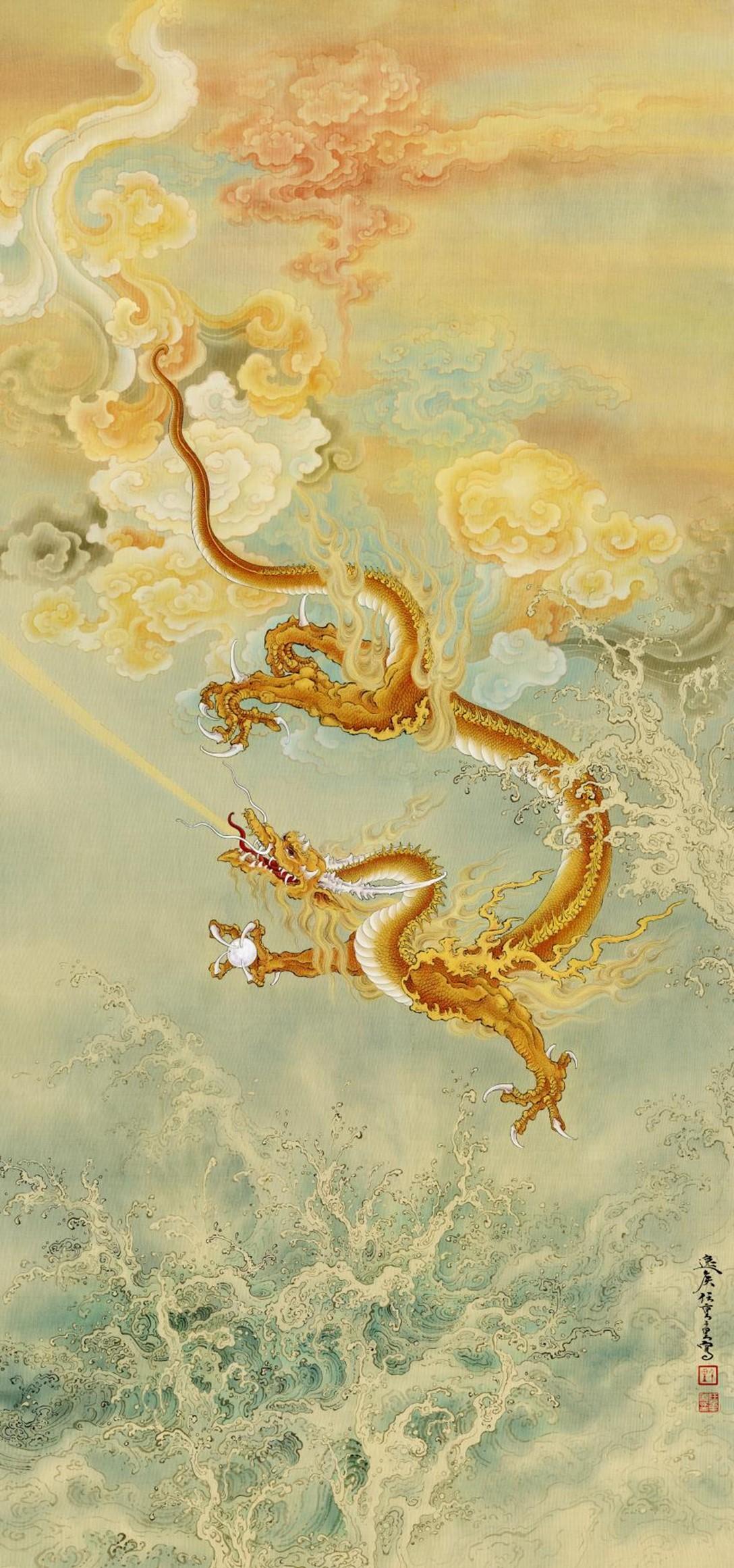
The Dragon of Wisdom and the Eight Winds

The Dragon of Wisdom and the Eight Winds

Long after Guan Yu had laid down his weapons of conquest and vowed to protect the Buddha’s Dharma under the guidance of Skanda Bodhisattva, there came a season of great peace.

The monasteries flourished. Bells echoed through the mountains each dawn, monks chanted the sutras beneath ancient pines, and countless pilgrims climbed the winding paths seeking refuge in the Buddha, the Dharma, and the Sangha.

Yet the wise knew that peace in the world did not always mean peace in the heart.

Far beyond the highest clouds lived an ancient dragon known as the Dragon of Wisdom. Unlike dragons that guarded jewels or ruled the storms, this dragon protected a treasure far greater—the wisdom that frees beings from suffering.

For countless ages, he had watched the hearts of gods and humans alike. He knew that the greatest enemies of enlightenment were not demons with swords or monsters with claws, but the invisible forces that stirred the mind itself.

One quiet evening, as Guan Yu finished his meditation before a humble temple, a golden light descended from the heavens.

From within the light emerged the Dragon of Wisdom.

His scales shimmered like polished emeralds, his eyes shone with infinite compassion, and every breath carried the fragrance of lotus blossoms.

Guan Yu respectfully bowed.

“Venerable Dragon, what brings you here?”

The dragon smiled.

“Guan Yu, your courage is known throughout heaven and earth. You have conquered mighty warriors and protected countless temples. But today you must face the battle that every practitioner must eventually fight.”

Guan Yu placed a hand upon the hilt of the Green Dragon Crescent Blade.

“I fear no enemy.”

The dragon gently shook his head.

“This enemy cannot be defeated by steel.”

With one graceful sweep of his tail, eight brilliant streams of wind began circling the mountaintop.

Each glowed with a different color, each carrying its own mysterious power.

“The Buddha taught that these are the Eight Worldly Winds. They blow through every human life. Because beings chase some and flee others, they remain bound to suffering.”

The first wind drifted forward like warm spring air.

It whispered one word.

“Gain.”

In an instant, magnificent palaces rose from the earth.

Golden treasures filled every hall. Noble kings offered Guan Yu priceless jade and silk. Thousands bowed before him, calling him the greatest protector who had ever lived.

For a brief moment, joy arose within his heart.

Then he remembered the Buddha’s teaching.

“Gain has arisen,” he said softly. “It is impermanent. It cannot remain forever.”

The golden palaces dissolved into mist.

The second wind blew cold across the mountain.

“Loss.”

Everything disappeared.

His armor vanished.

The temples crumbled.

The pilgrims no longer remembered his name.

For a moment, sorrow touched his heart.

Then he reflected.

“Loss has arisen. It too is impermanent.”

The sorrow passed like snow melting beneath the morning sun.

The third wind lifted him onto a magnificent throne.

“Status.”

Emperors sought his counsel.

Scholars praised his wisdom.

His name was spoken with reverence throughout every kingdom.

Yet Guan Yu remained seated in quiet mindfulness.

“Honor rises, and honor fades.”

The throne vanished.

The fourth wind darkened the sky.

“Disgrace.”

False accusations spread across the land.

Friends doubted him.

Many who once honored him now turned away.

Still he remained calm.

“Disgrace is also impermanent.”

The shadows disappeared.

The fifth wind became a storm of angry voices.

“Censure.”

People mocked him.

They questioned his intentions.

They criticized every decision he made.

Guan Yu listened without anger.

“Harsh words arise and pass away.”

The voices dissolved into silence.

The sixth wind sang with the sweetness of celestial music.

“Praise.”

Everywhere he walked, people celebrated his virtue.

They declared him wiser than kings and stronger than dragons.

Some even wished to worship him above all others.

Guan Yu lowered his head.

“All goodness comes from following the Buddha’s path. Praise belongs to the Dharma, not to me.”

The songs faded into the breeze.

The seventh wind carried heavenly fragrance.

“Pleasure.”

Beautiful gardens appeared.

Crystal streams flowed beneath flowering trees.

Celestial musicians filled the air with melodies unlike any heard on earth.

Perfect comfort surrounded him.

Guan Yu smiled peacefully.

“Pleasure is pleasant, but it too changes.”

The heavenly paradise vanished like a reflection upon still water.

At last the eighth wind arrived.

It was heavy and cold.

“Pain.”

Old wounds from countless battles returned.

His body ached.

Every breath became difficult.

Each step demanded great effort.

Yet Guan Yu neither resisted nor complained.

He simply observed.

“Pain has arisen. It is conditioned. It will also change.”

Though the pain remained for a time, it no longer ruled his mind.

The Dragon of Wisdom nodded with quiet joy.

“You have seen the Eight Worldly Winds as they truly are.”

Guan Yu looked down into the valley below.

There he saw countless people struggling.

Some rejoiced when they gained wealth.

Others despaired when they lost it.

Some became proud when honored.

Others were crushed by disgrace.

Many smiled when praised.

Many became angry when criticized.

They chased pleasure whenever it appeared.

They fled from pain whenever it arrived.

Their hearts rose and fell like leaves carried by the wind.

“Why do these winds cause so much suffering?” Guan Yu asked.

The dragon answered,

“The Buddha taught that gain and loss, status and disgrace, censure and praise, pleasure and pain come to every person. The difference is not in whether they arise, but in how they are understood.”

“The untrained mind believes these conditions define happiness. It welcomes what it likes and resists what it dislikes. In clinging and resisting, suffering grows without end.”

“But the wise disciple reflects, ‘This has arisen. It is impermanent. It is subject to change.’ Seeing clearly, the heart does not cling to gain or despair over loss. It is not intoxicated by praise nor wounded by blame. It enjoys pleasure without attachment and endures pain without hatred.”

As the dragon spoke, the eight winds slowly merged into a single clear breeze.

The mountain became perfectly still.

Guan Yu closed his eyes.

He saw that gain and loss were like passing clouds.

Status and disgrace were like echoes fading across distant valleys.

Praise and censure were like sounds carried upon the wind.

Pleasure and pain were like waves rising and falling upon the sea.

None endured.

None possessed a lasting self.

None could bind a mind that understood their true nature.

When Guan Yu opened his eyes, the Dragon of Wisdom had transformed into a radiant pearl that shone with brilliant golden light.

The pearl floated gently into Guan Yu’s heart.

From that day forward, those who came before Guan Yu’s image noticed a remarkable serenity upon his face.

Whether the temple was crowded with worshippers or stood empty…

Whether offerings were plentiful or scarce…

Whether people honored him or forgot his name…

His expression remained unchanged.

The monks understood the silent teaching.

A true guardian of the Dharma is protected not merely by strength, but by wisdom.

For the Buddha taught that the Eight Worldly Winds blow through every life.

The ordinary person is carried away by them, rejoicing in gain and despairing in loss, delighting in praise and fearing blame, chasing pleasure and fleeing pain.

But the wise see each experience as it truly is—impermanent, changing, and incapable of providing lasting happiness.

Because they neither cling nor resist, their hearts remain peaceful.

Like a great mountain that is unmoved by the fiercest winds, they abide in wisdom and compassion.

And in that unshakable peace lies the Dragon of Wisdom’s greatest treasure—the freedom that carries one beyond sorrow, beyond fear, beyond becoming, to the Further Shore.

Link: https://wisdomtea.org/2026/07/23/the-dragon-of-wisdom-and-the-eight-winds/

The Two Guardians of the Dharma

The Two Guardians of the Dharma

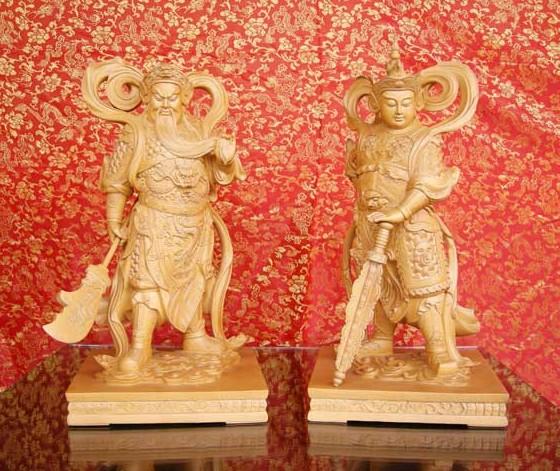
Long ago, after the great general Guan Yu had laid down his Green Dragon Crescent Blade and departed the world of men, his spirit wandered between heaven and earth.

Though honored by many for his loyalty and righteousness, Guan Yu’s heart knew no rest.

He remembered every battlefield.

Every oath.

Every life lost beneath the banners of war.

Standing before the endless sky, he prayed,

“If any merit remains from my life, may it no longer serve victory in battle, but the protection of the Buddha’s Dharma.”

His vow echoed through the Ten Directions.

Far above the heavenly realms, in the Palace of the Dharma Protectors, Skanda Bodhisattva opened his eyes.

For countless kalpas he had stood watch over monasteries, sutras, and all who sincerely sought awakening.

Never had he been moved by fame or worldly glory.

Yet this vow stirred the stillness of his heart.

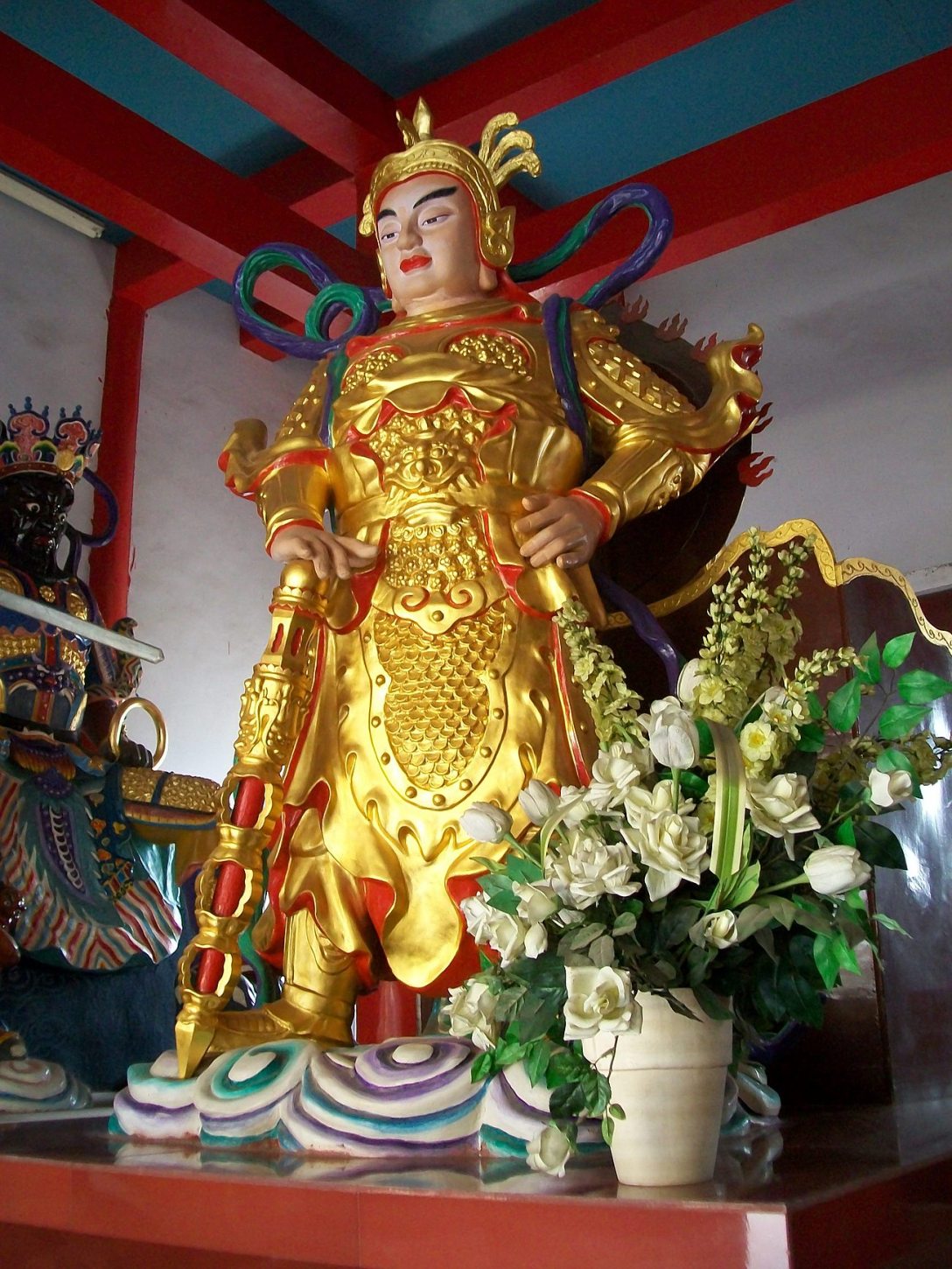
Without a word, he took up his vajra staff and descended from the heavens.

At the boundary between the human world and the celestial realms stood the Mountain of Silent Pines.

It was said that every being who wished to become a true protector of the Dharma must climb its seven terraces—not by strength, not by power, but by the purity of one’s intention.

Guan Yu arrived at the foot of the mountain.

His armor was scarred.

His famous blade rested upon his shoulder.

Before him stood a youthful warrior clothed in golden armor, holding a vajra that shone like a star.

The warrior bowed respectfully.

“I am Skanda.”

Guan Yu returned the bow.

“I know your name.”

“You have guarded the Dharma since the Blessed One walked this earth.”

Skanda looked quietly at the great general.

“And you are Guan Yu, whose loyalty has become legend.”

The two guardians stood facing one another beneath the whispering pines.

Neither spoke another word.

For true protectors recognize one another without boasting.

A voice from the empty sky declared,

“He who protects the Dharma must first conquer himself.”

Before Guan Yu appeared an army exactly as he remembered it.

Old enemies.

Old victories.

Old grudges.

The clash of steel echoed once again.

The Green Dragon Crescent Blade trembled in his hands.

He could have defeated every phantom.

Instead, he slowly lowered his weapon.

He folded his hands together.

“May every enemy I ever faced find peace.”

Instantly the battlefield dissolved into lotus blossoms.

Skanda smiled.

“The strongest sword,” he said, “is the one returned to its sheath.”

Then a dark cloud gathered before Skanda.

From within emerged demons born of greed, anger, and delusion.

They mocked him.

They cursed the Buddha.

They sought to provoke him into rage.

Guan Yu instinctively reached for his blade.

But Skanda gently raised one hand.

“No.”

The Bodhisattva sat upon a stone and entered deep meditation.

The demons roared louder.

Yet the more hatred they poured forth, the calmer his mind became.

His compassion became like sunlight.

One by one, the demons ceased their shouting.

Their fierce faces softened.

Their weapons crumbled into flowers.

Finally, they bowed.

Not defeated.

Transformed.

Guan Yu lowered his head.

“I once believed courage meant overcoming others.”

Skanda replied,

“The highest courage is refusing to create another enemy.”

At last they reached the highest terrace.

There they found no armies.

No demons.

No treasures.

Only an old monk carrying a bundle of weathered sutras.

As he crossed a narrow bridge, a violent storm arose.

The scriptures slipped from his hands.

Their pages scattered into the wind.

Without hesitation, Guan Yu leaped into the raging river below, risking himself to recover every page.

At the same moment, Skanda stood upon the bridge, raising his vajra toward the sky.

The storm grew still.

The winds quieted.

The falling pages drifted gently back into the monk’s arms.

When the last sutra had been saved, the old monk smiled.

His humble robes dissolved into robes of radiant light.

Before them stood the Buddha.

The mountain itself became filled with golden brilliance.

All the pines bowed.

Even the clouds became silent.

The Blessed One spoke:

“One guardian protects with fearless action.”

“One guardian protects with unwavering wisdom.”

“Neither is complete without the other.”

Guan Yu and Skanda knelt together.

The Buddha continued,

“Strength without compassion becomes violence.”

“Compassion without courage becomes helplessness.”

“When wisdom and righteousness walk together, the Dharma flourishes.”

The Buddha then entrusted Guan Yu with the protection of monasteries, pilgrims, and all who uphold justice with kindness.

To Skanda he entrusted the eternal guardianship of the Buddha’s teachings and the hearts of sincere practitioners.

Then he declared before gods, dragons, humans, and heavenly beings:

“From this day onward, you shall stand together as the Two Guardians of the Dharma.”

At that moment, heavenly bells rang throughout the Ten Directions.

Lotus blossoms rained from the sky.

The Dragon Kings offered pearls of gratitude.

Even the fiercest spirits lowered their heads in reverence.

It is said that whenever a temple bell rings before dawn, Skanda Bodhisattva silently walks its halls, protecting the Dharma from unseen dangers.

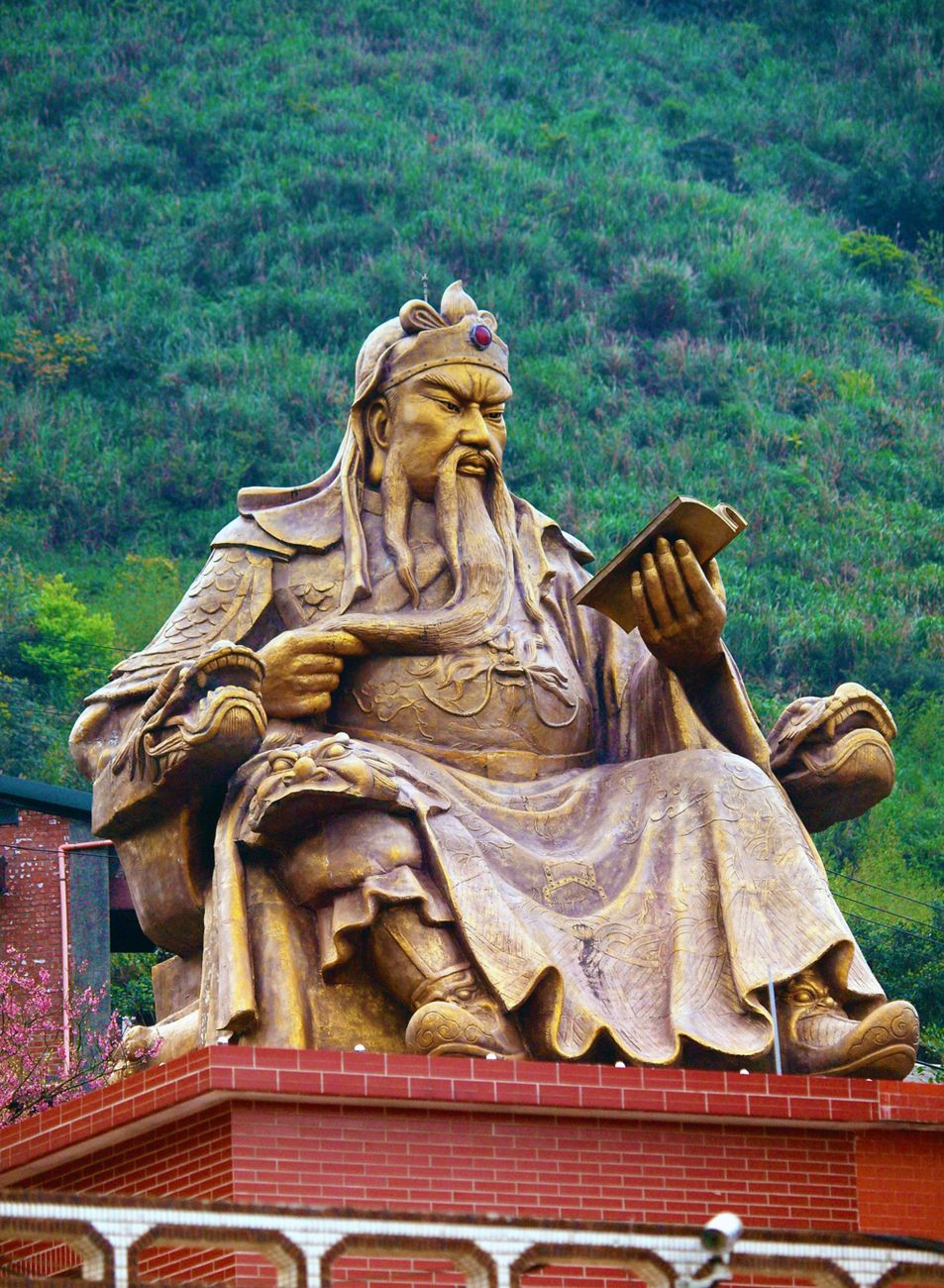
And whenever a traveler climbs a lonely mountain path in search of wisdom, a tall figure with a long beard and calm eyes walks a few steps behind, ensuring no harm comes to those whose hearts are sincere.

The monks say that the two guardians are never far apart.

One watches the scriptures.

The other watches the people.

One carries the vajra of wisdom.

The other bears the Green Dragon Blade of righteousness.

Together they remind all who enter the temple:

The Dharma is not protected by walls of stone.

It is protected by hearts that unite wisdom with compassion, courage with humility, and justice with loving-kindness.

And wherever these virtues arise, Skanda Bodhisattva and Guan Yu are said to be standing together—unseen, yet ever vigilant—guarding the path to awakening for all beings.

Link: https://wisdomtea.org/2026/07/16/the-two-guardians-of-the-dharma/

The Silent Guardian: The Legend of Skanda Bodhisattva

The Silent Guardian: The Legend of Skanda Bodhisattva

Long ago, when the Buddha’s teachings had spread across mountains and kingdoms, there stood a monastery hidden among clouds upon the Summit of the Seven Pines. Its monks possessed no treasures of gold or jade. Their greatest wealth was a library of sutras copied by generations of devoted hands.

Among them was an elderly monk named Venerable Mingyuan. Every dawn he would say,

“The Dharma is like a lamp. It is not protected by walls, but by awakened hearts.”

Yet, as the years passed, dark times came.

Bandits roamed the valleys. Warlords fought over kingdoms. Many temples were abandoned, and sacred scriptures were burned or scattered by fear and greed.

The young novices asked,

“Master, who will protect the Dharma if all earthly things perish?”

The old monk smiled.

“The Dharma has always had protectors. Some walk unseen.”


One winter evening, snow fell so heavily that the mountain paths disappeared beneath white silence.

A young novice named Liang remained awake, copying the Heart Sutra by candlelight. Suddenly, the temple bell rang by itself.

Dong…

Dong…

Dong…

No one stood beside it.

Liang stepped outside.

The wind had stopped.

The moon shone brightly over the courtyard.

There, before the Hall of the Buddha, stood a radiant warrior clad in celestial armor.

His face was youthful yet timeless.

His eyes were calm as a still lake.

In his hands rested a vajra staff that glowed like a pillar of blue lightning.

The warrior bowed toward the Buddha before speaking.

“I am Skanda, Guardian of the Dharma.”

Liang fell to his knees.

“Great Bodhisattva! Why have you come?”

Skanda answered,

“Because tonight the Dharma will be tested.”


Far below, a band of soldiers climbed the mountain.

Their commander sought treasures rumored to be hidden in the monastery.

“The monks hide gold,” he declared.

“They guard priceless jewels.”

But Skanda looked upon the temple and said softly,

“They possess only wisdom.”

The soldiers reached the gate before midnight.

As they pushed upon the wooden doors, a great wind circled the mountain.

The pines bent but did not break.

The snow rose into the air like countless white dragons.

Every path became unfamiliar.

The soldiers walked for hours, yet each time they believed they had reached the monastery, they found themselves standing once again beside the mountain stream below.

Some saw endless forests.

Some saw towering cliffs.

Some heard temple bells in every direction.

None could find the gate.

Not because Skanda wished them harm—

but because compassion sometimes protects by preventing wrongdoing.

By dawn, exhausted and humbled, the commander knelt upon the snow.

“If Heaven itself bars my way,” he whispered, “perhaps I have sought the wrong treasure.”

The illusion vanished.

The mountain path appeared once more.

The soldiers descended peacefully, never lifting a sword.


Liang asked Skanda,

“Why did you not strike them down? You are stronger than any army.”

Skanda planted his vajra upon the earth.

“To defeat an enemy is easy.”

“To transform a heart is far more difficult.”

“A protector who delights in violence protects nothing.”

Liang remembered these words for the rest of his life.


Many years later, drought struck the valleys.

People became hungry.

Some monks wished to hide the temple’s rice stores.

Others wished to give everything away.

They argued for many days.

That night, Skanda appeared again.

He carried no weapon.

Only a wooden bowl.

He filled it with rice.

As each hungry traveler arrived, the bowl never emptied.

When dawn came, it contained only a single grain.

Skanda smiled.

“The Dharma grows through generosity.”

“The smallest offering made with compassion outweighs mountains of gold given for fame.”

The bowl disappeared.

Yet from that day onward, the monastery never lacked enough food to share.


At last Venerable Mingyuan grew old.

Knowing his final day had arrived, he asked to sit beneath the ancient pine.

Liang, now himself an elder monk, remained beside him.

“Master,” Liang asked quietly, “have you ever seen Skanda?”

The old monk laughed.

“My child…”

“I have seen him every day.”

Liang looked around in confusion.

“There is no one here.”

The master pointed toward the meditation hall.

“He is the novice who rises before dawn to sweep the floor.”

“He is the monk who patiently copies one more page of scripture.”

“He is the cook who feeds strangers before feeding himself.”

“He is the traveler who returns a lost sutra instead of selling it.”

“He is every heart that chooses wisdom over fear.”

As the first rays of sunrise touched the mountain, Venerable Mingyuan peacefully entered final rest.

A gentle breeze moved through the pine branches.

The temple bell sounded once.

No hand had touched it.

High above the monastery, upon the highest peak, a solitary figure in golden armor looked toward the rising sun.

Skanda Bodhisattva raised his vajra in silent salute—not to kings or armies, but to the countless ordinary people who kept the light of the Dharma alive through kindness, discipline, and compassion.

Then, as morning mist embraced the mountain, the guardian vanished from sight.

Yet the monks would always say that on nights when the moon was bright and the temple bells rang without wind, Skanda still walked the quiet paths.

Not seeking praise.

Not seeking worship.

Only watching over those who carried the Buddha’s teachings with sincere hearts.

For the greatest fortress is not built of stone.

It is built within the awakened mind.

Link: https://wisdomtea.org/2026/07/09/the-silent-guardian-the-legend-of-skanda-bodhisattva/

Guan Yu and the Dragon of Wisdom

Guan Yu and the Dragon of Wisdom

Long after Guan Yu had laid down his mortal body and was honored as a Dharma Protector, peace returned to many lands. Temples flourished, monks chanted the sutras, and the bells of awakening echoed through mountains and valleys.

Yet beneath the tranquil world, another danger was quietly growing.

It was not an army of soldiers.

It was ignorance.

From the shadows arose a dark mist known as the Cloud of Delusion. It drifted through villages and kingdoms, filling people’s hearts with greed, anger, and pride. Friends became enemies. Families quarreled over wealth. Rulers sought power without compassion. Even sincere practitioners found their minds clouded with doubt.

The Buddhas and Bodhisattvas looked upon the suffering with great compassion.

Within the sacred Dragon Gate of Heaven dwelt an ancient dragon named Longzhi, the Dragon of Wisdom. His scales shimmered like emerald jade, and each breath carried the fragrance of lotus blossoms after the rain. He was older than mountains and quieter than still water.

Unlike dragons who commanded storms and thunder, Longzhi guarded something far more precious—the Pearl of Clear Wisdom.

It was said that whoever looked upon the pearl with a pure heart could see through illusion and understand that all beings were connected by compassion.

But the dragon had made a solemn vow.

“The Pearl shall never be given to one who seeks power. It shall only reveal itself to one who has conquered the self.”

The heavenly assembly asked,

“Who among the guardians is worthy to seek the Dragon of Wisdom?”

Without hesitation, all eyes turned toward Guan Yu.

Clad in green robes and crimson armor, Guan Yu bowed before the Buddhas.

“If it serves the Dharma,” he said, “I shall go.”

With a single step, he crossed rivers of clouds and climbed the Celestial Jade Mountains until he reached the Dragon Gate.

There, Longzhi emerged from a sea of mist.

His eyes shone like twin moons.

His voice rolled across the mountains.

“Guan Yu, Guardian of Righteousness… Why have you come?”

“I seek not power,” Guan Yu replied.

“I seek the wisdom to help all beings free themselves from suffering.”

The dragon remained silent.

Then he smiled.

“Many have spoken those words. Few have lived them.”

The dragon did not challenge Guan Yu with combat.

Instead, he tested his heart.

For seven days, Guan Yu walked through seven visions.

In the first, he was offered an empire greater than any king had ruled.

He bowed and walked away.

In the second, he was promised eternal fame.

He smiled and continued walking.

In the third, every enemy he had ever faced knelt before him in fear.

He lifted them to their feet and forgave them.

In the fourth, he saw his own victories carved into mountains of gold.

The wind erased every name.

He understood that glory fades.

In the fifth, he stood alone beneath countless stars.

He realized that even the greatest hero is only one traveler in the endless universe.

In the sixth, he saw every living being—rich and poor, human and animal, friend and stranger—sharing the same wish:

To be free from suffering.

Compassion filled his heart like an endless river.

At last came the seventh vision.

There was no dragon.

No mountain.

No heaven.

Only a still pool reflecting his own face.

As Guan Yu gazed into the water, his crimson face slowly disappeared.

His armor vanished.

His great blade dissolved into light.

Even his name faded away.

Nothing remained but quiet awareness.

When the vision ended, Longzhi bowed his great head.

“You have learned the final lesson.”

“Wisdom begins where the self ends.”

The dragon opened his claws.

The Pearl of Clear Wisdom floated into the air.

Its light spread across the heavens like a thousand rising suns.

But Guan Yu did not take it.

Instead, he said,

“The pearl belongs to all beings.”

Longzhi laughed, and the mountains echoed with joy.

“Because you would not possess it…”

“…you have become worthy of carrying its light.”

The pearl dissolved into countless rays that entered Guan Yu’s heart.

From that day forward, his Green Dragon Crescent Blade no longer shone merely with the brilliance of polished steel.

It glowed with the light of wisdom.

Wherever Guan Yu appeared, confusion gave way to clarity.

Hatred softened into understanding.

Fear transformed into courage.

People believed he defeated evil spirits with his mighty blade.

But the wise knew a deeper truth.

He conquered darkness because he first conquered the darkness within himself.

It is said that on quiet nights, when temple bells ring across the mountains and mist curls among ancient pines, an emerald dragon may still be seen circling the moon.

Those who glimpse the dragon are reminded that true strength is not found in victory over others.

True strength is found in mastering one’s own heart.

And somewhere beneath the dragon’s silent flight walks Guan Yu, Dharma Protector, carrying not only the blade of righteousness, but the light of wisdom for all who seek the path.

Link: https://wisdomtea.org/2026/07/02/guan-yu-and-the-dragon-of-wisdom/