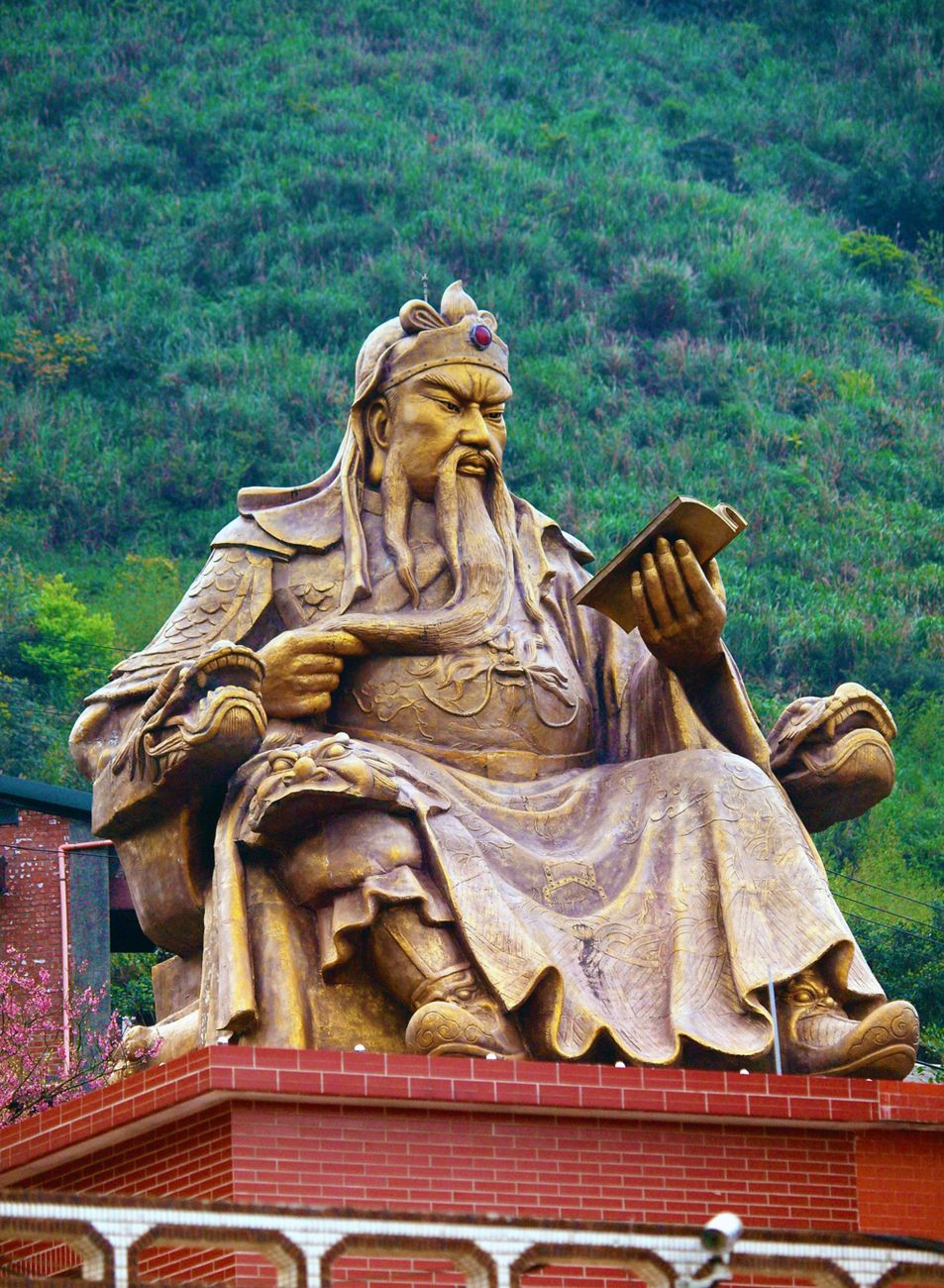
The Lesson of Impermanence

The Lesson of Impermanence

At the edge of a quiet forest monastery, where the earth still held the warmth of the day and the wind moved through bamboo like a whispered teaching, a young monk named Sāra approached his teacher at dusk.

The evening bell had just faded into silence, its last vibration dissolving into the wide sky. Sāra bowed low, his forehead touching the wooden floor.

“Master,” he said, his voice carrying both urgency and weariness, “my mind is unsettled. At times, joy rises in me so vividly that I wish it would never end. Then, without warning, sorrow follows, heavy and suffocating. And between these two, there are long stretches where I feel nothing at all—only a dull, drifting emptiness. I do not understand what is happening within me. I cannot find peace.”

The elder monk, Venerable Tissa, did not answer immediately. He sat quietly, as if listening not to Sāra’s words, but to the space between them.

At last, he gestured gently. “Come. Sit with me.”

They walked together to a small wooden platform overlooking a pond. The water was still, holding the last light of the sky like a fragile mirror. Crickets had begun their evening chant, and somewhere in the distance, a night bird called.

“Tell me, Sāra,” the elder began softly, “what do you see in the water?”

“I see the sky, Master—the clouds, the fading light.”

“And is it truly the sky?”

Sāra hesitated. “No… it only appears so.”

At that moment, a breeze passed over the pond. The reflected sky shattered into ripples, the clouds breaking into fragments.

“Look closely,” Tissa said. “When the wind comes, the sky seems to break. When the water is still, the sky appears whole again. Yet the real sky above has not been broken, nor restored. It has not suffered from the movement of the water.”

Sāra watched in silence, his brow slightly furrowed.

“In the same way,” Tissa continued, “what you call your feelings—pleasant, painful, and neutral—are like these reflections. They arise dependent on conditions: contact with sights, sounds, memories, the body, and the habits of the mind. They are compounded, woven together from countless causes. Because they are built, they must also fall apart.”

The elder reached down and picked up a small pebble. He dropped it into the pond.

Ripples spread outward, distorting everything.

“Did you command the ripples to appear?” he asked.

“No, Master.”

“Can you command them to stop immediately?”

Sāra shook his head.

“Feelings are the same. When a pleasant feeling arises, you say, ‘This is good. Let it stay.’ You grasp at it, like trying to hold the reflection of the moon in your hands. But the tighter you grasp, the more it slips away.”

Sāra lowered his gaze.

“And when pain arises,” Tissa went on, “you resist it. You say, ‘This should not be here.’ You push against it, struggle with it, and in doing so, you deepen its roots.”

The elder’s voice softened further.

“And when neither pleasure nor pain is strong, you fall into forgetfulness. You drift, unaware, as though nothing is happening. Yet even that quiet dullness is a feeling—subtle, conditioned, and impermanent.”

The sky above them darkened, deepening into shades of indigo. One by one, the first stars appeared.

“Master,” Sāra said slowly, “are all these feelings truly so unstable?”

Tissa nodded. “They are impermanent, dependently arisen, liable to fading away, to cessation. Pleasant feeling changes. Painful feeling changes. Even neutral feeling, so easily overlooked, is quietly shifting moment by moment.”

He paused, then added, “Consider the morning dew. At dawn, it glistens like jewels on the grass. By midday, it is gone. Or think of a bell—when struck, it sings clearly, but the sound does not remain. It fades into silence. Feelings are like this.”

Sāra closed his eyes, letting the words settle.

“Then how should I meet them?” he asked. “If I cannot hold on to the pleasant, and cannot escape the painful, what is the way?”

The elder turned toward him, his gaze steady and kind.

“You must learn to know them as they are,” he said. “Not as ‘mine,’ not as ‘self,’ but simply as experiences arising and passing.”

He continued:

“When pleasure arises, know it clearly: ‘This is pleasant feeling.’ Do not cling. See its arising, its changing, its fading.”

“When pain arises, know it clearly: ‘This is painful feeling.’ Do not resist. Observe its movement, its texture, its eventual dissolution.”

“And when neither stands out—when there is a quiet, neutral tone—know that too: ‘This is neutral feeling.’ Do not drift into ignorance. Stay present.”

Sāra listened deeply, as though hearing something both new and strangely familiar.

“Master,” he said, “it sounds simple… but in the moment, it feels difficult.”

Tissa smiled gently. “It is simple, but not easy. The mind has long been trained to grasp and reject. To see clearly requires patience, like watching a seed grow into a tree.”

The night deepened. The moon rose, casting a pale silver path across the pond. The air cooled, and the scent of earth and leaves became more vivid.

“Stay here tonight,” Tissa said. “Watch the mind as you would watch this water. Do not interfere. Do not chase. Do not turn away.”

Sāra bowed.

Left alone, he sat by the pond. At first, his thoughts came quickly—a memory of laughter with fellow monks earlier that day. A warmth spread through his chest.

“Pleasant feeling,” he whispered inwardly.

He noticed how the warmth lingered, then subtly shifted, then faded, like a flame losing fuel.

Soon after, a worry arose—an image of failure, of not progressing in his practice. His chest tightened.

“Painful feeling,” he noted.

Instead of pushing it away, he stayed with it. He felt its edges, its heaviness, its pulsing nature. To his surprise, it did not remain solid. It changed, softened, and eventually dissolved into something quieter.

Then came a long stretch where nothing seemed particularly strong. The night sounds blended together. His body felt neither comfortable nor uncomfortable.

“Neutral feeling,” he observed.

At first, his mind wanted to wander, to seek something more stimulating. But he gently returned, again and again, to simple knowing.

Hours passed.

The moon climbed higher. The pond shimmered.

Again and again, feelings arose—subtle pleasures, faint discomforts, quiet neutrality. Each one appeared, lingered briefly, and passed.

For the first time, Sāra began to see not just the content of his experience, but its nature.

Everything was moving.

Everything was changing.

Nothing stayed.

And yet, something within him was beginning to feel unmoved—not as a fixed thing, but as a clear, open knowing that did not grasp at what appeared within it.

Just before dawn, as the first light touched the horizon, a deep stillness settled over him. Not the dull stillness of before, but a vivid, wakeful calm.

In that moment, a gentle understanding arose:

Feelings were like waves.

But he did not have to be the wave.

He could know the wave.

When the elder returned in the early morning, he found Sāra still seated, eyes open, quietly present.

“Well, Sāra,” Tissa asked, “what have you seen?”

Sāra bowed, his voice steady.

“Master, I have seen that what I once chased and feared are only passing reflections. Pleasant feeling does not stay. Painful feeling does not stay. Even neutrality does not stay. They arise and vanish like ripples on water.”

He paused, then added softly,

“And I have begun to see that peace is not found by controlling them… but by understanding them.”

The elder nodded.

“Good,” he said. “This is the beginning of wisdom—not the end of feeling, but freedom within it.”

The wind moved once more through the bamboo, but now Sāra heard it differently—not as something to hold or escape, but as a fleeting song, complete in its arising and its passing.

And above it all, vast and untouched, the sky remained.

Link: https://wisdomtea.org/2026/04/23/the-lesson-of-impermanence/

The Hungry Ghost by the River

The Hungry Ghost by the River

In the time when the teachings of the Gautama Buddha were spreading across the lands of northern India, there lived many beings unseen by ordinary eyes. Some wandered through forests, some dwelled in lonely places, and some remained close to the human world, drawn by the weight of their past actions.

Among these unseen beings were the hungry ghosts.

They were called hungry not only because they lacked food and water, but because their hearts were consumed by endless craving. No matter how much they longed for satisfaction, it always slipped beyond their reach.

Near a quiet village flowed a wide river. During the day, villagers came to wash their clothes, fill their jars with water, and speak with one another beneath the shade of tall trees. But at night the riverbank became silent, and few people remained.

For many years, a hungry ghost wandered along that river.

Its body was thin as a withered branch. Its stomach burned with endless hunger, yet its throat was so narrow that even a drop of water seemed impossible to swallow. Whenever it reached toward food left by travelers, the food would turn to dust. Whenever it tried to drink from the river, the water seemed to vanish before touching its lips.

Day after day the ghost suffered in this way.

Often it cried out in despair.

“How cruel this world is! Food surrounds me, yet I cannot eat. Water flows before me, yet I cannot drink!”

But deep within its memory lay a truth it tried not to face.

In a previous life, it had been a man who loved wealth and possessions more than kindness. He had eaten well while others starved. He had turned away beggars who asked for help. Even when monks came asking for alms, he had mocked them and driven them away.

Now the results of those actions had ripened.

One evening, as the sky glowed softly with the colors of sunset, a group of monks approached the riverbank. At their head walked the Buddha, calm and serene, his presence peaceful like a still lake beneath the moon.

Though ordinary villagers saw only a wise teacher walking beside the water, the hungry ghost saw something more.

It saw a radiance surrounding him, a light that seemed to shine not from outside but from deep within.

The ghost trembled.

For the first time in many years, it felt both fear and hope.

Gathering its courage, the hungry ghost approached the Buddha and bowed low.

“Great Teacher,” it cried in a thin and sorrowful voice, “please look upon my suffering.”

The monks could not see the ghost, but the Buddha turned his gaze toward it with gentle understanding.

“What troubles you?” he asked.

“I am tormented by endless hunger and thirst,” the ghost said. “Food is near, but it becomes ashes. Water flows before me, but it disappears. I wander in misery without relief.”

The Buddha regarded the ghost with compassion.

“This suffering did not arise without cause,” he said calmly. “Just as a seed planted in the earth eventually bears fruit, actions guided by greed and cruelty bring painful results.”

The ghost lowered its head.

“I know this is true,” it whispered. “In my former life I refused help to those in need. My heart was hard, and I cared only for my own comfort.”

Tears like faint mist drifted from its hollow eyes.

“Is there no escape from this misery?”

The Buddha spoke gently.

“Even a mind that has wandered into darkness can turn toward the light. Though your past actions have brought suffering, your present mind can begin to change.”

The ghost looked up.

“But I have nothing,” it said. “I cannot give food or water. How can I practice goodness now?”

The Buddha pointed toward the village where evening lamps were beginning to glow.

“Kindness does not begin with wealth,” he said. “It begins with intention. When you see people drinking from the river, rejoice that their thirst is quenched. When you see families sharing food, feel glad that they are nourished. When you see travelers resting, wish them safety and peace.”

The ghost listened carefully.

“Such thoughts may seem small,” the Buddha continued, “but they loosen the knots of greed that bind the mind. A heart that learns to rejoice in the happiness of others becomes lighter with each moment.”

The ghost bowed deeply.

From that day forward, it tried to follow the Buddha’s teaching.

Whenever villagers came to draw water from the river, the ghost whispered silently:

May your thirst be satisfied.

When children shared rice cakes along the riverbank, the ghost wished:

May your bodies be strong and healthy.

When tired travelers rested beneath the trees, it thought:

May your journey be safe.

At first its hunger remained.

But gradually, something inside began to change.

The burning jealousy it once felt when seeing others eat slowly faded. In its place grew a quiet warmth, like the first light before dawn.

One night, as the moon reflected gently upon the river, the ghost suddenly noticed something strange.

Its thirst no longer tormented it as before.

The river’s water shimmered peacefully, and for the first time, the ghost felt no desperate urge to grasp at it.

In that moment, it understood the Buddha’s teaching.

Its suffering had not been caused merely by the absence of food or water. It had been fueled by the endless craving within its own mind.

And as that craving softened, the chains of its misery began to fall away.

Far away, walking along another road beneath the starlit sky, the Buddha paused briefly.

A faint smile appeared on his face.

For he knew that somewhere beside a quiet river, a suffering being had begun to awaken to the path that leads beyond hunger, beyond craving, and beyond suffering itself.

Link: https://wisdomtea.org/2026/03/12/the-hungry-ghost-by-the-river/

The Heart That Needed No One

The Heart That Needed No One

On the morning of Valentine’s Day, the monastery bells echoed across the valley, low and steady, dissolving into mist.

At the edge of a small town near Chiang Mai, lanterns shaped like red hearts were strung between cafés. Young couples walked past the temple gates carrying roses and sweets. Inside the gates, however, the air carried a different fragrance—the faint scent of incense and rain-soaked earth.

In the meditation hall, a lay practitioner named Ananda sat quietly before a small image of the Gautama Buddha. It was Valentine’s Day, and her heart felt heavier than she wished to admit.

For many years, she had secretly believed that loving-kindness—mettā—would one day bring her the right person. She had practiced sincerely, offering silent blessings:

May you be safe.
May you be happy.
May you be at peace.

But on this particular morning, she realized something subtle and uncomfortable: she had been offering loving-kindness like a trade.

“I give,” she whispered inwardly, “so that I may receive.”

The thought startled her.

The abbot entered quietly and sat beside her. He did not speak for a long time. Outside, laughter drifted faintly from the street beyond the temple walls.

“Venerable sir,” she finally said, “is it wrong to wish to be loved?”

The abbot smiled gently. “To wish to be loved is human. To cling to being loved is suffering.”

She lowered her gaze.

“Today,” he continued, “the world celebrates love that belongs to two. But the Buddha taught a love that belongs to no one and therefore includes everyone.”

He recited softly, words from the ancient discourse:

“As a mother would guard her only child with her life, even so should one cultivate a boundless heart toward all beings.”

Ananda had heard these lines before. They were from the Metta Sutta. But this time they entered her differently—not as poetry, but as instruction.

A boundless heart.

She closed her eyes.

At first, she pictured someone she loved easily. Warmth arose. Then she pictured someone neutral—the elderly vendor at the market. Then someone difficult—a colleague who had once spoken harshly to her.

Her chest tightened.

The abbot’s voice was quiet: “Loving-kindness is not romance. It is courage.”

She breathed slowly and continued.

May you be free from fear.
May you be free from resentment.
May you live with ease.

Something unexpected happened. The warmth she had tried so hard to direct outward began dissolving its boundaries. It no longer flowed from her to another. It simply radiated—like sunlight that does not choose where to fall.

Tears slipped down her cheeks, not from sadness, but from relief.

She saw clearly then: the heart that demands to be filled is always anxious. But the heart that gives without bargaining discovers it was never empty.

When the meditation ended, she walked outside the temple gates. The town was glowing with red and gold decorations. A florist handed a rose to a shy young man. A child ran past clutching a pink balloon.

Ananda paused and silently offered her practice to them all.

To the couples in love.
To the lonely.
To the grieving.
To the joyful.
To those whose love was returned, and those whose love was not.

For the first time on Valentine’s Day, she felt no lack.

That evening, as the sun set behind the hills, she lit a single candle in her room. Not for a partner. Not for a future promise. But for the simple, steady flame of goodwill itself.

And in that quiet glow she understood:

Romantic love binds two hearts together.
Loving-kindness frees the heart from all boundaries.

On Valentine’s Day, the world celebrated love that says, You are mine.

In the stillness of her practice, she discovered love that says,
May you be free.

Link: https://wisdomtea.org/2026/02/12/the-heart-that-needed-no-one/

The Noble Growth

The Noble Growth

When a woman devoted to the path of the noble ones nurtures five qualities in her life, she is said to be growing—not just outwardly, but inwardly, in the kind of growth that truly matters. Her life becomes a field of noble growth, a garden where the most precious and lasting qualities are cultivated. In doing so, she grasps what is essential—what is excellent—not something abstract or far off, but something embodied, real, and rooted in her very being.

What are these five ways in which she grows?

She grows in faith.
She develops a steady confidence in the path of truth. Even when life is uncertain or difficult, she trusts that goodness is not wasted, that wholesome actions bear fruit. Her faith is not blind, but bright—like a lamp in the dark, helping her take each next step with courage and conviction.

She grows in virtue.
She learns to live with integrity. She watches her actions, her words, and her thoughts, choosing what brings no harm to herself or others. When tempted to react out of anger, fear, or greed, she remembers what matters and chooses restraint. In this way, her life becomes peaceful, her conscience light.

She grows in learning.
She listens carefully to teachings that point toward wisdom. She reflects on them deeply—not just hearing words, but applying them, testing them in her own experience. Through this, she begins to understand what leads to suffering and what leads beyond it.

She grows in generosity.
She opens her heart and her hands. Whether she gives a kind word, a warm meal, a moment of her time, or a material gift, she gives with joy. She does not give to impress, to gain, or to control, but simply because giving frees the heart. In letting go, she discovers richness.

She grows in discernment.
Through reflection, quiet observation, and wise attention, she begins to see the nature of things: that all things change, that clinging leads to sorrow, that freedom is found in letting go. She begins to understand herself and the world more clearly, seeing beyond surface appearances.

In cultivating these five kinds of growth, she matures in the highest way. Her life leans toward awakening. She does not waste her human birth, but honors it. She holds fast to what is truly valuable—not wealth or status or fleeting pleasures, but the deep peace that comes from living wisely and kindly.

And all this, she develops not in some distant world or future life, but here and now, in this very body, in this very heart. In her own lived experience, she grasps what is essential and excellent—the noble growth that leads to lasting freedom.

Link: https://wisdomtea.org/2025/07/17/the-noble-growth/