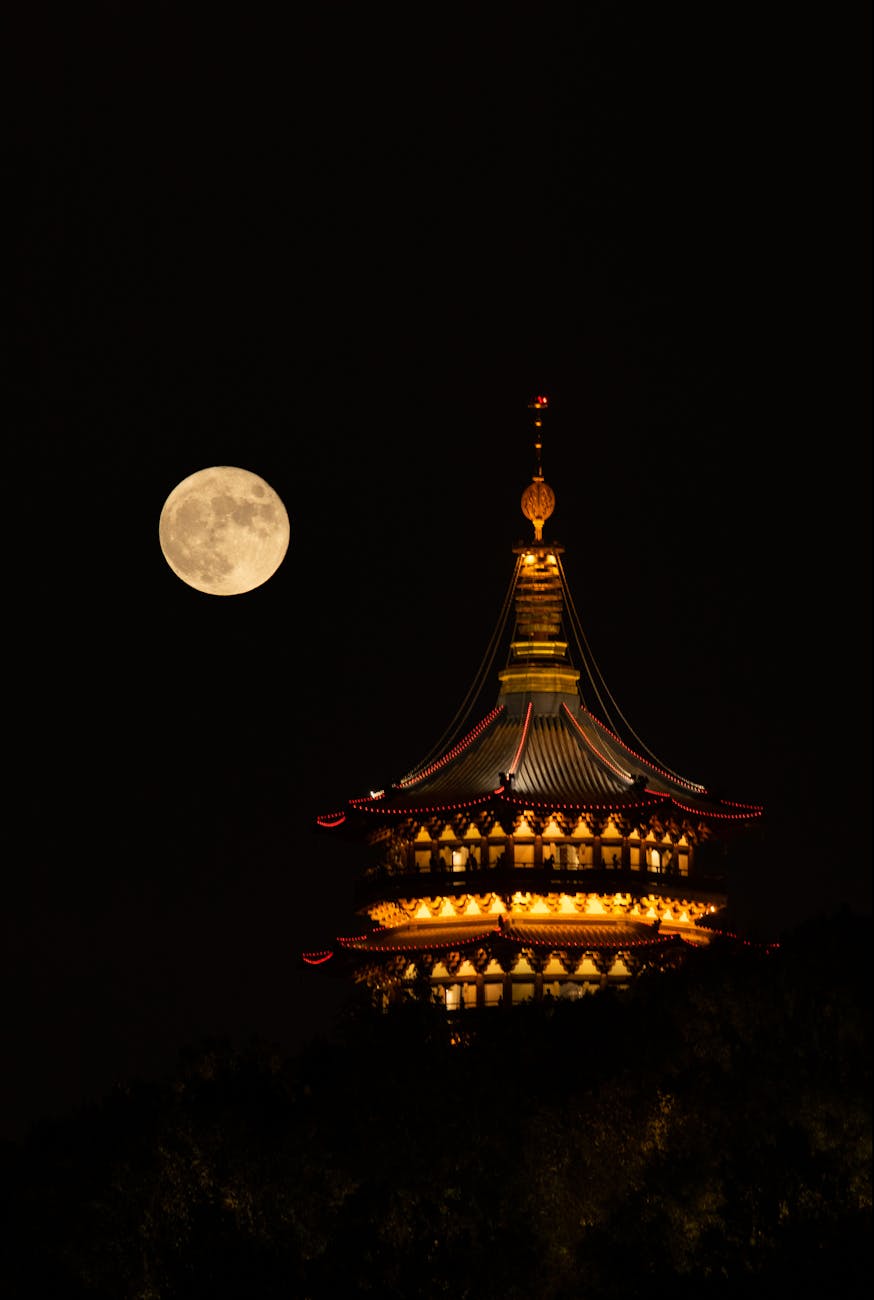
The End of Becoming

The End of Becoming

Thus it may be remembered that there was one known as Pajapati, who in the life of the world had been a queen of the Sakyas and a mother not by birth but through deep and unwavering care, and who later, having seen clearly the nature of things, entered the path that leads beyond all becoming and brought it to its completion.

Before she was known in these ways, however, she was simply a sister, bound by affection to her younger sister Maya, who gave birth to the child destined to awaken fully, yet whose life was brief, for having brought forth that child she passed away soon after, leaving behind both a profound sorrow and a condition of immeasurable consequence for the welfare of many beings.

It was then that Pajapati took the child into her arms and raised him as her own, not merely out of obligation or duty, but out of a tenderness that did not distinguish between what was given by birth and what was given by the heart, and in this way she nurtured the one who would later be known as the Awakened One.

As time unfolded according to conditions, the child grew into a young man who, seeing deeply into the nature of life, began to discern what would later be understood as the First Noble Truth—that all conditioned existence is marked by unsatisfactoriness, by instability, and by a subtle inability to provide lasting fulfillment, being bound up with aging, sickness, and death.

Moved by this understanding, he turned away from the household life not in rejection, but in profound inquiry, seeking the end of suffering, and in time he realized for himself the Deathless, directly knowing the cessation of that very unsatisfactoriness.

When Pajapati beheld him again after this awakening, she did not see merely the child she had raised, but recognized the truth he embodied, and understanding that the path he had realized was not reserved for one alone but could be cultivated by others, she resolved within herself to leave behind the life she had known and enter into the training that leads to liberation.

In doing so, she became the first among women to undertake fully the going forth into homelessness, establishing a way for others to follow, and she devoted herself to the practice, which is known as the Noble Eightfold Path: cultivating Right View and Right Intention as the foundation of wisdom; refining her conduct through Right Speech, Right Action, and Right Livelihood; and steadying the mind through Right Effort, Right Mindfulness, and Right Concentration, so that it might become clear and undisturbed.

Reflecting deeply through this practice, she came to understand directly what had long remained unseen, and she declared that through countless lives she had wandered in saṃsāra, taking on many forms and identities—now as mother, now as child, now as father, brother, or grandmother—continually arising and passing away without finding lasting peace, because she had not yet understood the Second Noble Truth: that suffering arises from craving, from the thirst that grasps at what is pleasant, resists what is painful, and clings even to what is neither, sustained always by not seeing things as they truly are.

Seeing this clearly, she did not turn away, but penetrated further, and through the fading and cessation of that very craving, she realized the Third Noble Truth: that there is an end to suffering, a cessation that is not fabricated or conditioned, but is known as nibbāna—the unshakable peace beyond all arising and passing away.

And this realization did not arise by chance, nor by mere belief, but through the complete cultivation of the Fourth Noble Truth, the Noble Eightfold Path itself, which she had walked with diligence, grounded in virtue, steadied through collectedness, and illuminated by wisdom that sees things as they are.

With this realization, there arose in her a knowledge that could not be shaken, namely that this present life would be her last, that this body formed through conditions would not give rise to further becoming, and that the long wandering through births had come to an end, for the current sustained by craving had been cut at its root.

Understanding this, she also saw clearly that liberation is not attained through birth, nor through status, nor through devotion alone, but through the steady cultivation of this very path, and she beheld those who practiced well—ardent, restrained, and resolute—honoring the Awakened One not merely in words, but in living accordance with the Dhamma.

And yet, even in the stillness of liberation, there remained a gentle recollection, and she remembered her sister Maya not as a distant figure of reverence, but as one dear to her, whose life had ended too soon, and who had not lived to see the full unfolding of what had begun with the birth of her son.

In this reflection, there was no sorrow bound by clinging, but a quiet understanding that for the welfare and benefit of many beings, Maya had given birth to the one who would reveal the Four Noble Truths and open the path by which the great mass of suffering—bound up with birth, aging, sickness, and death—could be fully understood and brought to an end.

Thus, through seeing clearly the impermanent nature of all conditioned things, and through realizing their cessation, Pajapati brought the process of becoming to its conclusion, so that no further birth remained, and what was realized was a peace beyond all change, beyond all grasping, and beyond all return.

Link: https://wisdomtea.org/2026/05/01/the-end-of-becoming/

The Light That Never Sets

The Light That Never Sets

The Buddha was staying at the Jetavana Monastery when a group of monks began to debate which of the world’s lights was the most powerful. One monk argued for the sun, which awakens the earth. Another insisted on the moon, which guides the traveler through the forest. A third spoke of the fire, which offers warmth and protection from the wild.

The Buddha stepped toward them and said, “There are these four types of brightness, monks. The brightness of the sun, the brightness of the moon, the brightness of fire, and the brightness of discernment. Of these four, the foremost is the brightness of discernment.”

To help them understand, he told of a group of merchants lost in a dense, sunless jungle during a heavy monsoon. The merchant leader, a man named Ananda, relied on the sun to find the east, but the clouds remained thick for days. His second-in-command waited for the moon to show the mountain peaks, but the sky stayed black. The third merchant tried to keep a great fire lit to ward off the shadows, but the torrential rain extinguished every flame.

As panic grew, a quiet traveler named Sobhita stood up. He did not look at the sky or struggle with wet wood. Instead, he sat in silence, calming his mind. Using the brightness of discernment, he realized that the water from the rain always flowed toward a specific river, and that the birds, though silent, always nested on the side of the trees protected from the northern wind.

“The sun is hidden, the moon is obscured, and the fire is dead,” Sobhita told the merchants. “But the truth of the forest is still visible to the mind that is still.”

By observing the subtle patterns of the earth that required no external light, Sobhita led the caravan safely to the edge of the jungle.

The Buddha concluded, “The sun sets, the moon wanes, and the fire goes out. But the light of a wise mind, seeing things as they truly are, can never be extinguished by any storm. It is the only light that can lead one out of the darkness of suffering.”

He then looked at the monks, his presence as steady as a mountain. “Just as a small lamp is useless in a great gale, the lights of the world—the sun, the moon, and the fire—eventually fail when the storms of life arrive. They can illuminate the road, but they cannot illuminate the heart.”

He raised his hand, pointing toward the flickering oil lamps of the monastery. “Do not be like the man who waits for the morning to find his way, or the one who fears the clouds that cover the moon. Instead, cultivate the light that is internal. When you see greed as greed, when you see hatred as hatred, and when you see the true nature of change, you are using the brightness of discernment.”

“This light,” the Buddha concluded, “does not depend on fuel, nor does it set behind the horizon. It is the only radiance that pierces the thick darkness of ignorance. Therefore, monks, be islands unto yourselves. Be your own lamps. Hold fast to the truth as a lamp, and you shall never truly be in the dark.”

The monks bowed in silence, the weight of the teaching settling into their hearts like a flame that would never flicker out.

Link: https://wisdomtea.org/2026/04/16/the-light-that-never-sets/

Healing Through the Four Noble Truths

Healing Through the Four Noble Truths

These two verses can be understood as pointing to the healing power at the heart of the Buddha’s teaching. In many traditional images, the Buddha is portrayed as a great physician—one who looks out upon the world and sees clearly the widespread condition of suffering that touches all beings. Rather than turning away, he responds with care and precision, offering a method as practical as it is profound. This method is expressed through the framework of the Four Noble Truths: first, to honestly recognize and describe the symptoms of suffering; second, to investigate and understand its underlying causes; third, to realize that these causes can be reversed, making healing possible; and finally, to lay out a path of practice—a flexible and compassionate treatment plan—that leads a person out of distress and toward a lasting well-being of both body and mind.

Yet even the most skillful medicine has no effect if it is never taken. This is a central and often overlooked point. The Buddha’s teaching is not meant to remain at the level of philosophy or intellectual admiration. While its analysis of the human condition is subtle, elegant, and deeply compelling, its true purpose is practical transformation. Just as a doctor can diagnose and prescribe but cannot swallow the medicine for the patient, the Buddha can only point the way. Each of us must take the step ourselves. We must “drink the medicine,” so to speak, by engaging in the practice. This is why meditation and the steady, moment-to-moment cultivation of wholesome states of mind are so essential. They are not optional additions—they are the means by which the teaching becomes alive within us.

When we look more closely, we begin to see that our suffering does not arise randomly. It grows from patterns of attachment (upādāna)—the ways we grasp, hold on, and build a sense of identity around our experiences. From these attachments, we construct layers of mental and emotional formations (upadhi), shaping how we perceive ourselves and the world. These constructions may feel solid and real, but they are in fact conditioned and ever-changing. The path to freedom, sometimes described as nibbuta—the cooling or extinguishing of suffering—unfolds as we gradually learn to loosen our grip on these constructions. As we stop feeding them, they begin to weaken and fade (khaya), like a fire that dies down when no more fuel is added.

The key to this process is wisdom. This is not merely intellectual knowledge, but a direct and experiential understanding that arises through practice. As we meditate (bhāvayitvā), we begin to observe more carefully and steadily the nature of our thoughts, feelings, and perceptions. Over time, we see more clearly (passitvā) how our experience is constructed—how it arises, changes, and passes away. This clarity brings a quiet but powerful shift. Instead of being entangled in our experiences, we learn to relate to them with openness and balance.

It is important to understand that “being cured” does not mean that life’s natural processes suddenly stop. Aging, illness, and death are still part of the human condition, because anything that is formed must eventually change and dissolve. The teaching does not promise escape from these realities. Rather, it offers a way to meet them without being inwardly shaken. Through wisdom, it becomes possible to remain, in a deep sense, untouched by aging and death—not because they do not occur, but because we no longer cling to what is passing.

True health, in this context, is not merely physical well-being or even emotional calm. It is a profound understanding of the nature of things—a clarity so deep that the impulse to grasp and cling falls away on its own. When there is no clinging, there is no struggle. When there is no struggle, there is peace. In this way, non-attachment is not a cold withdrawal from life, but the very essence of healing. It is the freedom to experience the world fully, without being bound by it.

Link: https://wisdomtea.org/2026/04/10/healing-through-the-four-noble-truths/

The Two Listeners and the Moonlit Teaching

The Two Listeners and the Moonlit Teaching

In a quiet valley embraced by soft green hills, there lay a small village where life moved gently and without hurry. Each full moon, when the sky glowed like a polished pearl, the villagers gathered beneath an ancient banyan tree to hear the teachings of Venerable Samita. His voice was calm and steady, like water flowing over smooth stones, and his presence alone seemed to settle the hearts of those who came to listen.

Among the villagers were two young men: Sura, whose mind was naturally reflective and open, and Venu, whose thoughts often tangled into knots of restlessness and doubt. Though they had grown up side by side, their inner worlds could not have been more different.

On one particularly luminous night, the villagers sat in a wide circle as Venerable Samita began to speak. “Children of the valley,” he said, “the Dharma is like the moon above us. It shines with the same brightness for all. Yet not all who look upon it see its light clearly. Some minds are ready to receive the truth. Others are veiled by their own conditions.”

Sura listened with quiet attention, his breath steady, his heart open. Venu shifted where he sat, already feeling impatience rise within him.

The elder continued, explaining that some people carry obstructions born of their present actions, stains of defilement that cloud the heart, and the lingering weight of past unskillful deeds. Without trust, without the wish to listen, and without clarity of mind, even the purest teaching cannot take root. It is like trying to plant a seed in soil hardened by drought.

Venu felt a flicker of discomfort. The elder’s words seemed to brush against the very places he avoided within himself — the grudges he clung to, the mistakes he refused to acknowledge, the stubborn certainty that he already understood enough. Sura, meanwhile, felt the teaching settle into him like gentle rain falling on fertile ground.

Then Venerable Samita spoke of the opposite state — a mind unburdened by present obstruction, unclouded by defilement, and no longer weighed down by the echoes of past deeds. A mind supported by trust, by the sincere wish to listen, and by the clarity that comes from honest reflection. In such a mind, even a single phrase of Dharma can blossom into understanding. When these six qualities are present, the heart becomes like fertile soil, ready to receive the seed of truth.

As these words drifted through the night air, Sura felt a quiet joy. He knew he was far from perfect, but he also knew he genuinely wished to understand. That wish alone made his heart spacious. Venu, however, felt resistance tightening within him. His thoughts wandered. He judged the teaching as too idealistic, too demanding. He blamed the heat, the insects, the length of the talk — anything but the state of his own mind.

When the teaching ended, the villagers bowed and slowly dispersed into the moonlit paths leading home.

Venu let out a frustrated sigh. “Sura, I don’t know how you sit through these talks. I hear the same words you do, but they don’t do anything for me.”

Sura turned to him with a gentle smile. “Maybe it isn’t the words,” he said softly. “Maybe it’s the mind that receives them.”

Venu frowned. “So you’re saying my mind is flawed?”

“Not flawed,” Sura replied. “Just unsettled. Like a pond after a storm. When the mud settles, the water becomes clear again.”

Venu looked down, embarrassed. Yet Sura’s voice held no judgment — only kindness and understanding.

“How do I let it settle?” Venu asked quietly.

Sura placed a hand on his friend’s shoulder. “Begin with one simple thing. Tonight, choose to listen. Not perfectly. Just sincerely.”

For the first time that evening, Venu felt something soften inside him — a small opening, like a door left slightly ajar.

When the next full moon rose, Venu arrived early. He sat closer to the front, not beside Sura but on his own, as if stepping into new territory. This time, when Venerable Samita spoke, the words did not bounce off him. They entered slowly, gently, like morning light filtering through mist. He did not understand everything, but he wanted to. And that simple wanting began to loosen the knots within him.

Sura watched from a distance, smiling quietly. He knew that the Dharma was never forced upon the mind — it was welcomed when the mind was ready.

In the months that followed, Venu changed in small but steady ways. He listened more. He reacted less. He apologized when he was wrong. He asked questions. He reflected. The villagers noticed. Even Venerable Samita noticed.

One evening, after a teaching, the elder approached him. “Your mind is clearing, Venu,” he said. “Not because the Dharma has changed, but because you have.”

Venu bowed deeply. “Teacher, I think I finally understand. The six qualities that open the path — freedom from present obstruction, freedom from defilement, freedom from the weight of past deeds, trust in the teaching, the sincere wish to listen, and the clarity to discern — they were all within me. I only needed to uncover them.”

The elder smiled. “Exactly. The Dharma is like the moon. It always shines. Whether we see it or not depends on the clouds in our own sky.”

And under that same moon, Venu felt a quiet gratitude — for the teaching, for his friend, and for the simple truth that the path begins the moment one chooses, even imperfectly, to listen.

Link: https://wisdomtea.org/2026/04/02/the-two-listeners-and-the-moonlit-teaching/

The Hungry Ghost by the River

The Hungry Ghost by the River

In the time when the teachings of the Gautama Buddha were spreading across the lands of northern India, there lived many beings unseen by ordinary eyes. Some wandered through forests, some dwelled in lonely places, and some remained close to the human world, drawn by the weight of their past actions.

Among these unseen beings were the hungry ghosts.

They were called hungry not only because they lacked food and water, but because their hearts were consumed by endless craving. No matter how much they longed for satisfaction, it always slipped beyond their reach.

Near a quiet village flowed a wide river. During the day, villagers came to wash their clothes, fill their jars with water, and speak with one another beneath the shade of tall trees. But at night the riverbank became silent, and few people remained.

For many years, a hungry ghost wandered along that river.

Its body was thin as a withered branch. Its stomach burned with endless hunger, yet its throat was so narrow that even a drop of water seemed impossible to swallow. Whenever it reached toward food left by travelers, the food would turn to dust. Whenever it tried to drink from the river, the water seemed to vanish before touching its lips.

Day after day the ghost suffered in this way.

Often it cried out in despair.

“How cruel this world is! Food surrounds me, yet I cannot eat. Water flows before me, yet I cannot drink!”

But deep within its memory lay a truth it tried not to face.

In a previous life, it had been a man who loved wealth and possessions more than kindness. He had eaten well while others starved. He had turned away beggars who asked for help. Even when monks came asking for alms, he had mocked them and driven them away.

Now the results of those actions had ripened.

One evening, as the sky glowed softly with the colors of sunset, a group of monks approached the riverbank. At their head walked the Buddha, calm and serene, his presence peaceful like a still lake beneath the moon.

Though ordinary villagers saw only a wise teacher walking beside the water, the hungry ghost saw something more.

It saw a radiance surrounding him, a light that seemed to shine not from outside but from deep within.

The ghost trembled.

For the first time in many years, it felt both fear and hope.

Gathering its courage, the hungry ghost approached the Buddha and bowed low.

“Great Teacher,” it cried in a thin and sorrowful voice, “please look upon my suffering.”

The monks could not see the ghost, but the Buddha turned his gaze toward it with gentle understanding.

“What troubles you?” he asked.

“I am tormented by endless hunger and thirst,” the ghost said. “Food is near, but it becomes ashes. Water flows before me, but it disappears. I wander in misery without relief.”

The Buddha regarded the ghost with compassion.

“This suffering did not arise without cause,” he said calmly. “Just as a seed planted in the earth eventually bears fruit, actions guided by greed and cruelty bring painful results.”

The ghost lowered its head.

“I know this is true,” it whispered. “In my former life I refused help to those in need. My heart was hard, and I cared only for my own comfort.”

Tears like faint mist drifted from its hollow eyes.

“Is there no escape from this misery?”

The Buddha spoke gently.

“Even a mind that has wandered into darkness can turn toward the light. Though your past actions have brought suffering, your present mind can begin to change.”

The ghost looked up.

“But I have nothing,” it said. “I cannot give food or water. How can I practice goodness now?”

The Buddha pointed toward the village where evening lamps were beginning to glow.

“Kindness does not begin with wealth,” he said. “It begins with intention. When you see people drinking from the river, rejoice that their thirst is quenched. When you see families sharing food, feel glad that they are nourished. When you see travelers resting, wish them safety and peace.”

The ghost listened carefully.

“Such thoughts may seem small,” the Buddha continued, “but they loosen the knots of greed that bind the mind. A heart that learns to rejoice in the happiness of others becomes lighter with each moment.”

The ghost bowed deeply.

From that day forward, it tried to follow the Buddha’s teaching.

Whenever villagers came to draw water from the river, the ghost whispered silently:

May your thirst be satisfied.

When children shared rice cakes along the riverbank, the ghost wished:

May your bodies be strong and healthy.

When tired travelers rested beneath the trees, it thought:

May your journey be safe.

At first its hunger remained.

But gradually, something inside began to change.

The burning jealousy it once felt when seeing others eat slowly faded. In its place grew a quiet warmth, like the first light before dawn.

One night, as the moon reflected gently upon the river, the ghost suddenly noticed something strange.

Its thirst no longer tormented it as before.

The river’s water shimmered peacefully, and for the first time, the ghost felt no desperate urge to grasp at it.

In that moment, it understood the Buddha’s teaching.

Its suffering had not been caused merely by the absence of food or water. It had been fueled by the endless craving within its own mind.

And as that craving softened, the chains of its misery began to fall away.

Far away, walking along another road beneath the starlit sky, the Buddha paused briefly.

A faint smile appeared on his face.

For he knew that somewhere beside a quiet river, a suffering being had begun to awaken to the path that leads beyond hunger, beyond craving, and beyond suffering itself.

Link: https://wisdomtea.org/2026/03/12/the-hungry-ghost-by-the-river/

The Measure of True Understanding

The Measure of True Understanding

When someone says, ‘I understand the Dhamma. I see the truth clearly,’ yet their mind is still overrun by greed, aversion, delusion, anger, hostility, hypocrisy, spite, selfishness, envy, or craving, it should be understood that their understanding has not yet ripened. For true understanding is not measured by how well one speaks about truth, but by how one responds when life becomes difficult.

It is easy to speak of wisdom when circumstances are calm. It is easy to speak of compassion when no one has offended us. It is easy to speak of non-attachment when we are not being asked to let go. But when someone criticizes us, and irritation flares up—what then? When we see something we strongly desire, and craving tightens in the chest—what then? When a colleague receives praise and envy quietly arises—what then?

If discernment has truly taken root, greed does not dominate the mind when something attractive appears. One may still see beauty, opportunity, or success—but the heart does not cling or grasp. If wisdom is present, anger may flicker for a moment, but it does not burst into flame. When there is clear seeing, resentment fades more quickly. When awareness is steady, delusion is recognized before it spreads into confusion and harmful action.

When someone says, ‘I am developed in my conduct, established in virtue, steady in mind, and grounded in discernment,’ yet they gossip freely, speak harshly when irritated, bend the truth when it benefits them, or justify small acts of selfishness, then their development is still incomplete. Development is not a claim; it is a gradual training. It shows itself not in grand declarations, but in ordinary moments.

Consider everyday life. When stuck in traffic, does frustration immediately take control? When plans change unexpectedly, does irritation spill out onto others? When money is tight, does fear harden into anxiety and blame? When success comes, does pride swell and look down on others? These are the testing grounds of understanding.

If someone claims both knowledge and development—saying, ‘I know this teaching; I see its truth; I live by it’—yet when criticized they become defensive, when praised they become inflated, when challenged they become hostile, then their claim does not yet match their reality. True seeing reveals the arising of these mental states the moment they begin. Through that clear seeing, they weaken. Through steady awareness, they pass away.

It is like a person who speaks often of generosity but never gives when the opportunity arises. Or someone who speaks of patience but loses their temper at the smallest inconvenience. Or someone who speaks of contentment but is always restless for more. Words alone cannot create the qualities they describe.

It is like a poor person who talks confidently about riches. They describe wealth in detail. They speak of gold and property as if they possess them. But when a bill must be paid, when help is needed, when generosity is called for, they cannot produce even a single coin. Then it becomes clear: the wealth was only in speech.

In the same way, when someone speaks eloquently about mindfulness but cannot notice their own irritation rising, or speaks of compassion but reacts coldly to another’s suffering, it becomes clear that the teaching has not yet been fully integrated. The knowledge remains in the intellect; it has not yet reached the heart.

But when someone says, ‘I know this teaching; I see it clearly; I strive to live by it,’ and their mind is not conquered by greed or aversion, not ruled by envy or hostility, then their understanding is genuine. When insulted, they pause before responding. When tempted, they reflect before acting. When they feel anger stirring, they recognize it and choose restraint. When desire arises, they observe it without immediately obeying it.

In daily life, this means speaking truthfully even when lying would be easier. It means listening fully instead of interrupting. It means admitting mistakes without defensiveness. It means forgiving more quickly. It means being content with enough rather than constantly chasing more.

It is like a truly wealthy person speaking of wealth. When generosity is called for, they can give. When responsibility arises, they can respond. Their resources are real, and so their words are supported by action.

In the same way, when understanding is real, it quietly supports wholesome action. When a conflict arises, patience appears. When another person succeeds, goodwill arises instead of envy. When loss occurs, acceptance gradually grows. When fear appears, wisdom steadies the heart.

True knowledge is not proven by debate or display. It is revealed in how one treats a difficult family member, how one behaves when no one is watching, how one responds to disappointment, how one handles success.

Therefore, one should not measure understanding by how much one can explain, nor by how many teachings one can quote. The true measure is this: when life presses upon the heart, does the heart remain free?

For genuine discernment does not merely describe freedom. It produces it. And when wisdom is authentic, it is known not by what is said, but by a mind that is no longer conquered by greed, hatred, or delusion in the ordinary moments of everyday life.

Link: https://wisdomtea.org/2026/02/19/the-measure-of-true-understanding/

Four Qualities for a Steady Life

Four Qualities for a Steady Life

Endowed with four qualities, a practitioner becomes steady and resilient, unlikely to drift away from the path, and able to move with confidence toward freedom from suffering. Which four?

There is the case where a practitioner lives ethically, guards the senses with care, knows moderation in eating, and values wakefulness and clarity of mind.

And how does a practitioner live ethically? They choose to live with integrity in the midst of ordinary life. In speech, they avoid what is harmful, careless, or untrue, and cultivate honesty, kindness, and restraint. In action, they consider the impact of what they do—on themselves, on others, and on the wider world. At home, at work, and in moments of privacy, they aim to act in ways that do not bring regret. Having committed to ethical principles, they remain attentive, recognizing that even small compromises, when repeated, can quietly erode clarity and peace. This is how a practitioner lives ethically.

And how does a practitioner guard the senses? Moving through the day, sights, sounds, smells, tastes, sensations, and impressions constantly present themselves. When seeing something attractive or unsettling, the practitioner notices the initial contact without feeding it with stories, judgments, or longing. They do not allow the eyes to wander endlessly, nor the mind to chase what it sees.

When hearing sounds—voices, music, or noise—they remain aware of how the mind reacts, choosing not to fuel irritation, fascination, or distraction. When encountering smells and tastes, they enjoy them without clinging or excess. When bodily sensations arise, pleasant or unpleasant, they meet them with patience rather than impulsive reaction.

When thoughts and ideas appear, the practitioner notices how easily the mind can spin narratives that lead to worry, resentment, craving, or self-criticism. Rather than getting pulled into these patterns, they learn to pause, recognize what is happening, and gently let go. In this way, the senses are not suppressed but cared for, and experience is met with balance rather than compulsion. This is how a practitioner guards the senses.

And how does a practitioner know moderation in eating? Before eating, they reflect on the purpose of food. They choose meals that support health and energy rather than heaviness and dullness. They eat with awareness, noticing when the body has had enough, and resisting the urge to eat out of boredom, stress, or emotional discomfort.

They understand that overeating, constant snacking, or indulgence can cloud the mind and weaken attention, just as undernourishment can lead to irritability and imbalance. With this understanding, they think: ‘I will nourish this body wisely, neither depriving it nor overloading it, so that it can support a calm and attentive mind.’ This is how a practitioner knows moderation in eating.

And how does a practitioner value wakefulness and clarity? During the day, they create space for mindful presence—whether through sitting quietly, walking attentively, or bringing awareness into ordinary activities like working, cleaning, or speaking with others. They notice when the mind becomes dull, scattered, or overstimulated, and gently steer it back toward balance.

In the evening, they are mindful of habits that drain energy or cloud awareness, such as excessive screen use or late-night distractions. When resting, they do so intentionally, not as an escape but as a way to restore clarity. They go to sleep with a settled mind and wake with the intention to meet the day attentively. In this way, wakefulness becomes less about staying awake and more about living with presence and care.

Endowed with these four qualities, a practitioner develops steadiness and confidence. Though life brings change, pressure, and uncertainty, they are less easily thrown off balance and more capable of responding wisely.

Living ethically,
caring for the senses,
moderate in food,
and devoted to clarity—
practicing with patient effort,
day after day—
one gradually develops wholesome qualities
that ease the heart and steady the mind.

Taking joy in attentiveness
and recognizing the cost of carelessness,
such a practitioner remains grounded,
moving step by step toward freedom from burden and distress.

Link: https://wisdomtea.org/2026/02/05/four-qualities-for-a-steady-life/

The Practice of Not Being Carried Away

The Practice of Not Being Carried Away

In the Buddha’s time, a king’s elephant was not simply a sign of status or strength. It was a symbol of reliability. On the battlefield, everything was overwhelming—noise, movement, pain, hunger, fear. An elephant that reacted to every sound or sensation could not be trusted. It would panic, freeze, or run. But a well-trained elephant could remain steady in the midst of chaos. Because of that steadiness, it could carry the king safely and serve as a true support for the kingdom.

The Buddha uses this image to point directly to our own minds.

Most of us know what it feels like to be an untrained elephant. A sight appears, and desire immediately follows. A sound arises, and irritation flares. A smell, a taste, a memory, or a bodily sensation pulls the mind away before we even realize what has happened. The world touches the senses, and the mind reacts automatically. We lose balance, not because the experience is overwhelming, but because we have not yet learned how to stay present with it.

This is not a moral failure. It is simply the natural condition of an untrained mind.

The Buddha does not say that the problem is sights, sounds, smells, tastes, or bodily sensations. These are part of being alive. The problem is the loss of steadiness that follows when craving or resistance takes over. When the mind is pulled outward by desire or contracts inward through aversion, it can no longer rest in itself. In those moments, we are carried by our reactions rather than guided by awareness.

Training begins by noticing this movement.

Each time we see something pleasant and feel the tug of wanting, we have an opportunity to pause. Each time we encounter discomfort or irritation, we can feel how quickly the mind tightens and pulls away. This moment of noticing is already a step toward steadiness. We are no longer completely lost in the reaction; awareness has begun to stand its ground.

A trained elephant does not become blind or deaf. It still sees the battlefield and hears the roar of war. In the same way, a trained mind does not numb itself or retreat from life. It feels fully. It simply does not lose itself in what it feels. Pleasure is known as pleasure. Pain is known as pain. Desire is known as desire. None of these have to be suppressed, and none of them need to be obeyed.

This is where true freedom begins.

When we can experience something without immediately chasing it or pushing it away, the mind starts to settle naturally. It becomes less scattered, less reactive. We discover that peace does not depend on perfect conditions. The noise does not have to stop. The discomfort does not have to disappear. What changes is our relationship to experience.

Over time, this steadiness becomes a form of inner strength.

A steady mind is not dramatic or forceful. It is quiet and dependable. It can stay with difficulty without collapsing and enjoy pleasure without clinging. Because of this, it becomes a refuge not only for ourselves but for others as well. People sense when someone is not easily shaken. Such a presence offers safety, patience, and clarity in a world that often feels unstable.

The Buddha describes this as becoming a “field of merit,” not because of status or words, but because a steady mind naturally supports goodness. Actions that arise from mindfulness tend to be kinder, wiser, and less harmful. When the mind is not constantly being dragged around by the senses, compassion has space to appear.

Training the mind in this way does not happen all at once. It happens in ordinary moments. When we eat, can we taste without grasping? When we hear criticism, can we feel the sting without immediately reacting? When we feel tired, hungry, or uncomfortable, can we stay present instead of becoming overwhelmed?

Each of these moments is part of the training.

Little by little, the mind learns to trust itself. Like the royal elephant, it becomes something steady enough to carry what matters most. Not power or control, but clarity, compassion, and freedom.

When the senses are no longer masters and no longer enemies, the mind can stand firmly in the middle. From that place, the path becomes clear—not as an escape from the world, but as a way of meeting it with wisdom and care.

Link: https://wisdomtea.org/2026/01/08/the-practice-of-not-being-carried-away/

At the Turning of the Year

At the Turning of the Year

The turning of the year is not a leap but a pause. Between the last moment of what has been and the first moment of what will be, there is a quiet interval that often goes unnoticed. In this pause, nothing needs to be achieved and nothing needs to be corrected. It is simply a space in which awareness can rest.

This threshold reveals something essential about impermanence. What we call the old year is already dissolving, not because we reject it, but because all conditioned things naturally pass away. The new year does not arrive as a command or a reward. It arrives because conditions continue to unfold. To sense this unfolding directly is already a form of understanding.

When we allow ourselves to linger briefly in this pause, time loosens its grip. The mind releases its urgency and becomes available to what is here. In such stillness, practice quietly begins again.

As the year comes to a close, memory gathers its images. Moments of joy return, along with moments of confusion or regret. The mind arranges these into stories of success and failure, progress and falling behind. Yet seen through the Dharma, nothing that has passed is truly lost.

Each experience has already performed its function. Even mistakes have shaped discernment. Even pain has deepened sensitivity. Causes have given rise to effects, and those effects now live on as understanding, habits, and capacities. The past survives not as a burden, but as condition.

To reflect wisely is not to accuse or praise oneself, but to see clearly what has arisen and what has ceased. When reflection is joined with compassion, it becomes a bow rather than a judgment. The past no longer demands correction. It asks only to be understood and gently released.

The arrival of a new year often carries the weight of expectation. We tell ourselves that this time we must improve, become better, fix what is lacking. Yet in the Dharma, intention is not a contract imposed on the future. It is the subtle leaning of the heart toward what is wholesome.

To begin again does not mean erasing what came before. It means meeting this moment without the burden of self-blame. Each breath already begins anew. Each step stands at the threshold of the path.

A skillful intention is light. It does not demand perfection or constant success. It orients the mind toward clarity and kindness, again and again. Like a compass, it does not force movement but quietly indicates direction.

Much of our unease at the turning of the year comes from holding too tightly. We cling to how things were, or to how we wish they had gone. We cling to images of how the future should unfold. This holding, subtle or strong, creates strain.

The Dharma points toward another way: intimacy without possession. To care deeply while allowing change. To participate fully without trying to freeze life in place. When grasping loosens, experience is allowed to move as it naturally does.

Joy arises and passes. Difficulty arises and passes. Nothing needs to be secured in order to be meaningful. When we release our tight grip on time and outcome, a quiet ease appears. Life no longer has to obey our preferences in order to be met with openness.

Gratitude, in the Buddhist sense, is not forced appreciation or optimistic thinking. It is a form of clear seeing. When awareness deepens, the web of conditions supporting each moment becomes visible.

This life is sustained by countless causes: the labor of others, the patience of the natural world, the kindness that appears unexpectedly, the endurance of the body, the wisdom preserved in teachings passed down through generations. Even difficulties arise through conditions not chosen or controlled.

To recognize this interdependence naturally gives rise to gratitude. Not because everything was pleasant, but because nothing existed in isolation. Gratitude becomes an acknowledgment of connection rather than a judgment about how things should have been.

From such seeing, the heart softens. Generosity and care arise without effort, flowing naturally into the days ahead.

Rather than viewing the coming year as a project to complete, the Dharma invites us to see it as a field in which practice unfolds. Every situation becomes a place of learning. Every reaction reveals something to be understood.

Practice does not wait for ideal conditions. It lives in conversation, in waiting, in fatigue, in small choices repeated again and again. Ordinary life is not separate from the path; it is the path itself when met with awareness.

When mindfulness is present, even simple actions carry depth. Walking, listening, pausing before speaking — these become expressions of understanding. Nothing extra needs to be added to make life meaningful. Attention itself transforms experience.

The future cannot be mastered, only met. No matter how carefully we plan, conditions shift. Expectations loosen. Directions change. This uncertainty is not a failure of effort but a reflection of dependent arising.

Trust, in the Buddhist sense, is not blind belief. It is confidence in the lawfulness of change and in our capacity to respond with awareness. When we trust the unfolding of causes and conditions, we stop demanding guarantees and begin cultivating presence.

Each moment carries its own instruction. Each difficulty contains the seed of understanding. Each ending prepares the ground for something not yet known.

As the year begins, a simple dedication may arise, not as a rigid vow but as a gentle orientation of the heart. It does not bind the future; it blesses the present.

May awareness grow where confusion once lived.
May kindness guide speech and action.
May patience deepen in moments of difficulty.
May wisdom mature through lived experience.
May this life, just as it is, serve the easing of suffering.

In this spirit, the New Year begins not with ambition, but with practice. Not with control, but with care. Each moment becomes both path and destination, teacher and teaching.

The year turns. The breath continues. The way opens exactly where one stands.

Link: https://wisdomtea.org/2026/01/01/at-the-turning-of-the-year/

Everyday Reflections on Change and Awakening

Everyday Reflections on Change and Awakening

Everything around us is in motion. The world we inhabit is constantly shifting, even when we convince ourselves it is stable. The ground beneath us changes through earthquakes, erosion, and construction. Cities expand, then contract. Technology that feels cutting-edge today becomes obsolete tomorrow. The phone you hold in your hand, the apps you scroll through, the platforms you rely on—all of them will eventually be replaced, updated, or forgotten.

Our awareness itself is never fixed. Thoughts appear and vanish, emotions surge and dissolve, perceptions shift moment by moment. What we call “mind” is not a solid possession but a flowing process, constantly changing. To recognize this truth is to begin living wisely.

Consider how quickly our digital lives change. A phone that seemed essential two years ago now feels outdated. Social media trends rise and fall in days, sometimes hours. A post that feels urgent and important today is forgotten tomorrow. Even the way we communicate—texting, video calls, apps—evolves so rapidly that what was once revolutionary soon becomes ordinary.

Relationships also reflect impermanence. Friends move away, families grow and transform, love blossoms and sometimes fades. Circumstances shift—jobs begin and end, fortunes rise and fall, homes are built and abandoned. Even our minds change—what we feared yesterday may not frighten us today, and what we desired once may no longer matter.

Impermanence is not a curse. It is the very condition that makes growth possible. Because things change, we can heal, we can learn, and we can awaken. Faith opens the heart, reflection sharpens the mind, and direct realization transforms the whole being. Each path is valuable, and each step brings us closer to freedom.

When we stop clinging to what cannot last, we begin to live with greater ease, compassion, and clarity. Impermanence becomes not something to fear, but the doorway to liberation. Everything changes, and to see this clearly—whether through trust, reflection, or direct experience—is to step onto the path of freedom.

Think about the pace of modern living. The job you hold today may not exist in ten years. Entire industries rise and fall—what was once considered secure can vanish overnight. The music you listen to, the shows you stream, the memes you laugh at—all of them pass quickly, replaced by something new.

Even our bodies remind us of change. The energy of youth gives way to the wisdom of age. Strength rises and falls. Health shifts from wellness to illness and back again. We are constantly reminded that nothing stays the same.

Stress itself is a teacher of impermanence. The worries that consume us today often fade tomorrow. The deadlines that feel overwhelming eventually pass. The arguments that feel sharp and painful lose their sting with time. What seems unbearable in the moment often becomes just another memory.

Impermanence is not only about loss—it is also about possibility. Because things change, we are not trapped forever in suffering. Because things change, we can grow beyond our mistakes. Because things change, compassion can deepen, wisdom can expand, and joy can arise in unexpected places.

Technology itself shows us this lesson. The tools we use evolve, but so do we. We adapt, we learn, we discover new ways to connect. Social media may be fleeting, but the connections we make can still be meaningful. The impermanence of platforms reminds us not to cling to the medium but to cherish the message.

To live with awareness of impermanence is to live with freedom. When we see that nothing can be clung to forever, we stop grasping so tightly. We begin to appreciate each moment for what it is, knowing it will not last. We treat others with more kindness, because we know relationships are fragile. We treat ourselves with more compassion, because we know our struggles will change.

Everything changes. The rise and fall of technology, the shifting tides of social media, the stress of daily life, the quiet changes of our own hearts—all of these are reminders of impermanence. To see this clearly is to live with wisdom, compassion, and freedom. Impermanence is not something to resist—it is the doorway to awakening.

Change is everywhere. To recognize it, accept it, and live with it is to step into a life of clarity and liberation.

Link: https://wisdomtea.org/2025/12/12/everyday-reflections-on-change-and-awakening/