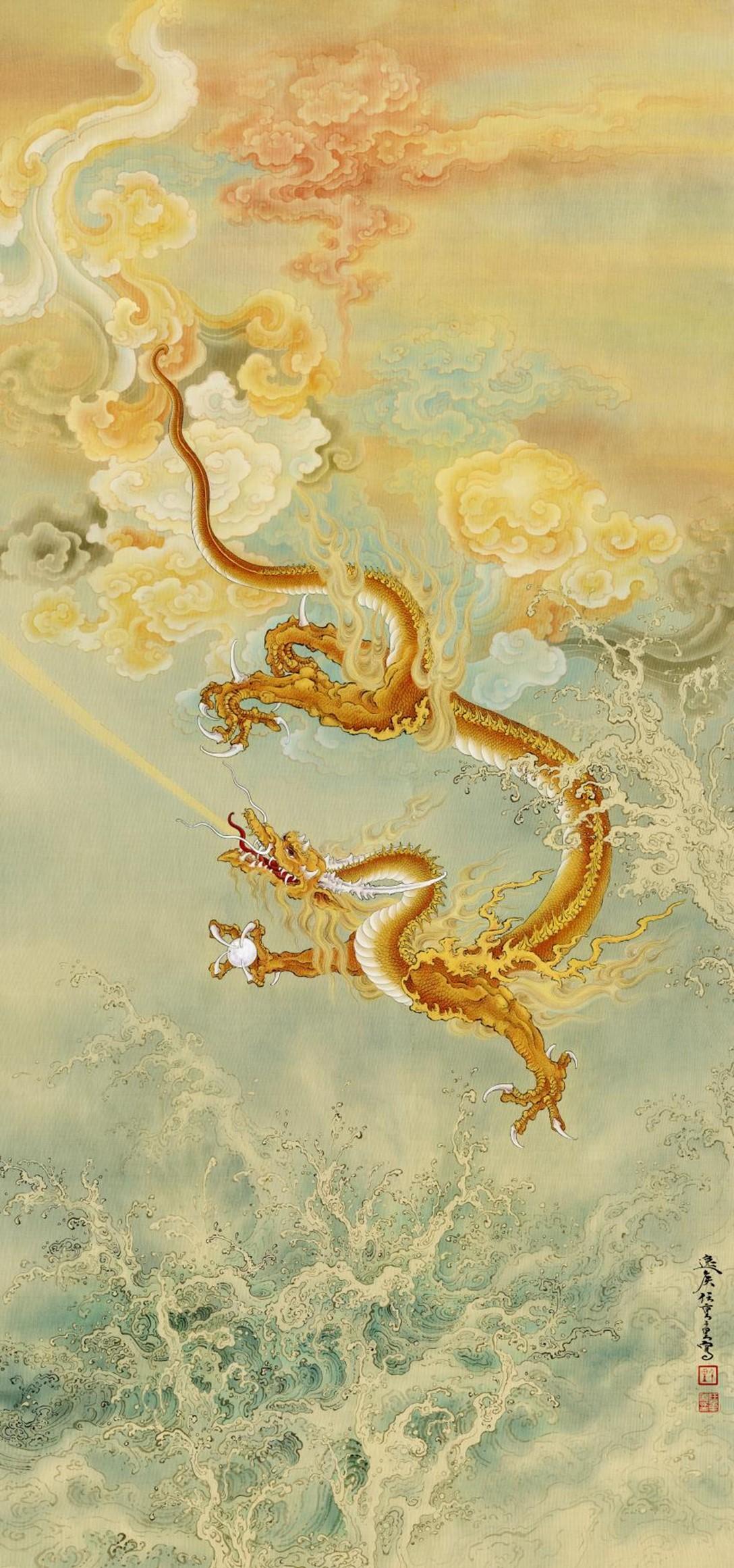
The Dragon of Wisdom and the Eight Winds
Long after Guan Yu had laid down his weapons of conquest and vowed to protect the Buddha’s Dharma under the guidance of Skanda Bodhisattva, there came a season of great peace.
The monasteries flourished. Bells echoed through the mountains each dawn, monks chanted the sutras beneath ancient pines, and countless pilgrims climbed the winding paths seeking refuge in the Buddha, the Dharma, and the Sangha.
Yet the wise knew that peace in the world did not always mean peace in the heart.
Far beyond the highest clouds lived an ancient dragon known as the Dragon of Wisdom. Unlike dragons that guarded jewels or ruled the storms, this dragon protected a treasure far greater—the wisdom that frees beings from suffering.
For countless ages, he had watched the hearts of gods and humans alike. He knew that the greatest enemies of enlightenment were not demons with swords or monsters with claws, but the invisible forces that stirred the mind itself.
One quiet evening, as Guan Yu finished his meditation before a humble temple, a golden light descended from the heavens.
From within the light emerged the Dragon of Wisdom.
His scales shimmered like polished emeralds, his eyes shone with infinite compassion, and every breath carried the fragrance of lotus blossoms.
Guan Yu respectfully bowed.
“Venerable Dragon, what brings you here?”
The dragon smiled.
“Guan Yu, your courage is known throughout heaven and earth. You have conquered mighty warriors and protected countless temples. But today you must face the battle that every practitioner must eventually fight.”
Guan Yu placed a hand upon the hilt of the Green Dragon Crescent Blade.
“I fear no enemy.”
The dragon gently shook his head.
“This enemy cannot be defeated by steel.”
With one graceful sweep of his tail, eight brilliant streams of wind began circling the mountaintop.
Each glowed with a different color, each carrying its own mysterious power.
“The Buddha taught that these are the Eight Worldly Winds. They blow through every human life. Because beings chase some and flee others, they remain bound to suffering.”
The first wind drifted forward like warm spring air.
It whispered one word.
“Gain.”
In an instant, magnificent palaces rose from the earth.
Golden treasures filled every hall. Noble kings offered Guan Yu priceless jade and silk. Thousands bowed before him, calling him the greatest protector who had ever lived.
For a brief moment, joy arose within his heart.
Then he remembered the Buddha’s teaching.
“Gain has arisen,” he said softly. “It is impermanent. It cannot remain forever.”
The golden palaces dissolved into mist.
The second wind blew cold across the mountain.
“Loss.”
Everything disappeared.
His armor vanished.
The temples crumbled.
The pilgrims no longer remembered his name.
For a moment, sorrow touched his heart.
Then he reflected.
“Loss has arisen. It too is impermanent.”
The sorrow passed like snow melting beneath the morning sun.
The third wind lifted him onto a magnificent throne.
“Status.”
Emperors sought his counsel.
Scholars praised his wisdom.
His name was spoken with reverence throughout every kingdom.
Yet Guan Yu remained seated in quiet mindfulness.
“Honor rises, and honor fades.”
The throne vanished.
The fourth wind darkened the sky.
“Disgrace.”
False accusations spread across the land.
Friends doubted him.
Many who once honored him now turned away.
Still he remained calm.
“Disgrace is also impermanent.”
The shadows disappeared.
The fifth wind became a storm of angry voices.
“Censure.”
People mocked him.
They questioned his intentions.
They criticized every decision he made.
Guan Yu listened without anger.
“Harsh words arise and pass away.”
The voices dissolved into silence.
The sixth wind sang with the sweetness of celestial music.
“Praise.”
Everywhere he walked, people celebrated his virtue.
They declared him wiser than kings and stronger than dragons.
Some even wished to worship him above all others.
Guan Yu lowered his head.
“All goodness comes from following the Buddha’s path. Praise belongs to the Dharma, not to me.”
The songs faded into the breeze.
The seventh wind carried heavenly fragrance.
“Pleasure.”
Beautiful gardens appeared.
Crystal streams flowed beneath flowering trees.
Celestial musicians filled the air with melodies unlike any heard on earth.
Perfect comfort surrounded him.
Guan Yu smiled peacefully.
“Pleasure is pleasant, but it too changes.”
The heavenly paradise vanished like a reflection upon still water.
At last the eighth wind arrived.
It was heavy and cold.
“Pain.”
Old wounds from countless battles returned.
His body ached.
Every breath became difficult.
Each step demanded great effort.
Yet Guan Yu neither resisted nor complained.
He simply observed.
“Pain has arisen. It is conditioned. It will also change.”
Though the pain remained for a time, it no longer ruled his mind.
The Dragon of Wisdom nodded with quiet joy.
“You have seen the Eight Worldly Winds as they truly are.”
Guan Yu looked down into the valley below.
There he saw countless people struggling.
Some rejoiced when they gained wealth.
Others despaired when they lost it.
Some became proud when honored.
Others were crushed by disgrace.
Many smiled when praised.
Many became angry when criticized.
They chased pleasure whenever it appeared.
They fled from pain whenever it arrived.
Their hearts rose and fell like leaves carried by the wind.
“Why do these winds cause so much suffering?” Guan Yu asked.
The dragon answered,
“The Buddha taught that gain and loss, status and disgrace, censure and praise, pleasure and pain come to every person. The difference is not in whether they arise, but in how they are understood.”
“The untrained mind believes these conditions define happiness. It welcomes what it likes and resists what it dislikes. In clinging and resisting, suffering grows without end.”
“But the wise disciple reflects, ‘This has arisen. It is impermanent. It is subject to change.’ Seeing clearly, the heart does not cling to gain or despair over loss. It is not intoxicated by praise nor wounded by blame. It enjoys pleasure without attachment and endures pain without hatred.”
As the dragon spoke, the eight winds slowly merged into a single clear breeze.
The mountain became perfectly still.
Guan Yu closed his eyes.
He saw that gain and loss were like passing clouds.
Status and disgrace were like echoes fading across distant valleys.
Praise and censure were like sounds carried upon the wind.
Pleasure and pain were like waves rising and falling upon the sea.
None endured.
None possessed a lasting self.
None could bind a mind that understood their true nature.
When Guan Yu opened his eyes, the Dragon of Wisdom had transformed into a radiant pearl that shone with brilliant golden light.
The pearl floated gently into Guan Yu’s heart.
From that day forward, those who came before Guan Yu’s image noticed a remarkable serenity upon his face.
Whether the temple was crowded with worshippers or stood empty…
Whether offerings were plentiful or scarce…
Whether people honored him or forgot his name…
His expression remained unchanged.
The monks understood the silent teaching.
A true guardian of the Dharma is protected not merely by strength, but by wisdom.
For the Buddha taught that the Eight Worldly Winds blow through every life.
The ordinary person is carried away by them, rejoicing in gain and despairing in loss, delighting in praise and fearing blame, chasing pleasure and fleeing pain.
But the wise see each experience as it truly is—impermanent, changing, and incapable of providing lasting happiness.
Because they neither cling nor resist, their hearts remain peaceful.
Like a great mountain that is unmoved by the fiercest winds, they abide in wisdom and compassion.
And in that unshakable peace lies the Dragon of Wisdom’s greatest treasure—the freedom that carries one beyond sorrow, beyond fear, beyond becoming, to the Further Shore.
Link: https://wisdomtea.org/2026/07/23/the-dragon-of-wisdom-and-the-eight-winds/

 Wisdom Tea