The Mother Who Returned to the Heavens

The Mother Who Returned to the Heavens

Long ago, in the ancient city of Kapilavatthu, a child was born whose life would one day illuminate the world.

His mother was Queen Māyā, a woman known for her kindness, grace, and purity of heart. For many years she had lived with the quiet wish that her life might bring forth something of great goodness. When the time came for her child to be born, she traveled toward her family’s home, as was the custom of the royal household.

But before she could reach her destination, beneath the shade of flowering trees in the garden at Lumbinī, the child was born.

The newborn prince was Siddhattha.

The earth seemed to become still around him. The wind softened among the trees, and the flowers opened as though welcoming a long-awaited guest. Those who witnessed his birth could not know the path that lay before him. They saw only a beautiful child, born into a royal family.

But destiny had already begun to unfold.

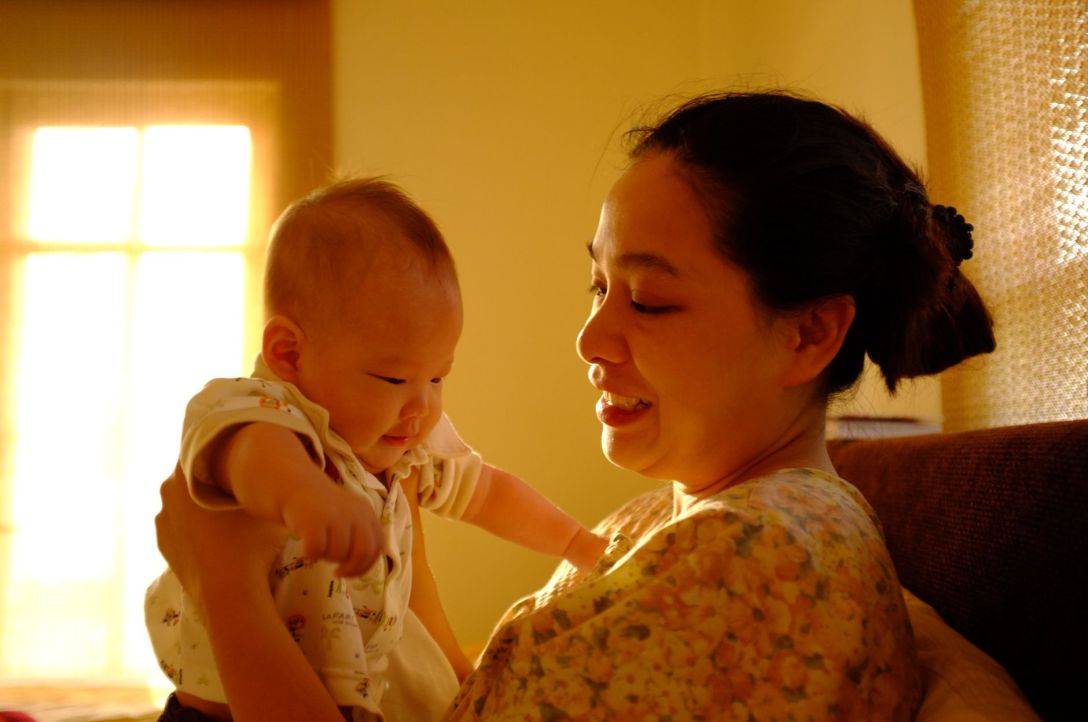
Queen Māyā held her newborn son close.

She could not know that her time in this world was almost finished.

Seven days after Siddhattha’s birth, Queen Māyā passed away.

Her departure was not caused by sorrow, nor was it punishment for anything she had done. It was simply the nature of conditioned existence. Life appears, remains for a time, and then passes away.

After her death, she was reborn among the gods of Tusita, the Contented Heaven.

Years passed.

The little prince grew into a young man. He eventually left the palace, renounced the life of royalty, practiced the path of awakening, and beneath the Bodhi tree realized the truth that had been hidden from ordinary eyes.

He became the Buddha.

One late afternoon, many years later, the Buddha was staying at Jeta’s Grove near Sāvatthī, at the monastery offered by Anāthapiṇḍika.

The sun was beginning to descend, and the golden light of evening stretched across the monastery grounds. The monks had finished their duties, and the quiet of the forest settled gently over the monastery.

Venerable Ānanda had been in seclusion. When he emerged in the late afternoon, he went to see the Buddha.

He approached, bowed respectfully, and sat to one side.

For a while, he remained silent.

Then a thought arose in his mind, and he spoke.

“Venerable sir, it is amazing. It is truly astonishing that your mother lived for such a short time. Only seven days after your birth, she passed away and was reborn among the gods of Tusita.”

The Buddha looked upon Ānanda with calm compassion.

“That is the way it is, Ānanda,” he said. “That is the way it is. The mothers of bodhisattvas are short-lived. Seven days after the birth of a bodhisatta, his mother passes away and is reborn among the Contented gods.”

Ānanda listened quietly.

Though he had heard many teachings about impermanence, there was something especially powerful in these words.

The Buddha’s own mother had died only seven days after bringing him into the world.

Even the mother of a Buddha could not remain forever.

No royal palace could protect her.

No wealth could purchase another day.

No love, however deep, could command life to remain.

The Buddha sat peacefully as the evening light faded around him.

He had known loss from the very beginning of his life.

He had known that the person who gave him life could not remain beside him.

And perhaps this was one of the first great lessons hidden within his own story:

Everything that comes into being must eventually pass away.

Kings lose their kingdoms.

The wealthy lose their possessions.

The young become old.

The healthy become sick.

Those who meet must one day part.

Those who are born must one day die.

Yet people often live as though the world belongs to them forever.

They hold tightly to their families, their possessions, their reputation, their bodies, and their dreams. They say, “This is mine. This will remain. This person will always be here.”

But impermanence makes no such promise.

The flowers bloom in the morning and fall in the evening.

The moon waxes and wanes.

Rivers rise and disappear.

Great mountains are slowly worn away by wind and rain.

Even the stars that appear eternal are travelers through time.

And so the Buddha, reflecting on the passing of his mother and the fate that awaits all beings, spoke these words:

“Those who have come to be,
and those who will come to be,
all will go,
leaving the body behind.

The skillful person,
realizing the loss of all,
should live the holy life
ardently.”

Ānanda lowered his eyes.

He understood that the Buddha was not speaking these words merely as a reminder of death.

He was pointing toward something much deeper.

To understand impermanence is not to become hopeless.

It is to become awake.

When we know that our time is limited, we learn to value the moment we have.

When we know that those we love cannot remain forever, we learn to love without taking them for granted.

When we understand that possessions cannot accompany us beyond death, we become less willing to sacrifice our lives merely to obtain them.

When we see that praise fades, status changes, and the body itself will one day return to dust, we begin searching for something that does not depend upon these fleeting things.

This is why the wise person does not wait until death approaches to begin living wisely.

The wise person begins now.

The Buddha’s mother had lived only seven days after his birth.

Yet in those seven days, she had given the world something beyond measure.

She had brought into the world the one who would awaken to the truth and show countless beings the path beyond suffering.

Her life had been brief.

But a life does not need to be long to be meaningful.

A single candle may burn for only a short time, yet its light can awaken another candle.

A single word of kindness may take only a moment to speak, yet its warmth can remain in another person’s heart for years.

A single life, however brief, can become a cause for immeasurable goodness.

And so, as night descended upon Jeta’s Grove, the Buddha remained seated beneath the quiet trees.

The stars appeared one by one above him.

Ānanda sat nearby, contemplating the mystery of life.

The mother had gone.

The child had become a Buddha.

The years had passed.

And still the truth remained unchanged.

Everything born will pass away.

Everything gathered will separate.

Everything created will dissolve.

But while life remains, there is a precious opportunity.

An opportunity to awaken.

An opportunity to practice compassion.

An opportunity to release hatred.

An opportunity to let go of greed.

An opportunity to stop clinging to what cannot be kept.

An opportunity to walk the path toward freedom.

The Buddha looked toward the darkening sky.

He did not mourn impermanence.

He understood it.

And because he understood it, he was free.

The lesson of Queen Māyā’s brief life was not that life is meaningless because it ends.

It was that life is precious precisely because it does.

Every sunrise is precious because it will set.

Every meeting is precious because one day there will be parting.

Every breath is precious because no breath is promised.

And every moment of this human life is precious because it gives us the opportunity to cultivate wisdom before the final moment arrives.

So the wise do not wait.

They practice while there is still time.

They love while there is still time.

They forgive while there is still time.

They awaken while there is still time.

For those who have come into being will one day go, leaving the body behind.

Knowing this, the wise person does not cling more tightly to the passing world.

Instead, with a peaceful heart and an unwavering mind, they walk the path of awakening—

ardently, compassionately, and without delay.

Link: https://wisdomtea.org/2026/08/27/the-mother-who-returned-to-the-heavens/

The Empty Cup of Praise

The Empty Cup of Praise

Long ago, in the time when the Buddha still walked among the people, there lived a young monk named Revata.

Revata was sincere in his practice. He rose before dawn, meditated beneath the trees, cared for the sick, and spent his afternoons listening to the teachings of the Buddha.

Wherever he went, people admired him.

Some praised his wisdom.

Some praised his kindness.

Some said that his voice was as gentle as rain falling upon a lotus pond.

At first, Revata accepted their words with humility.

When people offered flowers, he bowed and said, “These offerings belong to the Dharma, not to me.”

When villagers praised his teachings, he reminded himself, “The words are not mine. They come from the Buddha’s path.”

But praise is a subtle thing.

It can enter the heart without making a sound.

As the months passed, Revata began to notice that he felt especially happy when people spoke well of him.

When a large crowd gathered for his teachings, he felt important.

When people waited eagerly for his arrival, he felt honored.

And when another monk received greater praise than he did, something uncomfortable arose within him.

He would never admit it aloud, but a small voice inside whispered,

“Why are they praising him instead of me?”

One evening, Revata returned to the monastery troubled by his own thoughts.

He had done nothing wrong.

He had spoken no harsh words.

He had harmed no one.

Yet his heart was unsettled.

The next morning, he went to see the Buddha.

After bowing respectfully, he sat to one side.

The Buddha looked at him and said,

“Revata, your mind seems troubled.”

Revata lowered his eyes.

“Blessed One, I am ashamed to say that I have become attached to praise.”

The Buddha remained silent.

Revata continued.

“When people praise me, I am happy. When they ignore me, I feel disappointed. When another monk receives praise, I sometimes feel jealous. I know these feelings are not worthy of a monk, yet I cannot seem to free myself from them.”

The Buddha looked toward a small clay cup resting beside a water jar.

“Revata, bring me that cup.”

Revata picked it up and placed it before the Buddha.

The Buddha filled the cup with clear water.

“Is it full?”

“Yes, Blessed One.”

The Buddha poured a little more water into it.

The water spilled over the rim and onto the ground.

“What happens when you pour more into a cup that is already full?”

“It overflows.”

The Buddha nodded.

“So it is with the heart.”

He lifted the cup.

“A heart filled with the desire to be praised has no room for wisdom.”

Revata listened carefully.

The Buddha continued.

“When someone praises such a person, the praise enters the heart and strengthens pride.”

“When someone criticizes him, the criticism strikes against that pride and causes pain.”

“Thus, the person becomes dependent upon the words of others.”

The Buddha emptied the cup.

Then he placed it before Revata again.

“Now it is empty.”

Revata nodded.

“Can it receive water?”

“Yes, Blessed One.”

“Can it receive tea?”

“Yes.”

“Can it receive medicine?”

“Yes.”

The Buddha smiled.

“The empty cup can receive whatever is needed.”

“Likewise, the heart that does not cling to praise or fear blame remains open to wisdom.”

Revata gazed at the cup.

The Buddha then asked,

“If a person offers you a gift and you refuse to accept it, to whom does the gift belong?”

“To the person who offered it,” Revata answered.

“So it is with praise.”

The Buddha’s voice was quiet.

“When someone praises you, you do not have to carry their words.”

“When someone blames you, you do not have to carry those words either.”

“Praise belongs to the one who speaks it.”

“Blame belongs to the one who speaks it.”

“Your task is to examine your own mind.”

These words remained in Revata’s heart.

Several weeks later, Revata was invited to teach in a nearby village.

The villagers gathered beneath a great banyan tree.

After his teaching, an elderly woman approached him.

“Venerable Revata,” she said, “your words have brought peace to my heart. I have never heard the Dharma explained so beautifully.”

The people around her nodded in agreement.

Revata smiled.

But this time, he watched his own mind.

He noticed the small movement of pleasure that arose within him.

He did not push it away.

He did not follow it.

He simply observed it.

“It has arisen,” he thought.

“And it will pass.”

The following day, a different group of villagers criticized his teaching.

“Your words are too simple,” one man said.

“Another monk explains these matters much better.”

A few people laughed.

For a moment, Revata felt the old sting in his heart.

But then he remembered the cup.

He breathed quietly.

He observed the feeling.

And he let it pass.

That evening, he returned to the monastery and found the Buddha sitting beneath a tree.

Revata bowed.

The Buddha looked at him.

“Did you receive praise today?”

“Yes, Blessed One.”

“And did you receive blame?”

“Yes.”

“Which one remains?”

Revata thought carefully.

“Neither, Blessed One.”

The Buddha smiled.

“Then your cup is becoming empty.”

Years passed.

Revata became an elder monk, respected for his wisdom and kindness.

But something about him had changed.

When people praised him, he smiled.

When people criticized him, he listened.

If the criticism was true, he corrected himself.

If it was false, he let it go.

He no longer needed the world to tell him who he was.

One day, a young monk approached him.

“Venerable Revata, how did you become so peaceful?”

Revata took him to the monastery courtyard.

There stood the same clay cup that the Buddha had once used.

Its surface was cracked with age.

The young monk picked it up.

“It is very old.”

“Yes,” Revata said.

“And it is empty.”

Revata smiled.

“That is why it is still useful.”

The young monk looked puzzled.

Revata continued.

“If it were filled with yesterday’s tea, there would be no room for today’s water.”

“If it were filled with yesterday’s water, there would be no room for today’s medicine.”

“And if the heart is filled with yesterday’s praise, there is little room for today’s wisdom.”

The young monk remained silent.

Revata placed the cup gently beneath the open sky.

A few drops of rain began to fall.

The cup received them without resistance.

It did not ask whether the rain was sweet or bitter.

It did not ask whether the clouds praised it or criticized it.

It simply received what came.

Then Revata said,

“Learn to be like this cup.”

“Let praise come.”

“Let blame come.”

“Let gain come.”

“Let loss come.”

“Let pleasure come.”

“Let pain come.”

“Do not build your home upon any of them.”

The young monk bowed.

And as the rain continued to fall, Revata looked toward the forest.

The trees stood quietly beneath the clouds.

They did not become taller when praised.

They did not become smaller when criticized.

They simply stood rooted in the earth.

Revata smiled.

At last he understood what the Buddha had taught:

The world will always speak.

Some will praise us.

Some will blame us.

Some will honor us.

Some will ignore us.

But the liberated heart does not rise and fall with every voice.

It remains steady.

Like an empty cup beneath the rain,

it receives what comes,

releases what passes,

and remains ready for the next moment.

And in that emptiness,

there is freedom.

Link: https://wisdomtea.org/2026/08/14/the-empty-cup-of-praise/

The Monk Who Tried to Hold Fire

The Monk Who Tried to Hold Fire

Long ago, in the cool foothills beneath the Himalayas, there stood a monastery surrounded by towering pine trees and clear mountain streams. Travelers often said that the forest itself seemed to breathe with peace, and that even the wind slowed as it passed through its ancient gates.

Among the monks lived a young novice named Tissa.

He was earnest in his practice and sincere in his devotion to the Buddha, yet his heart was not at rest.

Whenever he sat in meditation, memories of the world returned to him like restless birds. He remembered the laughter of festivals, the fragrance of sweet blossoms, the admiration of friends, and the comforts of his former home. Though he had shaved his head and donned the saffron robe, these memories still whispered to him.

“Perhaps,” he wondered, “there is no harm in holding on to just a little.”

Ashamed of these thoughts, Tissa sought out the venerable Sariputta.

“Venerable sir,” he asked, “why do these desires still return? I know they bring suffering, yet part of me still longs for them.”

Sariputta looked kindly at the young monk.

“Come with me.”

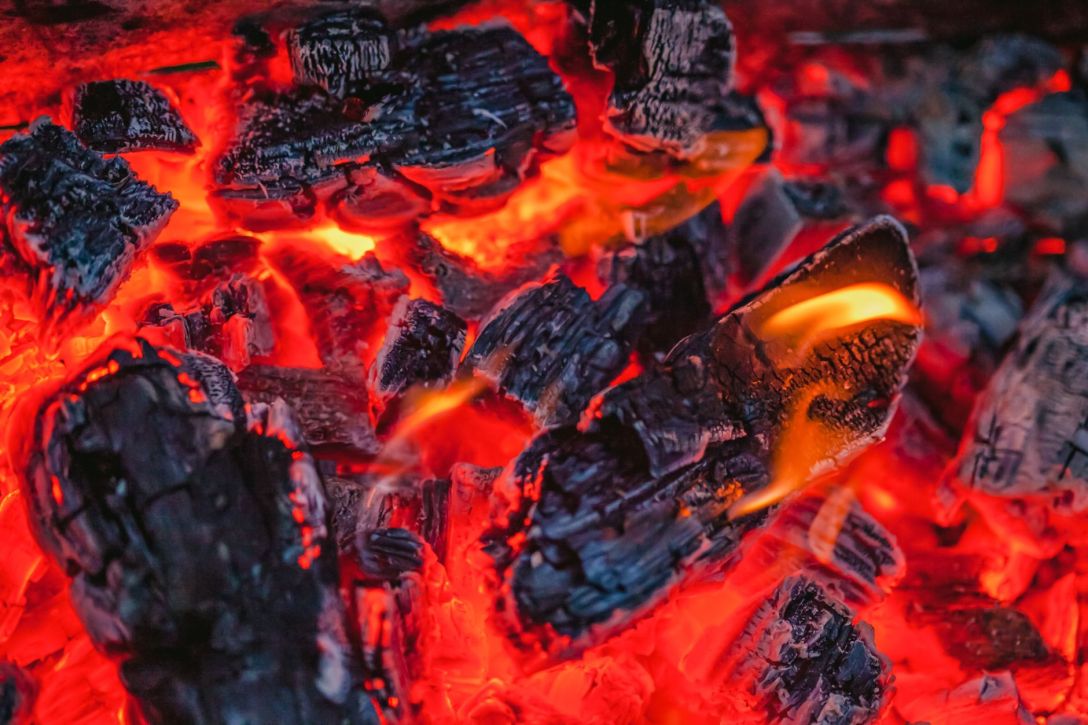
Without another word, he led Tissa deep into the forest until they reached a clearing where villagers had recently burned fallen branches. The fire had died down, but many glowing coals remained, bright as rubies beneath a blanket of gray ash.

Sariputta picked up a long stick and gently stirred the embers.

Their crimson light glowed even brighter.

“Tissa,” he asked, “what do you see?”

“I see fire, venerable sir.”

“Would you hold one of those coals in your hand?”

The novice immediately shook his head.

“No, Venerable. It would burn me.”

Sariputta smiled.

“Suppose the coal were covered in gold.”

“I still would not hold it.”

“What if it promised to make you wealthy?”

“I would refuse.”

“What if everyone around you praised your courage for holding it?”

Tissa laughed softly.

“The fire would still burn.”

Sariputta nodded.

“Exactly.”

He sat beside the dying fire.

“The world teaches us to chase beautiful forms, pleasing sounds, delightful tastes, comforting touch, and endless praise. They often appear harmless, just as these glowing coals appear beautiful in the fading light.”

He paused.

“But craving does not ask whether something is beautiful.”

“It asks only whether we will grasp it.”

The young monk looked again at the embers.

Their glow was strangely inviting.

For a brief moment he understood why a child might reach toward them.

Sariputta continued.

“When the Buddha compared sensual desire to burning charcoal, he was not condemning beauty itself.”

“The mountains are beautiful.”

“The moon is beautiful.”

“A lotus blossom is beautiful.”

“Beauty is not the danger.”

“The danger is believing that possessing beauty will satisfy a thirst that has no end.”

As evening approached, the mountain air grew colder.

Sariputta reached toward one glowing coal with the stick and rolled it into the open.

“What happens if no one touches it?”

“It slowly cools,” Tissa answered.

“And what happens if someone grasps it tightly?”

“They suffer.”

“Who caused the suffering?”

“The one who grasped it.”

Sariputta nodded again.

“The fire did not chase anyone.”

“They reached for it.”

Those words settled into Tissa’s heart more deeply than any sermon.

That night, as he sat beneath a pine tree, memories arose once again.

He remembered music.

He remembered delicious food.

He remembered praise from those who admired him before he became a monk.

For the first time, he did not wrestle with the memories.

He simply watched them appear.

He smiled gently.

“Like glowing coals,” he whispered.

Without grasping them, the memories faded on their own.

Day after day he practiced in this way.

When pleasant thoughts appeared, he recognized them without chasing them.

When unpleasant thoughts appeared, he no longer feared them.

Little by little, the fires that had once ruled his heart began to lose their fuel.

Months later, the Buddha visited the monastery.

The monks gathered beneath the shade of towering sal trees to hear him teach.

Looking upon the assembly, the Buddha said,

“Imagine a traveler crossing a desert who mistakes burning charcoal for precious jewels.”

“He fills both hands with them, believing himself fortunate.”

“But with every step, his pain increases.”

“The wise traveler does not curse the charcoal.”

“He simply opens his hands.”

Silence filled the grove.

Even the birds ceased their songs.

The Buddha continued,

“So it is with craving.”

“It is not the world that binds us.”

“It is our grasping.”

“When grasping ends, freedom begins.”

Tissa bowed until his forehead touched the earth.

At last he understood.

The path was not about rejecting the world with anger.

It was about meeting the world with wisdom.

To see beauty without clinging.

To experience pleasure without becoming its servant.

To welcome joy without fearing its passing.

Years later, travelers came from distant kingdoms seeking guidance from the monk who had become known for his calm and gentle smile.

Many asked him the secret of his peace.

He would simply lead them to the monastery’s old fire pit, where only cool gray ashes remained.

Pointing to the silent hearth, he would say,

“Once I believed peace could be found by finding the perfect fire.”

Then he smiled.

“I discovered that peace began the moment I stopped trying to hold it.”

And those who truly understood his words found themselves loosening the grip they had long held on the burning coals of their own desires.

For the greatest fire is not the one that burns in wood.

It is the one that burns within the heart.

And the greatest victory is not extinguishing the fire of the world—

but learning, through wisdom, never to grasp it.

Link: https://wisdomtea.org/2026/08/06/the-monk-who-tried-to-hold-fire/