The Monk Who Tried to Hold Fire
Long ago, in the cool foothills beneath the Himalayas, there stood a monastery surrounded by towering pine trees and clear mountain streams. Travelers often said that the forest itself seemed to breathe with peace, and that even the wind slowed as it passed through its ancient gates.
Among the monks lived a young novice named Tissa.
He was earnest in his practice and sincere in his devotion to the Buddha, yet his heart was not at rest.
Whenever he sat in meditation, memories of the world returned to him like restless birds. He remembered the laughter of festivals, the fragrance of sweet blossoms, the admiration of friends, and the comforts of his former home. Though he had shaved his head and donned the saffron robe, these memories still whispered to him.
“Perhaps,” he wondered, “there is no harm in holding on to just a little.”
Ashamed of these thoughts, Tissa sought out the venerable Sariputta.
“Venerable sir,” he asked, “why do these desires still return? I know they bring suffering, yet part of me still longs for them.”
Sariputta looked kindly at the young monk.
“Come with me.”
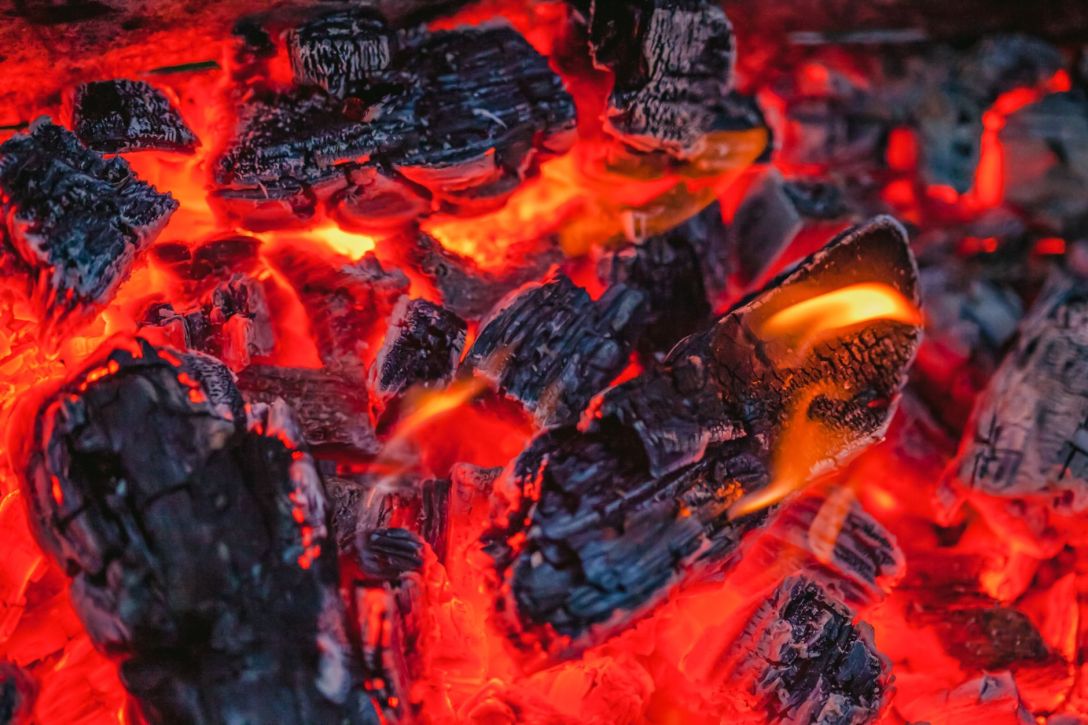
Without another word, he led Tissa deep into the forest until they reached a clearing where villagers had recently burned fallen branches. The fire had died down, but many glowing coals remained, bright as rubies beneath a blanket of gray ash.
Sariputta picked up a long stick and gently stirred the embers.
Their crimson light glowed even brighter.
“Tissa,” he asked, “what do you see?”
“I see fire, venerable sir.”
“Would you hold one of those coals in your hand?”
The novice immediately shook his head.
“No, Venerable. It would burn me.”
Sariputta smiled.
“Suppose the coal were covered in gold.”
“I still would not hold it.”
“What if it promised to make you wealthy?”
“I would refuse.”
“What if everyone around you praised your courage for holding it?”
Tissa laughed softly.
“The fire would still burn.”
Sariputta nodded.
“Exactly.”
He sat beside the dying fire.
“The world teaches us to chase beautiful forms, pleasing sounds, delightful tastes, comforting touch, and endless praise. They often appear harmless, just as these glowing coals appear beautiful in the fading light.”
He paused.
“But craving does not ask whether something is beautiful.”
“It asks only whether we will grasp it.”
The young monk looked again at the embers.
Their glow was strangely inviting.
For a brief moment he understood why a child might reach toward them.
Sariputta continued.
“When the Buddha compared sensual desire to burning charcoal, he was not condemning beauty itself.”
“The mountains are beautiful.”
“The moon is beautiful.”
“A lotus blossom is beautiful.”
“Beauty is not the danger.”
“The danger is believing that possessing beauty will satisfy a thirst that has no end.”
As evening approached, the mountain air grew colder.
Sariputta reached toward one glowing coal with the stick and rolled it into the open.
“What happens if no one touches it?”
“It slowly cools,” Tissa answered.
“And what happens if someone grasps it tightly?”
“They suffer.”
“Who caused the suffering?”
“The one who grasped it.”
Sariputta nodded again.
“The fire did not chase anyone.”
“They reached for it.”
Those words settled into Tissa’s heart more deeply than any sermon.
That night, as he sat beneath a pine tree, memories arose once again.
He remembered music.
He remembered delicious food.
He remembered praise from those who admired him before he became a monk.
For the first time, he did not wrestle with the memories.
He simply watched them appear.
He smiled gently.
“Like glowing coals,” he whispered.
Without grasping them, the memories faded on their own.
Day after day he practiced in this way.
When pleasant thoughts appeared, he recognized them without chasing them.
When unpleasant thoughts appeared, he no longer feared them.
Little by little, the fires that had once ruled his heart began to lose their fuel.
Months later, the Buddha visited the monastery.
The monks gathered beneath the shade of towering sal trees to hear him teach.
Looking upon the assembly, the Buddha said,
“Imagine a traveler crossing a desert who mistakes burning charcoal for precious jewels.”
“He fills both hands with them, believing himself fortunate.”
“But with every step, his pain increases.”
“The wise traveler does not curse the charcoal.”
“He simply opens his hands.”
Silence filled the grove.
Even the birds ceased their songs.
The Buddha continued,
“So it is with craving.”
“It is not the world that binds us.”
“It is our grasping.”
“When grasping ends, freedom begins.”
Tissa bowed until his forehead touched the earth.
At last he understood.
The path was not about rejecting the world with anger.
It was about meeting the world with wisdom.
To see beauty without clinging.
To experience pleasure without becoming its servant.
To welcome joy without fearing its passing.
Years later, travelers came from distant kingdoms seeking guidance from the monk who had become known for his calm and gentle smile.
Many asked him the secret of his peace.
He would simply lead them to the monastery’s old fire pit, where only cool gray ashes remained.
Pointing to the silent hearth, he would say,
“Once I believed peace could be found by finding the perfect fire.”
Then he smiled.
“I discovered that peace began the moment I stopped trying to hold it.”
And those who truly understood his words found themselves loosening the grip they had long held on the burning coals of their own desires.
For the greatest fire is not the one that burns in wood.
It is the one that burns within the heart.
And the greatest victory is not extinguishing the fire of the world—
but learning, through wisdom, never to grasp it.
Link: https://wisdomtea.org/2026/08/06/the-monk-who-tried-to-hold-fire/
 Wisdom Tea