Your Original Nature

Your Original Nature

You are only able to leave the cycle of reincarnation when you can thoroughly understand the original nature of mind, realize the truth of emptiness and comprehend the nonexistence of a real self in human beings. It is futile to cultivate concentration if you do not know or have a concept of your original nature. If you only seek realization and do not have this understanding, you will not even know what it is you are supposed to realize. You will simply enter into a state of mental confusion. Even if, upon reflection and introspection, your original nature suddenly manifests before you, you will still not recognize it. However, it is through the practice of concentration that you can thoroughly understand the original nature of mind. To realize the truth concerning your original nature, you must go from understanding to vision, from vision to penetration, from penetration to realization. You must have a working model or concept about what you are looking for to proceed. Knowing the principles or concepts involved, which is the starting point, is not the same thing as realizing your original nature. Your original nature is the pure dharma body of all sentient beings within the three spheres of existence (triloka).  It is united with the universe. It has no form or shape, no physical body or appearance. All living beings possess this original nature equally. It is the same as the dharma body of the Tathagata or dharmakaya.  It does not come and does not go. It is not too much nor is it lacking. It is immaculate (not clean or not dirty). The dharma body realized by living beings has just not reached the level of perfect realization attained by the Buddhas, but it is not different. This concept is sometimes called Buddha-nature, dharmakaya, wonderful prajna wisdom, etc. as well as original nature. To understand principles regarding the emptiness of one’s original nature and what wonderful prajna wisdom is, one should study the 600 volumes of the Great Prajna Sutras by reading Expounding the Absolute Truth through the Heart Sutra by H.H. Dorje Chang Buddha III.

Link: https://wisdomtea.org/2023/02/16/your-original-nature/

What Is Cultivation?

THE DHARMA OF CULTIVATION TRANSMITTED BY H.H. DORJE CHANG BUDDHA III
An oral discourse on the dharma given by
His Holiness Dorje Chang Buddha III to rinpoches and other disciples:

Today you, who are a rinpoche, respectfully requested a discourse on the dharma relating to the question “What is cultivation?” This is a very fundamental lesson; indeed, the first lesson. Nonetheless, this is an important matter that many cultivators, including those who have practiced cultivation over many years, do not understand and are confused about. It is difficult to incarnate as a human being. It is even more difficult to incarnate as a human being with the opportunity to encounter the true Buddha-dharma. Thus, today I will enlighten everyone on dharma relating to the question “What is cultivation?”

The essence of learning Buddhism lies with carrying out what we learn in our cultivation. We use good and bad causes and conditions as objects of cognition. Therefore, we must first understand what cultivation is. Cultivation is cultivating the increase of good karma and cultivating the avoidance of bad karma. It is increasing good karmic conditions, planting good causes, and reaping good effects. It is avoiding the increase of bad karmic conditions, not planting bad causes, and avoiding the reaping of bad effects. But the term cultivation has a rather broad meaning. We must first understand what cultivation is.

There must be that upon which the cultivator can rely. Without that which can be relied upon, your cultivation can easily become erroneous, non-Buddhist cultivation. For example, the cultivation of demonism entails cultivating the behavior of demons. The cultivation of Buddhism entails cultivating the behavior of Buddhas. Therefore, there must be that upon which the cultivator can rely. There must be models that the cultivator can reflect and rely upon.

All other religions espouse eliminating evil, promoting good, restraining selfishness, and benefiting others. The cultivator cannot rely upon this alone in his cultivation without understanding the purpose of Buddhism. This alone is not the practice of true Buddhism. Thus, in our cultivation, that which we rely upon is the Buddha. The perfect enlightenment of the Buddha is the model for our cultivation. We use our three karmas of bodily actions, speech, and thoughts to emulate everything about the Buddha. We thereby keep ourselves far away from all impure karma based on delusion and all evil conduct. We thereby constantly stay far away from that which is evil or bad. By not being involved with that which is evil or bad, our three karmas do not increase bad causes. Rather, we must carry out all good karma. Even one kind thought is something we should increase and never decrease. We should increase our good karmic affinity, good causes, and good karma every day. Simply put, we must always avoid that which is evil or bad and accumulate that which is good.

Why can it be said that we must stay far away from evil or bad karma but it cannot be said that we must eliminate evil or bad karma? Within the truth of Buddhism, there is the doctrine that the law of cause and effect can never be denied. Cause and effect cannot be eliminated. To say that it can is to take a nihilistic point of view. Hence, we can only build a wall of good karma, which is like building a retaining wall. This wall of good karma has the effect of blocking us from our evil karma.

Thus, only through learning from the Buddha, cultivating the conduct of the Buddha, and ultimately becoming a Buddha can we thoroughly liberate ourselves from the karma (cause and effect) that binds us to the cycle of reincarnation. Cause and effect still exists when one becomes a Buddha. However, cause and effect can not affect a Buddha. For example, the Buddha saw mountains of swords and seas of fire in the hell realm. The mountains of swords and seas of fire continued to exist as extremely painful means by which living beings undergo karmic retribution. When the Buddha suddenly jumped into the mountains of swords and seas of fire in order to undergo suffering on behalf of other living beings, the mountains and seas immediately transformed into a lotus pond of nectar. They transformed into a wonderful state. With respect to a Buddha, all bad or evil karmic conditions turn into the manifestation of good karma. Not only is there no suffering, there is instead a manifestation of great happiness.

Cultivation is to leave the cycle of reincarnation, liberate yourself from all suffering, become a holy being, and persevere until you become a Buddha. To leave the cycle of reincarnation, we must establish a mind of renunciation (a mind determined to leave the cycle of reincarnation), a mind of firm belief, a mind with immovable vows, a mind of diligence, and mahayana bodhicitta. All real states emanating from these minds rely upon and are based upon right view. Without right view, all states of mind will be inverted and confused. In other words, you will not experience any beneficial effects from cultivation that lacks right view.

For example, if you want to practice bodhicitta first, you will not be successful. It will result in an empty and illusory bodhicitta, a deluded and false state of mind. That is because bodhicitta must be based upon a mind of renunciation. That is, you must have a mind that is truly determined to attain liberation, to attain accomplishment in the dharma, and leave all of the sufferings of reincarnation. You must deeply understand that the cycle of reincarnation is indescribably painful. Not only are you yourself suffering, but all living beings in the six realms of reincarnation, each of whom we regard as our father or mother, are likewise suffering in the painful state of impermanence. Only if you want to extricate yourself from suffering do you truly cultivate yourself. Only then do you engage in Bodhisattva conduct that benefits yourself and others. Only then can bodhicitta arise.

However, it would be a mistake if you begin by cultivating a mind of renunciation. That would not accord with the proper order of cultivation. That would result in a non-substantive, theoretical type of desire to leave reincarnation and a self-deluded and self-confused state of mind. In such case, you would not be able to establish the true state of mind that is determined to leave the cycle of reincarnation.

Thus, if you want to have this true state of mind that is determined to leave the cycle of reincarnation, you must first understand impermanence. The second step is to have a mind of firm belief. You must firmly believe in the sufferings of reincarnation, which has as its source impermanence. Only with such a mind of firm belief will you fear the sufferings caused by impermanence and successfully attain a state of mind that truly fears impermanence. Having attained a state of mind that truly fears impermanence, your state of mind that is determined to leave the cycle of reincarnation will grow stronger day by day. Naturally, your state of mind that is determined to leave the cycle of reincarnation will enter a real state that truly fears impermanence. If living beings do not understand that all conditional dharmas in the universe are impermanent, if they do not understand the sufferings connected with reincarnation and impermanence, then they cannot establish a firm mind that gives rise to thoughts of leaving the cycle of reincarnation. If you have never thought about leaving the cycle of reincarnation, you will not cultivate at all, and you will not want to learn Buddhism. Those who do not learn Buddhism have no desire to leave the cycle of reincarnation. How could one who does not learn Buddhism have a mind determined to leave the cycle of reincarnation? Thus, you cannot first cultivate a mind determined to leave the cycle of reincarnation. As for the first step, you will not enter Buddhism without having a mind of impermanence. [Truly giving rise to feelings of fear of impermanence and truly giving rise to a state that fears impermanence ]. Even  if you become a Buddhist, you will not be able to attain a deep level of  correct cultivation.

To understand what cultivation is, you must understand the eight fundamental right views relating to learning Buddhism and cultivation.

The first one is a mind of impermanence The second is a mind with firm belief. The third is a mind of renunciation (a mind determined to leave the cycle of reincarnation). The fourth is a mind with true vows. The fifth is a mind of diligence. The sixth is the precepts. The seventh is dhyana and samadhi. The eighth is bodhicitta. Recognizing these eight dharmas and carrying them out with right views is correct practice of Buddha-dharma. These eight fundamental right views, which are indispensable for cultivators, must not be taken out of order. All the fruits resulting from a mind of impermanence are causes of cultivation. All of the fruits resulting from a mind with firm belief are causes of steadfastness that does not change. All of the fruits resulting from a mind of renunciation are causes of liberation. All of the fruits resulting from a mind with true vows are causes of action. All of the fruits resulting from a mind of diligence are causes of persistent advancement. All of the fruits resulting from  the precepts are causes of correct direction of cultivation. All of the fruits resulting from dhyana and samadhi are causes of wisdom. All of the fruits resulting from bodhicitta are causes leading to becoming a Bodhisattva.

These eight fundamental right views are the foundation of cultivation, liberation, and accomplishment in the dharma. If the root is not right, cultivation will not be established. Therefore, cultivation cannot be disorderly. Thus, practicing the eight fundamentals of cultivation must be guided by right view. That is, guided by right understanding and right view, you correctly develop your cultivation by going through these eight fundamentals in their proper order. That is cultivation. In your cultivation, you must constantly put into practice bodhicitta. That is because bodhicitta is the foundation for becoming a Bodhisattva.

According to the Buddha’s exposition of the dharma, the true meaning of bodhicitta is that it is the cause that will inevitably lead to becoming a Bodhisattva. Whoever walks the path of bodhi will ultimately reap the fruit of bodhi. The broad meaning of bodhicitta includes all of the mahayana dharma having to do with saving living beings out of great compassion and the causes leading to attaining the stages of enlightenment of a Bodhisattva.

However, because of the insufficient good fortune of living beings, some of the originally complete meaning of the Buddha-dharma has been lost as it was handed down from generation to generation. Especially in this current Dharma-Ending Age in which the karma of living beings in the three spheres (worlds) of the universe is like a sea of surging waves, it is as difficult for living beings to encounter the true Buddha-dharma as it is for a blind turtle swimming in the ocean to stick its neck through a tiny a knothole in a floating and bobbing board. Thus, it is now extremely difficult to obtain the perfect Buddha-dharma. As a result, the meaning of bodhi has shrunk. It has gradually shrunk from its broad meaning to the narrow meaning of bodhicitta dharma.

There are two types of bodhicitta. There is bodhicitta in the holy sense and bodhicitta in the worldly sense. Bodhicitta in the worldly sense can be roughly divided into “vow bodhicitta” and “action bodhicitta.” The practice of vow and action bodhicitta includes a myriad of dharma methods, such as those relating to sentient beings, nonsentient things, the four great elements, one’s own six elements, as well as breathing, the ear base, the eye base and other bases, inner and outer mandalas, and ritualistic chanting. Whether it is bodhicitta in the worldly sense or the holy sense, if you are guided by the two sets of seven branches of bodhicitta, that is the highest, most excellent, and most complete form of bodhicitta.

Each living being in the six realms of reincarnation within the three spheres of existence has the right to cultivate bodhicitta. However, most living beings do not have the karmic affinity. Thus, they practice a fragmented and shrunken version of bodhicitta dharma. As a result, they frequently harbor the misconceptions that only those with an enlightened mind can practice bodhicitta or bodhicitta is the dharmakaya state of enlightenment. Of course, we do not deny these are existing parts of bodhicitta. However, these conceptions omit the practice of bodhicitta dharma by those living beings who do not have an enlightened mind. More importantly, bodhicitta is not dependant upon an enlightened mind or an unenlightened mind. Bodhicitta is the power of vows made out of great compassion by those living beings who learn Buddhism in any of the six realms of reincarnation within the three spheres of the universe as well as the power of vows made out of great compassion by all holy beings in the dharma realm. Bodhicitta is actual conduct based upon great compassion that aids living beings in becoming Buddhas or Bodhisattvas. It is the mind of love in the holy sense that the enlightened and the unenlightened or the holy and the ordinary both have.

With respect to bodhicitta, those who are enlightened use their enlightened state of virtue and realization, correct practices, and propagation of the true dharma to teach and enlighten living beings so that those living beings will become Buddhas. With respect to bodhicitta, those who are not yet enlightened vow out of great compassion that living beings and themeslves shall together attain accomplishment in the dharma and liberation. They help other people enter the path of the true dharma of the Buddha, vowing that they will become Bodhisattvas and Buddhas. To such persons, bodhicitta dharma is the virtue of aiding others to become accomplished in the dharma. Because they benefit others, they receive merit. They thereby increase the causes leading to their becoming Bodhisattvas.

The manifestation of bodhicitta is expressed through actual practice involving the three karmas, which practice reflects great compassion. Any true cultivator, no matter whether he or she is ordinary or holy, has the right to arouse bodhicitta and should arouse bodhicitta. That is because bodhicitta is not an enlightened mind possessed only by holy people. Rather, it is conduct based upon great compassion. It is the planting of causes based upon a vow that oneself and others become enlightened. Bodhicitta does not only include the ten good characteristics, the four limitless states of mind (the four immeasurables), the six paramitas (perfections), and the four all-embracing Bodhisattva virtues (four methods that Bodhisattvas employ to approach and save living beings). Rather, it includes the entire Tripitaka, the esoteric scriptures, and all dharma transmitted orally, through the ears, or telepathically that engenders conduct that is greatly compassionate, is in accord with the dharma, and benefits and saves living beings.

Thus, the bodhicitta is ultimate truth in a broad sense. With respect to the Buddha, bodhicitta is the three bodies, the perfect wisdom that is summarized in four truths, and the mind of anuttara-samyak-sambodhi. With respect to a Bodhisattva, bodhicitta is propagating the dharma and benefiting and saving living beings out of great compassion. With respect to an enlightened being, bodhicitta is not being attached to the characteristics or distinctive features of things and not engaging in intellectual frivolity or conceptual elaborations. This is his or her original nature. It is Buddha-nature and usages arising from Buddha-nature. It is the ultimate truth of all conditional dharmas. With respect to an ordinary person, bodhicitta is compassionately helping other people and vowing that they learn Buddhism and attain liberation.

You must first have the perspective of impermanence before you can arouse bodhicitta. You must understand the impermanence and suffering relating to yourself and other living beings revolving in the cycle of reincarnation and thereby generate a perspective of awareness, a mind of impermanence. You will then vow to leave the cycle of reincarnation. As a result, you will then establish a mind that is determined to leave the cycle of reincarnation. You will say, “I resolve to leave.” You also want all living beings in the six realms, who are like your father or mother, to leave. You understand that the cycle of reincarnation is like a bitter sea, is difficult to endure, and is extremely painful. Because of this resolute perspective, you will generate a strong and pressing fear. You will constantly seek to be liberated at this very moment. But you understand that only by having the conduct of a Bodhisattva can you quickly attain liberation from the cycle of reincarnation. You thus vow to become a Bodhisattva. You seek to quickly enlighten yourself and others. Naturally, you then generate a mind of great compassion. As a result, the seeds of enlightenment are disseminated. The arousal of bodhicitta is based upon a mind of great compassion. Thus the Buddha said, “The water of great compassion irrigates the seeds of bodhi. As a result, the bodhi trees will have lush foliage and the fruits will be plentiful.” Hence, bodhicitta will naturally be established. Bodhicitta is the cause leading to becoming a mahayana Bodhisattva. You will attain pure and correct views and understanding of cultivation. Based on athese right views, you should deeply enter the emptiness bhuta-tathata (true suchness) and the practice of the state of emtiness. At this time, you transform worldly bodhicitta into a state in which you realize that “the three entities are inherently empty.” That is you transform everything in existence into bodhicitta in a holy sense. With bodhicitta, you cultivate the conduct of bodhi and enter the stage of a Bodhisattva.

Cultivation of bodhicitta requires implementation.  Cultivation of bodhicitta is not a matter of just ritualistic chanting, making empty vows, or engaging in visualization,   In the cultivation of bodhicitta, the most important aspect is deeply pondering the following concerning yourself: “my body is impermanent, is changing every nanosecond, and is moving toward decline, old age, and death. I compare why my face has aged over a ten-year period, over a forty-year period, or over a seventy-year period. The degree of agedness of my skin has changed. I will soon enter old age, sickness, and death and continue revolving in the cycle of reincarnation where I will experience suffering. I also contemplate that joyfully innocent, newborn, fresh, and lively look I had when I was a small child. I contemplate how I no longer have that childlike appearance. My face and skin have aged. My energy has declined. I often fall ill. That quality of youth is gone. The power of impermanence will end my life. My relatives and old friends will all die one after another. Like a dream, it will soon be all over. My mind generates great fear. With a resolute mind, I act in accord with the precepts, practice in accord with the dharma, and enter bodhicitta by practicing the two sets of seven branch bodhicitta dharma: the Dharma of Great Compassion for All Living Beings as My Mother Bodhicitta and the Dharma of Bodhisattva Correspondence Bodhicitta.”

When practicing the Great Compassion for My Mother Bodhicitta, you arouse great compassion and cultivate the following: understanding who my mother is, bearing in mind kindness, repaying kindness, loving-kindness, compassion, renouncing greed, and eliminating attachment. When practicing this cultivation, everyone should carry out the following for themselves:

Understanding who my mother is: I deeply understand that all living beings in the six realms of reincarnation within the three spheres of the universe have been since beginning-less time my fathers and mothers in the revolving cycle of reincarnation.

Bearing in mind kindness: I should deeply bear in mind that all of my parents (i.e. all living beings) that now exist in the cycle of reincarnation have since beginning-less time given birth to me, reared me, loved me, and became tired and ill for me. Their kindness to me is as heavy as a mountain. I should bear in mind their kindness. I will then regard the sufferings of my parents (i.e. all living beings) as my own suffering.

Repaying kindness: I understand that my parents (i.e. all living beings) have offered me everything. They are now revolving and wandering in the six realms of reincarnation experiencing endless suffering. I resolve to take action to enlighten myself and others, to save and liberate my parents (i.e. all living beings) in order to repay their kindness to me.

Loving-kindness: At all times, through the actions of my three karmas, I am loving and kind toward all living beings, who have been my parents. I wish them a long life without illness, good fortune, good luck, and a happy life.

Compassion: Day and night, I constantly beseech all of the Buddhas and Bodhisattvas to empower all of my parents (i.e. all living beings) so that they may extricate themselves from all forms of suffering, encounter and practice the Buddha-dharma, and liberate themselves from the sufferings of cyclic existence.

Renouncing greed: I hold no attachment in my mind to anything that I do to benefit any living beings, who have been my parents. I cultivate non-attachment to all of my good actions of body, speech, and mind. Thus, my good actions become natural and spontaneous, as my original nature is good. I do not do good purposefully. I do good and then forget about it.

Eliminating attachment: In my practice, as I cultivate all forms of goodness and benefit my parents (i.e. all living beings), I should not become attached to any dharma. I should eliminate all attachment to self. Realizing state of emptiness, I am aware and I experience wonderful happiness that comes from samadhi. While practicing the dharma, I am not attached to the dharma. I do not intentionally get rid of deluded thoughts. I do not intentionally seek the truth. Not coming and not going, blissful, clear, and without thought, I am as calm as tranquil water. Everything, including myself, is inherently empty.

The supporting conditions for putting bodhicitta into practice must be based upon right view. We contribute to living beings in their performance of good deeds, but we do not contribute or help living beings in their performance of bad deeds. We rectify their behavior so that they perform good deeds. Thus, we do all good deeds that benefit living beings. We plant all good causes that lead to benefiting living beings. In that way, we carry out the seven branches of the Dharma of Bodhisattva Correspondence Bodhicitta. We help living beings in their performing good deeds and help increase their good causes. We help living beings reduce their accumulation of bad karma and help them stay far away from bad causes. The seven branches of the Dharma of Bodhisattva Correspondence Bodhicitta are as follows. The first branch is “self and others are equal” bodhicitta. The second branch is “exchange between self and others” bodhicitta. The third branch is “benefit others before self” bodhicitta. The fourth branch is “dedicating merit” bodhicitta. The fifth branch is “fearlessly protect the dharma” bodhicitta. The sixth branch is “effectively lead others to correct practice” bodhicitta. The seventh branch is “renouncing self to help others build good karma” bodhicitta. When practicing this cultivation, everyone should carry out the following themselves:

Self and others are equal bodhicitta: When there is a conflict of interest between myself and others, I will rid myself of hatred, antipathy, greed, and arrogant, disparaging mentality. I must not emphasize benefiting myself. I should treat myself and others equally.

Exchange between self and others bodhicitta: I want to bear the sufferings of all living beings. I give to others all of my happiness and good luck so that they may leave suffering and obtain happiness.

Benefit others before self bodhicitta: When other living beings and I are suffering, I want others to extricate themselves from suffering before I do. When other living beings and I are happy, I want others to be happier than I am.

Dedicating merit bodhicitta: I dedicate to all living beings all of the merit and accomplishments from my cultivation in the hope that they will leave suffering and attain liberation.

Fearlessly protect the dharma bodhicitta: When any evil spirits or demons harm the Buddha-dharma, lead living beings to break the precepts, and harm living beings resulting in the suffering of living beings, I will maintain right view, will not fear the evil powers of those demons, and will step forward to protect the Buddha-dharma and the wisdom whereby living beings will become liberated.

Effectively lead others to correct practice bodhicitta: Because living beings are burdened with the power of karma that has accumulated since beginning-less time, because they are ignorant and have created all kinds of negative karma, there will be times when they will not repent or change their ways despite my constructive exhortations. In such case, I will use powerful rectifying dharma methods to lead such people onto the path of true dharma and beneficial and good conduct.

Renouncing myself to help others build good karma bodhicitta: When the realization of other people is higher than mine or their ability to save living beings is better than mine, I will yield to other people so that living beings will be benefited more. At such time, without any hesitation, I yield to them. This furthers the great undertaking of goodness.

Bodhicitta, as part of cultivation, is the source of accomplishment in the dharma and is very important. I will now give an example involving a rinpoche and a dharma master. This rinpoche cultivated himself for more than thirty years. He received more than one thousand esoteric dharma initiations. He mainly practiced the Great Perfection Dharma (Dzogchen) of the Nyingma sect. He was able to expound the Buddha-dharma of the Tripitaka very well. However, he did not have any real dharma powers. The other person, a dharma master, had been a monk for more than twenty years. He strictly abided by the precepts and rules of discipline. He was well versed in the sutras, the vinaya (precepts and rules of discipline), and the commentaries. He practiced important and great dharmas of the Tibetan esoteric school of Buddhism and was the abbot of a famous temple. Like the rinpoche, he was famous in expounding the dharma. However, he also was unable to manifest any actual realization.

I told them that no matter what great dharma of the esoteric school they may practice, it is all like building a tower on quicksand. Such a tower could not be built. I told them that even if they temporarily had some success in their practice, it would quickly vanish. I had them practice letting go of their own knowledge or habituated way of knowing because these are hindrances. I had them practice “What Is Cultivation?” After they practiced such dharma for about eight months, I had them add to their practice the Great Perfection (Dzogchen) and other dharmas. A miracle then happened. During a test of his progress, the rinpoche applied the Vajra Fist Powerful Thunder True Dharma Palm and manifested great powers. Actual realization was shown. However, the dharma master did not manifest any powers. He continued to practice this cultivation dharma. Under my careful pointing out of his shortcomings, he finally understood the importance of true cultivation and how true cultivation requires devoting time and energy on the actual carrying out of the three karmas. He finally understood that there is no room whatsoever for any slippage or compromise in this regard. He continued his practice for three months. In a test to measure his ability to manifest realization, his powers were thoroughly exhibited.

Thus, whoever can cultivate in such manner and carry out his practice according to the dharma will be able to obtain the true Buddha-dharma. Naturally, he will develop wisdom. He will not become involved with empty theories regarding the Five Vidyas. Rather, he will manifest actual states of accomplishment in the true Five Vidyas. Such a person will realize the ability to apply Buddha-nature (i.e. realize supernatural powers), attain the fruit of bodhi, and enter the stage of a Bodhisattva.

The practitioners of all Buddhist sects should comply with these rules of cultivation and should practice bodhicitta. If you do not follow such dharma of cultivation in its proper order, then you will easily become confused and lose your way. Such dharma is the key to the methods of practicing cultivation.

Learning the methods of practicing dharma is another matter. All beneficial effects derived from learning the dharma are based upon cultivation. When your practice is in strict conformity with the dharma, you will naturally realize virtue and will successfully reach the true state. If you do not have the correct rules concerning cultivation, the dharma that you learn will become dharma based on erroneous view or even the evil dharma of demons. If you are complying with the dharma of cultivation as stated in this discourse, the dharma that you have learned is good dharma, and you are engaged in practicing Buddha-dharma. Cultivation also involves the ten good characteristics, the four limitless states of mind (the four immeasurables), the six paramitas (perfections), the four all-embracing Bodhisattva virtues (the four methods that Bodhisattvas employ to approach and save living beings), etc.

Some disciples will think that they know all of the important dharma I expounded today on cultivation. They will therefore not carefully ponder and fully incorporate into their thinking the cultivation of which I spoke. Rather, the wish they harbor in their hearts is to learn a great dharma whereby they will become a Buddha in this very lifetime.

Anyone with such a mentality has only superficial knowledge, has fallen into confusion, and has lost his way. Such a person will not learn the true Buddha-dharma. Even if he is practicing great dharma, such as the Great Perfection (Dzogchen) of the Nyingma sect, the Mind Within Mind of the Kagyu sect, the Great Perfection of Wonderful Wisdom of the Sakya sect, the Kalachakra Vajra of the Geluk sect, Zen meditation of the Zen sect of exoteric Buddhism, reciting a Buddha’s name of the Pure Land sect, the dharma of the Consciousness-Only sect, or samatha and vipasyana of the hinayana school, he will not obtain any fruits from his practice and will not be able to transform his consciousness into wisdom. Thus, he will continue to go round and round in the state of an ordinary person. He will not be able to manifest any realization, the source of which is the wisdom of exoteric and esoteric Buddhism. He will not be able to exhibit any actual accomplishments in the Five Vidyas. He will only be able to manifest that which an ordinary person manifests. He may even be quite stupid such that he is only able to memorize theories in books and speak of empty theories, totally incapable of putting those theories into actual practice. Such a person cannot actually do anything. Even if he can do a few things, he cannot exceed those people in the world who are experts in those few things.

Think about it. Does such a person embody the Buddha-dharma? Is the wisdom derived from the Buddha-dharma so inferior? How can one who has not yet developed holy wisdom and still has the consciousness of an ordinary person possess the true dharma to enlighten himself and others? However, if you enter the practice of the dharma according to these rules of cultivation, then you can receive the true Buddha-dharma, can become truly proficient in exoteric and esoteric Buddhism, and can manifest accomplishments in the Five Vidyas. We should therefore understand that cultivation is the foundation for learning dharma, the cause of liberation, and the source of realizing the state of holiness.

Today I spoke briefly on the subject of what cultivation is. I expounded the subject of the correct practice of bodhicitta, which is part of cultivation. I did not speak of other dharma. There is so much more to teach. However, if I casually discussed those other teachings in this book, it would not be in accord with the rules of discipline and could easily create the negative karma of disrespect. Thus, I hope that all of you who learn Buddhism will deeply immerse yourselves in the Tripitaka and esoteric scriptures or will listen to my recorded discourses on the dharma. If you attentively listen to those discourses on the dharma with all your heart, within ten days you can attain a certain degree of joy or the wonderful joy of great enlightenment. If the causes and conditions mature, you will experience beneficial effects for your entire life or even attain great accomplishment, liberation, and Buddhahood.

Now that you have learned this dharma of cultivation, do you want to practice it? Anyone who engages in true cultivation can become accomplished in the dharma and attain liberation from the cycle of birth and death. Thus, we must clearly understand something. Although you have read “What is Cultivation?” and although you have read the eight fundamentals of cultivation and two sets of seven branches based upon right view, that is called “reading words relating to practice.” That is not cultivation. If you understand the principles relating to cultivation, that is called “understanding the theories of practice.” This is also not cultivation. If you begin to implement this dharma of cultivation according to its content, that is also not cultivation. That is called “entering the process of cultivation.” If you have done your utmost to apply great compassion in accordance with this dharma of cultivation, that is called “coarse cultivation.” It is not true and correct cultivation. If you do not need to do your utmost to apply great compassion, if you naturally, effortlessly and perfectly carry out the eight fundamentals of cultivation and two sets of seven branches according to the dharma, that is called “cultivation.”

Why is it that doing your utmost in cultivation is not called “cultivation” but rather is called “coarse cultivation”? It is because since beginning-less time, the power of karma and the hindrances of ignorance have obstructed practitioners. Hence, they cannot let go of greed (selfish desire), hatred (anger or antipathy), and ignorance (delusion). They cannot let go of their attachment to self. This produces the hindrances that are based on the defilements (afflictions). This also produces the hindrances that emanate from their own knowledge or habituated way of knowing. These karmic hindrances devour all of the right mindfulness (right thought) of these practitioners. As a result, the process of implementing each of these rules of cultivation is difficult for these practitioners. Precisely because of this difficulty, they choose the method of using their utmost effort to practice cultivation. Using one’s utmost efforts in this manner is like a pebble that is coarse on the inside and out rather than a shining precious stone that has been carved and polished. Practicing part of the eight fundamentals of cultivation and the two sets of seven branches and not practicing the remaining parts is also not called true cultivation. That is why it is called “coarse cultivation” or “incomplete cultivation.”

Thoroughly understanding the rules of cultivation, not forcefully implementing them, and naturally carrying out the eight fundamentals of cultivation and two sets of seven branches according to the dharma is true cultivation that is without attachment to self and that has overcome the hindrances. This is the path of bodhi. Thus, every day practitioners should introspect upon Great Compassion for All Living Beings as My Mother Bodhicitta and Bodhisattva Correspondence Bodhicitta. They should reflect upon those two sets of seven branches, asking themselves whether they have practiced them according to the dharma. If you were unable to practice these rules according to the dharma contained in this discourse, it shows that you have entered the state of “coarse cultivation.” If you did not fully implement these rules, then your cultivation is incomplete cultivation. You will not become accomplished in the dharma and liberated from the cycle of reincarnation through such incomplete cultivation. Even if you have some minor accomplishments, it will be impossible for you to attain great fortune and wisdom, supernatural powers, and realization in the Five Vidyas.

If you introspect every day upon these two sets of seven branches, are not forceful in implementing them, are greatly compassionate, follow goodness in a natural way, and carry out the two sets of seven branches naturally and according to the dharma, that would be true cultivation and complete practice. You will thereby easily be able to attain liberation, become a holy being, and obtain good fortune and wisdom. You will accordingly have realization in the Five Vidyas. You will certainly reach the stage of a Bodhisattva. Thus, you should understand that “reading words relating to practice,” “understanding the theories of practice,” “entering the process of cultivation,” and “incomplete cultivation” is easy. To practice the two sets of seven branches perfectly and without attachment is difficult. Actually, when you let go of attachment to self, you immediately enter correct and true cultivation. How could this be difficult? Everyone can do that!

When you do your daily introspection, besides using thought to contemplate and visualize, it is more important that you must use as objects of introspection fellow disciples with whom you are familiar, people with whom you get along, people who are not good to you, negative karmic conditions, any conditions or people that make you unhappy, or people you find hard to get along with, to whom who do not speak, or who do not speak to you. You must use them as objects of your practice, asking yourself, “Today did I act in accordance with the two sets of seven branches and on my own initiative show goodwill to these people? When I approached that person on my own initiative and he attacked me with abusive words, did I forbear those insults with patience and continue to approach him in order to show goodwill?” You must not bear any grudge due to abusive words, abusive conduct, and insults. If, every day, you practice your bodhicitta without relenting, carry out the two sets of seven branches through your three karmas of physical action, speech, and thoughts, and actually cultivate yourself according to the dharma in a real and concrete way, then it will be very easy for you to learn the supreme Buddha-dharma. In such case, bodhicitta and the stage of a Bodhisattva will naturally be yours. That is cultivation.

Link: https://wisdomtea.org/2023/02/09/what-is-cultivation/

The Piousness of the Husband and Wife Moved the Buddha to Invoke a Bodhisattva to Manifest in Reality

The Piousness of the Husband and Wife Moved the Buddha

to Invoke a Bodhisattva to Manifest in Reality

Buddhism appears to be very dominant in some countries in Southeast Asia. However, many Buddhists there always regard “Arhat” as the highest status of accomplishment in Buddhism. To them, Bodhisattvas who are often mentioned in Mahayana sutras such as Manjushri Bodhisattva and Kuan Yin Bodhisattva are simply not comparable to Arhats. That is why during the past thousands of years Mahayana Buddhism has never been able to propagate and spread widely in those regions. Of course, such a situation is due to karmic conditions of the living beings.

I am going to talk about a couple living in Thailand with family roots there for generations. The husband’s last name is Deng and the wife’s last name is Wang. Due to their hard working, honesty, and leading a plain and simple family life, they have long become well-known people with prominent fame in the business circle in Thailand. Meanwhile, they respectfully worship the Three Jewels, support the sangha, and engage in charities. Therefore, they are also praised by everyone as great and kind benefactors in the community. Though they possess deep root of kindness, due to the influence from some deviated views in the tradition of the Lessor Vehicle, they were unable to elevate their level of cultivation to enter deeply into the essence of the dharma principles contained in Mahayana. It was only until one day in 2004 when the karmic condition of their good fortune became mature. On that day, they were introduced by their friend to an opportunity of listening respectfully to the recorded dharma discourses expounded by H.H. Dorje Chang Buddha III. Only at that time, did they greatly awaken to the fact that true Buddha-dharma is so extensive, broad, precious, and profound.

The dharma expounded by H.H. Dorje Chang Buddha III is perfect and unimpeded, presenting the wonderful truth of true-suchness openly and widely. Mr. and Mrs. Deng admired wholeheartedly. They also deeply realized that the innumerable eminent monks and great virtuous ones that they had visited and consulted before in Thailand and Burma were so tiny, low, and insignificant with their shortcomings easily seen in comparison to H.H. Dorje Chang Buddha III. Though he was very busy in his business undertaking, Mr. Deng still flew across the Pacific Ocean often to beseech teachings from H.H. Dorje Chang Buddha III and spared no effort in the actions of propagating and spreading the true dharma of the Tathagata. However, deep in the couples’ mind through so many years, there was always an untied knot which was, “Are there really Bodhisattvas?”

One day, the couples finally summed up their courage and begged H.H. Dorje Chang Buddha III while kneeling on the ground, “Great Buddha Master, are there really Bodhisattvas? Can we ask for seeing Bodhisattvas?”

H.H. Dorje Chang Buddha III said expressionlessly, “When the karmic condition is mature, I will satisfy your wish.”

Time elapsed day by day. Long after that, they figured that H.H. Dorje Chang Buddha III had forgotten what they had asked for long ago and thus dared not mention it again. Furthermore, what if Bodhisattvas did not come even when invited?

Later, they had a chat with several fellow brothers who are rinpoches one day. Only then did they learn that the house that H.H. Dorje Chang Buddha III was living in was badly out of repair. Even the office space was just a small space next to a restroom and narrow stairs. Furthermore, the office desk was actually a very small table! They were greatly astounded after hearing the brothers’ descriptions! What was even more implausible to them was the fact that H.H. Dorje Chang Buddha III worked with His own hands to create artworks, not only to make the living but also help His disciples with their resources of cultivation as well as contribute to disaster relief efforts and benefit people.

The couples were deeply moved. They immediately made a decision to present a stock holding valued at 2.5 million US dollars as an offering to H.H. Dorje Chang Buddha III. However, H.H. Dorje Chang Buddha III said, “I have already said that I will only benefit living beings and will not accept any offerings. Therefore, I will not accept your offering.”

Although they begged very hard and repeatedly, H.H. Dorje Chang Buddha III was not persuaded at all and firmly refused to accept even a penny from that offering. Without any other choice, they could only transfer that stock holding entirely to the World Buddhism Association Headquarters.

H.H. Dorje Chang Buddha III was to determine their karmic conditions. Observing their piousness toward their Master, diligent cultivation and practice, and selflessly benefiting living beings, they truly have established undeniable merit of Bodhi. Therefore, His Holiness the Buddha decided to fulfill the wish they had for many years.

On the magnificent and auspicious day when His Holiness the Buddha was going to transmit the inner-tantric initiation, Laypersons Mr. and Mrs. Deng came to the open-air mandala at the holy site. The sky was completely clear without any cloud on that day. With beautiful green lawn, breeze blowing from time to time, singing and winging of bees and birds in the background, varieties of flowers contesting for beauty, and charming and attractive branches and shoots in the trees, the whole court was covered with splendid colors in addition to jade green.

Sitting on the Vajra dharma throne, H.H. Dorje Chang Buddha III said to the human and non-human disciples in the mandala, “I practice the dharma this time to invite and invoke a Bodhisattva for these two laypersons with their last names being Deng and Wang respectively. I do not have confidence! If it accidentally turns out to be successful, that would be due to the merit of Disciple Deng and Disciple Wang. However, you must absolutely pray and beseech with the most pious heart.”

Shortly after the discourse, H.H. Dorje Chang Buddha III immediately practiced the dharma. In less than 20 minutes, suddenly a beam of golden light flashed in the sky above. Next, countless light rays were emitted. A Vajra Bodhisattva with a height of about 16 feet suddenly appeared. The Bodhisattva was adorned with pearls necklace and looked extremely solemn and majestic, stepping on a lotus flower shape auspicious clouds of rainbow colors. In a few strides, the Bodhisattva descended into the mandala, standing in front of Mr. Deng and Mrs. Wang with a smile.

While they two were still stunned and astounded, the Bodhisattva took out the holy substance to empower them. With a finger snap, a five-colored light ray flew into the mouth of each of them. The taste was utmost delicious without comparison. They both felt relaxed and uninhibited throughout the body. An auspicious state manifested over the entire mandala at the holy site. Only then did the Vajra Bodhisattva merge into the brightness in the sky and disappear.

While everyone was still deeply enjoying the dharma joy and calming lightness occurring just moments ago, Mr. and Mrs. Deng excitedly described the personal feelings and experience that just happened to them, with hand gestures as they spoke. They two were extremely moved and bowed repeatedly to H.H. Dorje Chang Buddha III.

They saw a Bodhisattva! They truly saw a real Bodhisattva descending before them to meet with them! This is not a dream state and much less an illusory image. Though several years have passed, what really made us awaken is: Then, who is the Master who is living right before us and whom we follow closely to learn from? Good heavens! Have you forgotten? He is the supreme teacher of Bodhisattvas and Mahasattvas in the ten directions and even of all Buddhas! He is really the genuine incarnation of the holiest ancient Buddha in the dharma realm – Dorje Chang Buddha!

How fortunate living beings in the current dharma-ending era are to be able to meet this opportunity of H.H. Dorje Chang Buddha III descending to this earthly world. This is the great matter indicating the maturing of good fortune stemming from the karmic conditions since the beginning-less time. I sincerely, wholeheartedly, and eagerly hope that sentient beings in the six realms of the three spheres can all hear the dharma expounded by H.H. Dorje Chang Buddha III, to attain in the current lifetime perfect good fortune and wisdom, freedom from birth and death, holy status of liberation, and realization of great enlightenment!

Link: https://wisdomtea.org/2023/02/02/the-piousness-of-the-husband-and-wife-moved-the-buddha-to-invoke-a-bodhisattva-to-manifest-in-reality/

Supernormal Powers in Buddhism

Supernormal Powers in Buddhism

by the International Buddhism Sangha Association and taken from the book
H.H. Dorje Chang Buddha III

Do Buddhists advocate supernatural powers? Actually, this is not a matter of advocating or not advocating. Rather, supernatural powers are that which everyone who is accomplished in the dharma possesses. Such powers are the manifestation of realization achieved through cultivation. They are phenomena that exist in the course of cultivation but are not the goal of cultivation, which is liberation from the cycle of birth and death. They are by-products that arise during one’s practice. These by-products called supernatural phenomena naturally exist in all liberating paths within the Buddha-dharma. Becoming attached to these by-products and regarding them as the goal is heretical supernatural powers. Applying these by-products in a free and unattached way and regarding them as illusory is treating supernatural powers based on the correct Buddha-dharma view.

Sakyamuni Buddha manifested supernatural powers and also was against supernatural powers. Each of those two tacks reflects different underlying karmic conditions. To those with higher vehicle (Mahayana) faculties, the Buddha spoke of supernatural powers as enjoyment resulting from incredible realization and the free and unattached application of samadhi. Examples of this are in the Lotus Sutra, theSamyuktagama Sutra, and other sutras. To those practitioners with low faculties, the Buddha spoke of not being attached to supernatural powers in order to reach the goal of realizing emptiness. An example of this is in theShurangama Sutra.

Anyone with low faculties who wants to become a Buddha must go through the stage of cultivation corresponding to those with high faculties. In one’s course of cultivation, this is analogous to going from one city to another city. If one does not travel along the pathway between the two cities, one will not reach that other city. When one is walking toward that other city, one will certainly see and encounter all of the phenomena that are on the way. This is like the supernatural phenomena that arise in the course of one’s cultivation when wisdom is being opened. If one does not experience such phenomena that arise during the cultivation process, then one will not reach the other shore of liberation. Because one has not traversed the path of the Buddha-dharma leading to liberation, one cannot encounter phenomena that occur while traversing that path. That is why such a person has not experienced the stage in the process whereby wisdom is opened and supernatural powers are realized. Thus, all Buddhist who become accomplished in the dharma must go through the stage of supernatural powers.

Is it true that the authentic Buddha-dharma does not speak of supernatural powers? If that were the case, then why did the great leader of Buddhism, Sakyamuni Buddha, manifest supernatural powers everywhere? Why did he even manifest great supernatural powers right before entering nirvana? What crazed and demonic person would dare say that Sakyamuni Buddha did not practice the true Buddha-dharma? Just think. If someone with great accomplishment in the dharma did not have any supernatural realization powers, what would be the difference between that person and an ordinary person who had not learned Buddhism?

H.H. Dorje Chang Buddha III Wan Ko Yeshe Norbu Holiest Tathagata, is the highest ancient Buddha with complete proficiency in both exoteric and esoteric Buddhism and perfect mastery of the Five Vidyas. A portion of His Holiness’s realization powers is openly shown in this book A Treasury of True Buddha-Dharma for all to clearly see. However, the clear and definite views expressed by His Holiness have enabled us to understand the principles and direction of cultivation. H.H. Dorje Chang Buddha III said the following:

“Not only did the Buddha speak a great deal about supernatural powers in the sutras, he also manifested supernatural powers. Such words and facts were directed at those who reached the higher vehicle (Mahayana) sambhogakaya state or nirmanakaya state. The Buddha also stated in the sutras that one must not become attached to supernatural powers. Such teachings were directed at those who were at the beginning stage of realizing their original nature and dharmakaya in order to protect them. If practitioners who are at the beginning stage of realizing the true nature or true-suchness of all phenomena become attached to supernatural powers, they will fall into that which is conditioned. They will then be practicing heresy. Thus, you should understand that supernatural powers are a reflection of the unhindered, unobstructed nature of Buddhas and great Bodhisattvas. Such powers are not that which beginning stage practitioners can possess and enjoy.

“As for me, I went through the stage of supernatural powers in my early years. I deeply understand that they are the free and unattached application of samadhi but are not the ultimate attainment. I occasionally see the supernatural powers of others, which are manifestations of their karmic conditions of good fortune. I myself do not have such abilities!

“I do not advocate practicing supernatural powers. What I want is cultivation. Only through cultivation can one attain the goal. I myself am very ordinary. I do not have supernatural powers. I only have cultivation. The discourse entitled “What Is Cultivation?” that I gave for all good Buddhists with the karmic affinity to hear or read it is the palace of the Buddha-dharma, the root of liberation, and the source of great dharma in the dharma realm.”

Link: https://wisdomtea.org/2023/01/26/supernormal-powers-2/

Good Fortune

Good Fortune

Good Fortune is symbolized by the Chinese characters “fu bao” which are usually translated as having abundant happiness and blessings or living a “good life” including having high status, good health, and longevity. It also includes being free of calamities or avoiding disasters as expressed by the Chinese “mian zai.” However, like many of these Buddha-dharma “jewels” it has a deeper meaning as well. It also represents the accumulation of merit, one of the two accumulations or resources necessary to become a Buddha. You accumulate merit to acquire the body of a Buddha. The other is the accumulation of wisdom. You accumulate wisdom to acqure the mind of a Buddha. You acquire good fortune by practicing the basic precepts of the Buddha: “Cease Evil, Do Good, and Help Others.”

There are many aspects of Good Fortune that we need to understand in taking the “Quick Path to Enlightenment.” This includes its “worldly” aspects as well as its holy qualities. Since your fortune is determined by the laws of karma, it is also important that you have an understanding of karma as well.

Link: https://wisdomtea.org/2023/01/19/good-fortune/

Faith

Faith

Faith is an important concept in Vajrayana or Esoteric Buddhism. It is especially important in the beginning, but it is an essential component in all stages of practice. When you begin to practice Buddhism, you may not understand the essence of the Dharma and thus cannot enter into true practice. As a result, you will not be able to experience any beneficial effects from your practice. You may not be able to acquire good fortune and wisdom or manifest supernormal powers immediately.

At this time, you must be careful not to commit the offense of giving rise to doubt about either your Vajra Master or the Dharma, since this will cause you to incur even more karmic obstacles and thus make it even more difficult to receive any benefits. Patience is very important at this stage in your practice. It is not uncommon for beginners to experience karmic retribution on this path as conditions from past activities occur. It is important that you fully understand the principles of karma and you not erroneously blame these consequences on the Dharma or your Master.

You must have faith in your master, the Dharma, and yourself to become accomplished. Since your master represents the buddhas, you must believe that your master can confer the special blessings of a buddha and correctly convey the Buddha’s teachings. You must also believe that these teachings—the Dharma—is the medicine you need to enable you to eliminate your obstacles and clear your obstructions to obtaining liberation. AND you must believe that you are capable of becoming a buddha. All three kinds of faith are essential on this path.

However, this is not a blind faith. You must also be certain that your master is an authentic Vajra Master who possesses the true Buddha-dharma. Since faith in your master is such an important part of this path, it is essential that you pick the right master.

Link: https://wisdomtea.org/2023/01/12/faith/

H.H. Master Wan Ko Yee Honored with Museum Dedicated in His Honor

H.H. Master Wan Ko Yee Honored with Museum Dedicated in His Honor

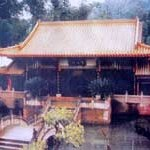
The government of the People’s Republic of China built a palace-like museum to house the many awards and honors received by H.H. Master Wan Ko Yee along with examples of his paintings, calligraphy and books on logic and Buddhist philosophy. This was the only such museum constructed while the honoree was still living. The buildings and gardens are in the classic Chinese Imperial style and consist of seven separate pavilions or “halls.”

Master Wan Ko Yee Museum in Sichuan, China

Entrance to the Master Wan Ko Yee Museum-China

The Hall of Knowledges at Master Wan Ko Yee Museum in Sichuan, China

At a ceremony held at the museum to honor H.H. Master Wan Ko Yee, the building began to drip nectar. For three years the 5,612 experts and scholars of the World Poets and Culture Congress, from 48 member countries and territories, undertook an exhaustive review in the comprehensive research and merits of H.H. Master Wan Ko Yee with respect to Buddhism, the Humanities, Chinese painting and calligraphy and ethical morality. Based on the assessment of their findings, the Fourth Session of the World Congress bestowed upon H.H. Master Wan Ko Yee the title “International Master: of the “Preeminently Distinguished” literary rank, or “Preeminent Distinguished International Master” in full. H.H. Master Wan Ko Yee was presented with a mortar, robe and the inscribed gold medallion of the “Preeminent Distinguished International Master.” This award was announced in Hungary with a congratulatory awards ceremony held in Sichuan Province in China at the Master Wan Ko Yee Museum. During that presentation the perfectly dry museum dripped nectar and auspicious clouds and a dragon appeared in the bright blue sky.

link: https://wisdomtea.org/2023/01/05/h-h-master-wan-ko-yee-honored-with-museum-dedicated-in-his-honor/

Receiving Dharma

Receiving Dharma

You can receive the dharma from many sources. You can listen to discourses given by dharma kings, rinpoches, lamas, or great dharma teachers or read their writings. You can also read the exoteric and esoteric texts as well, along with the classic commentaries on these texts by fully-realized masters. But how can you tell if these are authentic teachings?  How do you know if the master or teacher is a true master and, even if they are, how do you know if the translations you receive are correct if the original source was not in English? This is even true with the holy sutras and tantras which come to us from various traditions, cultures, and translations. You must remember that it took centuries and the power and resources of kings and emperors for these translations to be completed in China, Japan, Tibet, and other Buddhist countries and the subsequent testing of their correctness by greatly accomplished holy ones. They can only be considered correct if they work.

Does following them result in becoming a fully enlightened being? How do you tell if someone is an accomplished one? They will exhibit complete mastery of the sutras and tantras and manifest great proficiency in all five of the vidyas. You need to quickly develop your wisdom to ascertain what you can use and what you cannot and who is a true dharma king or rinpoche and who is not. You need to listen to the discourses and read the books of His Holiness Dorje Chang Buddha III. His Holiness teaches the correct Buddha-dharma and has exhibited His mastery of all five vidyas. You can rely on His discourses.

Master Mipam Gyatso (1846-1912) of the Nyingma Sect also warned us that “…as sutras and tantras prophesy, there are many who, having abandoned the profound meaning through dry analysis seems so plentiful and so good, distribute quasi-doctrine for material gain, leading those of low merit and small intelligence on a perverse path at this time of the end of the era (Dharma-Ending Age).”

His Holiness Dorje Chang Buddha III told us that the real words of dharma will enlighten people and make people’s fortune increase and get rid of their disasters and help them enter the bodhi state. The Buddha further said that the dharma must be taught according to the Buddha’s Tripitaka and other commentaries of those who have realized enlightenment (saints). It does not matter how high a person is who gives the words of dharma or whether he or she is a lay person or a monastic, if the teachings are not according to the Tripitaka or the tantras and if they are not according to bodhichitta and given out of compassion then they will contain some problems. The dharma must tell us how to attain happiness and how to walk the correct path to achieve liberation and freedom from the cycle of reincarnation or it is of no value.

The Buddha has also said that it is very precious to have the necessary affinity to be able to listen to the dharma in our cultivation. Listening to the true dharma for a day may achieve what you can’t get from ten years or even decades of practicing and meditation by yourself…In reality, listening to the dharma is a reward for the merit you have accumulated. Otherwise you would not even have the opportunity to do so. It is not easy to get such an opportunity… This is because it is a matter of karmic conditions related to good fortune.

If you do not understand the many principles of Buddhism, your cultivation will be wasted because you will practice based upon a confused understanding of the teachings. It is necessary to listen to discourses by His Holiness and read genuine Buddhist books to know how to cultivate yourself properly.

How you listen to dharma is also important. The analogy of the three pots is often given in this regard. A pot can have three faults: it can be upside down, it can be dirty, or it can be full of holes. It is useless for holding water if it has any of these faults since 1) the water cannot go in, 2) if it goes in, it will be contaminated by filth, or 3) if it does go in and it is pure, it will not remain. Similarly, even if you have the good fortune to hear the dharma, it will not help you if you 1) do not pay attention, 2) though paying attention, misunderstand what is heard or listen with a bad motivation, or 3) do not remember what was said.

Modern people may lack the incredible capacity for memorization possessed by those in ancient India and Tibet, but we do have the advantage of electronic recordings and the printed word. We should repeatedly listen to and reread the teachings until we thoroughly understand the principles being expounded and practice them daily–that is real understanding.

We also have the “Seven Dharma System” of listening to Dharma Discourses given to us by H.H. Dorje Chang Buddha III that provides a simple method for listening to, understanding, and using or applying the dharma to our daily lives. The Xuanfa Five Vidya Institute (XFVU) has developed a series of seminar/courses that uses this method to help us become accomplished.

It is not enough to just listen to or read or even memorize the words of dharma. You must understand the dharma and apply it to your daily life. All of the teachings of the Buddha were intended to be put into practice and not just serve as the basis for intellectual discussion or study. Your actions, speech and thoughts must be consistent with the dharma. Dorje Pa Mu’s book Dharma That Every Buddhist Must Follow is an excellent guide as are all of her and H.H. Dorje Chang Buddha’s books and regular discourses. However, this is just one part. You must read the book H.H. Dorje Chang Buddha III to be able to understand where the true Buddha-dharma is in the world today.

The sutras teach that when attending a dharma lecture or listening to any dharma teacher or lama, a practitioner should concentrate on listening and learning the dharma. He should avoid personal reactions to the teacher, such as, the teacher 1) has/has not violated the precepts; 2) comes from a poor/wealthy background; 3) has a pleasant/unpleasant physical appearance; 4) has good diction/a speech impediment; or 5) has a melodious/harsh voice. Furthermore you should heed the advice of the Buddha who gave us four guidelines in the Catuhpratisarana and the Samdhinirmocana Sutras:

Rely upon the teaching, not the teacher.
Rely upon the meaning, not the text.
Rely upon the definitive meaning, not the provisional meaning.
Rely upon prajna (wisdom), not consciousness.
You should become familiar with the Tripitaka and tantras so that you can evaluate the authenticity of any teaching and then practice those teachings and see if they really work. You should also rely on the “128 Evil and Erroneous Views” contained in the Supreme and Unsurpassable Mahamudra of Liberation to evaluate the validity of what you are reading.

link: https://wisdomtea.org/2022/12/29/receiving-dharma/

Three foods options to boost immune system

Three foods options to boost immune system

If you’re looking for ways to prevent colds, the flu, and other infections, then you can try these 3 food options. Feeding your body with these 3 food options may keep your immune system strong.

#1 Citrus fruits

Vitamin C, or ascorbic acid, is a water-soluble vitamin well known for its role in supporting a healthy immune system. Most people turn straight to vitamin C after they’ve caught a cold. That’s because it helps build up your immune system.

Vitamin C is thought to increase the production of white blood cells, which are key to fighting infections.

Citrus fruits are an excellent source of vitamin C that fights free radicals in the body which may help prevent or delay certain cancers and heart disease, and promote healthy aging.

Popular citrus fruits include grapefruit, oranges,  clementines, tangerines, lemons, and limes.

#2 Red Bell Peppers

A cup of chopped red bell pepper contains nearly three times more vitamin C than an orange—190 mg. Red peppers are also a great source of vitamin A, which promotes eye health.

#3 Broccoli

Broccoli is one of the healthiest vegetables you can put on your plate.

One cup of raw chopped broccoli has 81 mg vitamin C. That’s not quite as much as orange juice, but a big serving of raw broccoli provides most of the vitamin C you’ll need for one day.

Link: https://wisdomtea.org/2022/12/22/three-foods-options-to-boost-immune-system/

Finding a True Vajra Master

Finding a True Vajra Master

The practice of esoteric Buddhism depends on establishing the proper relationship with an authentic vajra master. This requires that a karmic affinity exists between the master and the disciple. A disciple must carefully choose his or her master and the master must select the disciple as well to determine whether or not the potential disciple is a suitable vessel to receive and understand the teachings of Buddhism. An unqualified disciple is not allowed to receive the great tantra. Once the relationship between a disciple and a vajra master is established, the disciple must respect his or her master as a Buddha throughout his or her lifetime. Once you have found an authentic master, you should begin to learn the teachings in a fully committed, whole-hearted way. If there are Bodhisattva masters present, you should learn from them. The rules of the dharma require that you must learn from your vajra master in order to attain accomplishment.

It is critical in practicing esoteric Buddhism that you envision the master as being capable of developing the fundamentals and that you rely on this master for your liberation by faithfully establishing your actions, speech, and thought to be the same as your master’s. Paying utmost and sincere respect to your master is essential to the way of becoming a Buddha. This is because when the master is treated with respect as a Buddha, you are learning from a Buddha and only a Buddha can liberate you. If you cannot see your master as a Buddha, how can he or she confer the special blessings of a Buddha that can enable you to become enlightened? If you view your master as an ordinary person you will definitely only receive the results of an ordinary person, no matter what level of realization the master may have.

You must know that your three karma gates (conduct, speech, and thought) must correspond to the three karmas of your vajra master. However, it is essential to clearly evaluate and verify the qualifications the master possesses. If the master does not have an understanding of the sutras, possess the realizations of Buddha-dharma, or is able to perform two or three of the five vidyas that are beyond the ordinary person’s abilities and powers, the master is not qualified. This so-called master is an ordinary person and is not qualified to be considered a master. Corresponding to the three karmas of a unqualified master can lead you to being guilty of the most heinous crimes.

The three steps of showing respect to a vajra master are:

1.  Do your best to serve and please your master.

2.  Have complete confidence in the teachings of your master.

3.  Treat your master and the Buddha as one and the same.

There are many different types and levels of masters:

  • The refuge master
  • The conditional or basic master (sometimes referred to as a doctrine master)
  • The vajra master

Your refuge master is the one from whom you receive the refuge vows and precepts and who teaches you how to practice the refuge state.

The conditional or basic masters, who may or may not also be your refuge master, are kind and dignified Buddhist teachers who are very knowledgeable and compassionate. This is the master that you listen to for his or her interpretation of the sutras or discourses. These discourses are according to the teachings of sutra-pitaka. When the conditions are right, you may study or learn from such a master. Even a great vajra master or dharma king may serve as your conditional master or even your refuge master.

On the other hand, the vajra master teaches the tantra and confers the tantric initiation. Your vajra master is the master who transmits the Buddha-dharma to you and initiates you in the Buddha-dharma. The disciple follows the doctrine of this master in the practice of the disciple’s yidam. The vajra master also teaches and transmits the doctrines of exoteric Buddhism. The high level vajra masters have acquired liberation from the cycle of birth and death and have already obtained the dharmakaya themselves.

The highest of all is the dharma king master who represents the highest accomplishments of all with an understanding of the Tripitaka and tantras that is equal to the Buddha, who is able to conduct all of the inner tantra initiations, and who has the highest level of achievement in all of the five vidyas. Such a being has direct contact with the Buddhas and Bodhisattvas and can exhibit supernatural powers both in the mandala and in other ways.

A disciple may take refuge with any vajra master who can meet the qualifications listed below and who can arrange that the disciple will receive the appropriate inner tantra initiations when the disciple is ready to receive them, either by conducting them or by having his or her vajra master conduct them. This means that a beginning vajra master must have as his or her master an authentic inner tantra master or a dharma king or Buddha who will serve as the disciple’s “Grand Master” and give the highest initiations. If you want to achieve liberation, you should not take as your master one who does not meet these standards.

As a minimum, any master must have very high moral achievement; must understand the meaning of the Buddha’s teachings and have command of sutra and tantra; is conversant in the five vidyas; can continue the dharma lineage by having sufficient merit to disseminate the Buddha-dharma to liberate all sentient beings; and have received the Vajra Acarya Initiation or other form of certification from someone who possesses the qualifications to bestow it. A vajra master must also have the other four virtues of always obeying his or her master’s orders; not violating any of the esoteric or exoteric precepts; expounding the Correct Dharma; and having equal compassion for all believers, never giving up on them, and loving everyone—even his or her enemies. In addition, a vajra master should diligently practice the principles explained in “What Is Cultivation?,” perfect the six paramitas, and be able to manifest at least two of the five vidyas. They must also have the approval of their vajra master to enter a mandala and perform empowerments and initiations for disciples. You can count on following such masters to reach liberation.

An inner tantra master, in addition to the above conditions, must possess the mandala power to confer at least one of the inner tantra initiations. The disciple must be able to see evidence that the dharma protecting deities have actually come to the mandala. (In this context, mandala refers to the sacred altar area where initiations are given.) An inner tantra master must be able to document that he or she has met the qualifications for giving inner tantric initiations. A dharma king must possess all four divisions of the inner tantra initiations and the supreme secret inner tantra initiations in addition to all the criteria stated above and greatly excel in all five vidyas. In short, a dharma king must be able to communicate directly with the saints or great holy ones (Buddhas and Bodhisattvas). A true holy dharma king also possesses a vajra dharma wheel (dharmachakra) that can make decisions concerning who should receive which inner tantra initiations as well as perform other miraculous functions.

There is also the Holy Form of Inner Tantra Initiations that is even more rare and will not be discussed here. Read H.H. Dorje Chang Buddha III for more information on this very high form of practice. There are very few people in the world today who can perform it.

You should never be confused by outer appearances. Do not misconceive the false as the true and mistake outer tantra initiation as inner tantra initiation. Most empowerments or initiations given today are only outer tantra initiations. The inner tantra initiation is for people with the utmost Mahayana’s faculty to enter Buddhahood in their current lifetime and not for regular practitioners. Moreover, the saint who can confer an inner tantra initiation is very rare; it is hard to find one in 10,000 great rinpoches. However, you should never look down upon outer tantra initiation and its practices that were also handed down by the Buddhas and also possess the tantra blessing power. If you correspond your three karmas with the teachings of your master and practice accordingly, then you can get out of reincarnation by means of outer tantra initiation.

Practitioner Mi-Kong in How to Recognize the Vajra Tantra states:

“Tantra provides a shortcut for achievement and for the highest level of attainment (that is, for one who practices unexcelled yoga, Supreme Tantra enables one to become a Buddha in the current life, make the whole body transparent, transform miraculously at one’s will and be the same entity as the universe). Hence, many practitioners have devoted their entire life to seeking the utmost tantra since Adharma Buddha (the Adi-Buddha) started teaching tantra. I have studied tantra for decades in Tibet and have seen an enormous amount of tantra—similar to a deep ocean—that is immense, concise and wise. Many great virtuous ones throughout Tibet have achieved Nirvana based on tantra. Consequently, a number of normal Buddhism teachers and false practitioners pretend to be rinpoches or khutukhus and claim themselves to be vajra masters. They teach false tantra. Innumerable innocent people have been deceived and learned nothing but rather wasted time and effort; even worse, some have entered the wrong paths and become the devil’s offspring. Especially during the current degenerate period, it is difficult to distinguish between a Buddha and a devil, and there are more false masters than can be counted. Sentient beings are easily bewildered by false dharma and deceiving masters.”

The United International World Buddhism Association Headquarters has developed a system for determining the qualifications and levels of accomplishment of various masters. You should refer to their public announcements on how to determine the level of any master so that you will not be misled. You should also know that until any master reaches a very high level of non-regression, he or she can devolve into an ordinary being even though he or she was once a true vajra master. Reading the 128 Evil and Erroneous Views and listening to recorded dharma discourses given by H.H. Dorje Chang Buddha III are also helpful in knowing what to look for in a vajra master.

Link: https://wisdomtea.org/2022/12/15/finding-a-true-vajra-master/