Another Disciple of H.H. Wan Ko Yeshe Norbu Attains Liberation from the Cycle of Reincarnation

Another Disciple of H.H. Wan Ko Yeshe Norbu Attains Liberation from the Cycle of Reincarnation

(Translation from Chengdu, China newspaper article)
(Article from Asian Journal )

A Heavenly Window Opens to the Western Buddha Land; Everyone Saw Holy Sights of the Western Paradise of Ultimate Bliss

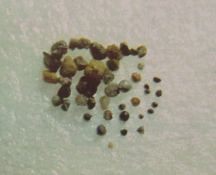
 Laywoman Quan-Fang Lu Attained Enlightenment; Amitabha Buddha Escorted Her Away to the Western Paradise; She Left Behind 49 Shariras and Firm Relics

After the cremation of laywoman Quan-Fang Lu, people collected 49 shariras and firm relics from her bone ashes.

Several days ago, Madame Tang, who was a disciple of H.H. Wan Ko Yeshe Norbu, attained great liberation from the cycle of reincarnation and left behind 263 sharira firm relics. On September 9th, Amitabha Buddha escorted to the Western Paradise of Ultimate Bliss yet another outstanding disciple of His Holiness–laywoman Quan-Fang Lu! Amitabha Buddha praised the unsurpassed and true Buddha-dharma of H.H. Wan Ko Yeshe Norbu. For 29 hours, Amitabha Buddha opened up a heavenly window of a Buddha land, thereby allowing many people to see the sights of that Buddha land. An image of H.H. Wan Ko Yeshe Norbu miraculously emitted bright light for three hours, thereby empowering those with the karmic affinity to be empowered!

Elder laywoman Quan-Fang Lu was from Chengdu, Sichuan. She and her husband, layman Gung-Ming Wang, had been Buddhists since the 1950’s. When they took refuge in Buddhism, they received an initiation and Dharma transmission from His Holiness. In the 1950’s, they were working in Tibet. Because of their underlying karmic conditions, they received the guidance of an outstanding Rinpoche of Tibetan esoteric Buddhism. That Rinpoche told them that H.H. Wan Ko Yeshe Norbu possessed the best and highest Buddha-dharma. After going through many hardships, they brought their son to His Holiness. His Holiness was not even seven years old at the time. The three of them formally acknowledged His Holiness as their Master. Laywoman Quan-Fang Lu and her husband Gung-Ming Wang then resolutely decided to have their son stay by the side of His Holiness in order to receive his training and Dharma teachings.

They have been very pious and respectful toward His Holiness, and they have diligently practiced the Dharma that His Holiness transmitted to them. Over the past two years, certain people have spread rumors and made false accusations against His Holiness. Laywoman Quan-Fang Lu and her husband Gung-Ming Wang were filled with righteous indignation at this. They vigorously berated the contemptible conduct of those rascals who spread rumors, fabricated lies, and deceived people.

Based upon layman Gung-Ming Wang’s own pious heart and upon His Holiness’s realization, which is like that of a Buddha, in November of last year, layman Gung-Ming Wang passed on to the Western Paradise of Ultimate Bliss. At his cremation, layman Gung-Ming Wang left behind 11 sharira firm relics.

In the middle of August, 2004, laywoman Quan-Fang Lu told her son Min Wang that she would soon pass away. Min Wang telephoned His Holiness a few times, beseeching His Holiness to cause his loving mother to stay alive longer. When Min Wang’s mother found out about these calls, she admonished her son, “Those who learn Buddhism and cultivate themselves must understand that the law of cause and effect never fails. My karmic connection with this world is about to end. My karmic connection with the dharma is now complete. His Holiness will help me go to the Western Paradise of Ultimate Bliss.”

As expected, at around noon on September 9th, the crown of elder laywoman Lu’s head suddenly opened. The crown of her head became as soft as cotton. At that time, a colorful auspicious light filled the room. Amitabha Buddha came to escort her away. Beautifully set off by a huge white Buddha light, the pure gold bowl of Amitabha Buddha slowly descended. The red lotus flowers in the bowl were bright-colored. Two photographs were hurriedly taken of this extremely rare and holy sight. Heavenly music could be heard. Imitating the Buddha, elder laywoman Lu assumed the “auspicious recumbent posture.” Amid the Buddha light, she passed on to the Western Paradise of Ultimate Bliss.

The next day, her body was placed in the Buddha worshipping hall of Bao Guang Temple in Xindu, which is one of the four great Chan (Zen) temples in China. Right after her body was placed there, an image of His Holiness suddenly emitted bright light. A colorful Buddha light went round and round H.H. Wan Ko Yeshe Norbu’s image. A fragrant scent wafted through the air.

News of such phenomena began to spread. More and more people came to chant mantras and sutras for the benefit of laywoman Lu, respectfully see her off to the next realm, and observe the ceremony. Day and night, the chanting of Amitabha Buddha’s name did not stop. On the evening of September 10th, eminent Tibetan Rinpoches and Lamas who were all disciples of tHis Holiness arrived at the temple after having traveled a great distance. They came to perform Buddhist rites. On the evening of September 11th, the machine used to chant the name of Amitabha Buddha suddenly emitted the shocking sound of H.H. Wan Ko Yeshe Norbu chanting the name of Amitabha Buddha. His Holiness was in the United States. The monastics and laypersons in attendance were all extremely moved.

At around noon on September 12th, a holy sight appeared for the first time in history! A painting of Amitabha Buddha hangs in the Buddha worshipping hall of the temple. In front of Amitabha Buddha’s chest, a heavenly window to the Western Paradise of Ultimate Bliss suddenly opened. This heavenly window directly displayed the sights of the Western Paradise of Ultimate Bliss!

People were seething with excitement. They were so pleasantly surprised they could hardly control themselves. Through that heavenly window to a Buddha land that appeared in front of the painting of Amitabha Buddha, all of those who had the requisite karmic affinity saw Amitabha Buddha. They even saw the protuberance on top of Amitabha’s Buddha’s head. They saw Kuan Yin Bodhisattva wearing white clothes and holding willow tree branches. They also saw Mahasthamaprapta Bodhisattva. In that heavenly window, elder laywoman Lu was reciting the name of Amitabha Buddha. Her lips were constantly moving, her eyes blinked, and her head swayed. She looked the same as when she recited Amitabha Buddha’s name when she was alive. The former abbot of Zhao Jue Temple, Dharma Teacher Qing Ding, also appeared. He was sitting on a chair, smiling, and nodding his head.

The image of H.H. Wan Ko Yeshe Norbu appeared in that heavenly window. He was wearing a red Dharma robe and a Dharma crown. When he appeared, people excitedly shouted words such as, “Master, I see you!” “Great Dharma King Master, by following you we do not fear even death!”  “Great Dharma King, my whole family wants to take refuge in you! We want to learn the true Buddha Dharma from you!”

People were awestruck by these holy scenes. They could not control their emotions. The sounds of people marveling, shouting, and kowtowing could be heard.

At 8:00 or 9:00 that evening, more and more people arrived at the cremation site. People rushed over from all directions to see the holy sights of the Western Paradise of Ultimate Bliss displayed through that heavenly window and to receive empowerment from Amitabha Buddha. Many people rushed home and brought back their parents and children. All of the elder and young people saw the holy scenes of that Buddha land. They did not even care about eating their dinner. They sat there in rows and devoutly chanted the holy name of Amitabha Buddha deep into the night. The holy sights of the Western Paradise of Ultimate Bliss displayed by that heavenly window continually changed and lasted all the way up to 5:00 in the afternoon the next day. This display of sights lasted all together 29 hours, which is a miracle in the history of Buddhism.

On the morning of September 13th, a colorful Buddha light filled the sky. After 1:00 in the afternoon, the picture of His Holiness suddenly began emitting bright white light that continually flashed. For three hours, this light empowered those with the karmic affinity to be empowered. While immersed in the Buddha-dharma empowerment bestowed by His Holiness, people shouted with joy and prostrated. It was an extremely moving scene!

At 5:00 in the afternoon, those disciples who had been reciting the name of Amitabha Buddha formed long lines as part of the ceremony placing the body of elder laywoman Lu into the cremation furnace. Whatever place her body passed through, there was a fragrant scent in the air. Before the monastics and lamas began chanting mantras and performing Buddhist rites, the part of the wooden cremation-casket over elder laywoman Lu’s chest was covered with Buddha light. From the cracks in that wooden cremation-casket, red, white, and yellow light emanated!

As soon as the cremation furnace was lit, a round Dharma object that formed from a translucent silver light appeared on the crown of elder laywoman Lu’s head. There was a square hole in the middle of that Dharma object. That Dharma object was exactly the same as the round light that appeared over the crown of Henghsing Gyatso Rinpoche’s head when he respectfully received a picture of His Holiness. He received that picture right before he began his journey around the island of Taiwan. Before receiving that picture, Henghsing Gyatso Rinpoche, who is a disciple of H.H. Wan Ko Yeshe Norbu, had made a vow to journey 1,100 kilometers around the island of Taiwan on foot by prostrating fully once after each step. He made this vow in order to atone for the sins of others.

During the cremation of laywoman Lu, holy sights continually appeared. Lotus flowers emerged. Images of His Holiness, the Three Holy Ones of the Western Paradise (Amitabha Buddha, Kuan Yin Bodhisattva, and Mahasthamaprapta Bodhisattva), and Maitreya Bodhisattva all appeared. Vajra Dharma protecting deities and dragon-spirit Dharma protecting deities stood in a circle on both sides of her. Fire phoenix flew to and from inside the cremation furnace. Beautiful scenes of pagodas and towers from the Western Paradise of Ultimate Bliss repeatedly appeared. People before the cremation furnace were filled with Dharma joy and began prostrating. They were so moved they began to cry. The sound of joyous laughter filled the temple.

Link: https://wisdomtea.org/2024/02/16/another-disciple-of-h-h-wan-ko-yeshe-norbu-attains-liberation-from-the-cycle-of-reincarnation/

The Eight Worldly Conditions

The Eight Worldly Conditions

by Venerable Narada Mahathera

This complex world is neither exclusively rosy nor entirely thorny. The rose, soft, beautiful, and fragrant, grows on a stem filled with thorns. What is rosy remains so, and what is thorny persists. One should not interfere with the thorns due to the presence of the rose, nor disparage the rose because of the thorns.

To an optimist, the world appears absolutely rosy; to a pessimist, it seems entirely thorny. However, a realist views the world neither as entirely rosy nor wholly thorny. From a realistic perspective, the world is a blend of beautiful roses and prickly thorns.

An understanding person appreciates the rose’s beauty without becoming infatuated, acknowledging the thorns’ nature and taking precautions not to be wounded.

Similar to a pendulum swinging between right and left, four inevitable conditions prevail in life — gain and loss, fame and defame, praise and blame, happiness and pain.

Gain and Loss: Businesspeople experience both gain and loss. While it’s natural to be pleased with profits, one must exhibit moral courage and maintain a balanced mind in the face of losses. Anticipating losses and being prepared helps reduce disappointment.

Fame and Defame: Fame and defame are inevitable in life. Seeking undue praise or avoiding criticism can lead to unfulfillment. True greatness is indifferent to external approbation.

Praise and Blame: Wise individuals remain unaffected by praise or blame, recognizing that opinions vary. The Buddha’s teachings emphasize responding to false accusations with patience and understanding.

Happiness and Pain: Genuine happiness is not solely derived from material possessions, power, or external circumstances. Inner happiness is found in non-attachment and leading a blameless life.

Facing pain, whether from old age, disease, separation, or death, requires equanimity. The Buddha himself endured physical suffering but maintained a balanced mind. Death, inevitable for all, should be faced with perfect equanimity.

Amidst these dualities, a balanced mind is crucial. The Buddha’s teachings encourage cultivating equanimity in the face of worldly conditions.

Link: https://wisdomtea.org/2024/02/08/the-eight-worldly-conditions/

The Root Sequence

The Root Sequence

Translated from the Pali by Thanissaro Bhikkhu

In the serene atmosphere of the Very Blessed Grove under a royal Sal tree in Ukkattha, the Blessed One addressed the gathering of monks, saying, “Monks!”

Respectfully, the monks responded, “Yes, lord.”

The Blessed One began, “Monks, I will elucidate the fundamental sequence underlying all phenomena, the root sequence of all phenomena. Pay heed, and listen carefully.”

“As you instruct, sir,” the monks replied.

The Blessed One explained, “Consider an uninstructed person, indifferent to noble teachings, unacquainted with the Dhamma of the virtuous. Such a person perceives elements like earth, water, fire, and wind merely as they appear. Engaging in conceptualizations about ownership and pleasure, they fail to comprehend the true nature of these elements.”

The Blessed One continued to describe how an untrained individual perceives various aspects of existence, attributing personal ownership and finding delight in them due to a lack of comprehension.

Then, he shifted to the Trainee, a monk earnestly aspiring for liberation. The Trainee, still on the path, is advised to directly understand and not form attachments or conceptualize about the elements and experiences, striving for comprehension.

The Arahant, a monk who has achieved enlightenment, is portrayed as one devoid of mental fermentations, having eradicated passion, aversion, and delusion. The Arahant directly knows and understands without attachment, having comprehended the true nature of all phenomena.

The Blessed One emphasized the importance of comprehending, ending passion, aversion, and delusion, leading to liberation.

Finally, the Tathagata, the awakened one, who has attained the ultimate understanding, directly knows and comprehends all phenomena. The Tathagata, having realized that delight is the root of suffering, aging, and death, has achieved complete awakening, devoid of craving.

Despite the profound teachings, the monks, displeased, did not find delight in the words of the Blessed One.

Link: https://wisdomtea.org/2024/02/01/the-root-sequence/

Virtuous

Virtuous

Translated from the Pali by Thanissaro Bhikkhu.

Once, in the tranquil Deer Park at Isipatana near Varanasi, Venerable Sariputta and Venerable Maha Kotthita chose to spend their time in contemplation. As the sun dipped below the horizon, Venerable Maha Kotthita emerged from his seclusion and approached Venerable Sariputta. The two venerable monks exchanged warm greetings, settling into a peaceful conversation.

Seated beside each other, Venerable Maha Kotthita posed a question to his esteemed companion, “Sariputta, my friend, what aspects should a virtuous monk focus on in a manner befitting his practice?”

In a composed manner, Venerable Sariputta responded, “A virtuous monk, Kotthita my friend, should conscientiously direct his attention to the five clinging-aggregates, perceiving them as impermanent, fraught with suffering, akin to a malady, a cancer, an arrow, and a source of pain—an affliction that is foreign, ephemeral, empty, and devoid of self. These aggregates include form, feeling, perception, fabrications, and consciousness. By contemplating them as impermanent and not-self, a virtuous monk may attain the realization of stream-entry.”

Prompted by curiosity, Venerable Maha Kotthita inquired, “And what should a monk who has attained stream-entry focus on?”

“A monk who has attained stream-entry should persistently attend to these five clinging-aggregates, perceiving them as impermanent, stressful, a disease, a cancer, an arrow, painful, an affliction, alien, a dissolution, an emptiness, and not-self. By doing so, he may progress towards the realization of once-returning,” explained Venerable Sariputta.

Eager to delve deeper, Venerable Maha Kotthita continued to inquire about the subsequent stages of realization—the monk who has attained once-returning, non-returning, and arahantship. Each time, Venerable Sariputta reiterated the importance of contemplating the five clinging-aggregates in an appropriate way, emphasizing their impermanence, suffering, and lack of inherent self.

In conclusion, Venerable Sariputta enlightened his friend, “An arahant, having reached the highest state of enlightenment, should still attend to these five clinging-aggregates with mindfulness and alertness. Although there is nothing more to achieve, and nothing to add to the accomplishment, such contemplation leads to a serene existence in the present moment, fostering mindfulness and heightened awareness.”

Link: https://wisdomtea.org/2024/01/26/virtuous/

Mental Absorption

Mental Absorption

Translated from the Pali by Thanissaro Bhikkhu

Firstly, there is an individual who, having withdrawn from sensuality and unwholesome qualities, enters and abides in the first jhana. This state is characterized by rapture and pleasure born from withdrawal, accompanied by directed thought and evaluation. Savoring this experience, such an individual longs for it, finds satisfaction, and stays fixed on that state. Dwelling there often and not falling away, upon death, this person reappears in conjunction with the devas of Brahma’s retinue. These devas have a life-span of an eon. An ordinary person having stayed there, exhausting the devas’ life-span, undergoes rebirths in hell, the animal womb, or the state of hungry shades. In contrast, a disciple of the Blessed One, having used up the devas’ life-span, attains liberation right in that state.

Secondly, an individual may enter the second jhana, characterized by the stilling of directed thoughts and evaluations, experiencing rapture and pleasure born of composure. Longing for and finding satisfaction in this state, such a person, dwelling there often and not falling away, upon death, reappears in conjunction with the Abhassara devas. The Abhassara devas have a life-span of two eons. An ordinary person staying there exhausts the devas’ life-span and faces subsequent rebirths, while a disciple of the Blessed One attains liberation in that state.

The third type of individual enters the third jhana, characterized by equanimity, mindfulness, and the sensing of pleasure with the body as rapture fades away. Longing for and finding satisfaction in this state, such a person, dwelling there often and not falling away, upon death, reappears in conjunction with the Subhakinha devas. These devas have a life-span of four eons. An ordinary person having stayed there exhausts the devas’ life-span, undergoing rebirths, while a disciple of the Blessed One attains liberation in that state.

Lastly, there is an individual who enters the fourth jhana, marked by the abandoning of pleasure and stress, residing in purity of equanimity and mindfulness. Savoring this state, such a person longs for it, finds satisfaction, and stays fixed on that. Dwelling there often and not falling away, upon death, this individual reappears in conjunction with the Vehapphala devas. The Vehapphala devas have a life-span of 500 eons. An ordinary person having stayed there exhausts the devas’ life-span, facing subsequent rebirths, while a disciple of the Blessed One attains liberation in that state.

These distinctions highlight the difference between an educated disciple of the noble ones and an uneducated run-of-the-mill person regarding their destinations and reappearances. These are the four types of individuals found in the world.”

Link: https://wisdomtea.org/2024/01/18/mental-absorption/

The Relaxation of Thoughts

The Relaxation of Thoughts

Translated from the Pali by Thanissaro Bhikkhu

Once, the Blessed One resided in Savatthi, at Jeta’s Grove in Anathapindika’s monastery. Addressing the assembly of monks, he spoke, “Monks!”

Respectfully, the monks replied, “Yes, Lord.”

The Blessed One shared guidance on cultivating a focused mind, highlighting five essential themes for monks to consider at the appropriate times.

Firstly, if unwholesome thoughts arise during meditation, connected to desire, aversion, or delusion, the monk should shift attention to a different theme associated with what is skillful. By doing so, the disturbing thoughts subside, allowing the monk to steady, settle, unify, and concentrate the mind.

If, despite this shift, unskillful thoughts persist, the monk should examine the drawbacks: recognizing them as unskillful, blameworthy, and causing stress. Through this scrutiny, the undesirable thoughts fade away, and the monk attains mental steadiness.

In the rare case that unwholesome thoughts persist, the monk should practice indifference, paying no mind to them. By disregarding these thoughts, the monk frees the mind from their influence and achieves concentration.

Should the unskillful thoughts persist even with indifference, the monk is advised to focus on relaxing thought-fabrication concerning those thoughts. This practice enables the abandonment of the troublesome thoughts and promotes mental stability.

In the event that unwholesome thoughts persist during the relaxation of thought-fabrication, the monk is encouraged to employ a more forceful approach. With teeth clenched and tongue pressed against the roof of the mouth, the monk should beat down, constrain, and crush the unskillful thoughts with awareness. This resolute effort results in the abandonment of disturbing thoughts and the attainment of mental concentration.

A monk who successfully applies these methods is recognized as having mastery over thought sequences. Such a monk can choose to think or not think as desired, having severed craving and liberated themselves from the fetters. Through a deep understanding of conceit, they have reached the cessation of suffering and stress.

Upon hearing these teachings, the monks were gratified, finding delight in the Blessed One’s words.

Link: https://wisdomtea.org/2024/01/11/the-relaxation-of-thoughts

Prajna / Wisdom

Prajna / Wisdom

The concept of wisdom, represented by the Chinese characters “zhi-hui” and expressed in Buddhism as “prajna,” goes beyond mere problem-solving ability. In Buddhism, prajna signifies the profound wisdom of a Buddha, crucial for attaining Buddhahood alongside the accumulation of merit. It is the key to possessing a Buddha’s mind and gaining the extraordinary abilities needed to aid living beings.

To achieve prajna, a sequence of morality, concentration, and then wisdom must be followed. Without moral conduct, concentration becomes unattainable, and without concentration, the profound prajna wisdom cannot be realized. Additionally, developing wisdom is vital in applying precepts correctly.

There exist three types of prajna: acquired through written teachings and contemplation, they pave the way for the ultimate understanding of reality. Shakyamuni Buddha regarded prajna as unparalleled, the pinnacle of Buddha’s teachings, unveiling the true nature of Tathagatas and all living beings—the very truth of the universe. Realizing prajna is fundamental for liberation from the cycle of birth and death, requiring a deep comprehension of the inherent emptiness and impermanence of all phenomena.

Prajna, also known as understanding, knowledge, or insight, transcends mere conceptual conveyance. It embodies an intuitive grasp of emptiness, the fundamental essence of reality—a Sanskrit term denoting the wisdom that reveals the purified insight into emptiness, the core of existence.

Link: https://wisdomtea.org/2023/12/22/prajna-wisdom/

Parable Sutra

Parable Sutra

(Translated from Sanskrit into Chinese by I-ching; translated into English by Charles Patton)

Once upon a time, in the serene Jetàvana grove near the city of Shràvastã, the Bhagavat resided. Amidst a vast congregation, the World Honored One addressed King Brilliance, saying, “Great king, let me briefly share a parable about the beings trapped in samsàra, entangled in feelings, attachments, mistakes, and troubles. Pay close attention, your majesty, and contemplate it deeply.”

“In a bygone age, stretching across immeasurable aeons, there was an individual who ventured into the wilderness, pursued by a malevolent elephant. Overwhelmed by fear and devoid of refuge, he stumbled upon an empty well. A tree’s root dangled into the well, offering a precarious escape. Swiftly, he descended the root, seeking shelter inside the well. Above him, two rats, one dark and one light, gnawed incessantly at the tree root. Meanwhile, four sides of the well housed poisonous snakes eager to strike the person, and below, a venomous serpent lurked. The person’s mind was tormented by the impending threat of snakes and the fragility of the tree root. Miraculously, drops of honey from bees residing in the tree roots fell into his mouth. When the tree shook, swarming bees descended, inflicting stings. To add to the perils, brush fires repeatedly threatened to consume the tree.”

The king inquired, “How is it that this person endures such ceaseless distress for so little satisfaction?”

The World Honored One replied, “The wilderness symbolizes the vast and distant night of ignorance. The term ‘that person’ metaphorically refers to a being in another life. The elephant represents impermanence, the well signifies samsàra, and navigating the perilous tree roots mirrors the journey of life. The pair of rats, light and dark, symbolizes day and night, their constant gnawing a metaphor for the relentless stream of thoughts until death. The four snakes represent existence in the four elements, while the honey embodies the five desires, and the bees signify false thinking. The fire serves as a metaphor for aging and illness, and the poisonous serpent represents death.”

“Great king,” continued the Buddha, “recognize that birth, aging, illness, and death are formidable challenges. Contemplate them mindfully, freeing yourself from the enslavement of desires.”

In solemn verse, the World Honored One expressed:

“The wilderness: the path of ignorance, Fleeing person: the ordinary man’s plight, Great elephant: the metaphor for impermanence, Well: a symbol for the shore of samsàra.

Tree roots: a metaphor for life’s journey, Two rats: akin to night and day’s cycle, Gnawed root: the decay of thoughts to death, Four snakes: existence in the four elements.

Dripping honey: metaphor for the five desires, Bee stings: a simile for false thinking, Fire: akin to aging and illness, Poisonous serpent: the path to death’s suffering.

The wise perceive thus: Elephant wearies one’s passage, Five desires lead the mind to detachment, And the path is that of the liberated.

The ocean of ignorance: an oppressive place, Death, the relentless pursuer, Recognize the fleeting joy of sound and form, Not a pleasure once the ordinary departs.”

Upon hearing this discourse on the travails of birth and death, King Brilliance experienced an unprecedented disillusionment with the world. With palms joined in reverence, he addressed the Buddha, “World Honored One, your compassionate elucidation on the profound meaning of Dharma is truly remarkable. I am now awakened.”

The Buddha responded, “Excellent, excellent. Great king, adhere to the teachings and avoid unrestrained pursuits.”

King Brilliance and the assembled congregation were filled with joy. They faithfully received, transmitted, and upheld the teachings.

Link: https://wisdomtea.org/2023/12/15/parable-sutra/

Ullambana Sutra

Ullambana Sutra

Once upon a time, it is said that the Buddha resided in Shravasti, specifically in the Garden of the Benefactor of Orphans and the Solitary.

Mahamaudgalyayana, having recently attained the six penetrations, felt a deep desire to repay the kindness of his parents for raising him. Utilizing his divine vision, he surveyed the world and discovered that his departed mother was reborn among the hungry ghosts, emaciated and without sustenance.

Touched by compassion and sadness, Mahamaudgalyayana filled a bowl with food and approached his mother to provide nourishment. However, as she attempted to consume the food, it inexplicably transformed into burning coals, rendering it inedible.

In anguish, Mahamaudgalyayana hurried back to the Buddha to recount this sorrowful experience.

The Buddha, acknowledging the profound and entrenched offenses of Mahamaudgalyayana’s mother, explained that individual efforts alone were insufficient to liberate her. Even though filial sentiments could move heaven and earth, the combined spiritual power of the Sangha from the ten directions was necessary for her liberation.

The Buddha proceeded to impart a salvific teaching, a method to alleviate the suffering and remove obstacles from accumulated offenses. He instructed Mahamaudgalyayana to make offerings to the assembled Sangha on the fifteenth day of the seventh month, known as Pravarana day. These offerings included clean basins filled with diverse flavors, the five fruits, incense, oil, lamps, candles, beds, and bedding – the best of worldly offerings. The entire virtuous Sangha, regardless of their location or spiritual accomplishments, was to gather on that day and partake in the pravarana food.

By making such offerings, Mahamaudgalyayana’s parents, as well as ancestors of seven generations, could escape the paths of suffering and attain liberation. The Buddha directed the assembled Sangha to recite mantras and vows for the benefit of the donor’s family.

Delighted by this guidance, Mahamaudgalyayana and the great Bodhisattvas followed the Buddha’s instructions. As a result, Mahamaudgalyayana’s mother found liberation from the prolonged suffering of the hungry ghosts.

Expressing gratitude, Mahamaudgalyayana inquired if future disciples, by offering Ullambana basins, could similarly assist their present and past parents. The Buddha affirmed this, emphasizing the importance of practicing compassionate filial conduct on the fifteenth day of the seventh month.

He urged disciples to place diverse foods in Ullambana basins and offer them to the Pravarana Sangha of the ten directions. The practitioners should vow to ensure their parents’ longevity and happiness, as well as the liberation of seven generations of ancestors from the realm of hungry ghosts.

In conclusion, the Buddha encouraged all disciples to consistently recall their parents and ancestors, offering Ullambana basins on the fifteenth day of the seventh month as a gesture of filial compassion. This practice, he emphasized, was a respectful way to repay the boundless kindness bestowed by one’s parents. The bhikshu Maudgalyayana and the entire assembly, inspired by the Buddha’s teachings, joyfully embraced this compassionate practice. And thus, the Buddha spoke of the Ullambana Sutra, providing a timeless guide for repaying the kindness of parents.

Link: https://wisdomtea.org/2023/12/07/ullambana-sutra/

Buddha Speaks of Amitabha

Buddha Speaks of Amitabha

Once upon a time, it is said that the Buddha resided in Shravasti, within the Jeta Grove, situated in the garden of the Benefactor of Orphans and the Solitary. Accompanying him were a congregation of twelve hundred fifty great Bhiksus, all esteemed arhats whom the assembly recognized, including Elders Sariputra, Mahamaudgalyayana, Mahakasyapa, Hahakatyayana, Mahakaushtila, Revata, Suddhipanthaka, Nanda, Ananda, Rahula, Gavampati, Pindolabharadvaja, Kalodayin, Mahakaphina, Vaddujla, Aniruddha, and others. Additionally, numerous Bodhisattvas and celestial beings, including Ajita Bodhisattva, Gandhastin Bodhisattva, Nityodyukta Bodhisattva, and the chief of gods, Shakra, were present, along with countless beings from various heavens.

During that time, the Buddha addressed Elder Sariputra, saying, “Travel westward across hundreds of thousands of millions of Buddhalands, and you will reach a realm known as Ultimate Bliss. In this land, a Buddha named Amitabha currently imparts the teachings.”

“Sariputra, why is it called Ultimate Bliss? Because every being in this country is free from suffering and enjoys unbounded bliss, hence the name Ultimate Bliss.”

Furthermore, Sariputra, the land of Ultimate Bliss is enclosed by seven tiers of railing, crafted from the four treasures, thus earning its name. Pools of the seven jewels, filled with the eight waters of merit and virtue, grace this land. The pools boast pure bottoms covered in golden sand, with stairs of gold, silver, lapis lazuli, and crystal on each side. Raised pavilions, adorned with precious materials like gold, silver, lapis lazuli, crystal, mother-of-pearl, red pearls, and carnelian, grace the surroundings. Within these pools, lotuses with hues resembling carriage wheels bloom, emitting subtle, wonderfully fragrant, and pure scents.

“The realization of the land of Ultimate Bliss is thus adorned with merit,” Sariputra, the Buddha continued.

Moreover, in this Buddhaland, harmonious heavenly music perpetually resonates, and the ground is composed of yellow gold. During the six periods of day and night, a rain of mandarava flowers descends, and each morning, the inhabitants of this land offer myriad wonderful flowers to countless Buddhas in all directions. After their meals, they leisurely stroll through their homeland.

Sariputra, the land of Ultimate Bliss is abundantly adorned in this way.

Furthermore, rare and exquisite varicolored birds, including white cranes, peacocks, parrots, egrets, kalavinkas, and two-headed birds, inhabit this land. In the six periods of the day and night, these flocks produce melodious and elegant sounds, proclaiming profound teachings such as the five roots, the five powers, the seven Bodhi shares, and the eight sagely way shares. When the inhabitants hear these sounds, they become mindful of the Buddha, the Dharma, and the Sangha.

“Sariputra, do not assume these birds are karmic retribution. In this Buddhaland, there are no three evil ways of rebirth; in fact, not even the names of these ways exist. Amitabha Buddha, desiring to widely spread the Dharma sound, created this multitude of birds through transformation.”

The Buddha continued to describe the enchanting features of the land of Ultimate Bliss, its jeweled trees producing subtle and wonderful sounds when the soft wind blows. As these descriptions unfolded, Sariputra listened attentively, absorbing the profound beauty of this Buddhaland.

After detailing the splendors of the land, the Buddha turned to Sariputra and asked, “Why do you think this Buddha is called Amitabha?”

“The brilliance of Amitabha Buddha’s light is immeasurable, illuminating the lands of the ten directions without hindrance. He is called Amitabha for this reason. Furthermore, the lifespan of Amitabha Buddha and his people extends for countless kalpas, making him worthy of the name ‘Amitabha.’ Ten kalpas have passed since Amitabha attained Buddhahood.”

As the Buddha spoke, Sariputra gained deeper insights into the infinite virtues of Amitabha Buddha and the extraordinary qualities of the land of Ultimate Bliss.

The text continues to explore the presence and teachings of other Buddhas in different directions, emphasizing their encouragement for all living beings to believe, praise, and hold in reverence the inconceivable merit and virtue of the sutra.

Finally, the Buddha urged Sariputra and all present to have faith and make the vow to be born in Amitabha’s country, emphasizing the profound benefits and the irreversible attainment of anuttara-samyak-sambodhi for those who make this vow.

Upon concluding his teachings, the Buddha witnessed Sariputra, the bhiksus, gods, humans, and other celestial beings joyously receiving his words. The assembly, filled with reverence, bowed and withdrew, having absorbed the wisdom imparted by the Buddha.

Link: https://wisdomtea.org/2023/11/30/buddha-speaks-of-amitabha/