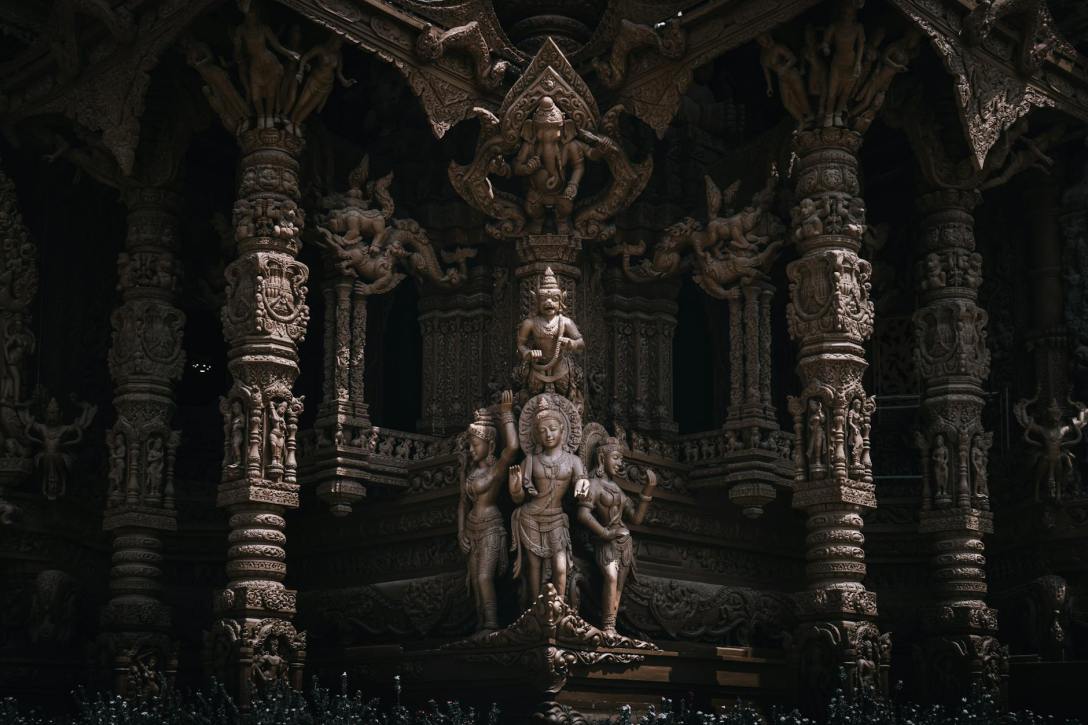
An Analysis of the Truths

An Analysis of the Truths

I heard that the Blessed One was staying near Bārānasī in the Deer Park at Isipatana. Addressing the monks, he said, “Monks, near Bārānasī, in the Deer Park at Isipatana, the Tathāgata—worthy and rightly self-awakened—set in motion the unexcelled Wheel of Dhamma that cannot be stopped by any contemplative, brahman, deva, Māra, Brahmā, or anyone else in the cosmos. This Wheel of Dhamma includes the declaration, teaching, description, setting-forth, revelation, explanation, and making-plain of the four noble truths: the noble truth of stress, the noble truth of the origination of stress, the noble truth of the cessation of stress, and the noble truth of the path leading to the cessation of stress.

“Monks, associate with Sāriputta and Moggallāna, who are wise and sympathetic towards their fellow monks in the holy life. Sāriputta is like a mother giving birth, training others to the fruit of stream-entry, while Moggallāna is like a nurse raising the child, leading others to the highest goal.”

After the Blessed One left, Ven. Sāriputta addressed the monks, “Friends, near Bārānasī, in the Deer Park at Isipatana, the Tathāgata set in motion the unexcelled Wheel of Dhamma that cannot be stopped by anyone in the cosmos. This Wheel of Dhamma includes the declaration, teaching, description, setting-forth, revelation, explanation, and making-plain of the four noble truths: the noble truth of stress, the noble truth of the origination of stress, the noble truth of the cessation of stress, and the noble truth of the path leading to the cessation of stress.

“Now, friends, what is the noble truth of stress? Birth is stressful, aging is stressful, death is stressful; sorrow, lamentation, pain, distress, and despair are stressful; not getting what is wanted is stressful. In short, the five clinging-aggregates are stressful.

“What is birth? It is the birth, taking birth, descent, coming-to-be, coming-forth, appearance of aggregates, and acquisition of sense spheres of beings. What is aging? It is the aging, decrepitude, breaking down, graying, wrinkling, decline of life-force, and weakening of faculties of beings. What is death? It is the deceasing, passing away, breaking up, disappearance, dying, completion of time, break-up of aggregates, casting off of the body, and interruption of the life faculty of beings. What is sorrow? It is the sorrow, sorrowing, sadness, inward sorrow, and inward sadness of anyone suffering from misfortune, touched by a painful thing. What is lamentation? It is the crying, grieving, lamenting, weeping, wailing, and lamentation of anyone suffering from misfortune, touched by a painful thing. What is pain? It is the bodily pain, bodily discomfort, pain, or discomfort born of bodily contact. What is distress? It is the mental pain, mental discomfort, pain, or discomfort born of mental contact. What is despair? It is the despair, despondency, and desperation of anyone suffering from misfortune, touched by a painful thing. What is the stress of not getting what is wanted? It is the wish for freedom from birth, aging, illness, death, sorrow, lamentation, pain, distress, and despair, which cannot be achieved by wishing. The five clinging-aggregates are the form clinging-aggregate, the feeling clinging-aggregate, the perception clinging-aggregate, the fabrication clinging-aggregate, and the consciousness clinging-aggregate. These are called the five clinging-aggregates that are stressful.

“This, friends, is called the noble truth of stress.

“What, friends, is the noble truth of the origination of stress? It is the craving that leads to further becoming—accompanied by passion and delight, relishing now here and now there. This includes craving for sensuality, craving for becoming, and craving for non-becoming.

“This is called the noble truth of the origination of stress.

“What, friends, is the noble truth of the cessation of stress? It is the remainderless fading and cessation, renunciation, relinquishment, release, and letting go of that very craving.

“This is called the noble truth of the cessation of stress.

“What, friends, is the noble truth of the path leading to the cessation of stress? It is the noble eightfold path: right view, right resolve, right speech, right action, right livelihood, right effort, right mindfulness, and right concentration.

“What is right view? It is the knowledge of stress, the knowledge of the origination of stress, the knowledge of the cessation of stress, and the knowledge of the way of practice leading to the cessation of stress. This is called right view.

“What is right resolve? It is the resolve for renunciation, freedom from ill will, and harmlessness. This is called right resolve.

“What is right speech? It is abstaining from lying, divisive speech, abusive speech, and idle chatter. This is called right speech.

“What is right action? It is abstaining from taking life, stealing, and sexual misconduct. This is called right action.

“What is right livelihood? It is the case where a disciple of the noble ones, having abandoned dishonest livelihood, keeps his life going with right livelihood. This is called right livelihood.

“What is right effort? It is the case where a monk generates desire, endeavors, arouses persistence, upholds, and exerts his intent for the non-arising of evil, unskillful qualities that have not yet arisen, for the abandoning of evil, unskillful qualities that have arisen, for the arising of skillful qualities that have not yet arisen, and for the maintenance, non-confusion, increase, plenitude, development, and culmination of skillful qualities that have arisen. This is called right effort.

“What is right mindfulness? It is the case where a monk remains focused on the body in and of itself—ardent, alert, and mindful—putting aside greed and distress with reference to the world. He remains focused on feelings in and of themselves, the mind in and of itself, and mental qualities in and of themselves—ardent, alert, and mindful—putting aside greed and distress with reference to the world. This is called right mindfulness.

“What is right concentration? It is the case where a monk, quite secluded from sensuality and unskillful qualities, enters and remains in the first jhāna: rapture and pleasure born of seclusion, accompanied by directed thought and evaluation. With the stilling of directed thought and evaluation, he enters and remains in the second jhāna: rapture and pleasure born of concentration, unification of awareness free from directed thought and evaluation—internal assurance. With the fading of rapture, he remains equanimous, mindful, and alert, and senses pleasure with the body. He enters and remains in the third jhāna, of which the noble ones declare, ‘Equanimous and mindful, he has a pleasant abiding.’ With the abandoning of pleasure and pain—as with the earlier disappearance of elation and distress—he enters and remains in the fourth jhāna: purity of equanimity and mindfulness, neither pleasure nor pain. This is called right concentration.

“This is called the noble truth of the path leading to the cessation of stress.

“Friends, near Bārānasī, in the Deer Park at Isipatana, the Tathāgata—worthy and rightly self-awakened—set in motion the unexcelled Wheel of Dhamma that cannot be stopped by anyone in the cosmos, declaring these four noble truths.”

Link: https://wisdomtea.org/2024/07/04/an-analysis-of-the-truths/

The Seven Harmful Consequences of Anger

The Seven Harmful Consequences of Anger

Anger brings about seven unfortunate consequences that delight one’s enemy. What are these seven?

  1. Loss of Appearance: An enemy wishes for their foe to become unattractive. When someone is consumed by anger, no matter how well-groomed they are, their appearance turns ugly due to the overwhelming influence of their anger. This pleases their enemy.
  2. Poor Sleep: An enemy wishes for their foe to sleep poorly. When someone is angry, even the most luxurious and comfortable bed cannot grant them restful sleep. The turmoil of anger disrupts their rest, which is gratifying to their enemy.
  3. Misjudgment of Profit and Loss: An enemy wishes for their foe to misjudge their gains. When someone is angry, they mistakenly view losses as gains and gains as losses. This confusion leads to long-term suffering, much to the enemy’s satisfaction.
  4. Loss of Wealth: An enemy wishes for their foe to lose wealth. When anger takes hold, a person’s accumulated wealth may be forfeited due to fines or poor decisions made in the heat of the moment. This loss of wealth is a victory for their enemy.
  5. Loss of Reputation: An enemy wishes for their foe to lose their good name. Anger can tarnish a person’s reputation that was built through careful and heedful behavior. This fall from grace delights their enemy.
  6. Loss of Friends: An enemy wishes for their foe to be isolated. Anger drives away friends, companions, and relatives, leaving the person lonely and isolated. This social isolation is pleasing to their enemy.
  7. Spiritual Decline: An enemy wishes for their foe to suffer in the afterlife. Anger leads to harmful actions in body, speech, and mind, causing the person to face a wretched rebirth. This spiritual downfall fulfills the enemy’s desire.

The Consequences of Anger

An angry person becomes unattractive and suffers from poor sleep. They turn profits into losses through misguided actions and words, destroying their wealth and status. Friends and family avoid them, and their mind is inflamed by anger. They fail to see the danger within themselves and cannot grasp the Dhamma, leading to darkness and regret. They take pleasure in bad deeds, which later cause immense suffering. Their anger obscures their judgment, leading to destructive actions and ultimate ruin.

Overcoming Anger

Anger drives people to commit terrible deeds, harming themselves and others. It is a snare that traps the heart and mind. To overcome anger, one must cultivate self-control, discernment, persistence, and right view. By abandoning anger, greed, and longing, and by taming oneself, true liberation and peace can be achieved. Train yourselves to avoid the destruction anger brings and strive to live untroubled and unbound.

Link: https://wisdomtea.org/2024/06/27/the-seven-harmful-consequences-of-anger/

The Reserve Fund

The Reserve Fund

A person stashes funds away deep underground, at the waterline: “When a need or duty arises, this will provide for my needs, for my release if I’m denounced by the king, harassed by thieves, in case of debt, famine, or accidents.” With aims like this in the world, a reserve fund is stashed away. But no matter how well it’s stored, deep underground, at the waterline, it won’t always serve one’s needs. The fund gets shifted from its place, or one’s memory gets confused; or—unseen—nāgas make off with it, spirits steal it, or hateful heirs run off with it. When one’s merit ends, it’s totally destroyed. But when a man or woman has laid aside a well-stored fund of generosity, virtue, restraint, and self-control, with regard to a shrine, the Saṅgha, a fine individual, guests, mother, father, or elder sibling: That’s a well-stored fund. It can’t be taken away. It follows you along. When you leave this world, for wherever you must go, you take it with you. This fund is not shared with others, & cannot be stolen by thieves. So, enlightened, you should make merit, the fund that will follow you along. This is the fund that gives all they want to beings human and divine. Whatever devas aspire to, that is all gained by this. A fine complexion, fine voice, a body well-built, well-formed, lordship, a following: That is all gained by this. Earthly kingship, supremacy, the bliss of an emperor, kingship over devas in the heavens: That is all gained by this. The attainment of the human state, any delight in heaven, the attainment of unbinding: That is all gained by this. Excellent friends, appropriate application, mastery of clear knowing & release: That is all gained by this. Acumen, emancipations, the perfection of disciplehood: That is all gained by this. Private awakening, Buddhahood: That is all gained by this. So powerful this, the accomplishment of merit. Thus the wise, the enlightened, praise the fund of merit already made.

Link: https://wisdomtea.org/2024/06/20/the-reserve-fund/

Discourse on Outcasts

Discourse on Outcasts

Once upon a time, the Blessed One was staying near Savatthi at Jetavana in Anathapindika’s monastery. One morning, he dressed himself, took his bowl and robe, and entered the city for alms. At the house of the brahman Aggikabharadvaja, a fire was burning, and an offering was being prepared.

As the Blessed One approached, the brahman shouted, “Stay there, you shaveling! Stay there, you wretched monk! Stay there, you outcast!”

The Blessed One calmly asked, “Do you know, brahman, who an outcast is and what makes one an outcast?”

“No, Venerable Gotama, I do not know. Please explain,” the brahman replied.

The Blessed One said, “Listen carefully, and I will explain.”

  1. “Whoever is angry, hateful, deceitful, and reluctant to speak well of others is an outcast.
  2. “Whoever kills living beings and lacks sympathy is an outcast.
  3. “Whoever destroys villages and becomes notorious as an oppressor is an outcast.
  4. “Whoever steals, whether in the village or forest, is an outcast.
  5. “Whoever incurs a debt and denies it is an outcast.
  6. “Whoever kills and robs travelers is an outcast.
  7. “Whoever lies as a witness for personal gain is an outcast.
  8. “Whoever engages in infidelity with relatives’ or friends’ spouses is an outcast.
  9. “Whoever, despite wealth, neglects his elderly parents is an outcast.
  10. “Whoever strikes and abuses family members with harsh words is an outcast.
  11. “Whoever gives harmful advice when asked about good is an outcast.
  12. “Whoever commits evil deeds in secret and wishes they remain hidden is an outcast.
  13. “Whoever does not honor a host after partaking of their food is an outcast.
  14. “Whoever deceives brahmans, ascetics, or mendicants by lying is an outcast.
  15. “Whoever angers a visiting brahman or ascetic during mealtime and does not offer alms is an outcast.
  16. “Whoever speaks harsh words or falsehoods expecting to gain something is an outcast.
  17. “Whoever exalts himself and belittles others out of pride is an outcast.
  18. “Whoever is angry, miserly, selfish, deceitful, shameless, and fearless in doing evil is an outcast.
  19. “Whoever reviles the Buddha, a disciple, a recluse, or a householder is an outcast.
  20. “Whoever pretends to be an arahant but is not is the lowest of outcasts.
  21. “Not by birth is one an outcast; by deeds, one becomes an outcast. By deeds, one becomes a brahman.

“Consider Sopaka, an outcast’s son who became the renowned Matanga. Despite his low birth, he attained the highest fame, reached the Brahma realm, and was honored by many. In contrast, brahmans born into noble families often commit evil deeds and are despised in this life and the next. Therefore, not by birth is one an outcast or a brahman; by deeds, one becomes an outcast or a brahman.”

Moved by these words, the brahman Aggikabharadvaja said, “Excellent, Venerable Gotama! You have expounded the Dharma clearly. I take refuge in the Venerable Gotama, the Dhamma, and the Sangha. Please accept me as a lay follower from this day onwards, for as long as life lasts.”

Link: https://wisdomtea.org/2024/06/13/discourse-on-outcasts/

LongNails

LongNails

I have heard that on one occasion the Blessed One was staying near Rājagaha on Vulture Peak Mountain, in the Boar’s Cave. LongNails the wanderer went to the Blessed One, exchanged courteous greetings, and then stood to one side. He said to the Blessed One, “Master Gotama, I believe that ‘Nothing is pleasing to me.’”

The Blessed One asked, “But even this view of yours, Aggivessana—is that not pleasing to you?”

LongNails replied, “Even if this view were pleasing to me, it would still be the same.”

The Blessed One explained, “Many people cling to views, yet they do not abandon them. There are few who abandon views and do not cling to another. Some believe ‘Everything is pleasing to me,’ some ‘Nothing is pleasing to me,’ and others ‘Some things are pleasing, others are not.’ Those who believe ‘Everything is pleasing to me’ are close to attachment, while those who believe ‘Nothing is pleasing to me’ are close to non-attachment.

“A wise person reflects that holding firmly to any view leads to conflict, dispute, and frustration. Seeing this, they abandon these views and do not cling to another. Thus, they relinquish these views.

“Consider the body as inconstant, stressful, and not-self. By viewing it this way, any desire for or attraction to the body is abandoned.

“There are three kinds of feelings: pleasant, painful, and neither-pleasant-nor-painful. Each feeling is inconstant, fabricated, and subject to ceasing. Seeing this, a noble disciple grows disenchanted with all types of feelings, becomes dispassionate, and is released. They discern, ‘Birth is ended, the holy life fulfilled, the task done.’ A monk whose mind is thus released does not take sides or dispute with anyone.

“Now, Ven. Sāriputta, sitting behind the Blessed One, thought, ‘The Blessed One speaks of abandoning qualities through direct knowledge.’ Reflecting thus, his mind was released from defilements through non-clinging. Meanwhile, in LongNails the wanderer, there arose the Dhamma eye: ‘Whatever is subject to origination is all subject to cessation.’

LongNails the wanderer, having realized the Dhamma, said to the Blessed One: “Magnificent, Master Gotama! Just as one would set upright what was overturned or bring light into darkness, Master Gotama has made the Dhamma clear. I go to Master Gotama, the Dhamma, and the Saṅgha for refuge. May Master Gotama remember me as a lay follower who has gone to him for refuge for life.”

Link: https://wisdomtea.org/2024/05/30/longnails/

Concluding Reflections: Tracing the Origins and Spread of the Sacred Dharma

Concluding Reflections: Tracing the Origins and Spread of the Sacred Dharma

Sakra, the prince of the gods, approached the Buddha with reverence. “Lord,” he began, his voice resonating with admiration, “throughout countless eons, I have had the privilege of hearing myriad teachings of the Dharma from enlightened beings and wise sages. Yet, never before have I encountered a teaching as profound and transformative as this discourse on inconceivable transformations.”

The Buddha regarded Sakra with a serene smile. “Your words hold great significance, Sakra,” he responded. “For this teaching illuminates the path to liberation in a way that transcends ordinary understanding.”

Sakra’s heart swelled with gratitude as he continued, “Lord, those who receive and internalize this teaching will undoubtedly become vessels of the Dharma, guiding themselves and others towards enlightenment. Their lives will be blessed with boundless virtues, shielded from suffering, and honored by all Buddhas.”

The Buddha’s eyes gleamed with approval. “Indeed, Sakra,” he affirmed, “the essence of the Buddhas’ enlightenment resides within this discourse. It is a beacon of wisdom that illuminates the path for all sentient beings.”

As the celestial beings listened intently, the Buddha wove a tapestry of metaphorical imagery, illustrating the profound impact of embracing the Dharma. He spoke of vast cosmic cycles, where the merit accrued from understanding and propagating the teachings far surpassed the offerings of material wealth.

“Imagine,” the Buddha urged, “a world where every act is imbued with the spirit of Dharma, where kindness and compassion reign supreme. In such a world, the merit attained transcends the bounds of comprehension, bestowing blessings upon all who tread the path.”

Sakra nodded in deep understanding, his resolve strengthened by the Buddha’s words. “Truly, Lord,” he exclaimed, “the merit derived from embracing the Dharma surpasses all worldly treasures. I vow to uphold and propagate this teaching, ensuring its perpetuity for generations to come.”

Moved by Sakra’s commitment, the Buddha turned to Maitreya, the bodhisattva of loving-kindness. “Maitreya,” he said, his voice imbued with solemnity, “I entrust you with the sacred task of preserving and disseminating this teaching in the ages to come. Let it be a guiding light for all sentient beings, leading them out of the darkness of ignorance.”

Maitreya bowed deeply, his heart overflowing with reverence. “I humbly accept this sacred duty, Lord,” he declared. “With unwavering devotion, I will safeguard and propagate the teachings of the Dharma, ensuring that all beings may benefit from its wisdom.”

As the assembly of celestial beings rejoiced, the Buddha turned to Ánanda, his faithful disciple. “Ánanda,” he said, “remember these teachings and share them far and wide. Let the light of Dharma illuminate the hearts of all who seek liberation.”

Ánanda nodded solemnly, his mind filled with determination. “I will fulfill your command, Lord,” he vowed. “With every breath, I will strive to spread the teachings of the Dharma, guiding sentient beings towards the path of enlightenment.”

And so, amidst the celestial chorus of joy and reverence, the Buddha concluded the discourse known as “The Teaching of Vimalakirti.” Its profound wisdom echoed throughout the cosmos, offering solace and guidance to all who sought the path of liberation.

Link: https://wisdomtea.org/2024/05/23/concluding-reflections-tracing-the-origins-and-spread-of-the-sacred-dharma/

Lesson of the Destructible and the Indestructible

Lesson of the Destructible and the Indestructible

In the tranquil garden of Amrapali, where the Lord expounded the Dharma, a remarkable transformation unfolded. The space seemed to stretch endlessly, and a radiant golden glow enveloped the entire assembly. Intrigued by these auspicious signs, venerable Ánanda turned to the Buddha, asking for their significance.

The Buddha revealed, “Ánanda, these signs herald the arrival of the Licchavi Vimalakirti and Crown Prince Manjusri, accompanied by a vast multitude, to our presence.”

Prompted by Vimalakirti, Manjusri agreed to bring the assembly before the Buddha. With a miraculous gesture, Vimalakirti lifted the entire gathering onto his palm and transported them to the Buddha’s presence. There, he humbly bowed at the Buddha’s feet before withdrawing to the side.

Bodhisattvas from various Buddha-fields descended from their thrones, paying homage to the Buddha before stepping aside. Even celestial beings and gods joined in reverence.

The Buddha welcomed them, inviting them to take their thrones. Turning to Shariputra, he inquired about the bodhisattvas’ extraordinary feats.

Shariputra admitted, “Lord, their actions are beyond my comprehension. They appear inconceivable, defying judgment or imagination.”

Ánanda, noticing a unique fragrance, questioned its origin. The Buddha explained that it emanated from the bodhisattvas’ pores, a result of partaking in food from the Buddha-field of Sugandhakuta.

Vimalakirti clarified that the fragrance would linger until the food was digested, a process spanning forty-nine days, followed by seven more days without discomfort. He elucidated how the food’s digestion correlated with the spiritual progress of those who consumed it.

Ánanda marveled at the food’s transformative properties, acknowledging its embodiment of Buddha’s work. The Buddha elaborated on the various means by which Buddha-fields facilitated enlightenment, emphasizing the diverse paths to discipline beings.

Reflecting on the countless virtues of Buddhas, the Buddha imparted the profundity of their enlightenment. Ánanda humbly renounced his claim as the foremost learned, recognizing the incomprehensibility of bodhisattvas’ wisdom and deeds.

The Buddha reassured Ánanda, affirming his distinction among disciples while highlighting the unfathomable nature of bodhisattvas. He emphasized the bodhisattva path’s arduous yet compassionate essence.

Bodhisattvas from Sugandhakuta sought guidance on remembering the Buddha upon returning to their realm. The Buddha expounded on the liberation of bodhisattvas, balancing engagement with the world and realization of the unconditioned.

He delineated the bodhisattva’s path, emphasizing the cultivation of virtues, compassion, and wisdom, all while remaining engaged in the world. This balance, he declared, epitomized the bodhisattva’s liberation, both destructible and indestructible.

Filled with reverence and joy, the bodhisattvas showered the Buddha and his assembly with offerings, expressing their gratitude. With prayers of praise, they vanished from the Saha universe, returning to Sugandhakuta, their hearts uplifted by the teachings they had received.

Link: https://wisdomtea.org/2024/05/09/lesson-of-the-destructible-and-the-indestructible/

Vision of the Universe Abhirati and the Tathágata Aksobhya

Vision of the Universe Abhirati and the Tathágata Aksobhya

The Buddha turned to Licchavi Vimalakirti and asked, “Noble son, how do you perceive the Tathágata when you wish to see him?”

Vimalakirti replied, “Lord, when I seek to behold the Tathágata, I perceive him by transcending the notion of seeing a Tathágata. Why? Because I perceive him beyond the confines of time – not bound by the past, present, or future. He embodies essence, the very reality of existence, yet he is beyond the material realm. He is the essence of sensation, intellect, motivation, and consciousness, yet he transcends these aspects. Like space, he exists beyond the elements. He surpasses sensory perception and is untouched by the limitations of the six senses. Free from worldly entanglements, he embodies ultimate liberation and wisdom. He is beyond categorization, beyond the grasp of consciousness, and beyond duality. He is beyond light and darkness, beyond concepts and characteristics. He is beyond limitations, beyond birth and death, beyond causality, and beyond comprehension. The Tathágata defies explanation, encompassing all and yet transcending all.”

Shariputra inquired about Vimalakirti’s previous incarnation, to which the Buddha instructed him to ask directly.

Shariputra asked, “Where did you pass away before being reborn here?”

Vimalakirti replied, “Do you see anything that truly dies or is reborn?”

Shariputra conceded that nothing truly dies or is reborn.

Vimalakirti continued, “Likewise, just as nothing truly dies or is reborn, why ask about my past incarnations? If one were to question a creation of magic about its past lives, what answer would you expect?”

Shariputra replied that such a creation doesn’t die or reincarnate.

Vimalakirti reminded him that the Tathágata likened all things to magical creations.

Shariputra acknowledged this truth.

Vimalakirti elaborated, explaining that while death signifies the end of one performance and rebirth signifies continuation, a bodhisattva’s death doesn’t end virtuous deeds, and rebirth doesn’t perpetuate sin.

The Buddha revealed that Vimalakirti had come from the Buddha-field of Aksobhya in the Abhirati universe. Shariputra marveled at how Vimalakirti left such a pure realm to dwell in the flawed Saha universe.

Vimalakirti likened this to the sun dispelling darkness. Just as the sun rises to illuminate and dispel darkness, bodhisattvas voluntarily incarnate in impure realms to guide beings towards enlightenment.

Upon the multitude’s desire to witness the Abhirati universe, the Buddha instructed Vimalakirti to reveal it.

Vimalakirti, without rising, conjured the Abhirati universe into the Saha universe. Although some beings sensed this, the Saha universe remained unchanged.

The Buddha asked the assembly if they saw Abhirati and Aksobhya, to which they affirmed.

The Buddha emphasized that those aspiring for such realms should emulate Aksobhya’s bodhisattva practices.

Witnessing this, many beings aspired for rebirth in Abhirati, and the Buddha prophesied their future attainment.

Vimalakirti returned Abhirati to its original place, and the Buddha asked Shariputra if he had seen it.

Shariputra acknowledged, expressing gratitude for the teachings and the sight of holy beings, which bring immense benefit. He emphasized the transformative power of understanding and practicing the Dharma.

Thus, the teachings of Vimalakirti left a profound impact, guiding beings towards enlightenment and future Buddahood.

Link: https://wisdomtea.org/2024/05/09/vision-of-the-universe-abhirati-and-the-tathagata-aksobhya/

The Feast Brought by the Emanated Incarnation

The Feast Brought by the Emanated Incarnation

Deep in contemplation, venerable Shariputra pondered, “How will these esteemed bodhisattvas satisfy their hunger if they prolong their gathering past noon?”

Reading Shariputra’s thoughts, the sage Licchavi Vimalakirti addressed him telepathically:

“Reverend Shariputra, the Tathágata has imparted teachings on the eight liberations. Focus on these liberations, listening to the Dharma with a mind free from material distractions. Just a moment longer, and you’ll taste food unlike any before.”

With intense concentration, Vimalakirti performed a miraculous act, revealing to the assembly the universe known as Sarvagandhasugandha. There, beyond countless Buddha-fields, resided Tathágata Sugandhakuta, surrounded by bodhisattvas, amidst fragrant trees surpassing all others.

In this realm, disciples and solitaries were absent, and only bodhisattvas gathered to receive the Dharma from Sugandhakuta. Their abodes, pathways, and parks were scented, and the aroma of their meals permeated boundless universes.

As Sugandhakuta partook of his meal, celestial beings devoted to the Mahayana served him. Witnessing this spectacle, Vimalakirti challenged the assembly:

“Is there among you one willing to retrieve food from this realm?”

Yet, none dared, restrained by Manjusri’s supernatural power.

Vimalakirti turned to Manjusri, “Are you not ashamed of this reluctance?”

Manjusri replied, “Noble sir, did not the Tathágata teach not to despise the unlearned?”

Unperturbed, Vimalakirti manifested a golden-bodied bodhisattva and instructed him to visit Sugandhakuta, seeking food to inspire beings in the realm of Saha.

Upon arrival, the bodhisattva conveyed Vimalakirti’s message. Sugandhakuta, pleased, offered food imbued with divine scents. Ninety million bodhisattvas volunteered to accompany him back to Saha.

Sugandhakuta cautioned, advising modesty and concealment of beauty to avoid envy. Instantly, they returned to Vimalakirti’s abode, where replicas of majestic lion-thrones awaited them.

Presenting the food to Vimalakirti, the bodhisattva filled the air with its fragrance, drawing multitudes to witness the spectacle. Cleansed and inspired, beings from all realms gathered, marveling at the bodhisattvas seated upon radiant thrones.

Vimalakirti urged the disciples to partake without reservation, cautioning against narrow-mindedness. Despite doubts, the food proved inexhaustible, infusing bliss into all who consumed it.

Curious about Sugandhakuta’s teachings, the visiting bodhisattvas inquired. Vimalakirti explained their unique method, contrasting it with Shakyamuni Buddha’s approach tailored to the unruly.

Impressed, the visiting bodhisattvas praised Shakyamuni’s compassion and the challenges faced in Saha. Vimalakirti highlighted Saha’s distinct virtues and the unwavering compassion of its bodhisattvas.

They discussed the qualities necessary for transcending Saha, emphasizing altruism, fortitude, and self-awareness. Inspired, many embraced the path to enlightenment, while others attained profound insights.

Link: https://wisdomtea.org/2024/05/02/the-feast-brought-by-the-emanated-incarnation/

The Dharma-Door of Non-duality

The Dharma-Door of Non-duality

In a vibrant assembly of enlightened bodhisattvas, Licchavi Vimalakirti, renowned for his wisdom, posed a profound question: “Esteemed friends, could you elucidate how bodhisattvas embrace the path of non-duality?”

With reverence, the bodhisattvas began to share their insights:

Dharmavikurvana, with a voice resonating like a gentle breeze, shared, “The profound realization that nothing truly arises or ceases to exist leads one to the gateway of non-duality. In recognizing the inherent birthlessness of all phenomena, one transcends the dualistic notions of production and destruction.”

Srigandha, with eyes sparkling with clarity, offered, “By relinquishing the illusory concepts of ‘self’ and ‘possessions,’ one can truly embody non-duality. When there is no presumption of ownership or attachment, the mind finds liberation from the chains of dualistic thinking.”

Srikuta, with a serene countenance, added, “To journey towards non-duality is to perceive defilement without clinging to the notion of purification. When one comprehends the inseparability of defilement and purity, the path towards the cessation of all conceit unfolds.”

Bhadrajyotis, with unwavering focus, declared, “In the absence of distraction, the mind attains a state of pure presence. When the turbulence of mental activity subsides, one enters the tranquil expanse of non-duality.”

Subahu, with a gentle smile, shared, “To transcend the distinctions between ‘bodhisattva-spirit’ and ‘disciple-spirit’ is to realize the sameness of all beings. When the mind sees beyond the illusion of hierarchical distinctions, true non-duality dawns.”

As each bodhisattva contributed their unique perspective on non-duality, the atmosphere was imbued with profound wisdom. They explored concepts such as grasping and non-grasping, uniqueness and characterlessness, good and evil, sinfulness and sinlessness, knowledge and ignorance, and more, each offering a facet of the jewel of non-duality.

Finally, when all had spoken, the bodhisattvas turned to Manjusri, the embodiment of transcendent wisdom, seeking his guidance. With a compassionate smile, Manjusri responded, “Your words are profound, yet they still dwell within the realm of duality. True non-duality transcends all concepts and expressions.”

Turning to Vimalakirti, the bodhisattvas awaited his insight. However, Vimalakirti remained silent, his presence radiating boundless tranquility. In his silence, he conveyed the ineffable truth of non-duality, beyond the limitations of language and conceptualization.

Impressed by Vimalakirti’s profound silence, Manjusri applauded, acknowledging the depth of his realization. “Truly, noble sir, your silence speaks volumes. In the absence of words, you have demonstrated the essence of non-duality.”

With this realization, a profound sense of clarity descended upon the assembly. Five thousand bodhisattvas, inspired by the teachings of Vimalakirti and Manjusri, embarked on the journey towards non-duality, embracing the boundless expanse of wisdom and compassion.

Link: https://wisdomtea.org/2024/04/25/the-dharma-door-of-non-duality/