Supernormal Powers in Buddhism

Supernormal Powers in Buddhism

by the International Buddhism Sangha Association and taken from the book
H.H. Dorje Chang Buddha III

Do Buddhists advocate supernatural powers? Actually, this is not a matter of advocating or not advocating. Rather, supernatural powers are that which everyone who is accomplished in the dharma possesses. Such powers are the manifestation of realization achieved through cultivation. They are phenomena that exist in the course of cultivation but are not the goal of cultivation, which is liberation from the cycle of birth and death. They are by-products that arise during one’s practice. These by-products called supernatural phenomena naturally exist in all liberating paths within the Buddha-dharma. Becoming attached to these by-products and regarding them as the goal is heretical supernatural powers. Applying these by-products in a free and unattached way and regarding them as illusory is treating supernatural powers based on the correct Buddha-dharma view.

Sakyamuni Buddha manifested supernatural powers and also was against supernatural powers. Each of those two tacks reflects different underlying karmic conditions. To those with higher vehicle (Mahayana) faculties, the Buddha spoke of supernatural powers as enjoyment resulting from incredible realization and the free and unattached application of samadhi. Examples of this are in the Lotus Sutra, theSamyuktagama Sutra, and other sutras. To those practitioners with low faculties, the Buddha spoke of not being attached to supernatural powers in order to reach the goal of realizing emptiness. An example of this is in theShurangama Sutra.

Anyone with low faculties who wants to become a Buddha must go through the stage of cultivation corresponding to those with high faculties. In one’s course of cultivation, this is analogous to going from one city to another city. If one does not travel along the pathway between the two cities, one will not reach that other city. When one is walking toward that other city, one will certainly see and encounter all of the phenomena that are on the way. This is like the supernatural phenomena that arise in the course of one’s cultivation when wisdom is being opened. If one does not experience such phenomena that arise during the cultivation process, then one will not reach the other shore of liberation. Because one has not traversed the path of the Buddha-dharma leading to liberation, one cannot encounter phenomena that occur while traversing that path. That is why such a person has not experienced the stage in the process whereby wisdom is opened and supernatural powers are realized. Thus, all Buddhist who become accomplished in the dharma must go through the stage of supernatural powers.

Is it true that the authentic Buddha-dharma does not speak of supernatural powers? If that were the case, then why did the great leader of Buddhism, Sakyamuni Buddha, manifest supernatural powers everywhere? Why did he even manifest great supernatural powers right before entering nirvana? What crazed and demonic person would dare say that Sakyamuni Buddha did not practice the true Buddha-dharma? Just think. If someone with great accomplishment in the dharma did not have any supernatural realization powers, what would be the difference between that person and an ordinary person who had not learned Buddhism?

H.H. Dorje Chang Buddha III Wan Ko Yeshe Norbu Holiest Tathagata, is the highest ancient Buddha with complete proficiency in both exoteric and esoteric Buddhism and perfect mastery of the Five Vidyas. A portion of His Holiness’s realization powers is openly shown in this book A Treasury of True Buddha-Dharma for all to clearly see. However, the clear and definite views expressed by His Holiness have enabled us to understand the principles and direction of cultivation. H.H. Dorje Chang Buddha III said the following:

“Not only did the Buddha speak a great deal about supernatural powers in the sutras, he also manifested supernatural powers. Such words and facts were directed at those who reached the higher vehicle (Mahayana) sambhogakaya state or nirmanakaya state. The Buddha also stated in the sutras that one must not become attached to supernatural powers. Such teachings were directed at those who were at the beginning stage of realizing their original nature and dharmakaya in order to protect them. If practitioners who are at the beginning stage of realizing the true nature or true-suchness of all phenomena become attached to supernatural powers, they will fall into that which is conditioned. They will then be practicing heresy. Thus, you should understand that supernatural powers are a reflection of the unhindered, unobstructed nature of Buddhas and great Bodhisattvas. Such powers are not that which beginning stage practitioners can possess and enjoy.

“As for me, I went through the stage of supernatural powers in my early years. I deeply understand that they are the free and unattached application of samadhi but are not the ultimate attainment. I occasionally see the supernatural powers of others, which are manifestations of their karmic conditions of good fortune. I myself do not have such abilities!

“I do not advocate practicing supernatural powers. What I want is cultivation. Only through cultivation can one attain the goal. I myself am very ordinary. I do not have supernatural powers. I only have cultivation. The discourse entitled “What Is Cultivation?” that I gave for all good Buddhists with the karmic affinity to hear or read it is the palace of the Buddha-dharma, the root of liberation, and the source of great dharma in the dharma realm.”

Link: https://wisdomtea.org/2023/01/26/supernormal-powers-2/

Good Fortune

Good Fortune

Good Fortune is symbolized by the Chinese characters “fu bao” which are usually translated as having abundant happiness and blessings or living a “good life” including having high status, good health, and longevity. It also includes being free of calamities or avoiding disasters as expressed by the Chinese “mian zai.” However, like many of these Buddha-dharma “jewels” it has a deeper meaning as well. It also represents the accumulation of merit, one of the two accumulations or resources necessary to become a Buddha. You accumulate merit to acquire the body of a Buddha. The other is the accumulation of wisdom. You accumulate wisdom to acqure the mind of a Buddha. You acquire good fortune by practicing the basic precepts of the Buddha: “Cease Evil, Do Good, and Help Others.”

There are many aspects of Good Fortune that we need to understand in taking the “Quick Path to Enlightenment.” This includes its “worldly” aspects as well as its holy qualities. Since your fortune is determined by the laws of karma, it is also important that you have an understanding of karma as well.

Link: https://wisdomtea.org/2023/01/19/good-fortune/

Faith

Faith

Faith is an important concept in Vajrayana or Esoteric Buddhism. It is especially important in the beginning, but it is an essential component in all stages of practice. When you begin to practice Buddhism, you may not understand the essence of the Dharma and thus cannot enter into true practice. As a result, you will not be able to experience any beneficial effects from your practice. You may not be able to acquire good fortune and wisdom or manifest supernormal powers immediately.

At this time, you must be careful not to commit the offense of giving rise to doubt about either your Vajra Master or the Dharma, since this will cause you to incur even more karmic obstacles and thus make it even more difficult to receive any benefits. Patience is very important at this stage in your practice. It is not uncommon for beginners to experience karmic retribution on this path as conditions from past activities occur. It is important that you fully understand the principles of karma and you not erroneously blame these consequences on the Dharma or your Master.

You must have faith in your master, the Dharma, and yourself to become accomplished. Since your master represents the buddhas, you must believe that your master can confer the special blessings of a buddha and correctly convey the Buddha’s teachings. You must also believe that these teachings—the Dharma—is the medicine you need to enable you to eliminate your obstacles and clear your obstructions to obtaining liberation. AND you must believe that you are capable of becoming a buddha. All three kinds of faith are essential on this path.

However, this is not a blind faith. You must also be certain that your master is an authentic Vajra Master who possesses the true Buddha-dharma. Since faith in your master is such an important part of this path, it is essential that you pick the right master.

Link: https://wisdomtea.org/2023/01/12/faith/

H.H. Master Wan Ko Yee Honored with Museum Dedicated in His Honor

H.H. Master Wan Ko Yee Honored with Museum Dedicated in His Honor

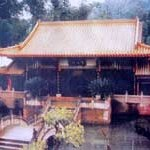
The government of the People’s Republic of China built a palace-like museum to house the many awards and honors received by H.H. Master Wan Ko Yee along with examples of his paintings, calligraphy and books on logic and Buddhist philosophy. This was the only such museum constructed while the honoree was still living. The buildings and gardens are in the classic Chinese Imperial style and consist of seven separate pavilions or “halls.”

Master Wan Ko Yee Museum in Sichuan, China

Entrance to the Master Wan Ko Yee Museum-China

The Hall of Knowledges at Master Wan Ko Yee Museum in Sichuan, China

At a ceremony held at the museum to honor H.H. Master Wan Ko Yee, the building began to drip nectar. For three years the 5,612 experts and scholars of the World Poets and Culture Congress, from 48 member countries and territories, undertook an exhaustive review in the comprehensive research and merits of H.H. Master Wan Ko Yee with respect to Buddhism, the Humanities, Chinese painting and calligraphy and ethical morality. Based on the assessment of their findings, the Fourth Session of the World Congress bestowed upon H.H. Master Wan Ko Yee the title “International Master: of the “Preeminently Distinguished” literary rank, or “Preeminent Distinguished International Master” in full. H.H. Master Wan Ko Yee was presented with a mortar, robe and the inscribed gold medallion of the “Preeminent Distinguished International Master.” This award was announced in Hungary with a congratulatory awards ceremony held in Sichuan Province in China at the Master Wan Ko Yee Museum. During that presentation the perfectly dry museum dripped nectar and auspicious clouds and a dragon appeared in the bright blue sky.

link: https://wisdomtea.org/2023/01/05/h-h-master-wan-ko-yee-honored-with-museum-dedicated-in-his-honor/

Receiving Dharma

Receiving Dharma

You can receive the dharma from many sources. You can listen to discourses given by dharma kings, rinpoches, lamas, or great dharma teachers or read their writings. You can also read the exoteric and esoteric texts as well, along with the classic commentaries on these texts by fully-realized masters. But how can you tell if these are authentic teachings?  How do you know if the master or teacher is a true master and, even if they are, how do you know if the translations you receive are correct if the original source was not in English? This is even true with the holy sutras and tantras which come to us from various traditions, cultures, and translations. You must remember that it took centuries and the power and resources of kings and emperors for these translations to be completed in China, Japan, Tibet, and other Buddhist countries and the subsequent testing of their correctness by greatly accomplished holy ones. They can only be considered correct if they work.

Does following them result in becoming a fully enlightened being? How do you tell if someone is an accomplished one? They will exhibit complete mastery of the sutras and tantras and manifest great proficiency in all five of the vidyas. You need to quickly develop your wisdom to ascertain what you can use and what you cannot and who is a true dharma king or rinpoche and who is not. You need to listen to the discourses and read the books of His Holiness Dorje Chang Buddha III. His Holiness teaches the correct Buddha-dharma and has exhibited His mastery of all five vidyas. You can rely on His discourses.

Master Mipam Gyatso (1846-1912) of the Nyingma Sect also warned us that “…as sutras and tantras prophesy, there are many who, having abandoned the profound meaning through dry analysis seems so plentiful and so good, distribute quasi-doctrine for material gain, leading those of low merit and small intelligence on a perverse path at this time of the end of the era (Dharma-Ending Age).”

His Holiness Dorje Chang Buddha III told us that the real words of dharma will enlighten people and make people’s fortune increase and get rid of their disasters and help them enter the bodhi state. The Buddha further said that the dharma must be taught according to the Buddha’s Tripitaka and other commentaries of those who have realized enlightenment (saints). It does not matter how high a person is who gives the words of dharma or whether he or she is a lay person or a monastic, if the teachings are not according to the Tripitaka or the tantras and if they are not according to bodhichitta and given out of compassion then they will contain some problems. The dharma must tell us how to attain happiness and how to walk the correct path to achieve liberation and freedom from the cycle of reincarnation or it is of no value.

The Buddha has also said that it is very precious to have the necessary affinity to be able to listen to the dharma in our cultivation. Listening to the true dharma for a day may achieve what you can’t get from ten years or even decades of practicing and meditation by yourself…In reality, listening to the dharma is a reward for the merit you have accumulated. Otherwise you would not even have the opportunity to do so. It is not easy to get such an opportunity… This is because it is a matter of karmic conditions related to good fortune.

If you do not understand the many principles of Buddhism, your cultivation will be wasted because you will practice based upon a confused understanding of the teachings. It is necessary to listen to discourses by His Holiness and read genuine Buddhist books to know how to cultivate yourself properly.

How you listen to dharma is also important. The analogy of the three pots is often given in this regard. A pot can have three faults: it can be upside down, it can be dirty, or it can be full of holes. It is useless for holding water if it has any of these faults since 1) the water cannot go in, 2) if it goes in, it will be contaminated by filth, or 3) if it does go in and it is pure, it will not remain. Similarly, even if you have the good fortune to hear the dharma, it will not help you if you 1) do not pay attention, 2) though paying attention, misunderstand what is heard or listen with a bad motivation, or 3) do not remember what was said.

Modern people may lack the incredible capacity for memorization possessed by those in ancient India and Tibet, but we do have the advantage of electronic recordings and the printed word. We should repeatedly listen to and reread the teachings until we thoroughly understand the principles being expounded and practice them daily–that is real understanding.

We also have the “Seven Dharma System” of listening to Dharma Discourses given to us by H.H. Dorje Chang Buddha III that provides a simple method for listening to, understanding, and using or applying the dharma to our daily lives. The Xuanfa Five Vidya Institute (XFVU) has developed a series of seminar/courses that uses this method to help us become accomplished.

It is not enough to just listen to or read or even memorize the words of dharma. You must understand the dharma and apply it to your daily life. All of the teachings of the Buddha were intended to be put into practice and not just serve as the basis for intellectual discussion or study. Your actions, speech and thoughts must be consistent with the dharma. Dorje Pa Mu’s book Dharma That Every Buddhist Must Follow is an excellent guide as are all of her and H.H. Dorje Chang Buddha’s books and regular discourses. However, this is just one part. You must read the book H.H. Dorje Chang Buddha III to be able to understand where the true Buddha-dharma is in the world today.

The sutras teach that when attending a dharma lecture or listening to any dharma teacher or lama, a practitioner should concentrate on listening and learning the dharma. He should avoid personal reactions to the teacher, such as, the teacher 1) has/has not violated the precepts; 2) comes from a poor/wealthy background; 3) has a pleasant/unpleasant physical appearance; 4) has good diction/a speech impediment; or 5) has a melodious/harsh voice. Furthermore you should heed the advice of the Buddha who gave us four guidelines in the Catuhpratisarana and the Samdhinirmocana Sutras:

Rely upon the teaching, not the teacher.
Rely upon the meaning, not the text.
Rely upon the definitive meaning, not the provisional meaning.
Rely upon prajna (wisdom), not consciousness.
You should become familiar with the Tripitaka and tantras so that you can evaluate the authenticity of any teaching and then practice those teachings and see if they really work. You should also rely on the “128 Evil and Erroneous Views” contained in the Supreme and Unsurpassable Mahamudra of Liberation to evaluate the validity of what you are reading.

link: https://wisdomtea.org/2022/12/29/receiving-dharma/

Three foods options to boost immune system

Three foods options to boost immune system

If you’re looking for ways to prevent colds, the flu, and other infections, then you can try these 3 food options. Feeding your body with these 3 food options may keep your immune system strong.

#1 Citrus fruits

Vitamin C, or ascorbic acid, is a water-soluble vitamin well known for its role in supporting a healthy immune system. Most people turn straight to vitamin C after they’ve caught a cold. That’s because it helps build up your immune system.

Vitamin C is thought to increase the production of white blood cells, which are key to fighting infections.

Citrus fruits are an excellent source of vitamin C that fights free radicals in the body which may help prevent or delay certain cancers and heart disease, and promote healthy aging.

Popular citrus fruits include grapefruit, oranges,  clementines, tangerines, lemons, and limes.

#2 Red Bell Peppers

A cup of chopped red bell pepper contains nearly three times more vitamin C than an orange—190 mg. Red peppers are also a great source of vitamin A, which promotes eye health.

#3 Broccoli

Broccoli is one of the healthiest vegetables you can put on your plate.

One cup of raw chopped broccoli has 81 mg vitamin C. That’s not quite as much as orange juice, but a big serving of raw broccoli provides most of the vitamin C you’ll need for one day.

Link: https://wisdomtea.org/2022/12/22/three-foods-options-to-boost-immune-system/

Finding a True Vajra Master

Finding a True Vajra Master

The practice of esoteric Buddhism depends on establishing the proper relationship with an authentic vajra master. This requires that a karmic affinity exists between the master and the disciple. A disciple must carefully choose his or her master and the master must select the disciple as well to determine whether or not the potential disciple is a suitable vessel to receive and understand the teachings of Buddhism. An unqualified disciple is not allowed to receive the great tantra. Once the relationship between a disciple and a vajra master is established, the disciple must respect his or her master as a Buddha throughout his or her lifetime. Once you have found an authentic master, you should begin to learn the teachings in a fully committed, whole-hearted way. If there are Bodhisattva masters present, you should learn from them. The rules of the dharma require that you must learn from your vajra master in order to attain accomplishment.

It is critical in practicing esoteric Buddhism that you envision the master as being capable of developing the fundamentals and that you rely on this master for your liberation by faithfully establishing your actions, speech, and thought to be the same as your master’s. Paying utmost and sincere respect to your master is essential to the way of becoming a Buddha. This is because when the master is treated with respect as a Buddha, you are learning from a Buddha and only a Buddha can liberate you. If you cannot see your master as a Buddha, how can he or she confer the special blessings of a Buddha that can enable you to become enlightened? If you view your master as an ordinary person you will definitely only receive the results of an ordinary person, no matter what level of realization the master may have.

You must know that your three karma gates (conduct, speech, and thought) must correspond to the three karmas of your vajra master. However, it is essential to clearly evaluate and verify the qualifications the master possesses. If the master does not have an understanding of the sutras, possess the realizations of Buddha-dharma, or is able to perform two or three of the five vidyas that are beyond the ordinary person’s abilities and powers, the master is not qualified. This so-called master is an ordinary person and is not qualified to be considered a master. Corresponding to the three karmas of a unqualified master can lead you to being guilty of the most heinous crimes.

The three steps of showing respect to a vajra master are:

1.  Do your best to serve and please your master.

2.  Have complete confidence in the teachings of your master.

3.  Treat your master and the Buddha as one and the same.

There are many different types and levels of masters:

  • The refuge master
  • The conditional or basic master (sometimes referred to as a doctrine master)
  • The vajra master

Your refuge master is the one from whom you receive the refuge vows and precepts and who teaches you how to practice the refuge state.

The conditional or basic masters, who may or may not also be your refuge master, are kind and dignified Buddhist teachers who are very knowledgeable and compassionate. This is the master that you listen to for his or her interpretation of the sutras or discourses. These discourses are according to the teachings of sutra-pitaka. When the conditions are right, you may study or learn from such a master. Even a great vajra master or dharma king may serve as your conditional master or even your refuge master.

On the other hand, the vajra master teaches the tantra and confers the tantric initiation. Your vajra master is the master who transmits the Buddha-dharma to you and initiates you in the Buddha-dharma. The disciple follows the doctrine of this master in the practice of the disciple’s yidam. The vajra master also teaches and transmits the doctrines of exoteric Buddhism. The high level vajra masters have acquired liberation from the cycle of birth and death and have already obtained the dharmakaya themselves.

The highest of all is the dharma king master who represents the highest accomplishments of all with an understanding of the Tripitaka and tantras that is equal to the Buddha, who is able to conduct all of the inner tantra initiations, and who has the highest level of achievement in all of the five vidyas. Such a being has direct contact with the Buddhas and Bodhisattvas and can exhibit supernatural powers both in the mandala and in other ways.

A disciple may take refuge with any vajra master who can meet the qualifications listed below and who can arrange that the disciple will receive the appropriate inner tantra initiations when the disciple is ready to receive them, either by conducting them or by having his or her vajra master conduct them. This means that a beginning vajra master must have as his or her master an authentic inner tantra master or a dharma king or Buddha who will serve as the disciple’s “Grand Master” and give the highest initiations. If you want to achieve liberation, you should not take as your master one who does not meet these standards.

As a minimum, any master must have very high moral achievement; must understand the meaning of the Buddha’s teachings and have command of sutra and tantra; is conversant in the five vidyas; can continue the dharma lineage by having sufficient merit to disseminate the Buddha-dharma to liberate all sentient beings; and have received the Vajra Acarya Initiation or other form of certification from someone who possesses the qualifications to bestow it. A vajra master must also have the other four virtues of always obeying his or her master’s orders; not violating any of the esoteric or exoteric precepts; expounding the Correct Dharma; and having equal compassion for all believers, never giving up on them, and loving everyone—even his or her enemies. In addition, a vajra master should diligently practice the principles explained in “What Is Cultivation?,” perfect the six paramitas, and be able to manifest at least two of the five vidyas. They must also have the approval of their vajra master to enter a mandala and perform empowerments and initiations for disciples. You can count on following such masters to reach liberation.

An inner tantra master, in addition to the above conditions, must possess the mandala power to confer at least one of the inner tantra initiations. The disciple must be able to see evidence that the dharma protecting deities have actually come to the mandala. (In this context, mandala refers to the sacred altar area where initiations are given.) An inner tantra master must be able to document that he or she has met the qualifications for giving inner tantric initiations. A dharma king must possess all four divisions of the inner tantra initiations and the supreme secret inner tantra initiations in addition to all the criteria stated above and greatly excel in all five vidyas. In short, a dharma king must be able to communicate directly with the saints or great holy ones (Buddhas and Bodhisattvas). A true holy dharma king also possesses a vajra dharma wheel (dharmachakra) that can make decisions concerning who should receive which inner tantra initiations as well as perform other miraculous functions.

There is also the Holy Form of Inner Tantra Initiations that is even more rare and will not be discussed here. Read H.H. Dorje Chang Buddha III for more information on this very high form of practice. There are very few people in the world today who can perform it.

You should never be confused by outer appearances. Do not misconceive the false as the true and mistake outer tantra initiation as inner tantra initiation. Most empowerments or initiations given today are only outer tantra initiations. The inner tantra initiation is for people with the utmost Mahayana’s faculty to enter Buddhahood in their current lifetime and not for regular practitioners. Moreover, the saint who can confer an inner tantra initiation is very rare; it is hard to find one in 10,000 great rinpoches. However, you should never look down upon outer tantra initiation and its practices that were also handed down by the Buddhas and also possess the tantra blessing power. If you correspond your three karmas with the teachings of your master and practice accordingly, then you can get out of reincarnation by means of outer tantra initiation.

Practitioner Mi-Kong in How to Recognize the Vajra Tantra states:

“Tantra provides a shortcut for achievement and for the highest level of attainment (that is, for one who practices unexcelled yoga, Supreme Tantra enables one to become a Buddha in the current life, make the whole body transparent, transform miraculously at one’s will and be the same entity as the universe). Hence, many practitioners have devoted their entire life to seeking the utmost tantra since Adharma Buddha (the Adi-Buddha) started teaching tantra. I have studied tantra for decades in Tibet and have seen an enormous amount of tantra—similar to a deep ocean—that is immense, concise and wise. Many great virtuous ones throughout Tibet have achieved Nirvana based on tantra. Consequently, a number of normal Buddhism teachers and false practitioners pretend to be rinpoches or khutukhus and claim themselves to be vajra masters. They teach false tantra. Innumerable innocent people have been deceived and learned nothing but rather wasted time and effort; even worse, some have entered the wrong paths and become the devil’s offspring. Especially during the current degenerate period, it is difficult to distinguish between a Buddha and a devil, and there are more false masters than can be counted. Sentient beings are easily bewildered by false dharma and deceiving masters.”

The United International World Buddhism Association Headquarters has developed a system for determining the qualifications and levels of accomplishment of various masters. You should refer to their public announcements on how to determine the level of any master so that you will not be misled. You should also know that until any master reaches a very high level of non-regression, he or she can devolve into an ordinary being even though he or she was once a true vajra master. Reading the 128 Evil and Erroneous Views and listening to recorded dharma discourses given by H.H. Dorje Chang Buddha III are also helpful in knowing what to look for in a vajra master.

Link: https://wisdomtea.org/2022/12/15/finding-a-true-vajra-master/

True innocence relieves the suffering of many

True innocence relieves the suffering of many

Once upon a time, the Enlightenment Being was born as a fish in a pond in northern India. There were many kinds of fish, big and small, living in the pond with the Bodhisatta.

There came to be a time of severe draught. The rainy season did not come as usual. The crops of men died, and many ponds, lakes and rivers dried up.
The fish and turtles dug down and buried themselves in the mud, frantically trying to keep wet and save themselves. The crows were pleased by all this. They stuck their beaks down into the mud, pulled up the frightened little fish, and feasted on them.

The suffering of pain and death by the other fish touched the Enlightenment Being with sadness, and filled him with pity and compassion. He realized that he was the only one who could save them. But it would take a miracle.

The truth was that he had remained innocent. by never taking the life of anyone. He was determined to use the power of this wholesome truth to make rain fall from the sky, and release his relatives from their misery and death.

He pulled himself up from under the black mud. He was a big fish, and as black from the mud as, polished ebony. He opened his eyes, which sparkled like rubies, looked up to the sky, and called on the rain god Pajjunna. He exclaimed, “Oh my friend Pajjunna, god of rain, I am suffering for the sake of my relatives. Why do you withhold rain from me, who am perfectly wholesome, and make me suffer in sympathy with all these fish?”

“I was born among fish, for whom it is customary to eat other fish – even our own kind, like cannibals! But since I was born, I myself have never eaten any fish, even one as tiny as a rice grain. In fact, I have never taken life from anyone. The truthfulness of this my innocence gives me the right to say to you: Make the rains fall! Relieve the suffering of my relatives!”

He said this the way one gives orders to a servant.

And he continued, commanding the mighty rain god Pajjunna: “Make rain fall from the thunderclouds! Do not allow the crows their hidden treasures! Let the crows feel the sorrow of their unwholesome actions. At the same time release me from my sorrow, who have lived in perfect wholesomeness.”

After only a short pause, the sky opened up with a heavy downpour of rain, relieving many from the fear of death – fish, turtles and even humans. And when the great fish who had worked this miracle eventually died, he was reborn as he deserved.

Link: https://wisdomtea.org/2022/12/08/true-innocence-relieves-the-suffering-of-many/

Dharma Assembly of Empowerment by Guan Shi Yin Bodhisattva’s Mind of Great Compassion ——Note Written Afterwards to Describe the Most Magnificent Scene at the Site

Dharma Assembly of Empowerment by Guan Shi Yin Bodhisattva’s Mind of Great Compassion ——Note Written Afterwards to Describe the Most Magnificent Scene at the Site

Written By: Hua Yan (Chen, Shuyan)

In September this year, I had the good fortune to attend the Dharma Assembly of Empowerment by Guan Shi Yin Bodhisattva’s Great Compassion and received great empowerment from Guan Shi Yin Bodhisattva. The effect was very magnificent. I take this opportunity to share my experience and feelings at that time with my fellow cultivators.

At the beginning of the dharma assembly, I was a little nervous. I closed my eyes and raised my arms to the horizontal position. I bent my legs slightly. A short while later, I heard the hearty laughter from some people. I wanted very much to know who received the empowerment from Guan Shi Yin Bodhisattva so quickly, but I dared not open my eyes.

I firmly remembered what the presiding master told us and did my best to keep my mind calm and focused. Suddenly, a strong heat flow went from my right shoulder to the left shoulder. My hands then began waving spontaneously to the left and right. I felt heat emitting from my body. Next, I opened my voice to cry and shout. My hand-waving and crying lasted for a while and then gradually came to a stop. At this time, my body felt hot and sweated. I felt rather tired and so sat down on the ground.

After resting for a while, I stood up with my eyes still closed. I raised my arms again. At this time, I heard someone singing. The voice of singing came closer from far away and in a short while was behind me. Ah, I heard clearly that the song was the Six Character Great Bright Mantra. The ear-pleasing singing changed from the solo singing at the beginning to a chorus with many people. Eventually I heard that the wonderfully pleasant singing also came from the space. I felt that the Bodhisattva was empowering us from the space. I naturally joined the singing. Tears unintentionally flew down from my eyes. That was my gratitude to the kindness received! Meanwhile, my legs started to tremble and my hands were waving again. However, the movement this time was somewhat different from what I did earlier and was like dancing along with the pleasant singing. At that time, my mood was joyful and delighted and my body was very relaxed. In this manner, my hands were waving continuously until the dharma master announced, “Stop.”

After the dharma assembly concluded perfectly, the relaxed and pleasant feeling remained in my mind. I am extremely grateful!

After the dharma assembly, I have two beneficial effects from the empowerment. The first is that my shoulder pain has completely disappeared! Shoulder pain was an old illness that plagued me for many years. The second is that I am now much more energetic than before! In the past, when I was practicing the dharma or reading respectfully Buddhist books, I would feel sleepy after half an hour. I am now much more energetic and will not dose off even after two hours.

I am extremely grateful to the good fortune of attending such a magnificent dharma assembly this time!

I prostrate to H.H. Dorje Chang Buddha III!

I prostrate to the greatly loving and greatly compassionate Guan Shi Yin Bodhisattva!

Link: https://wisdomtea.org/2022/12/01/dharma-assembly-of-empowerment-by-guan-shi-yin-bodhisattvas-mind-of-great-compassion-note-written-afterwards-to-describe-the-most-magnificent-scene-at-the-site/

My Dog Becomes a Buddhist

My Dog Becomes a Buddhist

Regina Chang

Hua Zang Si is a temple in the United States that propagates the dharma of H.H. Dorje Chang Buddha III. I have been a disciple at Hua Zang Si since I was in middle school. As a young adult, I gained valuable wisdom and experience attending temple with my family. The blessings I have received are innumerable and I am always grateful for everything I learn from the true Buddha dharma.

My Dog, Pansy

On Saturday, May 6, 2017, my dog was able to take refuge with Hua Zang Si temple in San Francisco under Qupei Rinpoche after attending a one hour fish release dharma assembly. I adopted Pansy, in October 2016 from the San Francisco SPCA Mission branch. Pansy is now two and a half years old, but still very boisterous and energetic like a puppy. She is very playful and likes to jump on people. She also barks and runs a lot when there are many people and dogs around her and she wants their attention on her. I was worried about Pansy taking refuge during the fish release because she is often very vocal and difficult to control in crowds.

As the fish release dharma assembly began, being near five other dogs in attendance should have driven her into a frenzy, yet she remained calm and simply paced around. Pansy only barked two times during the whole ceremony. It was a shock to me that she was not barking and crying nonstop the whole time. When the master came over to bless Pansy with holy water, she sat still and regarded everything with a calm disposition. She didn’t bark at Qupei Rinpoche or jump on her. She was very well behaved. As I went down to the dock to release fish, Pansy sat down next to my mom and waited patiently for me to return.

Pansy met the five other dogs and they were now Buddhist brothers and sisters.

After the ceremony was complete, Pansy met the five other dogs and they were now Buddhist brothers and sisters. It was a beautiful day filled with a lot of happiness. All the monastics gave Pansy water to drink and pet her. I could tell Pansy was content and happy by the way her tail wagged and her trot around me. I want to give thanks to the sangha, the master, and the Buddha for allowing her to gui yi (taking refuge in Chinese). I hope in the future, Pansy can receive more blessings and have a chance to meet H.H. Dorje Chang Buddha III. In the future, my wish is for Pansy to reincarnate to the human realm to cultivate and study Buddhism to get out of the cycle of birth and death.

Link: https://wisdomtea.org/2022/11/24/my-dog-becomes-a-buddhist/