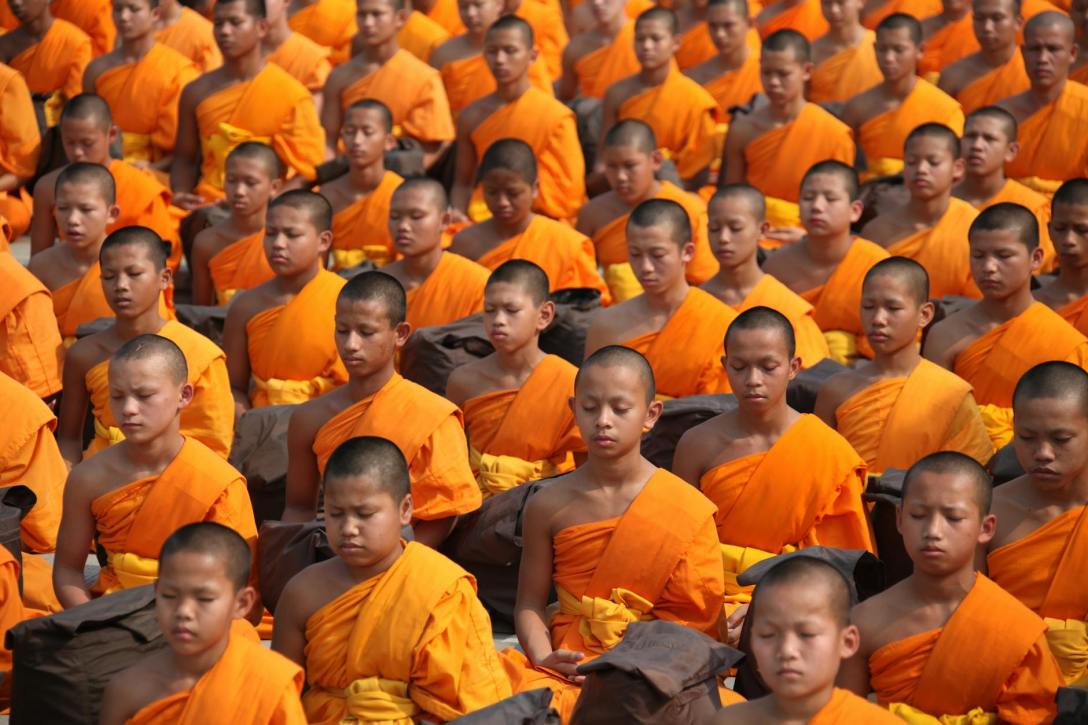
Everyday Reflections on Change and Awakening

Everyday Reflections on Change and Awakening

Everything around us is in motion. The world we inhabit is constantly shifting, even when we convince ourselves it is stable. The ground beneath us changes through earthquakes, erosion, and construction. Cities expand, then contract. Technology that feels cutting-edge today becomes obsolete tomorrow. The phone you hold in your hand, the apps you scroll through, the platforms you rely on—all of them will eventually be replaced, updated, or forgotten.

Our awareness itself is never fixed. Thoughts appear and vanish, emotions surge and dissolve, perceptions shift moment by moment. What we call “mind” is not a solid possession but a flowing process, constantly changing. To recognize this truth is to begin living wisely.

Consider how quickly our digital lives change. A phone that seemed essential two years ago now feels outdated. Social media trends rise and fall in days, sometimes hours. A post that feels urgent and important today is forgotten tomorrow. Even the way we communicate—texting, video calls, apps—evolves so rapidly that what was once revolutionary soon becomes ordinary.

Relationships also reflect impermanence. Friends move away, families grow and transform, love blossoms and sometimes fades. Circumstances shift—jobs begin and end, fortunes rise and fall, homes are built and abandoned. Even our minds change—what we feared yesterday may not frighten us today, and what we desired once may no longer matter.

Impermanence is not a curse. It is the very condition that makes growth possible. Because things change, we can heal, we can learn, and we can awaken. Faith opens the heart, reflection sharpens the mind, and direct realization transforms the whole being. Each path is valuable, and each step brings us closer to freedom.

When we stop clinging to what cannot last, we begin to live with greater ease, compassion, and clarity. Impermanence becomes not something to fear, but the doorway to liberation. Everything changes, and to see this clearly—whether through trust, reflection, or direct experience—is to step onto the path of freedom.

Think about the pace of modern living. The job you hold today may not exist in ten years. Entire industries rise and fall—what was once considered secure can vanish overnight. The music you listen to, the shows you stream, the memes you laugh at—all of them pass quickly, replaced by something new.

Even our bodies remind us of change. The energy of youth gives way to the wisdom of age. Strength rises and falls. Health shifts from wellness to illness and back again. We are constantly reminded that nothing stays the same.

Stress itself is a teacher of impermanence. The worries that consume us today often fade tomorrow. The deadlines that feel overwhelming eventually pass. The arguments that feel sharp and painful lose their sting with time. What seems unbearable in the moment often becomes just another memory.

Impermanence is not only about loss—it is also about possibility. Because things change, we are not trapped forever in suffering. Because things change, we can grow beyond our mistakes. Because things change, compassion can deepen, wisdom can expand, and joy can arise in unexpected places.

Technology itself shows us this lesson. The tools we use evolve, but so do we. We adapt, we learn, we discover new ways to connect. Social media may be fleeting, but the connections we make can still be meaningful. The impermanence of platforms reminds us not to cling to the medium but to cherish the message.

To live with awareness of impermanence is to live with freedom. When we see that nothing can be clung to forever, we stop grasping so tightly. We begin to appreciate each moment for what it is, knowing it will not last. We treat others with more kindness, because we know relationships are fragile. We treat ourselves with more compassion, because we know our struggles will change.

Everything changes. The rise and fall of technology, the shifting tides of social media, the stress of daily life, the quiet changes of our own hearts—all of these are reminders of impermanence. To see this clearly is to live with wisdom, compassion, and freedom. Impermanence is not something to resist—it is the doorway to awakening.

Change is everywhere. To recognize it, accept it, and live with it is to step into a life of clarity and liberation.

Link: https://wisdomtea.org/2025/12/12/everyday-reflections-on-change-and-awakening/

Rewards

Rewards

Friends, there are eight profound benefits that arise from living with wisdom and integrity. These benefits are not small or fleeting; they are deep sources of joy, nourishment for the heart, and pathways to peace. They lift us up, bring happiness, and guide us toward lives of meaning, fulfillment, and well-being. They are heavenly in nature, yet they are realized here and now, in the choices we make each day. What are these eight?

The first benefit comes when a person places their trust in the Buddha — the awakened teacher who discovered the path to freedom. To take refuge in the Buddha is to recognize that awakening is possible, that human beings can rise above confusion and suffering. This trust gives direction, hope, and confidence. It is like finding a guiding light in the darkness.

The second benefit comes when a person places their trust in the Dharma — the teachings that reveal the way. To take refuge in the Dharma is to embrace truth, wisdom, and compassion as the compass of one’s life. These teachings are not abstract; they are practical, showing us how to live with clarity, kindness, and balance. They are like a map that leads us safely through the wilderness of life.

The third benefit comes when a person places their trust in the Sangha — the community of practitioners who walk the path together. To take refuge in the Sangha is to recognize the power of companionship, encouragement, and shared effort. No one walks alone. The Sangha is like a circle of friends who remind us of our highest aspirations and help us stay true to them.

Beyond these three refuges, there are five great gifts that anyone can give simply by living ethically. These gifts are timeless, pure, and respected by the wise. They are not open to doubt, and they bring peace both to the giver and to the world. They are called “great gifts” because they are immeasurable in their reach. When we live by them, we give safety, trust, and freedom to countless beings, and we share in that freedom ourselves.

The first great gift is the choice not to harm life. When a person refrains from killing, they give safety to all beings. Every creature, from the smallest insect to the largest animal, benefits from this gift. In giving safety, the person also experiences safety in return. Their heart becomes lighter, their conscience clear, and their life more peaceful. This is the fourth benefit of merit.

The second great gift is the choice not to steal. When a person respects what belongs to others, they give freedom from fear and oppression. No one needs to worry about losing what is theirs. In giving this freedom, the person also experiences freedom in return. Their relationships are built on trust, and their life is free from suspicion. This is the fifth benefit of merit.

The third great gift is the choice to live with integrity in relationships, avoiding sexual misconduct. When a person honors boundaries and respects others, they give trust and security. Families, friendships, and communities flourish in safety. In giving trust, the person also experiences trust in return. Their life is marked by respect and dignity. This is the sixth benefit of merit.

The fourth great gift is the choice to speak truthfully, avoiding lies. When a person speaks with honesty, they give reliability and peace of mind. Others know they can be trusted, and communication becomes clear and wholesome. In giving truth, the person also experiences truth in return. Their words carry weight, and their relationships deepen. This is the seventh benefit of merit.

The fifth great gift is the choice to remain clear-minded, avoiding intoxicants. When a person refrains from substances that cloud the mind, they give stability and safety to others. Their actions are guided by mindfulness and responsibility. In giving clarity, the person also experiences clarity in return. Their life is steady, their mind sharp, and their choices wise. This is the eighth benefit of merit.

These five gifts are ancient and enduring. They are original, long-standing, traditional, and pure from the beginning. They are honored by those who see clearly, and they remain faultless in the eyes of the wise. Together with the three refuges, they complete the eight rewards of merit — benefits of skillfulness, sources of happiness, pathways to peace, leading to what is desirable, joyful, and good.

To live in this way is to live a life that is wholesome, uplifting, and deeply fulfilling. It is to walk a path that brings happiness not only to oneself but to countless others. These eight rewards are not distant promises; they are realities that unfold in the present moment, whenever we choose trust, wisdom, compassion, and integrity. They are the foundation of a life that is truly free.

Link: https://wisdomtea.org/2025/12/04/rewards/

The Brightness of the World

The Brightness of the World

“He showed me the brightness of the world.”

That’s how my teacher, Ajaan Fuang, once described his debt to his own teacher, Ajaan Lee. His words took me by surprise. I had only recently begun studying with him, still fresh from an education where I’d learned that serious Buddhists took a dark, pessimistic view of life. Yet here was a man who had dedicated his life to the Buddha’s teachings, speaking instead of brightness.

Of course, by “brightness,” he didn’t mean the pleasures of food, art, travel, sports, or family life—the kinds of things you’d find in the Sunday paper. He was talking about a deeper happiness that comes from within. As I got to know him, I began to see how deeply happy he really was. He could be skeptical of human pretensions, but I’d never call him negative or pessimistic. “Realistic” was closer to the truth. Still, for a long time I couldn’t shake the feeling of paradox: how could the supposed pessimism of Buddhism take shape in such a grounded, joyful person?

Only when I began reading the early texts for myself did I realize that what I thought was a paradox was actually an irony. Buddhism, which gives such a positive view of human potential for real happiness, is often labeled in the West as negative and life-denying.

You’ve probably heard the claim that “Life is suffering” is the first principle of Buddhism—the Buddha’s first noble truth. It’s a famous line, often repeated by teachers and scholars alike. But it’s not quite right. The Buddha actually taught four truths, not one:

  1. There is suffering.
  2. There is a cause of suffering.
  3. There is an end to suffering.
  4. There is a path that leads to that end.

Taken together, these truths are anything but pessimistic. They describe a practical, problem-solving method—like a doctor diagnosing and curing an illness, or a mechanic fixing an engine. You identify the problem, find its cause, and remove it.

What’s special about the Buddha’s approach is that the “illness” he addresses is human suffering itself, and the cure is something anyone can apply. Just as a doctor with a guaranteed cure for measles doesn’t fear the disease, the Buddha wasn’t afraid to face suffering directly. Having discovered a happiness that’s completely unconditional, he wasn’t afraid to point out the stress hidden in the pleasures we cling to. Instead of running away from suffering, he taught us to examine it carefully. By understanding it, we can uncover its cause and bring it to an end—completely. That’s not pessimism; that’s confidence.

So why does the idea of Buddhism as pessimistic still linger? Maybe because, when we approach Buddhism from a Western background, we expect it to answer our own cultural question: Is the world good or bad?

In the Book of Genesis, this was God’s first question after finishing creation: had he done a good job? He looked at the world and saw that it was good. Ever since, people in the West have taken sides—agreeing or disagreeing with that verdict—but always assuming it’s the right question to ask.

When Theravāda Buddhism encountered Christian missionaries during the colonial era, some Buddhists—educated by those same missionaries—accepted that question and tried to answer it on their own terms. They argued that the first noble truth proved God wrong: if life is full of suffering, then the world can’t be “good.” It was an effective debate tactic at the time, but it missed the Buddha’s real point.

The Buddha wasn’t trying to judge creation. He wasn’t asking whether life is good or bad. He was asking a much more practical question: where does suffering come from, and how can we end it?

In one discourse, a brahman named Dīghanakha—whose name means “Long-Nails”—comes to the Buddha and declares, “I don’t approve of anything.” If the Buddha had really meant “life is suffering,” this would have been the perfect time to agree. But instead, he challenged the whole idea of approving or disapproving of life at all.

He explained that there are three possible positions:

  1. Nothing is worth approving of.
  2. Everything is worth approving of.
  3. Some things are, and some things aren’t.

Take any of these positions, he said, and you’ll just end up arguing with people who disagree. So what’s the point?

Instead, the Buddha taught Dīghanakha to look directly at his body and feelings as examples of suffering—unstable, unreliable, not worth clinging to as self. When Dīghanakha followed this advice and let go, he caught his first glimpse of something beyond suffering—the Deathless.

The lesson is simple: trying to decide whether the world is good or bad is a waste of time. The real task is to see where suffering arises, understand it, and release it.

The problem isn’t the body or feelings themselves—it’s the clinging to them. The Buddha described all forms of suffering as “the five aggregates of clinging”: attachment to physical form, feelings, perceptions, thought constructs, and consciousness. When we cling to these things, they cause suffering. When we don’t, they lead to lasting benefit and peace.

So the first noble truth, simply put, is that clinging is suffering.

Because of clinging, physical pain turns into mental pain. Because of clinging, aging, illness, and death become emotional torment. The irony is that in trying to hold onto things, we don’t control them—we trap ourselves.

If the Buddha had said “life is suffering,” there would be no escape except death or annihilation. But he didn’t say that. He said clinging is suffering—which means there is a way out. If we can see and let go of our clinging, suffering ends.

Of course, the mind doesn’t stop clinging just because we tell it to. It’s like a stubborn child: if you force it to let go while you’re watching, it just hides its attachments where you can’t see them. The Buddha identified this hiding place—ignorance—as the real root of suffering. Ignorance gives rise to craving, which leads to clinging.

That’s why the fourth noble truth describes a path of practice: the Eightfold Path. It includes right view, right resolve, right speech, right action, right livelihood, right effort, right mindfulness, and right concentration. In short, it’s about abandoning and developing—abandoning unskillful habits and developing qualities that bring clarity and awareness.

Abandoning means avoiding thoughts, words, and actions driven by craving. Developing means cultivating mindfulness, concentration, and discernment until they’re strong enough to see clearly into the mind. Only then can you let even those go.

It’s like climbing a ladder to reach a rooftop. You hold onto each rung until you find a higher one, letting go as you rise. As your view expands, you see more clearly where the mind is clinging and what needs to be done:

  • The parts that are suffering should be understood.
  • The causes of suffering should be abandoned.
  • The path should be cultivated.
  • The end of suffering should be realized.

Step by step, you climb until you reach the roof. That’s when you can finally let go of the ladder completely—and be free.

So the real question isn’t whether life or the world is good or bad. It’s this: how skillfully are we handling our experience? Are we clinging in ways that keep suffering going, or are we learning to let go wisely?

When we approach life with all four noble truths in mind—not just the first—we see that life contains both suffering and the end of suffering. And that brings hope: the hope that we can see clearly, let go of what binds us, and discover for ourselves the brightness that shines when suffering finally comes to an end.

Link: https://wisdomtea.org/2025/10/16/the-brightness-of-the-world/

Why the Same Mistake Affects People Differently

Why the Same Mistake Affects People Differently

Friends, let’s talk about karma—not just as a cosmic scoreboard, but as something deeply personal and shaped by who we are.

Some people believe that whatever kind of karma you create, you’ll experience it exactly that way. If you do something bad, something bad will happen to you—no exceptions. But that view is too rigid. It leaves no room for growth, no space for transformation, and no path to peace.

Instead, consider this: the way karma plays out depends not just on the action itself, but on the person who experiences it. Karma isn’t a fixed punishment—it’s a process, and it interacts with the state of your mind, your heart, and your development as a human being.

Let me explain with a few examples.

Imagine two people lose their temper and yell at a coworker. One of them is already carrying a lot of emotional baggage—resentment, insecurity, and stress. That outburst leads to guilt, shame, and maybe even disciplinary action. It spirals into something bigger.

The other person has spent time working on themselves. They’ve built emotional awareness, practiced patience, and cultivated kindness. When they slip and raise their voice, they recognize it quickly, apologize sincerely, and repair the relationship. The same mistake, but two very different outcomes.

Or think about someone who cheats on a small test. One student is already struggling academically and emotionally. That act of dishonesty weighs heavily on them, leading to anxiety and a sense of failure. Another student, who’s generally confident and well-supported, might feel a pang of guilt but use it as a wake-up call to study harder next time. Again, same action—different impact.

Now picture this in terms of salt and water.

If you drop a salt crystal into a tiny cup of water, the water becomes salty and undrinkable. But if you drop that same crystal into a vast river, it dissolves without a trace. The salt is the karma. The water is your inner life. If your heart and mind are small and undeveloped, even a little negativity can overwhelm you. But if you’ve cultivated depth, compassion, and wisdom, you can absorb it and keep flowing.

Let’s look at justice in society.

Imagine two people shoplift the same item—say, a $5 snack. One is homeless and desperate. They’re arrested, fined, and possibly jailed. The other is a teenager from a wealthy family. They’re let off with a warning. The same act, but the consequences are shaped by who they are and the context they live in.

This isn’t just about external systems—it’s about our internal ones too. If you’re living in emotional scarcity—feeling unloved, unsupported, or disconnected—your mistakes hit harder. But if you’re living in emotional abundance, with a strong foundation of self-worth and understanding, you’re more resilient. You can face your flaws without being crushed by them.

Here’s another image to consider.

A goat butcher catches someone stealing a goat. If the thief is poor and powerless, the butcher might beat him, tie him up, or worse. But if the thief is a king or a minister, the butcher wouldn’t dare lay a hand on him. He’d bow and beg: “Please, sir, could you pay for the goat?”

Now imagine this in a modern setting. A cashier catches someone trying to walk out with unpaid groceries. If it’s a struggling single parent, they might be reported and shamed. If it’s a well-dressed executive who forgot to scan an item, they might be given the benefit of the doubt. Same action—different treatment.

So what does this mean for us?

It means that our spiritual development matters. It means that we’re not just at the mercy of our past actions—we can shape how those actions affect us. By growing in virtue, wisdom, and compassion, we create space inside ourselves. We become like the river, not the cup.

And it means we should be gentle with ourselves and others. Not every mistake deserves harsh punishment. Sometimes, what someone needs isn’t judgment—it’s support, understanding, and the chance to grow.

If we believe karma is fixed and unforgiving, we close the door to healing. But if we understand that karma interacts with who we are, we open the door to transformation. We make space for the spiritual life. We make space for peace.

Link: https://wisdomtea.org/2025/10/09/why-the-same-mistake-affects-people-differently/

The Truth of the Heart

The Truth of the Heart

We don’t usually think of Buddhism as an emotional religion. Early Buddhism, especially, is often portrayed as something that lives more in the head than in the heart—calm, rational, even detached. But if you look closely at the tradition, you’ll find that from the very beginning it’s been powered by a deep emotional current.

Think about the story of Prince Siddhartha—the Buddha before his awakening—and his first encounters with aging, sickness, death, and finally a wandering spiritual seeker. This story has endured because it speaks directly to the heart. When the young prince saw aging, illness, and death for the first time, he was shaken to the core. He saw them not as abstract facts of life, but as terrifying realities. And when he saw the forest contemplative, he pinned all his hopes on that way of life as his only escape.

As the Buddhist poet Aśvaghoṣa tells it, the prince wasn’t lacking in well-meaning friends and relatives trying to talk him out of his conclusions. Aśvaghoṣa even portrays their life-affirming advice in an attractive light. But the prince realized that accepting their advice would mean betraying his heart. So he followed his honest emotions and stepped away from the familiar values of his society, heading toward a deeper truth beyond life and death.

This isn’t a “life-affirming” story in the usual sense. But it affirms something more powerful: the truth of the heart when it longs for a happiness that’s absolutely pure. This longing rests on two key emotions, known in Pali as saṁvega and pasāda. These terms aren’t widely known, but they lie at the very foundation of Buddhism. They not only inspired the young prince’s quest; even after his awakening, the Buddha encouraged his followers to cultivate these emotions every day. In fact, the way he understood and worked with them may be one of Buddhism’s most important contributions to modern culture.

Saṁvega is what Siddhartha felt when he first saw aging, sickness, and death. It’s a difficult word to translate because it bundles together at least three kinds of feelings: a shock of dismay and alienation at the pointlessness of ordinary life; a humbled awareness of our own blindness and complacency; and a sense of urgent need to find a way out. Most of us have felt something like this at some point growing up, but there’s no single English word that really captures it. That alone might be reason enough to borrow the word saṁvega as it is.

But Buddhism doesn’t stop at naming the feeling—it offers a clear strategy for responding to it. Modern culture, by contrast, often treats feelings of saṁvega as dangerous and does a poor job of handling them. Of course, this isn’t unique to our time. In the Siddhartha story, the father’s response represents the way most societies try to deal with such unsettling emotions: he told his son that his standards for happiness were too high, and then tried to drown his unease in pleasures and distractions. He arranged the perfect marriage, built seasonal palaces, provided the finest luxuries, sponsored endless entertainments, and kept a staff of cheerful attendants to cater to his every whim.

In simple terms, the father’s strategy was to get the prince to aim lower—to settle for a happiness that was less than pure. If Siddhartha were alive today, the tools might be different—therapy, retreats, spiritual counseling—but the underlying strategy would be the same: distract, soothe, normalize, and make him a productive member of society.

Luckily, Siddhartha was too clear-eyed and courageous to fall for that. And, just as fortunately, he lived in a culture that gave him a real alternative: the contemplative life, which promised a path that honored the truth of his heart.

The turning point comes when the prince sees the wandering ascetic—the fourth sight. Compared to the “dusty, confining path” of household life, the life of the forest seeker looked like open air. Here, he sensed, was a way to find real answers to his deepest questions and to live according to his highest ideals—“as pure as a polished shell.”

The feeling that arose in him then is called pasāda. Like saṁvega, it’s a layered emotion. It’s usually translated as “clarity and serene confidence,” the steadying counterpart that keeps saṁvega from sliding into despair. Siddhartha suddenly saw his situation clearly and felt confidence that a way out existed.

Early Buddhist teachings don’t shy away from the hard truth: the cycle of birth, aging, and death is inherently unsatisfying. They don’t ask us to pretend otherwise or close our eyes. As one teacher put it, Buddhism’s honest recognition of suffering—the First Noble Truth—is a kind of gift. It validates our most sensitive, intuitive sense of reality—something many other traditions try to deny.

From that starting point, the teachings go further. They ask us to look more closely until we see that the real source of suffering isn’t “out there” in society or some external being—it’s “in here,” in the craving that arises within our own minds. Then they point to a solution: the end of suffering, achieved by developing the noble qualities already present in the mind until they’re strong enough to let go of craving entirely, opening onto the Deathless. In other words, the predicament has a practical solution—one within reach of every human being.

This solution is also open to investigation and testing, showing the Buddha’s confidence in his response to saṁvega. This honest, practical approach attracts people who are tired of being told to deny the insights that gave rise to their saṁvega in the first place.

Buddhism doesn’t just manage saṁvega—it actively cultivates it. Facing the big questions of life takes real energy, and saṁvega provides that motivation. That’s why the Buddha encouraged everyone—monastic or lay—to reflect daily on aging, illness, separation, and death, to deepen their sense of saṁvega, and then to balance it with pasāda: trust in the path and in the power of one’s own actions.

For those whose saṁvega runs so deep that they want to leave worldly ties behind, Buddhism offers a well-tested path and a support structure: the monastic saṅgha, which allows them to focus fully on practice without worrying about survival. For those who remain in the world, the tradition offers a way to live without being consumed by it—through generosity, ethical conduct, and meditation. The close, mutually supportive relationship between monastics and laypeople ensures that monks and nuns don’t become isolated eccentrics, and laypeople don’t lose touch with the deeper values that sustain practice.

Buddhism, then, deliberately nurtures saṁvega—a sober recognition of life’s fragility and limitations—and develops it into pasāda, a confident, clear trust in a path that leads beyond them. Along with teachings that have stood the test of time, it offers a living community that keeps the path vibrant. These are things our society urgently needs. As we look to Buddhist teachings for what they can offer modern life, we shouldn’t forget one of their great strengths: the ability to keep one foot outside the mainstream. After all, the traditional image of the path is one that crosses the stream—to the further shore.

Link: https://wisdomtea.org/2025/10/02/the-truth-of-the-heart/

No Killing, No Excuses

No Killing, No Excuses

People often say the Buddha didn’t take sides on big questions — like whether the universe is eternal or not. Because of that, some thought he avoided taking a stand on anything. Some got frustrated and called him indecisive. Others admired him for being open-minded.

But both groups missed the point.

The Buddha didn’t waste time on debates that didn’t help people suffer less. He focused on what really mattered: how to live well. And on that, he was crystal clear.

He taught that unskillful actions — the ones that lead to suffering — include killing, stealing, cheating, lying, harsh speech, gossip that stirs up division, empty chatter, greed, hatred, and wrong thinking. Skillful actions are the opposite: honesty, kindness, generosity, peace, and wisdom.

Killing, especially, was never okay. Someone once asked if there was ever anything it was right to kill. His answer? Anger. That’s it. He never approved of killing any living being. In fact, when a monk told an executioner to kill “compassionately,” the Buddha expelled him from the community. Even suggesting such a thing went against his teaching.

He told his followers that even if they were attacked, they shouldn’t let anger take over. Instead, they should stay calm, speak kindly, and radiate compassion — even toward the people harming them.

When the Buddha gave moral guidelines to everyday people, he didn’t allow for loopholes. The first precept — not to kill — was meant to protect all beings. If you keep it, you offer safety to others and peace to yourself. But if you start making excuses — like “I’ll only kill if I feel threatened” — that protection falls apart.

This ties directly to karma. Unwholesome intentions bring suffering; wholesome intentions bring happiness. If you don’t kill, you don’t create new causes for your own life to be cut short. You might still face the results of past actions, but at least you’re not digging the hole deeper.

The Buddha said virtue is your greatest treasure. People can steal your possessions, but they can’t steal your goodness. And when your goodness is strong and steady, it shields you from the inside out.

Even if you don’t believe in karma or rebirth, the Buddha still said it’s worth living this way. He told people that if you always choose kind, honest actions, you’ll live with a clear conscience — and that’s priceless.

So yes, the Buddha took a stand: no killing, no stealing, no lying. Period.

But today, some leaders say it’s their duty to kill or lie to keep others safe. Even some Buddhist teachers try to argue that the Buddha must’ve allowed exceptions. But he never taught a “just war” idea. No soldier has ever truthfully said, “I killed with the Buddha’s blessing.” That’s one of the most powerful things about Buddhism — and we shouldn’t twist it to fit our compromises.

Some people point to kings or later teachers who went to war and say, “See? Buddhism allows it.” But just because a king who called himself Buddhist fought a war doesn’t mean the Buddha approved.

Others say, “Well, the Buddha didn’t tell kings to stop fighting, so maybe he was okay with it.” But in the Buddha’s teaching, silence only meant consent in small things — like accepting a meal. Most of the time, silence was just being polite. For example, when a soldier asked about heavenly rewards for dying in battle, the Buddha stayed quiet at first. But when pressed again and again, he finally said:

“If a warrior goes into battle thinking, ‘May these people be destroyed,’ and dies with that thought, he’s reborn in a hellish place. To believe otherwise is a wrong view — and wrong views lead to suffering.”

The soldier broke down in tears — not because the Buddha was cruel, but because he realized he’d been misled.

The Buddha was careful when speaking to kings. They had power, but not always wisdom. One king even asked how to attack his neighbors — clearly missing the point. Even King Pasenadi, who respected the Buddha deeply, was often slow to understand. But the Buddha kept guiding him patiently.

Once, he told Pasenadi to imagine four mountains rolling in from every direction, crushing everything. “What should you do?” he asked. The king replied, “Live in line with the Dharma.” The Buddha agreed — aging and death are rolling toward us just like those mountains.

Another time, Pasenadi said:

“People who act badly — in body, speech, or mind — leave themselves unprotected. Even if they have huge armies, they’re still vulnerable. But people who act well — even without armies — are safe, because real protection comes from within.”

Pasenadi didn’t always live up to this, but it left its mark. When another king invaded and was later captured, Pasenadi could have killed him. Instead, he spared his life. It’s hard not to see the Buddha’s influence there.

The Buddha also taught:

“If you kill, you invite someone to kill you. If you conquer, you invite someone to conquer you. If you insult, you invite insult. In this cycle of action, the plunderer is plundered in turn.”

Even Pasenadi, slow as he was, understood the lesson.

The real question is: why don’t we?

Link: https://wisdomtea.org/2025/09/18/no-killing-no-excuses/

The Five Qualities of a True Teacher

The Five Qualities of a True Teacher

Once upon a time, the Blessed One, the Buddha, was staying in the great city of Kosambī, at the peaceful Ghosita’s monastery. The monastery stood just outside the busy town, surrounded by trees and open spaces, a place where monks and lay people often came seeking quiet, guidance, and the company of wise friends.

On one particular day, Venerable Udāyin was sitting in the shade of a large hall within the monastery grounds. Around him was gathered a great crowd of householders—men, women, young and old—who had come to hear the Dharma. They sat close together, some on mats, some on the bare ground, their eyes fixed on him with curiosity and respect. Udāyin spoke with energy, explaining the teachings, answering questions, and holding the attention of the assembly.

Venerable Ānanda happened to walk by and saw this scene. He noticed how Udāyin sat surrounded by such a large gathering of lay people, sharing the Buddha’s words. A thought arose in Ānanda’s mind: “It is good that people wish to hear the Dharma, but teaching many at once is not an easy task.” With this thought, he decided to go directly to the Blessed One to report what he had seen.

Ānanda went to the Buddha’s dwelling. When he arrived, he bowed deeply in respect, then sat quietly to one side, as was the custom. After a moment of silence, he said:

“Lord, Venerable Udāyin is there, surrounded by a large assembly of householders, teaching the Dharma.”

The Buddha listened carefully, and then replied in a calm and steady voice:

“Ānanda, it is not an easy thing to teach the Dharma to others. Speaking about the truth requires more than words. It requires patience, understanding, and the right intention. One should teach the Dharma only when five qualities are well established in oneself. Without these, teaching may confuse more than it clarifies. And what are these five qualities?”

The monks seated nearby leaned in a little closer, and even Ānanda, who knew the Dharma well, straightened with attention.

“First,” the Buddha said, “when teaching the Dharma, one should think: ‘I will speak step by step.’ Do not hurry, and do not overwhelm people with too much at once. Just as one climbs a staircase one step at a time, so too should the teaching be given gradually, beginning with what is simple and clear, and then rising toward the deeper truths.

“Second, one should think: ‘I will explain the sequence of cause and effect.’ People should see how things are connected—how our thoughts shape our actions, how actions bear fruit, how wholesome actions bring happiness and peace, and unwholesome actions bring sorrow and difficulty. If cause and effect are not explained, the teaching will not take root in people’s hearts.

“Third, one should think: ‘I will speak out of compassion.’ The words of the Dharma are not for showing off knowledge or for gaining praise. They should come from a heart of kindness, with the intention to ease suffering and to guide others toward peace. Without compassion, the words may sound empty, sharp, or self-serving.

“Fourth, one should think: ‘I will not speak for the sake of material gain.’ If one teaches with the desire for money, fame, or personal advantage, then the Dharma is misused. The purity of the teaching is lost when it is spoken for the sake of wealth or recognition.

“Fifth, one should think: ‘I will speak in a way that does not harm myself or others.’ The Dharma should never be taught with harshness, arrogance, or anger. True teaching is like a gentle rain that nourishes all it touches, not a storm that breaks branches. It should uplift the listener, bring steadiness to the heart, and offer benefit to both speaker and listener alike.

“So, Ānanda,” the Buddha concluded, “it is not an easy thing to teach the Dharma to others. The Dharma should be shared only when these five qualities are firmly established within the teacher.”

As the Blessed One spoke, the monks reflected silently, some remembering times when they had spoken too quickly, or without compassion, or with hidden motives. Others felt encouraged, understanding more clearly how to approach their own teaching. And Ānanda himself bowed deeply, realizing that the act of teaching was not merely passing on words, but a practice of patience, kindness, and wisdom.

From then on, those who heard this teaching carried it with them—whether they were monks guiding others, or lay people sharing words of kindness at home—remembering that the Dharma shines brightest when it is spoken step by step, with clarity, compassion, and sincerity.

Link: https://wisdomtea.org/2025/08/21/the-five-qualities-of-a-true-teacher/

The Strengths of One Who Is Free

The Strengths of One Who Is Free

One quiet day, Venerable Sāriputta went to visit the Blessed One. The morning was cool, and the forest was alive with soft, scattered sounds—the faint chirping of birds, the rustle of leaves stirred by a passing breeze, the distant crack of a branch falling somewhere deep in the grove. The sunlight filtered through the tall sal trees, casting shifting patterns of gold and green on the forest floor.

When Sāriputta arrived, he bowed deeply, lowering his head in reverence, as one who has found a safe harbor bows to the one who showed him the shore. He then sat quietly to one side, folding his robe neatly, settling his body into stillness. The Blessed One regarded him with eyes full of calm and kindness, his presence like the steady warmth of the morning sun.

After a moment of silence, the Blessed One spoke in a voice that was neither hurried nor slow, but carried the weight of deep knowing.
“Sāriputta, tell me—how many strengths does a monk possess when his mind is completely free from all stains, all clinging, all defilements? Strengths that allow him to speak with unshakable certainty, ‘The defilements are ended in me’?”

Sāriputta’s face lit with respect, for he knew the question was not just about knowledge, but about living truth. “Lord,” he said, “there are eight such strengths. And when these are fully present, a monk can speak not from memory, not from hearsay, but from the direct, clear seeing of his own heart.”

He began to describe them, his voice unhurried, allowing the meaning to sink in.

He spoke first of the deep seeing of impermanence—the quiet but unshakable understanding that nothing in this world stands still. Every sight, sound, thought, feeling, and form is like a cloud drifting across the sky—changing shape, dissolving into something new. The seasons turn; the rivers flow without pausing; even the mountains, solid as they seem, are slowly wearing away. To see this truth with clarity is to loosen the grip of clinging, to stand on ground that no change can disturb.

He spoke of how one who has ended the defilements understands the nature of sensual desire. To those untrained, pleasures of the senses seem sweet and safe, like a bright fire on a cold night. But with wisdom, they are seen as dangerous, like embers that may look harmless yet will burn the hand that grasps them. This seeing does not come from fear, but from understanding; it is the calm knowledge that such pleasures cannot give lasting peace, and that reaching for them is like reaching for smoke.

Sāriputta’s words flowed like water over smooth stones as he spoke of the mind’s turning toward solitude. Such a monk delights in quiet places: the shade beneath a forest tree, the open expanse of a moonlit clearing, the hush before dawn when the world is still asleep. In seclusion, his heart feels light, unburdened, like a traveler who has set down a heavy load after a long journey. Noise and distraction hold no pull over him; renunciation is not a loss, but a gain beyond measure.

His mindfulness is steady, clear, and unbroken. He knows the body simply as it is—breathing, moving, changing—not as “I” or “mine,” but as part of the great stream of nature. He notices feelings—pleasant, unpleasant, and neutral—without clinging or pushing away. He watches the mind, knowing whether it is restless or calm, clouded or clear, and he understands the mental qualities that lead toward harm and those that lead toward peace. His awareness is like a lamp that continues to burn even in the wind—protected, unwavering, and bright.

Sāriputta spoke of the inner powers that such a monk develops: the power of aspiration that keeps his direction true, the power of energy that keeps him from laziness, the power of concentration that keeps the mind collected, and the power of wisdom that keeps it rightly guided. Together, they are like the firm pillars of a well-built house, holding everything in balance and security.

He spoke of the inner faculties—faith, energy, mindfulness, concentration, and wisdom—that have grown strong and harmonious. Faith steadies the heart like a deep-rooted tree in the wind. Energy moves him forward like a boat catching the right current. Mindfulness keeps him anchored in the present moment, concentration gathers his mind into stillness, and wisdom lights the way like a lantern in the night. Each faculty supports the others, like skilled musicians playing in perfect harmony.

He described the wholesome qualities that awaken the heart—mindfulness, investigation, energy, joy, tranquility, concentration, and equanimity. These grow within him like rare flowers in a well-tended garden, each with its own beauty and fragrance. Mindfulness opens the way, investigation sharpens understanding, energy keeps the path alive, joy refreshes the spirit, tranquility soothes the heart, concentration gathers the mind, and equanimity spreads a boundless calm over all experiences.

And finally, Sāriputta spoke of the noble eightfold path, fully lived and completed—right view, right intention, right speech, right action, right livelihood, right effort, right mindfulness, and right concentration. Together they are like the eight spokes of a perfectly balanced wheel, carrying the traveler smoothly to the far shore of liberation.

When these qualities are present, Sāriputta said, there is no doubt, no hesitation, no uncertainty. The monk knows for himself, as surely as one holding a clear jewel in his hand, “The defilements are ended in me.” And in that knowing, there is no pride, only peace—deep, steady, and unshakable.

The forest was silent when Sāriputta finished speaking, as if the trees themselves were listening. The Blessed One simply nodded, and in that moment, nothing more needed to be said.

Link: https://wisdomtea.org/2025/08/14/the-strengths-of-one-who-is-free/

Letting Go of Everything

Letting Go of Everything

Near the city of Sāvatthī, in a quiet forest grove, the Buddha was seated with a group of monks. It was a peaceful time. The air was calm, the trees gently swayed, and the birds sang softly in the distance. The Buddha was speaking, offering his teachings with clarity and compassion. He was guiding the monks toward the freedom of heart and mind, encouraging them to understand the path that leads beyond suffering. His words were kind and clear, filled with wisdom that pointed to release, to peace, to unbinding from all clinging.

The monks were sitting quietly, deeply focused. They listened not just with their ears, but with their whole being. Their hearts were open. Their minds were steady. They paid close attention to the Dharma, allowing the Buddha’s words to sink deep. They were present, fully engaged in the moment, undistracted and receptive.

Far from that serene place, Māra—the one who delights in restlessness and attachment—was watching. He saw the Buddha teaching. He saw the monks absorbing the Dharma. And he felt uneasy. He began to worry that these monks were slipping away from his control, that they were beginning to understand something that would carry them beyond his reach.

Māra thought of a plan. He decided to go to the Buddha and try to disturb his mind, to confuse his vision, to stop the flow of clarity. But he didn’t appear as himself. Instead, he disguised himself as a tired farmer. He carried a large plow across his shoulder and a long stick in his hand. His hair was unkempt, his clothes were rough and made of coarse fabric, and his feet were muddy, as though he had just come in from the fields.

Looking like an ordinary laborer, Māra approached the Buddha and asked if he had seen his missing oxen. The Buddha, calm and knowing, asked him what he meant by oxen.

Māra explained that the eye belonged to him, along with all the forms that are seen, and the awareness and contact that come through seeing. He said that the ear was his as well, along with all sounds. The nose and all smells were his too, as were the tongue and all tastes. The body and all sensations, the mind and all thoughts, all ideas and memories and plans—they all belonged to him. He claimed that wherever the senses operated, wherever there was contact, consciousness, and perception, that was his domain. And he insisted that there was nowhere the monk could go to escape his reach.

But the Buddha replied with deep peace and insight. He acknowledged that the senses and their objects did indeed belong to Māra in the world of ordinary experience. The eye, the forms, the awareness that arises from them, these were Māra’s. The same went for hearing, smelling, tasting, touching, and thinking. But he said there is a place beyond all that. A place where the eye does not arise, where forms are not perceived, where there is no contact, no feeling, no consciousness through the eye. And in that place, Māra cannot go. He explained that the same is true for the other senses. There is a state beyond sound, smell, taste, touch, and thought—a state beyond the reach of all sensory contact. In that state, there is no foothold for Māra. He cannot follow. He cannot touch what is beyond clinging.

Still trying, Māra argued that wherever people say “this is mine,” or cling to things as “me” or “mine,” he still has a way in. As long as someone holds to a sense of self, or ownership, or identity, Māra has power. If the mind is still grasping at anything, then escape is impossible.

But the Buddha had let go of all clinging. He did not claim anything as his. He did not identify with anything in the world. He did not speak from a place of self or ownership. He had gone beyond that. There was nothing Māra could grasp. No belief, no thought, no sense of “I” or “mine” remained. There wasn’t even a trace of a path to follow. No mental footprints left behind.

At that moment, Māra saw the truth. He realized that the Buddha saw him clearly, knew him completely, and had gone entirely beyond his reach. He had no power there. No influence. No way in.

Filled with disappointment and sorrow, Māra faded away. There was nothing more he could do.

Link: https://wisdomtea.org/2025/07/31/letting-go-of-everything/

Quiet Moments, Clear Mind: Buddhist Insight for Busy Lives

Quiet Moments, Clear Mind: Buddhist Insight for Busy Lives

One day, the Buddha was speaking to a group of householders and said:o

“Friends, let me tell you about Sāriputta—not just as a monk, but as someone who mastered the mind in a way that any person, even a parent or family member, can learn from. His wisdom came not from escaping life, but from understanding it deeply, stage by stage.

Imagine a mother or father at home after a long day. The kids are finally asleep. For the first time all day, the house is quiet. They sit down in the living room. At first, their mind is still racing—thoughts about work, dinner, bills, school activities. But slowly, they take a breath, and feel a simple relief in the stillness.

That first feeling—relief from the chaos—is like the first stage Sāriputta entered: a peaceful joy that comes when we step back from constant demands. He noticed the thoughts, the relief, the planning mind—and how all of it came and went. Just like a parent realizes: “Wow, my mind was so busy all day. Now I can see it.” Sāriputta didn’t cling to the peace. He simply observed: this too comes and goes.

Next, Sāriputta settled deeper—like a parent who stops thinking altogether for a few minutes, just enjoying the quiet. Not planning tomorrow, not reliving arguments—just resting. That’s the second stage, where the mind becomes still not because of effort, but because it’s naturally quiet. And again, he noticed: even this calm is temporary. It rises, it fades. Don’t cling.

Then came the third stage—like when a parent no longer feels excited or stressed, but just sits peacefully with a warm heart. No highs, no lows—just a steady, balanced calm. Sāriputta noticed how this balanced state also shifts. He didn’t try to hold on to it. He let it pass, like a parent learning to enjoy peace without trying to make it last.

Then, he went even further—a fourth stage where even comfort and discomfort fall away. Imagine a parent who accepts the noise, the mess, the quiet, the stillness—all of it—with the same peaceful heart. There’s no “I wish it were different.” There’s just acceptance. Sāriputta saw: even this deep equanimity isn’t permanent.

And then—he let go of even the sense of “me.” Just like when a parent forgets themselves completely while watching a child sleep. In that moment, there’s no thought of being tired or busy—just space, just presence. That’s like entering the infinite space of awareness. But even that, Sāriputta saw, is just another experience. It too passes.

He moved beyond that—like when a parent starts to feel not just peace, but a deep knowing: “I am aware. I am conscious.” But even awareness itself, he saw, arises and passes away. It’s not permanent.

He went deeper still—to a state where there was a feeling of nothing at all. Like when a parent, totally burned out, feels empty—not sad, not happy, just… nothing. Even this, he examined and understood: this emptiness also has a beginning, middle, and end.

And then came the most subtle level—where even the sense of perception faded. Like the moment just before falling asleep, when you’re barely aware of anything. When he emerged from that, he looked back and clearly saw: every state of mind—joy, peace, emptiness, awareness—they all rise and fall. None of them are “me.” None are lasting. And because he saw this so clearly, he was free.

Finally, Sāriputta entered a state of complete stillness—no feeling, no perception—just pure rest. And when he returned from that, he knew without a doubt: there’s nothing more to chase. No more striving. He had arrived.

So I say to you, friends: if anyone is to be called truly wise, free in heart and mind, devoted not to wealth but to truth—it would be Sāriputta. And just as he walked the path with clear eyes, you too can practice this in your daily life. With each moment of awareness, you keep the wheel of truth turning.”

And when the Buddha finished, the people felt comforted and inspired—knowing that peace isn’t far away. It’s right here, in the middle of everyday life.

Link: https://wisdomtea.org/2025/07/04/quiet-moments-clear-mind-buddhist-insight-for-busy-lives/