The Boundless Merit of a Pure Offering

The Boundless Merit of a Pure Offering

The Setting: A Sacred Place of Wisdom

Long ago, in the land of Kosala, near the great city of Savatthi, the Blessed One, the Buddha, was residing in the peaceful and lush Jeta’s Grove, within the monastery of Anathapindika. This monastery, a place of great reverence, had been generously donated by the wealthy merchant Anathapindika, whose devotion to the Buddha and his teachings knew no bounds. The monastery stood as a sanctuary for monks, a refuge for spiritual seekers, and a center of wisdom where countless people came to listen to the Buddha’s words.

During this time, there lived a devoted laywoman named Velukandaki, the mother of Nanda. She was known not only for her deep faith in the Buddha but also for her unwavering generosity. One day, with a heart full of devotion, she made a grand offering to the community of monks, led by the great disciples Sariputta and Moggallana.

She prepared everything with care and reverence, ensuring that the offering was pure and given with the best of intentions. She selected the finest food, the cleanest robes, and all the necessary requisites for the monks’ well-being. With a mind filled with joy, she dedicated this offering with sincerity, wishing for the monks’ happiness and progress on the path to enlightenment.

The Buddha’s Divine Vision

The Blessed One, possessing the divine eye, which allowed him to see beyond ordinary human sight, observed the act of generosity from a distance. He saw not only the physical offering but also the purity of Velukandaki’s heart, the joy she felt in giving, and the vast merit her actions generated. He understood that this was no ordinary act of charity but one imbued with profound significance.

Gathering the monks around him, the Buddha spoke:

“Monks, do you see how Velukandaki, Nanda’s mother, has made an offering with great sincerity? This is no ordinary gift. It is an offering endowed with six noble qualities, making it a source of immeasurable merit.”

The monks, always eager to learn from their revered teacher, listened attentively.

The Six Qualities That Make a Gift Truly Noble

The Buddha continued, explaining that for a donation to generate immense spiritual benefit, it must possess six essential qualities. These qualities come from both the giver and the recipient.

The Three Qualities of the Giver

  1. Before giving, the donor is joyful – True generosity begins in the heart. A giver should not give out of duty, pressure, or reluctance. Instead, they should feel happiness and eagerness before making an offering, understanding that giving is an opportunity to cultivate virtue and compassion.
  2. While giving, the mind is clear and bright – The act of giving should be done with sincerity, free from hesitation, regret, or pride. The donor should give with an open heart, purely for the benefit of others, without expecting anything in return.
  3. After giving, the donor feels satisfied – Once the gift has been given, the donor should not feel regret or attachment to what was given. Instead, they should feel a deep sense of fulfillment, knowing that they have done something good, planting seeds of merit for the future.

The Three Qualities of a Worthy Recipient

  1. They are free from or striving to overcome passion (craving and attachment) – The best recipients are those who are free from excessive desires or are practicing to let go of worldly attachments. Such individuals use what they receive with mindfulness and do not misuse gifts for selfish purposes.
  2. They are free from or striving to overcome aversion (anger and hatred) – A worthy recipient has a mind of loving-kindness, free from resentment or ill will. Their purity of heart ensures that the offering does not go to someone who would use it with a mind tainted by negativity.
  3. They are free from or striving to overcome delusion (ignorance and confusion) – The highest recipients of generosity are those who have wisdom, who understand the nature of existence, and who use what they receive to support their path toward enlightenment.

The Incalculable Merit of a Pure Offering

The Buddha then explained why such an offering creates immeasurable merit.

“Monks, when a gift is made with these six qualities, its merit is beyond calculation. Just as no one can measure the vast waters of the great ocean by counting buckets of water, no one can measure the merit of such a pure and selfless act. The results of such a gift are boundless, leading to happiness in this life and beyond, opening the doors to heavenly realms and ultimate liberation.”

To illustrate this truth, the Buddha spoke a verse:

“Before giving, one is joyful.
While giving, the heart is bright.
After giving, one feels content—
This is the perfection of generosity.

When given to those free from greed,
Hatred, and delusion,
Such an offering bears great fruit.

A wise and faithful giver,
With a pure mind,
Will be reborn in a realm of joy.

The Ripple Effect of Generosity

The monks were deeply moved by the Buddha’s words. They understood that generosity was not merely about giving material things but about cultivating a generous heart, a mind free from attachment, and an attitude of selflessness.

From that day on, monks and laypeople alike practiced generosity with deeper awareness. They no longer gave out of habit or mere obligation but with joy, wisdom, and faith in the power of good deeds. They realized that every act of true giving created ripples, touching not only the recipient but also bringing happiness to the giver and inspiring others to do the same.

The Eternal Truth of Giving

Generosity, the Buddha taught, is one of the highest virtues, a foundation for spiritual growth. It purifies the heart, weakens selfishness, and strengthens the bonds of kindness among beings. It is a practice that leads not only to worldly happiness but also to the highest goal—awakening.

And so, the teachings of the Blessed One continued to illuminate the path for all who sought truth, guiding them toward a life of compassion, wisdom, and boundless merit.

Link: https://wisdomtea.org/2025/03/06/the-boundless-merit-of-a-pure-offering/
The Path Beyond Fear

The Path Beyond Fear

The Fearless and the Fearful

Janussonin, a learned brahman, had long pondered the nature of death. Though he had wealth, status, and knowledge of the sacred texts, the question of what lay beyond this life troubled him deeply. One day, driven by an unshakable need for clarity, he set out to visit the Blessed One, the teacher renowned for his wisdom and understanding of the Dharma.

Arriving at the serene grove where the Blessed One resided, Janussonin approached with reverence. The air was calm, carrying the faint scent of blossoming trees. A group of monks sat nearby in quiet meditation, their faces reflecting a deep sense of peace.

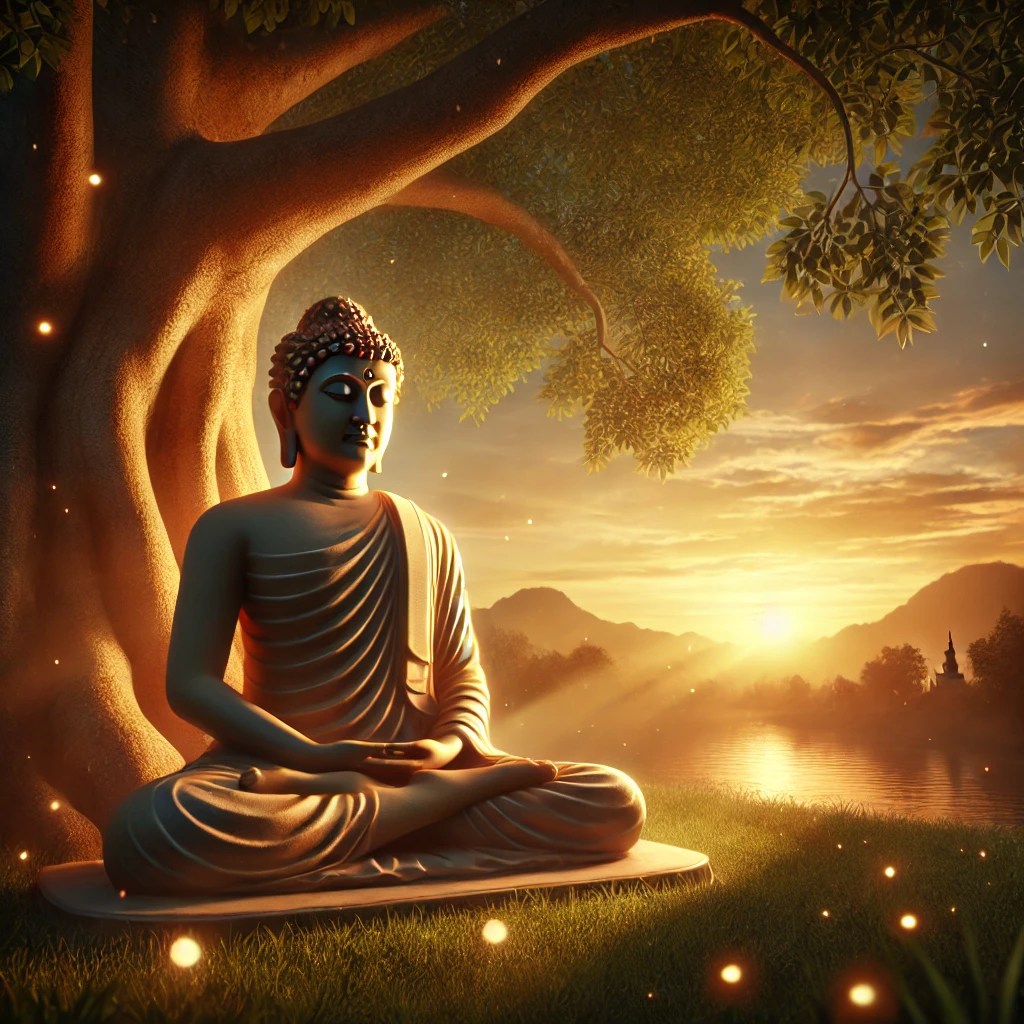
Janussonin bowed respectfully before the Blessed One, who sat beneath a great tree, radiating an aura of stillness. After exchanging polite greetings, the brahman seated himself to one side and spoke:

“Master Gotama, I have long reflected on the nature of death. I hold the view that no one, knowing that they must die, is free from fear. Surely, when the final moment comes, every being trembles before the unknown.”

The Blessed One looked at Janussonin with kindness and replied, “Brahman, there are indeed those who, knowing they are subject to death, are afraid and in terror of it. But there are also those who, though subject to death, do not fear it, nor do they tremble in its face. Listen carefully, and I shall explain.”

The Fear of the Clinging Heart

The Blessed One continued, his voice steady like the flow of a gentle river:

“Who, then, is afraid of death?

“Consider the one who is attached to sensual pleasures, bound by passion, desire, and craving. This person spends their life indulging in fleeting joys, believing them to be the source of happiness. When illness strikes and death approaches, their heart wails: ‘Oh, my beloved pleasures will be taken from me! I will be torn from all that I hold dear!’ They grieve, they lament, they weep, and they suffer.

“Furthermore, there is the one who clings to the body, seeing it as their true self. They gaze upon their reflection and think, ‘This is me; this is mine.’ But when disease takes hold and their strength fades, they despair: ‘Oh, this body, which I have nourished and cherished, will soon be no more!’ Such a person, Brahman, is tormented by the thought of death.

“Then there is the one who has lived unrighteously—one who has harmed others, spoken falsely, acted with cruelty, and been consumed by greed. They may have deceived many in life, but in the face of death, the truth cannot be ignored. As their final breath nears, they think: ‘I have done what is evil. My deeds will bear fruit, and I know not what awaits me.’ Fear grips their heart like a tightening noose, and their mind is consumed by terror.

“And lastly, Brahman, there is the one who has spent their life in doubt, unsure of the path, wavering between beliefs, questioning but never seeking, hearing but never understanding. When death approaches, they are lost in confusion, thinking: ‘What is my fate? Have I walked the right path? Have I wasted my life?’ Such a person, too, is afraid and in terror of death.”

As Janussonin listened, he nodded, for he had seen such fear in the eyes of many—wealthy merchants clutching their gold as they lay dying, rulers who trembled at the loss of power, and even scholars who, despite all their learning, were uncertain of what lay ahead.

The One Who Walks Without Fear

The Blessed One continued, “But Brahman, who is the one who, though subject to death, is not afraid?

“Consider the one who has abandoned craving for sensual pleasures. This person, knowing that all things are impermanent, does not lament when the body weakens. When illness comes, they do not grieve, for they understand that just as the seasons change, so too does life. Their heart remains calm, like a still lake untouched by the wind.

“Consider the one who does not mistake the body for the self. They have realized, ‘This body is but a vessel, subject to decay. It is not truly mine.’ When sickness arises, they do not weep, for they have let go of attachment. Like a traveler discarding old garments for new, they meet death with serenity.

“Then there is the one who has walked the path of virtue, who has done what is good, acted with kindness, protected those in fear, and lived with generosity. As death approaches, they reflect: ‘I have done what is right. My actions will bear good fruit.’ With a heart untroubled, they do not fear death, for they know that goodness leads to peace.

“And finally, there is the one who has seen the truth of the Dharma, whose heart is steady in wisdom. When the end draws near, they do not waver, for they think: ‘I have no doubt, no perplexity. I have walked the path with understanding.’ Such a person meets death as a traveler stepping onto a well-lit road, without hesitation, without fear.”

Janussonin sat in deep contemplation. The words of the Blessed One were like a clear mirror reflecting his own thoughts and fears. He realized that it was not death itself that caused terror, but the attachments, regrets, and doubts carried in one’s heart.

After a long silence, he bowed low before the Blessed One and spoke with great reverence:

“Master Gotama, truly, you have illuminated the Dharma, like one who sets upright what was overturned, reveals what was hidden, shows the way to the lost, or lights a lamp in the darkness so that those with eyes may see. Today, I understand what I had not seen before. The fearless do not escape death, but they walk towards it without chains.

“From this day forward, I take refuge in the Blessed One, in the Dharma, and in the Sangha. May you remember me as a lay follower, devoted to the path, for the rest of my life.”

The Blessed One nodded with a gentle smile, his gaze filled with compassion. And as Janussonin departed, the setting sun cast golden light upon the path before him, as if nature itself was guiding his steps toward a newfound clarity.

Link: https://wisdomtea.org/2025/02/27/the-path-beyond-fear/

The Discourse on Feelings and Supreme Pleasure

The Discourse on Feelings and Supreme Pleasure

Once, in the land where the Blessed One taught the Dharma, a skilled carpenter named Fivetools went to visit the Venerable Udayi. Carpenter Fivetools was a devoted follower of the Buddha’s teachings and had spent much time contemplating the nature of feelings. Wishing to clarify his understanding, he respectfully approached Venerable Udayi, bowed, and sat down to one side.

After a moment of silence, he asked, Reverend Udayi, how many kinds of feelings did the Blessed One teach?”

Venerable Udayi, a learned monk and disciple of the Buddha, replied with certainty, “Carpenter, the Blessed One has taught three kinds of feelings: pleasant, painful, and neutral. These are the three categories of feelings expounded by the Blessed One.”

Upon hearing this, Carpenter Fivetools furrowed his brows and shook his head slightly. “No, reverend Udayi, the Blessed One did not speak of three feelings. He spoke of only two: pleasant and painful. The so-called neutral feeling, as taught by the Blessed One, is not truly neutral but is itself a form of peaceful and sublime happiness.”

Venerable Udayi remained calm but unwavering. “No, Carpenter. The Buddha clearly distinguished three types of feelings: pleasant, painful, and neutral.”

Their exchange continued, each presenting their case with firm conviction. The discussion grew more animated but remained respectful. Three times Carpenter Fivetools tried to persuade Venerable Udayi, and three times Venerable Udayi stood by his explanation. Neither could convince the other.

It so happened that the Venerable Ananda, the Buddha’s devoted attendant, was nearby and overheard their conversation. Recognizing the importance of the discussion, he decided to seek the guidance of the Blessed One himself. With deep reverence, Ananda approached the Buddha, bowed respectfully, and took a seat nearby.

Having settled, he recounted the entire debate between Venerable Udayi and Carpenter Fivetools, seeking clarity.

The Blessed One listened patiently and then spoke with his serene and compassionate voice:

“Ananda, Udayi’s explanation, with which Carpenter Fivetools disagreed, is correct. But likewise, Carpenter Fivetools’ understanding, with which Udayi disagreed, is also correct.

“In one way of teaching, I have spoken of two kinds of feelings—pleasant and painful. In another way, I have spoken of three—pleasant, painful, and neutral. In yet other ways, I have described six, eighteen, thirty-six, and even one hundred and eight kinds of feelings. The Dharma has been shown in different ways to help beings of different dispositions understand it.

“But, Ananda, when people fail to recognize the variations in teaching, when they cling rigidly to their own perspective without considering the full breadth of the Dharma, disputes arise. They argue, quarrel, and wound one another with harsh words. However, when they accept the Dharma in all its depth, without attachment to their own opinions, they live in harmony—just as milk mixes easily with water. They regard one another with kindness, free from conflict.”

The Blessed One then continued, expanding on a profound truth:

“Ananda, there are five strands of sense desire. And what are these five?

  1. Forms visible to the eye that are pleasing, desirable, and enticing.
  2. Sounds heard by the ear that are sweet, melodious, and captivating.
  3. Scents perceived by the nose that are fragrant, delightful, and alluring.
  4. Flavors tasted by the tongue that are delicious, rich, and satisfying.
  5. Sensations felt by the body that are soft, pleasurable, and delightful.

“These five strands of sense desire give rise to pleasure and joy. This is what is called sensual pleasure. However, if someone were to claim that this is the highest and most supreme pleasure, I would not agree. And why? Because there exists a pleasure far greater than sensual pleasure—one that is more refined, more sublime, and free from attachment.”

The monks and lay followers listened intently as the Buddha spoke. The grove was silent, save for his voice, rich with wisdom.

“Ananda, what is this higher pleasure? It is the joy that arises when a monk, secluded from sensual desires and unwholesome states of mind, enters the first meditative absorption (jhana). In this state, there is joy and rapture, born of seclusion.

“But even this is not the highest. There is an even greater joy—one that surpasses the first. By quieting the restless activity of the mind, a monk enters the second meditative absorption, where joy and inner peace deepen, unshaken by discursive thoughts.

“Still, there is more. A monk may progress further, transcending all perception of material form, entering the boundless realm of infinite space. Then, beyond that, into the realm of infinite consciousness. And beyond that, into the realm of nothingness. Even further still, into the state of neither-perception-nor-non-perception.

“But, Ananda, there remains a pleasure greater than all these. And what is that? It is the supreme bliss of complete stillness—when a monk, having surpassed all conditioned states, abides in the cessation of perception and feeling. This, Ananda, is the highest and most sublime happiness.”

The gathered disciples were awed by the depth of the Blessed One’s words. Yet, the Buddha foresaw the doubts that might arise in the minds of others.

“Ananda, there may be those outside this teaching who question: ‘How can the cessation of perception and feeling be called pleasure?’ To them, one should respond:

‘The Blessed One does not define pleasure solely as what is felt. He describes as pleasure whatever state is truly peaceful, free from suffering, and unshaken by worldly concerns.'”

Upon hearing this profound discourse, Ananda, Venerable Udayi, Carpenter Fivetools, and all who were present gained a deeper understanding of the nature of feelings and the path to true peace. They rejoiced in the Blessed One’s words and paid homage to him with great reverence.

And thus, the discourse on feelings and supreme pleasure was spoken.

Link: https://wisdomtea.org/2025/02/20/the-discourse-on-feelings-and-supreme-pleasure/

The Impermanence of Life

The Impermanence of Life

It is said that on one occasion, the Blessed One was residing near Sāvatthī, in the tranquil setting of Jeta’s Grove, within the monastery of the great lay disciple, Anāthapiṇḍika. The grove, known for its serene beauty, was a place where the gentle rustling of leaves harmonized with the distant murmurs of disciples in meditation. The air was cool and carried the faint fragrance of blossoming trees, as birds nestled into their branches, signaling the arrival of dusk.

That afternoon, Venerable Ānanda, after emerging from his period of solitary contemplation, felt a stirring within his heart—an inquiry that had long lingered in his mind. With reverence, he made his way toward the Blessed One, his robes flowing gently with each step. Approaching the Master, he bowed deeply, touching his forehead to the ground, before sitting respectfully to one side.

After a brief silence, he spoke. “It is truly astonishing, Blessed One,” he began, his voice carrying both wonder and solemnity. “It is beyond ordinary understanding how brief the life of your noble mother was. Just seven days after giving birth to you, she departed from this world and was reborn among the Contented (Tusita) devas. Such a profound event—one might wonder, why must it always be so?”

The Blessed One, seated in perfect stillness, his presence like the steady glow of a lamp in the darkness, turned his gaze toward Ānanda. A gentle smile played upon his lips, filled with both compassion and wisdom. “That is the way of things, Ānanda,” he replied with serene certainty. “It has been so for all bodhisattas. Seven days after giving birth, their mothers depart from this world and reappear among the Contented devas. This is not by chance, nor is it unjust—it is simply the unfolding of causes and conditions, bound to the nature of existence itself.”

Hearing this, Ānanda lowered his gaze, reflecting deeply. The inevitability of impermanence was a truth he had long understood, yet there was something profoundly moving about the fate of the Blessed One’s mother. She had carried the future Buddha within her, borne him into the world, and yet was granted only the briefest of moments to gaze upon her child before departing. What a poignant reminder of the fleeting nature of life!

Sensing the unspoken thoughts in Ānanda’s heart, the Blessed One continued, his voice steady and clear. “Ānanda, all that arises is bound to pass away. This truth is not new, nor is it sorrowful—it is simply the nature of all things. The wise do not grieve over what must change, but rather, they come to understand it, to see it as it truly is. Just as a river flows ever onward, never pausing for even a moment, so too does life, moving ceaselessly from birth to death, from form to formlessness.”

Ānanda listened intently, his heart absorbing the words like parched earth drinking the first drops of rain. The Blessed One’s wisdom was not meant to bring sorrow but liberation—an awakening to the truth that, when seen clearly, freed one from suffering.

Then, in that sacred moment, the Blessed One uttered verses that carried the weight of countless eons of wisdom:

All who have come to be,
And all who are yet to come,
Shall one day depart,
Leaving the body behind.

As a traveler moves from one land to the next,
So too does the being journey on,
Carrying only the weight of their deeds.

The wise, knowing this truth,
Understanding the fleeting nature of all things,
Should live the holy life
With diligence and unwavering resolve.

As these words were spoken, a deep stillness settled over the grove, as though nature itself had paused to listen. The trees swayed gently in the evening breeze, their leaves whispering secrets to one another, as if in agreement with the wisdom that had just been revealed.

Ānanda bowed his head once more, his heart filled with both reverence and renewed understanding. In that moment, he saw more clearly than before—the path laid out by the Blessed One was not one of despair but of awakening, not of loss but of liberation. Impermanence was not to be feared, for it was the very nature of existence. To grasp this truth was to be free from suffering, to walk the noble path with clarity and purpose.

As the sun dipped below the horizon, casting long shadows across the monastery grounds, the Blessed One remained in serene meditation, embodying the very truth he had spoken. His presence was like the still ocean—deep, vast, and unshaken by the passing winds of change.

And those who listened, those who truly understood, carried his words in their hearts like a lamp in the darkness, guiding them ever forward on the path to awakening.

Link: https://wisdomtea.org/2025/02/13/the-impermanence-of-life/

Debtless

Debtless

Then Anathapindika the householder, deeply inspired by the Blessed One’s teachings, rose from his seat, bowed respectfully, and said, “Venerable Sir, the four kinds of bliss you have described resonate deeply with the life of a householder. Yet, I wonder: How might one cultivate and sustain these forms of bliss amidst the trials of worldly life?”

The Blessed One, serene and composed, replied, “Householder, these four kinds of bliss arise from skillful living, mindfulness, and virtue. If nurtured with wisdom, they endure and deepen, becoming a wellspring of happiness. Let me explain further.

The Bliss of Having
“When one reflects on righteous wealth earned through effort and virtue, they experience joy. But wealth, like a tree, must be tended. Safeguard it from wastefulness and misuse, just as a farmer guards their fields from drought and pests. Moreover, wealth is best preserved through generosity. When shared with compassion—with family, those in need, and for noble causes—it grows in unseen ways, fostering both material and spiritual abundance.

The Bliss of [Making Use of] Wealth
“True joy comes from using wealth wisely. Partake of it to support loved ones, uplift the downtrodden, and contribute to the greater good. Wealth hoarded is a burden, but wealth utilized becomes a source of merit. Reflect, ‘Through my wealth, I bring happiness and alleviate suffering,’ and in doing so, you plant seeds of joy that bloom beyond this life.

The Bliss of Debtlessness
“Freedom from debt is a treasure beyond compare. Yet to preserve this freedom, one must live with contentment and restraint. Let your desires align with your means, and practice gratitude for what you have. The wise avoid the snares of excess, for they know that contentment, not possession, is the true wealth.

The Bliss of Blamelessness
“This, householder, surpasses all others. To live without blame requires vigilance in thoughts, words, and deeds. Reflect daily on your conduct: ‘Is my speech truthful? Are my actions kind? Do my thoughts arise from goodwill?’ Purify yourself steadily, and even amidst errors, resolve to learn and grow. A blameless life shines brightly, bringing peace to oneself and others.

“Thus, householder, one who cultivates these practices ensures that the four kinds of bliss endure. Yet remember, even these are but stepping stones. The highest bliss lies beyond: the liberation of the mind, the unshakable peace of awakening.”

Hearing these words, Anathapindika felt his heart swell with gratitude. Bowing deeply, he said, “Venerable Sir, your teachings are like a lamp in darkness. I vow to follow this path and share this wisdom, so others may find joy and peace.”

The Blessed One, gazing upon him with compassion, replied, “Walk with diligence and sincerity, householder. In doing so, you become a source of light, guiding others toward the path of truth. May your life bring blessings to all.”

With these words, Anathapindika departed, his heart alight with purpose, resolved to live by the Blessed One’s teachings. Through his efforts, the message of the four kinds of bliss spread far and wide, inspiring countless householders to live virtuously and find joy in the proper season.

Link: https://wisdomtea.org/2025/01/02/debtless/

One Hundred Eight Feelings

One Hundred Eight Feelings

“I shall show you, O monks, a profound way of presenting the Dharma, by which you may come to understand one hundred and eight distinct feelings. These feelings encompass the vast spectrum of human experience. They are like ripples in a still pond, each one arising, spreading, and fading away, shaped by our interactions with the world and our inner thoughts. To comprehend them is to see the nature of existence itself. Therefore, listen attentively, for this teaching is both a key to understanding suffering and a guide to liberation.

“In one way, O monks, I have spoken of two kinds of feelings. In other ways, I have described them as three, five, six, eighteen, thirty-six, and ultimately one hundred and eight. These numbers are not arbitrary; they represent the many ways in which feelings arise and interweave, forming the fabric of human consciousness.

“Let us begin with the most basic distinction: What are the two feelings? They are bodily and mental feelings. Bodily feelings arise from direct physical contact. Imagine, monks, the warmth of the sun on your skin after a cold night—it is a bodily feeling of comfort. Similarly, the sharp sting of a thorn piercing your foot is a bodily feeling of pain. These are the sensations tied to the body, immediate and tangible.

“Mental feelings, on the other hand, are born of the mind. Consider the joy that arises when you recall a kind word spoken by a friend or the sorrow that surfaces when you remember a loved one who has passed away. These mental feelings, though intangible, are powerful. They shape our perceptions and responses, often influencing us more deeply than physical sensations.

“Next, let us consider the three feelings. They are pleasant, painful, and neither-painful-nor-pleasant. Pleasant feelings bring joy and satisfaction. Picture the delight of a fresh breeze on a warm day or the happiness of hearing a melody that stirs your heart. Painful feelings, in contrast, bring discomfort and suffering—like the ache of hunger or the sting of harsh words. The third category, neither-painful-nor-pleasant, refers to neutral feelings. These often go unnoticed, like the sensation of the air against your skin or the subtle pressure of your feet on the ground as you stand. Yet, they are ever-present, forming the backdrop of our experience.

“Now, monks, let us expand this understanding to the five feelings. These correspond to the faculties of pleasure, pain, gladness, sadness, and equanimity. Pleasure and pain are physical, tied to the sensations of the body. Gladness and sadness, however, are rooted in the mind—reflecting our emotional responses. Equanimity, the fifth feeling, stands apart. It is a state of balance, where neither joy nor sorrow sways the mind. Consider the calm of a monk sitting in meditation, undisturbed by the world around him—this is equanimity, a feeling cultivated through practice and mindfulness.

“Next, I shall explain the six feelings. These arise from the six sense bases: the eye, ear, nose, tongue, body, and mind. Through the eye, we perceive forms, such as the sight of a sunrise. Through the ear, we perceive sounds, like the rustling of leaves in the wind. The nose perceives smells, like the scent of blooming jasmine; the tongue perceives tastes, such as the sweetness of ripe fruit. The body perceives sensations, such as warmth or pressure. Lastly, the mind perceives thoughts and emotions. Each sense base gives rise to feelings, shaping our experience moment by moment.

“Let us now delve deeper into the eighteen feelings. These arise when the six sense bases interact with objects, producing feelings of gladness, sadness, or equanimity. For example, seeing a loved one may bring gladness, while hearing harsh words may bring sadness. Touching cool water on a hot day might bring equanimity—a neutral sense of relief without strong emotion. Each of these feelings, whether pleasant or painful, arises from the interplay between the senses and the world.

“We then move to the thirty-six feelings. These are further divided into feelings associated with the household life and those associated with renunciation. For example, monks, consider the gladness that arises when a layperson enjoys a festive meal—that is a feeling of gladness tied to the household life. Contrast this with the gladness of a monk who feels peace in solitude—this is a feeling tied to renunciation. Similarly, sadness may arise from worldly attachments or from the challenge of renouncing desires. Equanimity, too, can manifest in both realms, as one learns to navigate both worldly and spiritual lives.

“Finally, monks, let us understand the one hundred and eight feelings. These are the thirty-six feelings multiplied by time—past, present, and future. Feelings of the past arise when we recall memories, such as the joy of a past celebration or the sorrow of a past loss. Feelings of the future arise when we anticipate what is to come, whether with hope or fear. Feelings of the present are those we experience in the here and now, the fleeting sensations that form the texture of the present moment.

“These, O monks, are the one hundred and eight feelings. They are like waves upon the ocean of consciousness, rising and falling, each one unique yet interconnected. To see them clearly is to understand the impermanence of all things. To not cling to pleasant feelings nor resist painful ones, but to observe them with equanimity, is to walk the path of liberation. And this, O monks, is the way of the Dharma presentation by which the one hundred and eight feelings are understood.”

The Buddha paused, his gaze steady upon his disciples. “Reflect on these teachings, and in doing so, you will come to see the truth of feelings—not as a source of bondage, but as a doorway to freedom.”

Link: https://wisdomtea.org/2024/12/27/one-hundred-eight-feelings/

Wishes

Wishes

Once, the Blessed One, the Buddha, was residing near Sāvatthī, in Jeta’s Grove at the monastery donated by Anāthapiṇḍika, the great supporter of the Sangha. Jeta’s Grove was a place of great beauty and peace. The tall trees, their branches heavy with leaves, offered shade and shelter to monks seeking quiet and solitude. The air was cool, and the sounds of nature—the songs of birds, the hum of insects, and the gentle rustling of leaves—blended into a natural symphony of calm.

On this particular morning, as the sun began its slow ascent and golden light touched the forest floor, the monks returned from their almsround in Sāvatthī. With their bowls filled with the generosity of laypeople, they made their way quietly back to the monastery, their bare feet treading softly on the earth. After sharing their meal and completing their morning duties, the monks gathered under a large, ancient tree.

The Blessed One sat upon a simple seat prepared for him, his serene presence filling the space with stillness. Seeing his disciples seated before him—rows of saffron-robed monks, silent and attentive—the Buddha called out:

Monks!

Yes, Lord,” they responded in unison, bowing their heads respectfully.

The Buddha, his voice calm yet clear, began his teaching:

“Monks, dwell with pure virtue. Follow the Pāṭimokkha, the rules of discipline that preserve the holy life. Be careful and restrained in your conduct. Train yourselves diligently, and see danger even in the smallest faults. A monk who lives in this way will find great benefit, both in this life and beyond.”

The monks listened intently, their minds focused and still. Seeing their readiness to learn, the Buddha continued, explaining how pure conduct brings many blessings and fulfillments in a monk’s life.


The Ten Blessings of Pure Conduct

  1. Being Loved and Respected
    “If a monk wishes to be loved and respected by his fellow monks, let him be pure in his conduct. Such a monk inspires trust and admiration. He lives in harmony, free of quarrels and blame, like a calm lake that reflects the sky without distortion. He should meditate regularly, seeking peace in solitude. In quiet places, away from distractions, his mind becomes steady and clear. A monk who trains this way is loved not because he asks for it, but because his actions naturally inspire respect.”

The Buddha smiled slightly as he spoke, his gaze sweeping over the monks. “Reflect on this, monks: true respect cannot be forced; it arises naturally when virtue is perfected.”

  1. Receiving Life’s Necessities
    “If a monk wishes to receive food, robes, shelter, and medicine without difficulty, let him live a virtuous life. Laypeople see such a monk and feel confidence in supporting him. When they give, they know their offerings will be well used, bringing blessings to themselves and others.”

The Buddha continued, “Monks, remember: what we receive is given through the hard work and sacrifice of others. A virtuous monk accepts these gifts with gratitude and uses them wisely.”

  1. Bringing Benefit to Others
    “If a monk wishes the offerings he receives to bring great benefit to those who give, let him live purely and practice well. Gifts given to a pure monk bear great merit, like seeds sown in fertile soil. The giver reaps blessings long after the gift is given.”
  2. Helping Departed Relatives
    “If a monk wishes to bring blessings to his departed relatives, let him live a life of virtue and purity. Even those who have passed away are touched by the good deeds of their loved ones who remain. Like a lamp lighting a dark room, the pure life of a monk can bring peace to unseen realms.”

The monks reflected quietly on this, thinking of their own loved ones who had passed on.

  1. Finding Contentment
    “If a monk wishes to be content with what he receives—whether it be little or much—let him train his mind to be free from greed. Contentment is the greatest wealth. A monk who is satisfied with little will never feel poor, while one who chases after more will never be at peace.”
  2. Building Inner Strength
    “If a monk wishes to endure hardships—cold and heat, hunger and thirst, harsh words, or bodily pain—let him strengthen his mind. Like a great tree that stands firm in the wind, a monk trained in patience and virtue will not be shaken.”

The Buddha gestured to the great tree under which they sat. “See how this tree stands tall, unmoving, though the winds blow around it. In the same way, train yourselves to remain steady amidst the storms of life.”

  1. Overcoming Anger
    “If a monk wishes to overcome anger and irritation, let him train his mind in patience and kindness. Anger is like a fire that burns within, harming only the one who holds it. By practicing peace and forgiveness, a monk frees himself from this suffering.”
  2. Conquering Fear
    “If a monk wishes to overcome fear and dread, let him seek solitude and observe his fear. He will see it as a passing thought, without substance. Fear arises from delusion. By understanding this, a monk can let it go and dwell in peace.”
  3. Mastering Meditation
    “If a monk wishes to attain deep, peaceful meditation, let him live with pure conduct and train his mind in quiet places. With effort and dedication, he will find joy and calm, like a traveler who rests beneath a cool shade on a hot day.”
  4. Attaining Liberation
    “If a monk wishes to achieve the highest freedom—the end of all suffering—let him practice virtue, meditation, and wisdom with diligence. By following this path, he will realize the truth and be free.”

The Path to Peace

The Buddha looked kindly at his monks, his words resonating like a bell in their hearts.

“Monks, train yourselves well. Live with pure conduct and see danger even in the smallest faults. A life of virtue brings harmony, contentment, and strength. It leads to the highest freedom, Nibbāna, where suffering ceases completely.”

The monks sat in deep reflection, their minds uplifted and inspired. Some resolved to practice with greater diligence, while others silently rejoiced at the clarity and compassion of their Teacher’s words.

As the morning sun climbed higher into the sky, the grove seemed even more peaceful, the teachings of the Blessed One lingering like a soft echo among the trees.

From that day on, the monks at Jeta’s Grove renewed their efforts to live in purity, knowing that virtue was the path to peace, respect, and ultimate liberation.

Link: https://wisdomtea.org/2024/12/18/wishes/

Rushing

Rushing

Once, it is said, the Blessed One was residing near Sāvatthī, at Jeta’s Grove in Anāthapiṇḍika’s monastery. The night had descended, bringing with it a profound, enveloping darkness. It was the kind of night where even the stars seemed to hold their light in reserve, allowing shadows to reign supreme. Yet, within this darkness, the monastery grounds were alive with a quiet stillness, illuminated faintly by the soft, flickering glow of oil lamps placed along the pathways.

The Blessed One, serene and composed, was seated in the open air, his presence as still as the moonlit trees swaying gently in the night breeze. His mind was a vast, untroubled ocean, reflecting all yet clinging to nothing. As he sat there, the flames of the oil lamps danced, casting shadows that seemed to come alive, revealing the fleeting and uncertain nature of all things.

It was then that he observed a curious sight. In the warm light of the lamps, countless tiny insects were drawn to the glow. Some circled hesitantly, while others, overcome by their attraction, flew directly into the flames. One by one, they perished—meeting their downfall in the very light they had sought. Their fragile wings, so full of life moments ago, crumbled into ash, and their brief existence came to an abrupt and fiery end.

The Blessed One watched this with a calm yet penetrating gaze, his heart filled with compassion for all beings caught in the cycles of ignorance and craving. These insects, unaware of the danger, were ensnared by their desire, rushing heedlessly toward what they believed would bring fulfillment—only to find destruction. It was a poignant reflection of the human condition.

He spoke softly to himself, voicing the universal truth revealed in that simple, tragic scene:
“Beings, deluded and blinded by craving, rush headlong toward what they believe to be happiness, not seeing the flames that await them. Again and again, they meet their misfortune, unable to turn away from their desires.”

As the night deepened, a group of monks approached, drawn by the serene presence of the Blessed One. They seated themselves respectfully, sensing that their teacher had something to impart.

The Blessed One turned to them and said:
“Monks, do you see these insects, flying into the lamps, circling the flames, only to meet their end in the very light that captivates them?”

“Yes, Blessed One,” the monks replied in unison.

The Buddha continued, his voice steady and resonant:
“Just as these insects are drawn to the flames, so too are beings drawn to the allure of sights, sounds, tastes, smells, and touches. Overcome by craving, they pursue what appears desirable, unaware of the suffering that lies ahead. They become ensnared in the cycle of birth, aging, illness, and death, bound by their attachments and aversions.”

The monks listened intently, their hearts stirred by the profound truth of his words. The Blessed One then offered them a verse:

“Rushing headlong, blinded by craving,
missing what’s essential,
they fall, like moths into a flame.
One bond breaks, another forms,
and still they grasp,
seeking solace in the fleeting.”

“But monks,” the Buddha added, “there is a way out of this endless cycle. Through mindfulness and discernment, one can see clearly the nature of desire and its pitfalls. By cultivating the Noble Eightfold Path—right view, right intention, right speech, right action, right livelihood, right effort, right mindfulness, and right concentration—one can turn away from the flames and find liberation.”

The monks, inspired and grateful, resolved to deepen their practice. As the night wore on, the oil lamps flickered their last, and darkness reclaimed the grove. Yet within the hearts of those gathered, a light was kindled—a light of wisdom and understanding, brighter and more enduring than any flame.

Link: https://wisdomtea.org/2024/12/06/rushing/

Growth

Growth

Once there was a female disciple of the noble ones, a seeker on the path of awakening. She longed to understand the essence of life and grasp what was truly excellent within herself. Guided by the teachings of wisdom, she embarked on a journey of noble growth, cultivating five essential qualities that would transform her heart and mind.

The Five Pillars of Noble Growth

Conviction
Her journey began with conviction, a steadfast faith in the truth of the noble path. She believed in the guidance of the awakened ones, the law of cause and effect, and the possibility of liberation. This faith was not blind; it was rooted in her own experience, growing stronger each time she aligned her actions with the principles of compassion and truth.

Virtue
With conviction as her foundation, she embraced virtue. She lived a life of moral integrity, refraining from harm, dishonesty, and selfishness. Each act of kindness, each word spoken with care, became a step on the path to peace. Virtue was her armor against the chaos of the world, protecting her heart and inspiring those around her.

Learning
Hungry for understanding, she delved into the teachings, listening attentively to wise words, reflecting deeply, and putting what she learned into practice. Through learning, her mind expanded, shedding ignorance like a tree in autumn sheds its leaves. Each lesson was a seed of insight, taking root and flourishing as wisdom.

Generosity
Her heart opened wide, and she became known for her generosity. Whether it was a coin to a beggar, a meal to the hungry, or simply the gift of her time and presence, she gave freely and joyfully. Her generosity was not merely an offering of material goods; it was the sharing of herself—a smile, a kind word, a gesture of love.

Discernment
As her practice deepened, she cultivated discernment. She learned to see clearly, to distinguish between what was fleeting and what was eternal, between what bound her to suffering and what led to freedom. With discernment, she became her own guide, walking the path with wisdom and grace.

Transforming Through Noble Growth

Growing in these five ways, she transformed herself. She was no longer weighed down by doubt or fear. Instead, she moved through the world with a serene confidence, knowing she was cultivating what truly mattered.

Her days were filled with simple acts of mindfulness. When she spoke, her words carried kindness. When she worked, her actions were infused with purpose. When she rested, her heart was at peace. Through her growth, she discovered that the essence of life was not found in external achievements but in the quiet refinement of the heart.

A Light in the World

Her noble growth did not go unnoticed. Those around her were drawn to her serenity, her compassion, and her wisdom. They asked her, “How have you found such peace?”

She replied, “It is through conviction, virtue, learning, generosity, and discernment that I have grown. These are the treasures of the noble ones, available to all who seek them.”

Her words were like a lamp in the darkness, guiding others toward the same path. She became a source of inspiration, not through power or wealth, but through her unwavering commitment to what is good and true.

The Essence Within

She grows in conviction and virtue,
discernment, generosity, and learning.
Her life becomes a reflection
of the noblest qualities.

A virtuous female lay disciple,
such as this,
takes hold of the essence
right here within herself.

Her journey teaches us that noble growth is not an achievement but a continual unfolding. Each moment offers an opportunity to grow, to refine, and to grasp what is essential.

Through her, we see that the noble path is not distant or unattainable. It is here, in the choices we make each day, in the love we give, and in the wisdom we cultivate.

And so, the story of her noble growth becomes a story for us all—a reminder that within each of us lies the potential to grow, to awaken, and to grasp what is truly excellent in life.

Link: https://wisdomtea.org/2024/11/29/growth/

Dwellings

Dwellings

One serene afternoon, as the sun cast its golden rays over the forest monastery, the Blessed One, surrounded by his disciples, addressed them with a voice calm yet imbued with profound authority.

“Monks, today I shall teach you the nine step-by-step dwelling-attainments. These are the paths by which the mind ascends to liberation, shedding layer after layer of bondage. Listen well and pay close attention, for I shall speak.”

“Yes, Lord,” the monks replied in unison, their palms pressed together in respectful homage.

After a brief silence, the Blessed One began:

“And what, monks, are the nine step-by-step dwelling-attainments? These are the stages of gradual release, where the mind lets go of its attachments and enters ever-deeper states of peace and clarity. Let me explain them to you.

The First Attainment: The Cessation of Sensual Resolves

“Wherever sensual resolves cease, and those who continually abandon them dwell—truly, I tell you, by this, those venerable ones are free from hunger, unbound, having crossed over to the far shore.

“Now, imagine a person burdened by the weight of craving, their mind restless, chasing after sights, sounds, tastes, smells, and touches. If someone were to ask, ‘Where do sensual resolves cease? And where do those who continually abandon sensual resolves dwell? I do not know; I do not see,’ they should be told:

“‘Friend, there is a case where a monk, quite secluded from sensuality and unskillful mental qualities, enters and remains in the first jhāna—rapture and pleasure born of seclusion, accompanied by directed thought and evaluation. That is where sensual resolves cease, and where those who continually abandon sensual resolves dwell.’

“Picture this monk: seated in meditation beneath a towering tree, their robes still as the breeze whispers through the leaves. Their mind, unshackled from desire, glows with serenity, like a lamp undisturbed by wind.

“Surely, a sincere person, upon hearing these words, would say, ‘Very good!’ Delighting in and approving of the statement, they would pay homage, raising their hands palm-to-palm over their heart, and honor this truth.”

The Blessed One paused, allowing the monks to absorb the teaching. A moment of profound silence settled over the gathering, broken only by the distant chirping of birds.

The Second Attainment: The Stilling of Directed Thought and Evaluation

“Wherever directed thought and evaluation cease, and those who continually abandon them dwell—truly, I tell you, by this, those venerable ones are free from hunger, unbound, having crossed over to the far shore.

“Consider a mind that has tasted the joy of seclusion but still hums with the activity of thought, questioning and analyzing. If someone were to ask, ‘Where do directed thought and evaluation cease? And where do those who continually abandon directed thought and evaluation dwell? I do not know; I do not see,’ they should be told:

“‘Friend, there is a case where a monk, with the stilling of directed thought and evaluation, enters and remains in the second jhāna—rapture and pleasure born of concentration, unification of awareness free from directed thought and evaluation, with internal assurance. That is where directed thought and evaluation cease, and where those who continually abandon them dwell.’

“Imagine this monk: their mind, no longer scattered by inquiry, becomes like a still pond, its surface unbroken, reflecting the infinite sky. They sit in quiet confidence, their awareness unified, their joy deepened by this state of pure concentration.

“And again, a sincere person, hearing this, would say, ‘Very good!’ Delighting in and approving of the statement, they would pay homage and honor this teaching with reverence.”

The Third Attainment: The Fading of Rapture

“Wherever rapture ceases, and those who continually abandon rapture dwell—truly, I tell you, by this, those venerable ones are free from hunger, unbound, having crossed over to the far shore.

“Imagine the ecstasy of deep meditation—powerful, but still a wave in the ocean of the mind. If someone were to ask, ‘Where does rapture cease? And where do those who continually abandon rapture dwell? I do not know; I do not see,’ they should be told:

“‘Friend, there is a case where a monk, with the fading of rapture, remains equanimous, mindful, and alert, and senses pleasure with the body. They enter and remain in the third jhāna, of which the noble ones declare: “Equanimous and mindful, they have a pleasant abiding.” That is where rapture ceases, and where those who continually abandon rapture dwell.’

“Picture this monk: the vibrant joy of earlier meditations now quieted, replaced by serene equanimity. They sit like a mountain, unmoved by the passing winds of emotion, their mind calm and poised.

“A sincere person, upon hearing this, would again say, ‘Very good!’ They would bow deeply, honoring this profound truth.”

Link: https://wisdomtea.org/2024/11/22/dwellings/