The Priceless One

The Priceless One

Long ago, in a prosperous city nestled near the rivers and forests of ancient India, there lived a young woman named Anopama. Her name meant incomparable, and indeed, there seemed to be no one like her. She was born into a family of high rank and great wealth. Her father, Majjha, was the royal treasurer—a man of vast influence who managed the riches of kings.

Anopama grew up surrounded by luxury. Her home was filled with silks from distant lands, golden ornaments, fine perfumes, and attendants who waited on her every need. Her skin was radiant, her figure elegant, her manner graceful. Everywhere she went, people stopped and turned to admire her beauty. But it was not just beauty that set her apart. There was a quiet intelligence in her eyes, a thoughtfulness that hinted at deeper things.

As she came of age, many suitors arrived. Princes from powerful kingdoms and sons of the richest merchants sent letters, gifts, and proposals. They boasted of their palaces, their elephants and horses, their treasures, and their titles. They all wanted Anopama as their bride.

One day, a particularly wealthy merchant’s son sent a grand message to her father: “Name your price. I will give eight times her weight in gold and jewels. Just let me marry Anopama.”

Everyone around her was excited. They whispered of weddings, wealth, and the glory her marriage would bring. But Anopama felt none of that excitement. A quiet unease stirred within her. Despite the riches and praise, her heart felt empty.

She often sat alone on the balconies of her father’s mansion, gazing into the distance. “Is this all there is?” she would wonder. “Silks and ornaments, gifts and titles… Is this truly what life is for?”

She began to ask deeper questions. Why do people suffer? Why are we never satisfied? Why do we grow old, fall ill, and die? And is there a way beyond this cycle of constant grasping and loss?

Then, one day, her life changed forever.

Word spread through the city that the Buddha, the Self-Awakened One, had arrived and was teaching nearby. People flocked to see him—farmers, nobles, monks, and merchants. Anopama, too, felt drawn by something she couldn’t explain. She asked her attendants to take her to where the Buddha was staying.

When she arrived, she saw a man unlike any other. He wore a simple robe. His eyes were calm and clear, his presence quiet yet powerful. He looked at no one with desire or pride, only with compassion and understanding. The moment Anopama saw him, something within her shifted.

She stepped forward, bowed before him with great reverence, and sat to one side.

The Buddha looked at her kindly. He could see her readiness, her ripening insight. He spoke not of rules or rituals, but of life itself—of the suffering caused by desire, of the endless chasing after things that never last, and of a path that leads to freedom and peace.

As Anopama listened, it felt as though heavy veils were being lifted from her heart. The words entered not just her ears, but the deepest parts of her being. In that very moment, as she sat on the ground in her fine robes with dust on her feet, she awakened to the truth. She realized the nature of craving and the peace that comes when it is abandoned. She attained the third stage of enlightenment, known as anāgāmī—the state of the non-returner, one who will never again be bound by worldly attachments.

Tears of clarity welled in her eyes—not from sorrow, but from the overwhelming joy of truth.

She rose, and with quiet determination, made a decision that shocked everyone. She returned home only long enough to speak to her father. “I have found something more precious than all the gold and jewels you’ve stored your whole life. I cannot live as I did before. I am leaving home, not to marry, but to walk the path of awakening.”

Her father, stunned and heartbroken, pleaded with her to reconsider. But Anopama’s mind was firm. With his reluctant blessing, she cut off her long hair, shed her fine garments, and entered the homeless life as a nun.

She lived simply, wearing a robe of faded cloth and carrying a begging bowl. She found joy not in possessions but in quiet forests, in mindful steps, and in the inner stillness of meditation.

Days passed. She reflected deeply on the Buddha’s teachings, practiced with diligence, and let go of every last trace of craving.

On the seventh day of her new life, as the morning sun filtered through the trees, Anopama sat beneath a tree in quiet meditation. Her heart rested in stillness. And there, she experienced complete inner freedom. The final roots of desire had withered away. She was free.

No longer did she long for ornaments, praise, or titles. No longer did she fear loss or death. She had touched Nibbāna—the unshakable peace beyond all grasping.

In time, others would come to know her story. They would call her not only Anopama, the incomparable, but also the one who left everything… and gained the highest.

Link: https://wisdomtea.org/2025/05/15/the-priceless-one/

The Two Guardians of the World

The Two Guardians of the World

“Monks, there are two bright and powerful qualities that protect the world. Which two? Conscience and concern.”

Conscience is the quiet voice inside us that says, “This isn’t right.” It’s what makes us feel sorry when we hurt someone or break a promise. Concern is the care we feel for how our actions affect others. It’s the feeling that says, “What if this hurts someone? What will others think of this choice?”

These two qualities work together, like the sun and the moon lighting up the day and night. They guide people, help them make good choices, and stop them from falling into selfish or harmful behavior.

Imagine a village without any rules, without any kindness or respect. If conscience and concern were gone, people would stop caring. They would not think twice about lying, stealing, or hurting others. They would no longer honor their mothers, or show kindness to their aunts, or show respect to their teachers and their families. Every relationship would lose its meaning.

In such a place, the bonds that hold society together would fall apart. People would chase after their desires like animals in the wild—without shame, without care, without boundaries. Just as rams fight each other for a mate, or roosters trample over others to satisfy their wants, so would humans, lost in confusion and desire.

But monks, because conscience and concern still exist in this world, many people still know how to stop and think. A young man walking past a neighbor’s home remembers what he was taught and keeps his eyes and thoughts respectful. A daughter hears her conscience and chooses to speak kindly, even when she is angry. A student holds back from doing wrong, because he knows it would bring shame to his teacher.

Even in the heart of a person who has made many mistakes, these two bright qualities can still arise. Conscience can awaken like a candle lit in the dark. Concern can grow like a seed watered after a long dry season.

These two qualities are not just for monks or for the wise—they belong to everyone. They live in the hearts of mothers caring for their children, of friends watching over each other, of strangers choosing honesty even when no one is watching.

So, monks, nourish these two bright qualities. Let them guide your speech, your thoughts, and your actions. When conscience and concern are strong, people live with care. Families stay close. Communities grow peaceful. The world is protected—not with weapons or walls, but with goodness and restraint.

A person with conscience and concern is like a tree that gives shade to others. Even in hard times, such a person brings comfort and safety to the world.

Link: https://wisdomtea.org/2025/05/08/the-two-guardians-of-the-world/

The Four Kinds of Happiness

The Four Kinds of Happines

Long ago, in the city of Savatthi, there lived a kind and generous man named Anathapindika. He was known across the land for his compassion, honesty, and love for the Buddha’s teachings. Though he was wealthy, he never held on to his riches tightly. Instead, he used what he had to help others and support the community.

One bright morning, as the sun was just rising over the trees, Anathapindika felt a deep desire to visit the Buddha. He had questions in his heart—questions about the meaning of happiness, and how someone like him, living in the world with a family and business, could live a meaningful life.

So he got ready, dressed in clean white clothes, gathered some offerings, and made his way to the Jeta Grove Monastery, a peaceful place surrounded by trees and built from his own generous donations.

When he arrived, he saw the Buddha sitting quietly under the shade of a tree, his presence calm and bright like a still lake reflecting the sky. Anathapindika bowed low to the ground in respect and then sat to one side, waiting humbly.

The Buddha, seeing his sincerity, smiled gently and said,
“Householder, there are four kinds of happiness that someone who lives in the world can experience. These are not beyond reach. They come in their proper time, for someone who lives honestly and kindly. Do you want to hear them?”

Anathapindika looked up with joy.
“Yes, Blessed One, I would be honored to learn.”


1. The Happiness of Having Wealth

The Buddha began:
“The first kind of happiness is the happiness of having wealth. This is when a person works hard, earns money honestly, and takes care of their responsibilities. They don’t cheat or steal, and they don’t earn by harming others. Their wealth comes from effort, sweat, and skill.

“When such a person looks at what they have and thinks, ‘This came from my own honest work; I harmed no one to get it,’ they feel happiness in their heart. It is the happiness of knowing they have done well.”

Anathapindika nodded. He remembered the early days of his life—how he had worked long hours, stayed patient through struggles, and slowly built his business. It had not been easy, but it had always been fair. That thought filled him with quiet pride.


2. The Happiness of Using Wealth

The Buddha continued:
“The second kind of happiness is using wealth in good ways. A person may earn money, but what really matters is how they use it. They may care for their children, support their parents, help their friends, or offer help to people in need. They might build homes, give food, support monks and spiritual teachers, or give medicine to the sick.

“When a person thinks, ‘My wealth is helping others. It’s being used for something good,’ their heart becomes light and joyful. This is a deeper happiness—the happiness of generosity.”

Anathapindika smiled. He thought of the monastery he had built, where monks could meditate and people could come to learn the Dhamma. He remembered the joy on the faces of those he had helped, and he felt warmth spread in his chest.


3. The Happiness of Being Debt-Free

Then the Buddha said,
“The third kind of happiness is being free from debt. This means not owing anything to anyone—no loans, no promises left unkept, no burdens hanging over your head. Whether the debt is big or small, being free from it brings a peaceful feeling.

“When someone can think, ‘I owe no one anything—I am clear and clean in my dealings,’ that is a great relief. Their sleep is sweeter, and their mind is calm. This is the happiness of being debt-free.”

Anathapindika thought about this. He had always paid what he owed and tried to live simply, not letting money control him. This teaching reminded him how freeing it is to live without the weight of debt pressing on your mind.


4. The Happiness of Living a Blameless Life

Finally, the Buddha looked deeply into Anathapindika’s eyes and said,
“But the highest happiness, householder, is this: the happiness of a blameless life. This means your actions do not harm others. You are careful with your words, gentle in your thoughts, and kind in how you treat all beings.

“When someone thinks, ‘I do not harm. I do not lie. I try my best to live kindly and wisely,’ then their heart is truly at peace. This happiness does not depend on wealth or comfort. It is the joy of a clear conscience, of a life lived well.”

Anathapindika sat silently, his heart full. Of all the kinds of happiness the Buddha had spoken of, he knew this last one was the greatest. Money may come and go. Even good health may change. But a blameless life brings deep peace that stays with you always.


Then, the Buddha gently recited a verse:

Knowing the joy of being debt-free,
And remembering the joy of earning wealth,
Enjoying the joy of giving and using wealth,
A wise person sees things clearly.

But even all these joys together
Are not as great
As the joy of living a good and blameless life.


Anathapindika bowed deeply once more, grateful beyond words. As he walked home through the quiet grove, the birds singing and leaves rustling gently above him, he carried the Buddha’s words like a lamp in his heart—lighting his path with peace, purpose, and joy.

Link: https://wisdomtea.org/2025/05/01/the-four-kinds-of-happiness/

The Eight Strengths of the Enlightened Monk

The Eight Strengths of the Enlightened Monk

It was a quiet morning in the forest monastery. The early sunlight filtered gently through the tall sal trees, casting dappled patterns on the ground. The air was fresh and still, filled only with the occasional birdsong and the soft rustle of leaves. Monks moved silently through the pathways, each engaged in mindful reflection.

Venerable Sāriputta, known among the disciples for his deep wisdom and calm presence, rose from his meditation seat and walked toward where the Blessed One—the Buddha—was sitting beneath a tree, wrapped in serene composure.

Seeing the Teacher, Sāriputta approached, bowed respectfully, and sat to one side. His heart was quiet, his mind collected. He was not there to question, but to share. And the Buddha, ever attuned to the hearts of his disciples, turned to him with a warm, knowing smile.

“Sāriputta,” the Buddha said, “how many inner strengths does a monk possess when he has ended all defilements, all mental impurities? With what qualities does he affirm with certainty, ‘The effluents are ended in me’?”

Sāriputta, his voice steady and clear like a bell ringing in stillness, replied, “Eight, Blessed One. There are eight strengths that arise in one who has reached the end of suffering. These are not ordinary qualities. They are the inner pillars of realization. With them, one knows—without doubt—that the work is done, and the mind is free.”

The Buddha inclined his head slightly, inviting him to continue.

“The first strength,” Sāriputta said, “is the deep and unshakable understanding of impermanence. A monk who has ended the effluents sees with clarity that all things—every thought, every feeling, every formation—arise and pass away. They are not solid. They are not lasting. He does not merely believe this; he knows it directly. This knowledge frees the heart from clinging. When a storm arises in the mind, he knows: ‘This too is impermanent.’ And so he is not shaken. This clarity is his strength.”

“The second strength is the ability to see sensual desire for what it really is. Craving once seemed sweet, like honey on the tongue. But now, to the awakened monk, it appears as burning charcoal. It promises delight but brings suffering. He has touched peace, and so the old fires no longer attract him. This clear seeing is not a suppression—it is freedom. He knows the cost of desire, and with compassion for himself, he lets it go.”

“The third strength is his love of seclusion. He does not crave noise, company, or distraction. He finds joy in solitude, where the heart can settle and the mind can rest. His joy is not in escape, but in clarity. He delights in the quiet where wisdom grows. His heart leans naturally toward renunciation, for he knows that the real treasures are found within.”

“The fourth strength lies in his unwavering mindfulness. He is fully present—whether walking, eating, speaking, or sitting. He watches the movements of his body, the rising of feelings, the habits of the mind, and the nature of all things. This awareness is not forced; it is gentle and steady. Like a guardian at the gate, mindfulness protects and reveals. It keeps him rooted in the present, free from regret and fear.”

“The fifth strength is the cultivation of inner energy and focus. He has developed the four bases of spiritual power—desire, effort, focus, and investigation. When doubt arises, he meets it with inquiry. When laziness comes, he meets it with energy. His concentration is like a lamp in the dark—it illuminates, and it does not waver.”

“The sixth strength is his balance of spiritual faculties. He has grown in faith, energy, mindfulness, concentration, and wisdom. None overpowers the others. Like a well-tuned chariot, his inner qualities move in harmony. Faith supports wisdom. Energy fuels mindfulness. Concentration steadies the mind, and all work together to keep him on the path.”

“The seventh strength is the blooming of the seven factors of awakening. He lives in mindfulness. He explores reality with calm curiosity. He feels joy not based in gain, but in understanding. Tranquility, deep concentration, and equanimity flow through him. These qualities do not just visit him—they dwell in him, supporting his freedom.”

“And finally,” Sāriputta said with a deep and gentle reverence, “the eighth strength is his full realization of the Noble Eightfold Path. He no longer follows the path as a seeker—he is the path. Right view, right intention, right speech, right action, right livelihood, right effort, right mindfulness, and right concentration are no longer disciplines to practice—they are the natural expression of his being.”

After a quiet pause, he added, “With these eight strengths alive within him, the monk knows the truth. He does not guess, he does not hope—he knows: ‘The effluents are ended in me.’ He has walked the path. He has crossed the flood. He stands on the far shore.”

The Buddha listened in silence. The light of morning touched the edges of his robes. Around them, the forest was still. And though no words were spoken, the Buddha’s serene smile was his reply. It was the smile of a teacher hearing the truth spoken without error.

Link: https://wisdomtea.org/2025/04/24/the-eight-strengths-of-the-enlightened-monk/

Why the World Is Empty

Why the World Is Empty

One day, Venerable Ananda went to the Buddha, who was seated in peaceful meditation beneath a tree. After bowing respectfully, Ananda sat quietly to one side, waiting for the right moment. As he sat in silence, his heart filled with questions that he had been pondering for some time.

Finally, after a moment of deep reflection, Ananda spoke:

“Lord, I’ve heard it said by many that the world is empty, that the world is empty of all things. But I do not fully understand this. How is it that the world is said to be empty? What does it mean for the world to be empty?”

The Buddha looked kindly upon Ananda, his eyes filled with wisdom. He took a deep breath, and as the breeze rustled the leaves above, he began to speak:

“Ananda, the world is said to be empty in this way: It is empty of a self, and it is empty of anything that belongs to a self. It is this emptiness that frees us from suffering. It is this realization that brings clarity and peace. Let me explain further.”

The Buddha then began to point out the nature of emptiness in the simplest of terms, explaining how it applies to all things in the world.

“Consider the eye, Ananda. The eye is empty of a self. The shapes and forms it perceives — they are also empty. Eye-consciousness, the act of seeing itself, is empty. The contact between the eye and the object it perceives is empty. None of these things have a permanent self or essence that belongs to them. They come together in a fleeting moment, and when that moment passes, they vanish. There is no ‘I’ or ‘me’ within that experience. It is simply a process.”

Ananda listened carefully, feeling the weight of the Buddha’s words. He was starting to understand, but the Buddha wasn’t finished.

“The same is true for the ear, Ananda. The ear is empty of a self. The sounds it hears, the vibrations of the world — they are empty of self. Ear-consciousness, the act of hearing, is empty. The contact between the ear and the sound is empty. These, too, are temporary processes that arise and pass away. There is no permanent ‘self’ inside them.”

The Buddha’s voice was calm and steady as he continued:

“Now, think of the nose. The nose is empty of a self. The scents it detects are empty. The nose-consciousness, the very act of smelling, is empty. And the contact between the nose and the scent is empty. Just as with the eye and the ear, there is no solid, unchanging self within this process.”

Ananda felt a deep stillness in his heart. The Buddha’s words were beginning to dissolve the confusion he had about the nature of the world. He could feel his attachment to the concept of a fixed self slowly weakening.

“Let’s turn now to the tongue,” the Buddha continued. “The tongue is empty of a self. The flavors it tastes are empty. Tongue-consciousness, the act of tasting, is empty. And the contact between the tongue and the flavor is empty. None of these have any permanent essence. They are transient, impermanent.”

Ananda nodded slowly, beginning to see the pattern. The Buddha’s teachings were becoming clearer with each example.

“The body, too, is empty. The body is empty of a self. The sensations it feels — pain, pleasure, warmth, cold, comfort, discomfort — they are empty. Body-consciousness, the experience of touch, is empty. And the contact between the body and the sensation is empty. No self is found in any of these experiences.”

Ananda’s mind was beginning to open to a new way of understanding the world. He had always thought of himself as separate, as a solid being with a permanent essence. But now, the Buddha’s words were showing him the emptiness of that belief.

“And lastly, Ananda,” the Buddha said, “the mind — the intellect — is empty of a self. The thoughts, the ideas, the consciousness that arises in the mind are empty. Mind-consciousness, the act of thinking, is empty. And the contact between the mind and the thoughts is empty. Just as the eye sees without a permanent self, the mind thinks without a permanent self.”

Ananda sat quietly, his thoughts unfolding like petals in the wind. For the first time, he saw the world differently. Each sense, each experience, was like a wave in the ocean — rising and falling, but never holding on to anything permanent. The world, he now realized, was empty of the solid self he had clung to for so long.

The Buddha smiled gently, seeing the understanding dawning in Ananda’s eyes.

“Ananda, all that we experience — the sights, the sounds, the smells, the tastes, the touches, and even the thoughts — arise and pass away like clouds in the sky. There is no permanent ‘I’ or ‘me’ within any of these. When you see this, you will be free from attachment and suffering. You will realize that the world, in its deepest truth, is empty — empty of the self and all that the self clings to.”

Ananda sat in silence, contemplating the profound truth the Buddha had shared. He felt the weight of his attachments begin to lift, and for the first time in his life, he tasted a deep, abiding peace — the peace that comes when one no longer identifies with the fleeting experiences of the world.

The Buddha continued:

“This emptiness, Ananda, is not a void. It is not a negation of existence. It is the freedom that arises when we cease to cling to things as ‘mine’ or ‘me.’ When we realize that everything is empty of self, we can live with an open heart, free from the burdens of ego and desire.”

Ananda looked up at the Buddha, his heart filled with gratitude.

“Lord,” he said, “now I understand. The world is empty because it is free of the self — free of the illusion of permanence. And in this emptiness, there is true freedom.”

The Buddha smiled, his eyes radiant with compassion.

“Yes, Ananda. And when you see this truth, you will walk in the world with peace, compassion, and wisdom. For the world is not a place to cling to, but a place to learn, to grow, and to awaken.”

Link: https://wisdomtea.org/2025/04/17/why-the-world-is-empty/

Darkness

Darkness

The Four Paths of Life

There are four kinds of people in the world. What are these four?
One lives in darkness and is heading deeper into darkness.
One lives in darkness but is moving toward light.
One lives in the light but is falling into darkness.
And one lives in the light and is growing brighter still.

1. In Darkness, Headed Toward Darkness

Imagine someone born into deep poverty — not just financially, but emotionally and spiritually.
They grow up in a broken home, in a neglected neighborhood where violence is common and opportunities are rare. The schools are failing. The role models are missing. Food is often whatever can be found or afforded — rarely healthy, never enough.

This person carries the weight of early trauma — abuse, abandonment, discrimination. They may suffer from chronic illness, physical disability, or mental health issues, and access to help is limited or nonexistent. On top of that, they’re judged by their appearance — maybe disfigured or differently abled in a way society doesn’t accept.

Over time, pain hardens into anger, and anger becomes action. They turn to crime, to addiction, to destructive relationships. They lie, steal, manipulate, or lash out. Their trauma turns outward, damaging others. They trust no one. They hurt others before they can be hurt. And so they descend — deeper into loneliness, into despair, into self-destruction.

This is someone living in darkness, walking toward greater darkness.

2. In Darkness, Headed Toward Light

Now, picture another person born into a similar situation — same poverty, same hardship, same lack of support. The world doesn’t see them. They’re dismissed, ignored, maybe even pitied.

They too have known pain — hunger, judgment, rejection. They too may carry visible or invisible scars. But somewhere, somehow, a small light begins to flicker inside them. Maybe it’s a book they found in a library, a teacher who took a moment to care, a grandparent who offered wisdom, or just a quiet inner voice that said, “There must be more.”

Instead of falling, they fight. Instead of choosing bitterness, they choose kindness. Instead of retaliating, they reflect. They work hard, not for praise, but because they believe something better is possible. They help others even when no one helps them. They strive to be honest, to be thoughtful, to be good — not because it’s easy, but because it’s right.

Though the road is long and steep, they walk it with purpose. They rise, slowly but surely.

This is someone in darkness, walking toward the light.

3. In Light, Headed Toward Darkness

Then there is the person born into wealth, safety, and comfort. They grew up in a beautiful home, with access to education, health care, mentors, and every advantage. Their family is respected; they travel, explore, and are told they can do anything.

They are praised for their looks, their charm, their talents. Opportunities fall into their lap. People listen when they speak. Doors open for them.

But over time, entitlement grows. They stop seeing others as equals. They mock those who struggle, ignore those in pain, and begin to believe they’re above consequence. They cheat, lie, use others for personal gain. Compassion fades, replaced by arrogance. What was once light turns hollow — shiny on the outside, empty within.

They may still be admired by society, but inside, they’re losing their way. Their choices start to corrupt them. Relationships break. Peace vanishes. And eventually, they begin to fall — perhaps quietly, even invisibly — into darkness.

This is someone in light, headed toward darkness.

4. In Light, Headed Toward Light

Finally, there’s someone also born into comfort, privilege, and opportunity. But they are taught gratitude. They are encouraged to listen, to question, to care. They know their advantages, and instead of clinging to them, they use them to lift others.

They study, not just to succeed, but to understand. They serve, not for applause, but out of empathy. They are honest, humble, and aware. When they make mistakes, they own them. When they see suffering, they respond.

They build meaningful relationships, create beauty, and foster growth in others. With each act of integrity, with each gesture of kindness, their inner light grows stronger. And as they shine, they help others shine too.

This is someone in light, walking deeper into light.


These are the four paths.
Each person walks their own.
But here’s the truth: where you begin does not determine where you end.

Every step, every choice — toward kindness or cruelty, toward truth or deceit, toward compassion or indifference — shapes the path beneath your feet.

No matter where you are, the direction you walk is always yours to choose.

Link: https://wisdomtea.org/2025/04/10/darkness/

The Farmer of the Mind: Cultivating Mastery Over Thought

The Farmer of the Mind: Cultivating Mastery Over Thought

I have heard that on one occasion the Blessed One was staying at Sāvatthī, in Jeta’s Grove, Anāthapinḍika’s monastery. It was the rainy season, and the forest hummed with the soft patter of raindrops falling upon leaves. The scent of wet earth filled the air, and a gentle mist curled around the trees.

A great assembly of monks had gathered, their saffron robes glowing in the dim light of dawn. They sat in deep silence, their hands folded in reverence, awaiting the Blessed One’s words. He gazed upon them, his serene face illuminated by the morning light, and addressed them:

“Monks!”

“Yes, lord,” the monks replied in unison.

The Blessed One spoke:

“When a monk is intent on the heightened mind, there are five themes he should attend to at appropriate times. Which five?

“There is the case where evil, unskillful thoughts—connected with desire, aversion, or delusion—arise in a monk while he is referring to and attending to a particular theme. He should attend to another theme, apart from that one, connected with what is skillful. As he does so, those unskillful thoughts are abandoned and subside. With their abandoning, he steadies his mind, settles it, unifies it, and concentrates it.

“But if those thoughts persist, he should reflect on their drawbacks: ‘These thoughts lead to suffering. They darken the mind. They are thorns in the path of peace.’ Just as a traveler carrying a heavy sack realizes that dropping the burden brings relief, so too should the monk see how abandoning unwholesome thoughts brings lightness to the heart.

“If even then the thoughts persist, he should withdraw his attention—he should give them no mind. As a man walking through a marketplace ignores the clamor of voices around him and focuses only on his path, so too should the monk disregard the noise of unwholesome thoughts.

“If they still do not subside, he should attend to the relaxing of thought-fabrication, gently calming the movement of the mind. Just as a potter, shaping a vessel, slows the turning of his wheel to smooth its edges, so too does the wise monk soften the momentum of thought, guiding it toward stillness.

“And finally, should all else fail, he should take up the final method—firm and resolute. With teeth clenched and tongue pressed against the roof of his mouth, he should subdue the mind with force, constraining and crushing the unwholesome impulses with clear awareness, as a strong man might subdue a wild beast.

The Parable of the Two Farmers

The Blessed One paused, then continued:

“Monks, this is like two farmers who inherited the same land.

“One farmer was negligent and careless. He did not prepare his field properly. He let weeds grow alongside the crops, believing they would not harm the harvest. When pests came, he did not chase them away, thinking they would leave on their own. When the sun was too hot, he cursed the sky but did not shade his plants. And when the rains came, he lamented his ruined field but had done nothing to build proper irrigation.

“In the end, his harvest was meager, his efforts wasted. He blamed the land, the weather, and misfortune, but never did he see that it was his own negligence that had led to his failure.

“The other farmer was diligent and wise. He knew the land required effort. He removed the weeds as soon as they sprouted, before their roots took hold. When pests arrived, he drove them away with patience and care. If the sun was too harsh, he adjusted his crops and provided shade. When the rains came, he had already prepared the channels to guide the water where it was needed.

“In the end, his harvest was abundant, his granaries full. When asked the secret to his success, he simply smiled and said, ‘I cared for my field, and in return, it cared for me.’

“Monks, the untrained mind is like the lazy farmer’s field—overrun by weeds of desire, pests of aversion, and floods of delusion. But the well-trained mind is like the diligent farmer’s field—protected, cultivated, and yielding the fruits of wisdom.

“Just as the wise farmer does not despair when weeds appear but instead removes them skillfully, so too should you train your minds.

“Do not be disheartened when unskillful thoughts arise. Attend to them wisely, knowing that a well-tended mind, like a well-tended field, leads to a bountiful harvest—peace, clarity, and liberation.

The Power of a Well-Trained Mind

The Blessed One looked over the assembly and continued:

“Monks, you may ask, ‘What is the fruit of a well-trained mind?’ I will tell you.

“It is like a still lake in the heart of the forest. The surface is clear and unmoving, reflecting the moon and the stars without distortion. When an animal approaches to drink, it sees its own reflection perfectly. In such a lake, the sky, the trees, and the mountains appear as they are, undisturbed.

“But an untrained mind is like a lake constantly churned by the wind. Its waters are muddy, and no reflection can be seen. Even if the stars shine above, they are lost in the restless movement of the waves.

“When a monk, by these five methods, steadies his mind, unifies it, and concentrates it, he becomes a master of thought sequences. He thinks only what he chooses to think, and does not think what he does not. He has broken the bonds of craving and aversion. He has seen through conceit, and with right view, has reached the end of suffering and stress.

“Monks, train yourselves well. Be like the diligent farmer. Master the field of your own mind. Be like the still lake, where truth is seen clearly. For in doing so, you will not only benefit yourselves but all beings who come into your presence.”

The Awakening of the Monks

As the Blessed One spoke, a great stillness settled over the gathering. Some monks felt their minds clear as if a veil had been lifted. Others, who had struggled with restless thoughts, felt their burdens lighten. Among them was a young monk who had long battled with doubt.

That night, he sat beneath a great tree, reflecting on the Blessed One’s words. He thought of the two farmers and saw himself in the lazy one. But now, he resolved to change. He would uproot his weeds, guard his field, and let no impurity take hold.

With renewed determination, he entered deep meditation. As the night passed, his mind grew still, and as the first light of dawn touched the horizon, insight arose within him. He saw the nature of thought, the impermanence of all things, and in that moment, a great joy filled his heart.

The next morning, when the monks gathered once more before the Blessed One, the young monk stepped forward, bowed deeply, and said, “Lord, the field of my mind is now tended. The weeds are gone. The path is clear.”

The Blessed One smiled, his eyes filled with knowing. “Then, monk, walk that path with diligence. For now, you have truly begun.”


That is what the Blessed One said. Deeply inspired, the monks rejoiced in the words of the Blessed One, and many resolved then and there to train with renewed vigor, knowing that mastery over the mind was the key to liberation.

Link: https://wisdomtea.org/2025/04/03/the-farmer-of-the-mind-cultivating-mastery-over-thought/

Urgent

Urgent

The Three Urgent Duties

There are three urgent duties of a farming householder. What are these three?

There is the case where a farming householder, wise and diligent, does not delay in preparing his field. He knows that time waits for no one, and that a farmer who hesitates when the season arrives may find himself without a harvest.

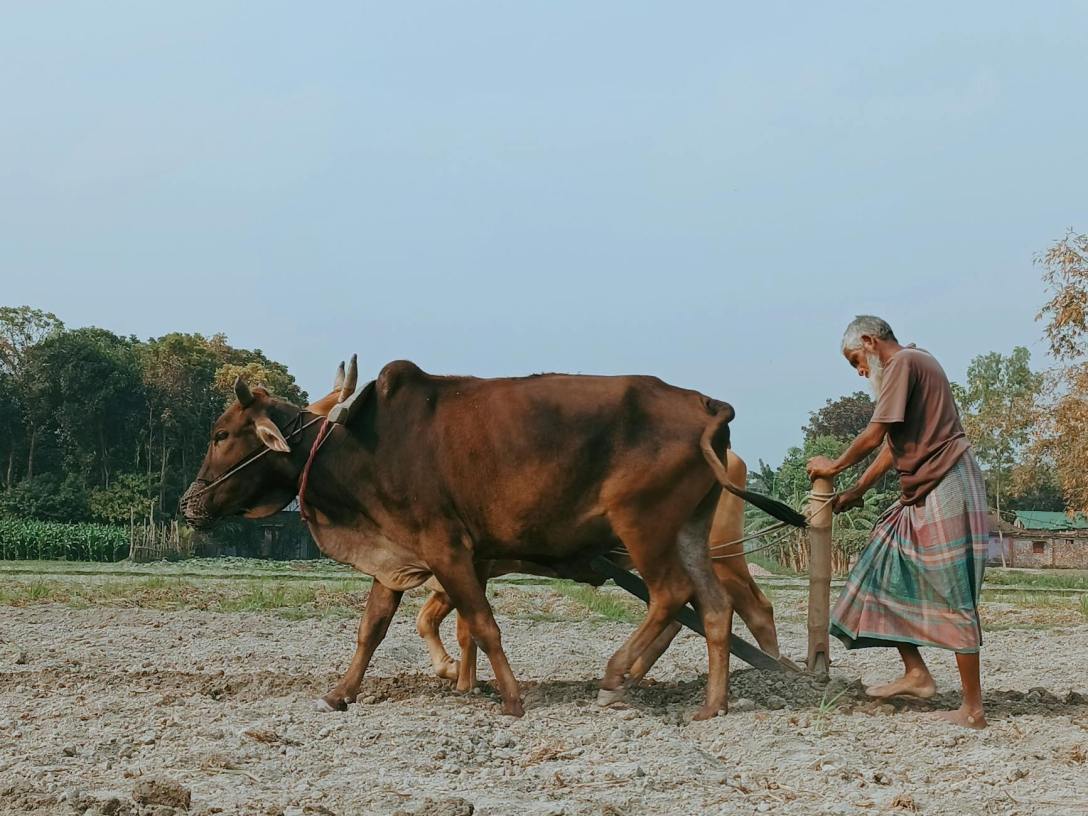
With determination, he takes up his plow and guides his oxen across the land. The sharp blade cuts deep into the earth, turning the soil, breaking apart clumps of hardened dirt, and exposing the rich nutrients hidden beneath. He labors under the sun, wiping sweat from his brow, but he does not falter. He understands that a well-prepared field is the foundation of a good harvest.

Having plowed the field, he does not stop there. He takes up his harrow and smooths the soil, breaking apart the rough clods, making the ground soft and welcoming for the seeds. He removes the weeds and stones, ensuring that nothing will hinder the young sprouts when they emerge. Only when the land is well-prepared does he proceed to the next task.

Then, with care and precision, he takes the best seeds he has—grains that are full, unblemished, and capable of yielding a strong crop. He sows them evenly, ensuring they are not too deep, nor too shallow. He does not rush, for he knows that carelessness in planting will lead to poor growth. He watches the sky, mindful of the winds and the rains, choosing the right time for each step.

Yet his work is not done. Once the seeds are in the ground, he must tend to the water. If the soil is dry, he directs the channels to let water in, ensuring that the young plants will have enough to drink. But he is also wise—he does not flood the field, nor does he allow the water to stagnate. When the time is right, he drains it out, keeping the balance so that the roots do not rot.

However, despite all his efforts, the farming householder does not possess the power to command nature. He cannot say, “May my crops sprout today, may the grains appear tomorrow, and may they ripen the next day.” Such things do not obey human will. But he knows one truth: if he fulfills his duties with care and perseverance, then when the time is right, the crops will sprout, the grains will appear, and they will ripen according to their nature.

The Three Urgent Duties of a Monk

In the same way, monks, there are three urgent duties of a monk. What are these three? The undertaking of heightened virtue, the undertaking of heightened mind, and the undertaking of heightened discernment.

Just as the farmer prepares his field with diligence, so too must a monk cultivate his virtue. A monk’s virtue is the foundation upon which wisdom and liberation grow. If his conduct is impure—if he allows deceit, unkindness, or heedlessness to take root—then his practice will be like a field overrun with weeds, where no wholesome crop can flourish.

Thus, a monk diligently undertakes the practice of virtue. He observes the precepts carefully, refraining from harming living beings, from false speech, from taking what is not given, from indulgence in intoxicants, and from engaging in unwholesome desires. He guards his actions and speech, just as a farmer guards his field from wild animals and pests. He knows that without this foundation, no progress can be made.

Once virtue is well established, the monk undertakes the training of the mind. Just as the farmer sows his seeds, the monk sows the seeds of concentration. Through meditation, he steadies his thoughts, quiets the restless chattering of the mind, and cultivates inner stillness. He does not allow distractions to overtake him, just as a farmer does not allow weeds to overrun his field. He remains steadfast, training his awareness to be sharp and unwavering, like a flame undisturbed by the wind.

Then, just as the farmer tends to his crops by managing water flow, the monk nourishes his wisdom. Through deep contemplation, study, and insight, he fosters discernment, allowing the truth to reveal itself naturally. He reflects on the impermanent nature of all things, understanding that clinging leads to suffering. He examines the causes of desire, aversion, and delusion, and through insight, he loosens the bonds that keep him tied to the cycle of suffering.

Yet, just as the farmer cannot command the crops to ripen on demand, the monk cannot will his mind to be freed from all attachments overnight. He does not have the power to declare, “May my mind be released from all clinging today, tomorrow, or the next day.” Such things unfold according to their own nature, ripening when the conditions are right.

But the monk does not despair. He knows that just as a farmer who plows, sows, and waters his field with patience will one day see the golden grains swaying in the wind, so too will the diligent practitioner, through perseverance, come to see the fruits of his practice. When the time is right—when his virtue is strong, his mind is steady, and his wisdom is deep—liberation comes as surely as the harvest follows the planting.

The Path to Liberation

Thus, monks, you should train yourselves:

“Strong will be our desire for the undertaking of heightened virtue.
Strong will be our desire for the undertaking of heightened mind.
Strong will be our desire for the undertaking of heightened discernment.”

This is how you should train yourselves.

A wise monk does not rush or seek immediate rewards, just as a farmer does not demand that his crops ripen in a day. Instead, he follows the natural path, understanding that progress is gradual. He remains diligent, unwavering, and patient, knowing that true wisdom and liberation are not forced, but arise naturally when the conditions are right.

And so, just as the diligent farmer reaps a plentiful harvest, the diligent monk will one day reap the fruits of his practice—the freedom from suffering, the end of all clinging, and the peace that surpasses all understanding.

Link: https://wisdomtea.org/2025/03/27/urgent/

The Winds of Feeling and the Stillness of Wisdom

The Winds of Feeling and the Stillness of Wisdom

In the vast sky above, O monks, the winds are ever-changing.
From the far reaches of the earth, they arise—east and west, north and south—
Some sweeping across the land with dust in their grasp,
Others gliding clear and pure, unseen yet felt.
Some arrive with a scorching heat, parching all they touch,
While others whisper with a cool breath, soothing the weary.
Some rage with unbridled fury, shaking trees and stirring waves,
Others pass so gently that even the finest leaf remains still.
Thus, the sky holds within it the ceaseless motion of change,
A dance without beginning, a rhythm without end.

Likewise, monks, within this fragile body, feelings arise and pass away.
Pleasant feelings, like the cool breeze of dawn, bring delight,
Painful feelings, like the searing winds of summer, bring distress,
And neutral feelings, subtle and unnoticed, drift like a silent air.
Just as the winds do not ask permission to blow,
Neither do feelings seek consent before they arise.
They come and go, transient as the shifting sky,
Unbound by will, untouched by desire.

There are times when joy rushes in like a warm southern wind,
Caressing the heart, lifting the spirit, filling the mind with delight.
Like the gentle wind that carries the scent of blossoms,
It fills one’s being with sweetness, with contentment, with ease.
But as swiftly as it arrives, it fades,
Leaving behind only the memory of its touch.

At other times, suffering comes like a storm from the north,
A wind that chills the bones and darkens the sky.
It roars through the mind like thunder over the mountains,
Scattering thoughts, shaking resolve, leaving fear in its wake.
One may grasp at warmth, may plead for calm,
But the storm does not heed the cries of those who resist.
It will pass in its own time, as all things do.

And then there are moments when neither pleasure nor pain arises,
When the winds are still, when the sky is vast and untroubled.
Yet even in this calm, there is movement unseen—
The silent shifting of clouds, the quiet breath of the unseen air.
Such is the nature of neutral feeling, subtle and unnoticed,
Present, yet often ignored, like a whisper in the great noise of life.

But, O monks, the wise one does not cling nor recoil.
He observes as a traveler watches the shifting clouds—
Unmoved by their beauty, unshaken by their darkness.
With mindfulness sharp as a lamp in the storm,
He sees the winds of feeling for what they are:
Impermanent, empty, without a self to call their own.
Neither delighting in pleasure nor despairing in pain,
He remains steadfast, grounded in the Dharma’s way.

The fool, however, is like a man chasing the wind.
He runs toward pleasure, longing to catch it in his grasp,
Yet it slips through his fingers like sand through an open hand.
He flees from suffering, cursing the bitter wind that stings his face,
Yet the more he resists, the fiercer the storm becomes.
He clings to what is fleeting, he weeps for what is lost,
Unaware that all things are like the sky—
Boundless, shifting, beyond his control.

But if a monk, O wise ones, is ardent and does not neglect
To practice mindfulness and comprehension clear,
Then the nature of all feelings will he understand.
Like a great tree rooted deep in the earth,
He does not sway with every passing breeze.
Neither heat nor cold disturbs his stillness,
Neither joy nor sorrow binds his heart.

And having penetrated them, he will be taint-free in this very life.
Mature in knowledge, firm in the ways of the Dharma,
He walks the path beyond sorrow, beyond birth and death.
For he has seen the truth with wisdom’s eye,
And in knowing, he is free.

When once his life-span ends, his body breaks,
Like a leaf that falls when its time has come,
He clings to nothing, holds to nothing.
No longer bound by the illusions of self and suffering,
He transcends all measure, beyond all concept,
Unshaken as the boundless sky itself.

Thus, O monks, let the winds blow as they will.
Do not chase them, do not flee from them.
Simply see them, know them, and be free.

Link: https://wisdomtea.org/2025/03/20/the-winds-of-feeling-and-the-stillness-of-wisdom/

The Fivefold Path of Growth

The Fivefold Path of Growth

A female disciple of the noble ones who grows in these five types of development progresses in noble growth. She grasps what is essential and excellent in the body and mind. Which five?

She grows in conviction. She places her faith in the path of virtue and wisdom, understanding that true refuge lies not in external forms but in the cultivation of the heart. She does not waver in times of difficulty, for she knows that conviction is the foundation upon which the journey to awakening is built. Even when the winds of doubt blow fiercely, she steadies herself, remembering the footsteps of those who have walked before her. With each challenge, her faith deepens, like the roots of an ancient tree grasping firmly into the earth.

She grows in virtue. With mindful effort, she refines her conduct, choosing words that uplift and actions that cause no harm. She does not merely follow precepts for their own sake but embraces them as a means to purify her heart and bring harmony to those around her. In her wake, she leaves no trail of regret, only the fragrance of kindness. Even in solitude, she holds fast to integrity, knowing that virtue is not a performance for others but a guiding light that shines from within. Each day, she strengthens her resolve, shaping her character with patience and perseverance.

She grows in learning. She listens deeply to the teachings, contemplates their meaning, and integrates them into her life. She does not seek knowledge for its own sake, nor does she cling to doctrine, but she uses wisdom as a lamp to illuminate the path ahead. With each lesson, she grows more skillful in distinguishing what leads to suffering and what leads to liberation. Her thirst for truth is unquenchable, and she does not turn away from difficult truths. She seeks out wise teachers, engages in thoughtful dialogue, and reflects deeply, allowing wisdom to take root in her heart.

She grows in generosity. With an open heart, she gives freely—not only material gifts but also her time, her patience, and her kindness. She understands that generosity is not measured by the size of the offering but by the sincerity of the giver. She gives without expectation, for she knows that in letting go, the heart expands. She finds joy in service, whether in great acts of charity or in the smallest gestures of kindness. Even when she has little, she gives, knowing that a generous spirit is never impoverished. She sees generosity not as a duty but as a privilege, an expression of boundless love.

She grows in discernment. She trains herself to see things as they truly are, beyond illusion and attachment. Through reflection and direct experience, she perceives the fleeting nature of all things. She does not cling to pleasure, nor does she despair in suffering. With discernment, she walks the middle path, neither grasping nor resisting, but abiding in wisdom and peace. When the world tempts her with distractions, she remains steadfast, recognizing their impermanence. She cultivates clarity, freeing herself from delusion, and with each passing day, her vision becomes sharper, her understanding deeper.

Growing in these five ways, the female disciple of the noble ones advances in noble growth. She grasps what is essential and excellent in the body and mind, cultivating a heart that is unshaken by the storms of the world. She walks the path with steady steps, knowing that each moment of virtue, generosity, wisdom, and love brings her closer to the highest freedom.

She grows in conviction and virtue,
Discernment, generosity, and learning.
A virtuous female lay disciple
such as this
takes hold of the essence
right here within herself.

And so, like a lotus rising from the mud, she blossoms—radiant, untainted, and free. Her journey is not without trials, yet she welcomes them as opportunities for growth. She meets each hardship with grace, each sorrow with understanding. She knows that the path is long, but she walks it joyfully, knowing that every step is a step toward awakening. And as she journeys onward, she becomes a beacon for others, illuminating the way with the light of her wisdom and compassion.

Link: https://wisdomtea.org/2025/03/13/the-fivefold-path-of-growth/