Diabetes type 2 – meal planning

Diabetes type 2 – meal planning

When you have type 2 diabetes, taking time to plan your meals goes a long way toward controlling your blood sugar and weight.

Function

Your main focus is on keeping your blood sugar (glucose) level in your target range. To help manage your blood sugar, follow a meal plan that has:

  • Food from all the food groups
  • Fewer calories
  • About the same amount of carbohydrates at each meal and snack
  • Healthy fats

Along with healthy eating, you can help keep your blood sugar in target range by maintaining a healthy weight. People with type 2 diabetes are often overweight or obese. Losing even 10 pounds (4.5 kilograms) can help you manage your diabetes better. Eating healthy foods and staying active (for example, 60 total minutes of walking or other activity per day) can help you meet and maintain your weight loss goal. Activity lets your muscles use sugar from the blood without needing insulin to move the sugar into the muscle cells.

HOW CARBOHYDRATES AFFECT BLOOD SUGAR

Carbohydrates in food give your body energy. You need to eat carbohydrates to maintain your energy. But carbohydrates also raise your blood sugar higher and faster than other kinds of food.

The main kinds of carbohydrates are starches, sugars, and fiber. Learn which foods have carbohydrates. This will help with meal planning so that you can keep your blood sugar in your target range. Not all carbohydrates can be broken down and absorbed by your body. Foods with more non-digestible carbohydrates, or fiber, are less likely to increase your blood sugar out of your goal range. These include foods such as beans and whole grains.

MEAL PLANNING FOR CHILDREN WITH TYPE 2 DIABETES

Meal plans should consider the amount of calories children need to grow. In general, three small meals and three snacks a day can help meet calorie needs. Many children with type 2 diabetes are overweight. The goal should be able to reach a healthy weight by eating healthy foods and getting more activity (150 minutes in a week).

Work with a registered dietitian to design a meal plan for your child. A registered dietitian is an expert in food and nutrition.

The following tips can help your child stay on track:

  • No food is off-limits. Knowing how different foods affect your child’s blood sugar helps you and your child keep blood sugar in target range.
  • Help your child learn how much food is a healthy amount. This is called portion control.
  • Have your family gradually switch from drinking soda and other sugary drinks, such as sports drinks and juices, to plain water or low-fat milk.

PLANNING MEALS

Everyone has individual needs. Work with your health care provider, registered dietitian, or diabetes educator to develop a meal plan that works for you.

When shopping, read food labels to make better food choices.

A good way to make sure you get all the nutrients you need during meals is to use the plate method. This is a visual food guide that helps you choose the best types and right amounts of food to eat. It encourages larger portions of non-starchy vegetables (half the plate) and moderate portions of protein (one quarter of the plate) and starch (one quarter of the plate).

EAT A VARIETY OF FOODS

Eating a wide variety of foods helps you stay healthy. Try to include foods from all the food groups at each meal.

VEGETABLES (2½ to 3 cups or 450 to 550 grams a day)

Choose fresh or frozen vegetables without added sauces, fats, or salt. Non-starchy vegetables include dark green and deep yellow vegetables, such as cucumber, spinach, broccoli, romaine lettuce, cabbage, chard, and bell peppers. Starchy vegetables include corn, green peas, lima beans, carrots, yams and taro. Note that potato should be considered a pure starch, like white bread or white rice, instead of a vegetable.

FRUITS (1½ to 2 cups or 240 to 320 grams a day)

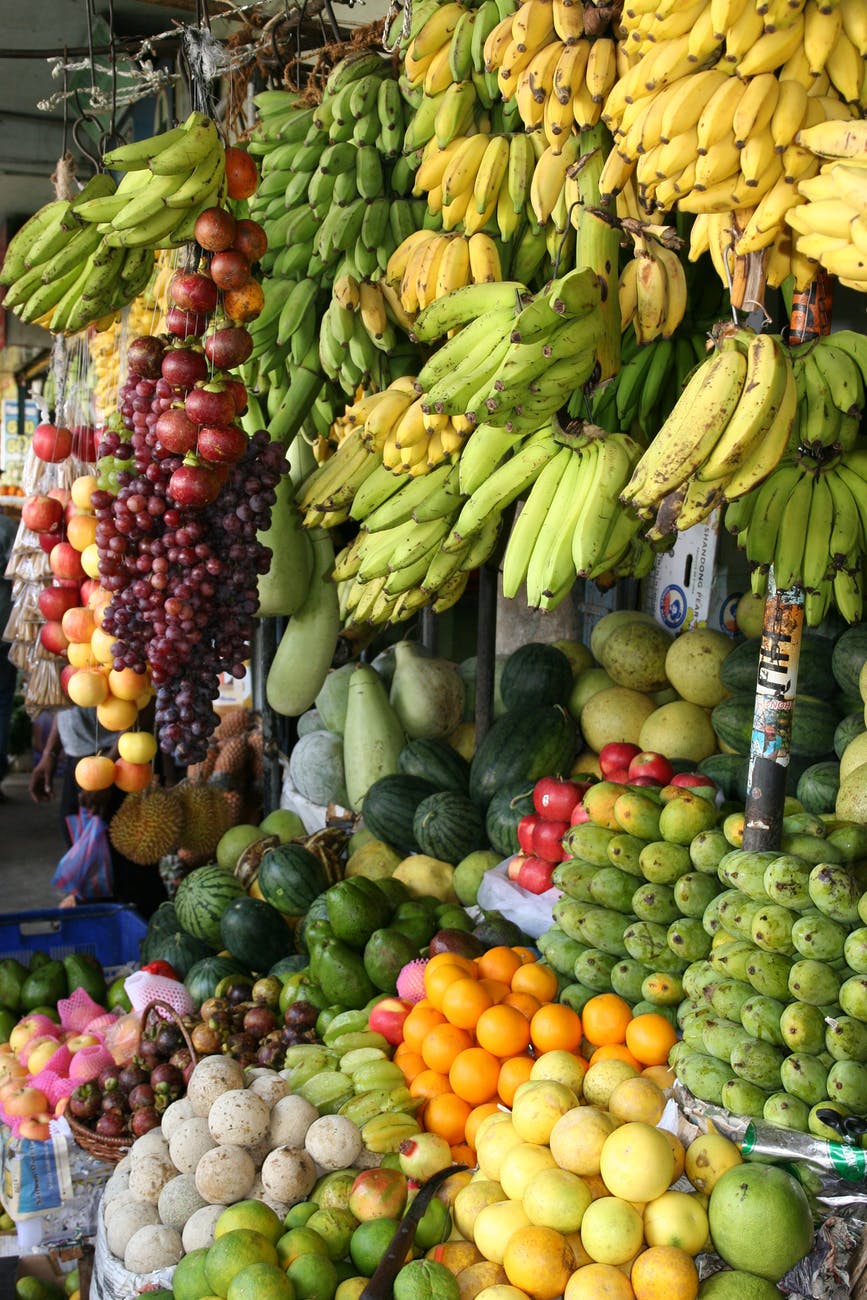
Choose fresh, frozen, canned (without added sugar or syrup), or unsweetened dried fruits. Try apples, bananas, berries, cherries, fruit cocktail, grapes, melon, oranges, peaches, pears, papaya, pineapple, and raisins. Drink juices that are 100% fruit with no added sweeteners or syrups.

GRAINS (3 to 4 ounces or 85 to 115 grams a day)

There are 2 types of grains:

  • Whole grains are unprocessed and have the entire grain kernel. Examples are whole-wheat flour, oatmeal, whole cornmeal, amaranth, barley, brown and wild rice, buckwheat, and quinoa.
  • Refined grains have been processed (milled) to remove the bran and germ. Examples are white flour, de-germed cornmeal, white bread, and white rice.

Grains have starch, a type of carbohydrate. Carbohydrates raise your blood sugar level. For healthy eating, make sure half of the grains you eat each day are whole grains. Whole grains have lots of fiber. Fiber in the diet keeps your blood sugar level from rising too fast.

PROTEIN FOODS (5 to 6½ ounces or 140 to 184 grams a day)

Protein foods include meat, poultry, seafood, eggs, beans and peas, nuts, seeds, and processed soy foods. Eat fish and poultry more often. Remove the skin from chicken and turkey. Select lean cuts of beef, veal, pork, or wild game. Trim all visible fat from meat. Bake, roast, broil, grill, or boil instead of frying. When frying proteins, use healthy oils such as olive oil.

DAIRY (3 cups or 245 grams a day)

Choose low-fat dairy products. Be aware that milk, yogurt, and other dairy foods have natural sugar, even when they do not contain added sugar. Take this into account when planning meals to stay in your blood sugar target range. Some non-fat dairy products have a lot of added sugar. Be sure to read the label.

OILS/FATS (no more than 7 teaspoons or 35 milliliters a day)

Oils are not considered a food group. But they have nutrients that help your body stay healthy. Oils are different from fats in that oils remain liquid at room temperature. Fats remain solid at room temperature.

Limit your intake of fatty foods, especially those high in saturated fat, such as hamburgers, deep-fried foods, bacon, and butter.

Instead, choose foods that are high in polyunsaturated or monounsaturated fats. These include fish, nuts, and vegetable oils.

Oils can raise your blood sugar, but not as fast as starch. Oils are also high in calories. Try to use no more than the recommended daily limit of 7 teaspoons (35 milliliters).

WHAT ABOUT ALCOHOL AND SWEETS?

If you choose to drink alcohol, limit the amount and have it with a meal. Check with your health care provider about how alcohol will affect your blood sugar and to determine a safe amount for you.

Sweets are high in fat and sugar. Keep portion sizes small.

Here are tips to help avoid eating too many sweets:

  • Ask for extra spoons and forks and split your dessert with others.
  • Eat sweets that are sugar-free.
  • Always ask for the smallest serving size or children’s size.

Link: https://wisdomtea.org/2022/04/20/diabetes-type-2-meal-planning/

https://medlineplus.gov/ency/article/007429.htm

7 Surprising Benefits of Exercise

7 Surprising Benefits of Exercise

BY MANDY OAKLANDER AND HEATHER JONES

SEPTEMBER 1, 2016

You probably have a vague sense that exercise is good for you—and you’ve probably heard that it’s “healthy for the heart.” But if you’re like most people, that’s not enough motivation to get you to break a sweat with any regularity. As I report in the TIME cover story, “The Exercise Cure,” only 20% of Americans get the recommended 150 minutes of strength and cardiovascular physical activity per week, more than half of all baby boomers report doing no exercise whatsoever, and 80.2 million Americans over age 6 are entirely inactive.

Photograph by Gjon Mili—The LIFE Picture Collection/Getty Images. Colorization by Sanna Dullaway for TIME

That’s bad news, but emerging evidence shows that there are plenty of compelling reasons to start moving at any age and even if you’re ill or pregnant. Indeed, scientists are learning that exercise is, actually, medicine. “There is no pill that comes close to what exercise can do,” says Claude Bouchard, director of the human genomics laboratory at Pennington Biomedical Research Center in Louisiana. “And if there was one, it would be extremely expensive.”

You can read the whole story for more, but here are some of the amazing things that happen to a body in motion.

1. Exercise is great for your brain.

It’s linked to less depression, better memory and quicker learning. Studies also suggest that exercise is, as of now, the best way to prevent or delay the onset of Alzheimer’s disease, a major fear for many Americans.

Scientists don’t know exactly why exercise changes the structure and function of the brain, but it’s an area of active research. So far, they’ve found that exercise improves blood flow to the brain, feeding the growth of new blood vessels and even new brain cells, thanks to the protein BDNF (brain-derived neurotrophic factor). BDNF triggers the growth of new neurons and helps repair and protect brain cells from degeneration. It may also help people focus, according to recent research.

2. You might get happier.

Countless studies show that many types of exercise, from walking to cycling, make people feel better and can even relieve symptoms of depression. Exercise triggers the release of chemicals in the brain—serotonin, norepinephrine, endorphins, dopamine—that dull pain, lighten mood and relieve stress. “For years we focused almost exclusively on the physical benefits of exercise and really have ignored the psychological and emotional benefits of being regularly active,” says Cedric Bryant, chief science officer of the American Council on Exercise.

3. It might make you age slower.

Exercise has been shown to lengthen lifespan by as much as five years. A small new study suggests that moderate-intensity exercise may slow down the aging of cells. As humans get older and their cells divide over and over again, their telomeres—the protective caps on the end of chromosomes—get shorter. To see how exercise affects telomeres, researchers took a muscle biopsy and blood samples from 10 healthy people before and after a 45-minute ride on a stationary bicycle. They found that exercise increased levels of a molecule that protects telomeres, ultimately slowing how quickly they shorten over time. Exercise, then, appears to slow aging at the cellular level.

4. It’ll make your skin look better.

Aerobic exercise revs up blood flow to the skin, delivering oxygen and nutrients that improve skin health and even help wounds heal faster. “That’s why when people have injuries, they should get moving as quickly as possible—not only to make sure the muscle doesn’t atrophy, but to make sure there’s good blood flow to the skin,” says Anthony Hackney, an exercise physiologist at the University of North Carolina at Chapel Hill. Train long enough, and you’ll add more blood vessels and tiny capillaries to the skin, too.

The skin also serves as a release point for heat. (See “Why Does My Face Turn Red When I Exercise?” for more on that.) When you exercise, your muscles generate a lot of heat, which you have to give up to the environment so your body temperature doesn’t get too high, Hackney says. The heat in the muscle transfers to the blood, which shuttles it to the skin; it can then escape into the atmosphere.

5. Amazing things can happen in just a few minutes.

Emerging research suggests that it doesn’t take much movement to get the benefits. “We’ve been interested in the question of, How low can you go?” says Martin Gibala, an exercise physiologist at McMaster University in Ontario. He wanted to test how effective a 10-minute workout could be, compared to the typical 50-minute bout. The micro-workout he devised consists of three exhausting 20-second intervals of all-out, hard-as-you-can exercise, followed by brief recoveries. In a three-month study, he pitted the short workout against the standard one to see which was better. To his amazement, the workouts resulted in identical improvements in heart function and blood-sugar control, even though one workout was five times longer than the other. “If you’re willing and able to push hard, you can get away with surprisingly little exercise,” Gibala says.

6. It can help you recover from a major illness.

Even very vigorous exercise—like the interval workouts Gibala is studying—can, in fact, be appropriate for people with different chronic conditions, from Type 2 diabetes to heart failure. That’s new thinking, because for decades, people with certain diseases were advised not to exercise. Now scientists know that far more people can and should exercise. A recent analysis of more than 300 clinical trials discovered that for people recovering from a stroke, exercise was even more effective at helping them rehabilitate.

Dr. Robert Sallis, a family physician at Kaiser Permanente Fontana Medical Center in California, has prescribed exercise to his patients since the early 1990s in hopes of doling out less medication. “It really worked amazingly, particularly in my very sickest patients,” he says. “If I could get them to do it on a regular basis—even just walking, anything that got their heart rate up a bit—I would see dramatic improvements in their chronic disease, not to mention all of these other things like depression, anxiety, mood and energy levels.”

7. Your fat cells will shrink.

The body uses both carbohydrates and fats as energy sources. But after consistent aerobic exercise training, the body gets better at burning fat, which requires a lot of oxygen to convert it into energy. “One of the benefits of exercise training is that our cardiovascular system gets stronger and better at delivering oxygen, so we are able to metabolize more fat as an energy source,” Hackney says. As a result, your fat cells—which produce the substances responsible for chronic low-grade inflammation—shrink, and so does inflammation.

Link: https://wisdomtea.org/?p=561

The Pope of Buddhism His Holiness Dorje Chang Buddha III

The Pope of Buddhism His Holiness Dorje Chang Buddha III

The conferment of the Pope of Buddhism to His Holiness Dorje Chang Buddha III originated in January 2018 when the World Peace Prize Awarding Council and World Peace Prize Religious Leaders Title Awarding Council passed the resolution to confer to H.H. Dorje Chang Buddha III the title of Pope of Buddhism, the highest leader of Buddhism in this world. However, His Holiness the Buddha refused to accept the conferment.

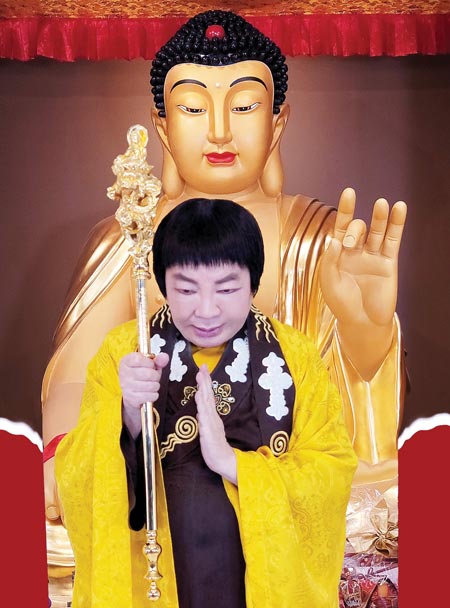
For the sake of propagating Buddha Dharma and benefitting living beings, the World Buddhism Association Headquarters took the liberty to accept the conferment decree and the Pope of Buddhism Scepter. When the World Buddhism Association Headquarters respectfully presented the Pope of Buddhism Scepter and conferment decree to H.H. Dorje Chang Buddha III, His Holiness the Buddha III said: “I see that on top of this Scepter is the seated Shakyamuni Buddha, we should be respectful to Namo Shakyamuni Buddha.” His Holiness the Buddha then raised the Scepter above His head and made a symbolic closed palm gesture with one hand to express His respects. However, H.H. Dorje Chang Buddha III also expressed that He is just a humble cultivator and resolutely would not accept such a conferment. Hence, His Holiness the Buddha immediately returned the conferment decree and the Pope of Buddhism Scepter to the two Councils.

On September 23, 2020, the World Peace Prize Awarding Council and World Peace Prize Religious Leaders Title Awarding Council passed an ultimate joint resolution, determining that the return of the Pope of Buddhism Scepter and conferment decree by H.H. Dorje Chang Buddha III was not effectible. On September 24, the joint Chair of the World Peace Prize Awarding Council and World Peace Prize Religious Leaders Title Awarding Council Suzi Leggett made the ultimate announcement at the Holy Miracles Temple of the World Buddhism Association Headquarters: “Over the past several decades, the World Peace Prize Awarding Council has presented the World Peace Prize to presidents, spiritual leaders, and prime ministers of many nations, including President Ronald Reagan, Hon. Mahatma Gandhi, and H.E. Yitzhak Rabin. There has never been a precedence of an award being retracted or returned. All determinations made and implemented by our Councils are very solemn, serious, and absolutely cannot be changed. The return of the Pope of Buddhism Scepter and conferment decree by H.H. Dorje Chang Buddha III is deemed not effectible. The title, status, and authority of the Pope of Buddhism belong only to H.H. Dorje Chang Buddha III, and cannot be exercised by anyone else.” Chair Leggett once again requested that the World Buddhism Association Headquarters accept and present to H.H. Dorje Chang Buddha III the Pope of Buddhism Scepter and conferment decree that His Holiness the Buddha previously returned.

Representing the World Buddhism Association Headquarters, Venerable Mozhi Rinpoche accepted the conferment decree and Pope of Buddhism Scepter. He said during his speech, “The World Buddhism Association Headquarters considers that the decision made by the two Councils is remarkably proper and sagacious.

“Ever since Namo Shakyamuni Buddha entered parinirvāṇa, there has not been a supreme leader who has the authority to guide all Buddhists the same way that the Buddha did. However, the authoritative position of the Pope of Buddhism certainly is not a role that a leader of a single Buddhist sect would have the attributes to fulfill; rather, the Pope must be a leader who has authority over the entirety of Buddhism, namely, a Buddha.

“Namo H.H. Dorje Chang Buddha III holds the perfect teachings of Buddhism and meets the criteria used by all Buddhist sects to recognize a Buddha. His inherent nature is in accord with that of a Buddha. His unsurpassed, complete, and perfect enlightenment is in accord with that of a Buddha. Just based on the accomplishment of H.H. Dorje Chang Buddha III in Lifting the Pestle onto the Platform, surpassing His own base weight standard by 59 levels, no one else can possibly reach such a record.

“The state of virtue of H.H. Dorje Chang Buddha III is that of a Buddha. His Holiness the Buddha has perfect mastery of Exoteric and Esoteric Buddhism, perfect accomplishments in the Five Vidyas, and so forth, all of which accord with the unsurpassed, complete, and perfect enlightenment of a Buddha.

“In more than 2,000 years, there has not been a Buddhist Holy Guru in this world who possesses the same Buddha level qualities. Just by the facts that H.H. Dorje Chang Buddha III vowed and carries out the vow to benefit living beings purely on a voluntary basis and does not accept any offerings throughout His entire life, and that He possesses perfect wisdom and unimpeded accomplishments, no other Holy Guru can be of comparison. Only Namo H.H. Dorje Chang Buddha III can take on this immensely noble, holy, and heavy responsibility of the Pope of Buddhism, to properly guide Buddhists onto the correct path of learning Buddhism.

“Therefore, on behalf of Buddhists, the World Buddhism Association Headquarters thanks the World Peace Prize Awarding Council and the World Peace Prize Religious Leaders Title Awarding Council for having made the ultimate decision.”

H.H. Dorje Chang Buddha III is selfless and noble, and the first person in Buddhism to possess substantive holy realization power of a Buddha and perfectly flawless accomplishments at the pinnacle of the Five Vidyas. These are the qualities that no other eminent Buddhist monastic or virtuous person in this world has so perfectly attained. It is naturally a matter of course that H.H. Dorje Chang Buddha III is the veritable Pope of Buddhism.

Link: https://wisdomtea.org/2022/04/06/the-pope-of-buddhism-his-holiness-dorje-chang-buddha-iii/

Type 2 Diabetes

Type 2 Diabetes

More than 37 million Americans have diabetes (about 1 in 10), and approximately 90-95% of them have type 2 diabetes. Type 2 diabetes most often develops in people over age 45, but more and more children, teens, and young adults are also developing it.

What Causes Type 2 Diabetes?

Insulin is a hormone made by your pancreas that acts like a key to let blood sugar into the cells in your body for use as energy. If you have type 2 diabetes, cells don’t respond normally to insulin; this is called insulin resistance. Your pancreas makes more insulin to try to get cells to respond. Eventually your pancreas can’t keep up, and your blood sugar rises, setting the stage for prediabetes and type 2 diabetes. High blood sugar is damaging to the body and can cause other serious health problems, such as heart disease,  vision loss, and kidney disease.

Symptoms and Risk Factors

Type 2 diabetes symptoms often develop over several years and can go on for a long time without being noticed (sometimes there aren’t any noticeable symptoms at all). Because symptoms can be hard to spot, it’s important to know the risk factors and to see your doctor to get your blood sugar tested if you have any of them

Testing for Type 2 Diabetes

A simple blood test will let you know if you have diabetes. If you’ve gotten your blood sugar tested at a health fair or pharmacy, follow up at a clinic or doctor’s office to make sure the results are accurate.

Managing Diabetes

Unlike many health conditions, diabetes is managed mostly by you, with support from your health care team (including your primary care doctor, foot doctor, dentist, eye doctor, registered dietitian nutritionist, diabetes educator, and pharmacist), family, and other important people in your life. Managing diabetes can be challenging, but everything you do to improve your health is worth it!

You may be able to manage your diabetes with healthy eating and being active, or your doctor may prescribe insulin, other injectable medications, or oral diabetes medicines to help manage your blood sugar and avoid complications. You’ll still need to eat healthy and be active if you take insulin or other medicines. It’s also important to keep your blood pressure and cholesterol close to the targets your doctor sets for you and get necessary screening tests.

You’ll need to check your blood sugar regularly. Ask your doctor how often you should check it and what your target blood sugar levels should be. Keeping your blood sugar levels as close to target as possible will help you prevent or delay diabetes-related complications.

Stress is a part of life, but it can make managing diabetes harder, including managing your blood sugar levels and dealing with daily diabetes care. Regular physical activity, getting enough sleep, and relaxation exercises can help. Talk to your doctor and diabetes educator about these and other ways you can manage stress.

Make regular appointments with your health care team to be sure you’re on track with your treatment plan and to get help with new ideas and strategies if needed.

Whether you were just diagnosed with diabetes or have had it for some time, meeting with a diabetes educator is a great way to get support and guidance, including how to:

  • Develop a healthy eating and activity plan
  • Test your blood sugar and keep a record of the results
  • Recognize the signs of high or low blood sugar and what to do about it
  • If needed, give yourself insulin by syringe, pen, or pump
  • Monitor your feet, skin, and eyes to catch problems early
  • Buy diabetes supplies and store them properly
  • Manage stress and deal with daily diabetes care

Ask your doctor about diabetes self-management education and support services and to recommend a diabetes educator, or search the Association of Diabetes Care & Education Specialists’ (ADCES) nationwide directoryexternal icon for a list of programs in your community.

Type 2 Diabetes in Children and Teens

Childhood obesity rates are rising, and so are the rates of type 2 diabetes in youth. More than 75% of children with type 2 diabetes have a close relative who has it, too. But it’s not always because family members are related; it can also be because they share certain habits that can increase their risk. Parents can help prevent or delay type 2 diabetes by developing a plan for the whole family:

  • Drinking more water and fewer sugary drinks
  • Eating more fruits and vegetables
  • Making favorite foods healthier
  • Making physical activity more fun

Healthy changes become habits more easily when everyone makes them together. Find out how to take charge family style with these healthy tips.

link: https://wisdomtea.org/2022/03/31/type-2-diabetes/

https://www.cdc.gov/diabetes/basics/type2.html

Holy Beings (Saints)

Holy Beings (Saints)


Green Tara (Jetsun Drolma) statue from the Gyantse Kumbum Pagoda, Pelkor Chode Monastery, Gyantse, Tibet

H.E. Tangtong Gyalpo Bodhisattva (1361-1485)

It is through the understanding and practice of the Buddha-dharma that one becomes a holy person–a living jewel. Sainthood in Buddhism has a somewhat different meaning than that held in Christianity although both refer to people who live an exceptionally holy life, are very compassionate, and can demonstrate certain “miracles.” In Buddhism it also means one who has become enlightened—been liberated from the cycle of reincarnation and all its related suffering. The Christian saint aspires to be born in the Christian heaven, but this is not the goal of a Buddhist. A Buddhist saint is one who has escaped samsara or existence all together and gone beyond what is possible in the heavenly realms. A Buddhist saint would live in the Dharma realms or wherever he choses to be to help living beings. A saint in Buddhism is one who, like the Buddha, has become enlightened and realized his or her original nature, possessing the skills and wisdom of a Buddha. They have gained control over life and death and are thus liberated from the cycle of reincarnation. This is true happiness!

“Painting of Monk Jigong” by Master Wan Ko Yee.

In Buddhism saints may not lead what is normally thought of as a “conventional” life. There are many examples of Buddhist saints who exhibited most unorthodox (“deliberate“) behavior. Examples of these kinds of happy, crazy saints are Han-shan and Shih-te, eccentric Ch’an (Zen) hermit-monks from Tang Dynasty, as well as Monk Ji-gong and Birdnest Roshi, but there are many others including the crazy yogis of Tibet like Padmasambhava, Virupa, Manjusrimitra, Tsang Nyon Heruka, and Tangtong Gyalpo. Saints can manifest in innumerable forms and may appear as humans or animals or live in other dimensions.

Japanese hanging scroll by Hashimoto Gaho of Han-shan and Shih-te (Kanzan and Fittoku), eccentric Ch’an (Zen) hermit-monks from Tang Dynasty, whose poetry is popular in the west.

It is important to know that one cannot fully understand what takes place on higher levels of the path. For example, those on the first Bodhisattva stage do not know about what takes place on the second Bodhisattva stage and so on up the path. Those on the second Bodhisattva stage see those on the first Bodhisattva stage as having impurities. Even those on the tenth Bodhisattva stage see those on the ninth Bodhisattva stage as having certain impurities. It is natural that the impurities and obscurations of those on the lower levels would be greater than those at the higher levels. Nevertheless, those who are kind and benefit others can guide and transform living beings no matter where they are on the path. However, ordinary beings and those at the lower levels of the path cannot possibly understand the behavior of true holy beings.

The key features of the various paths to becoming a holy being are summarized in the chart “The Way to Become a Holy Being or Saint.” It is useful to think of these paths as stages on the way to becoming a Buddha. It is interesting to note that the other world religions are also included as initial stages on the way to buddhahood in as much as they teach compassion, loving kindness, some aspects of morality, and discourage evil. Some also teach various forms of training the mind in meditation. Bodhisattvas do not only incarnate as Buddhists to help living being. The three pure precepts of Buddhism—cease evil, do good, and help others—can be practiced in many forms.

You must remember that ALL sentient beings are evolving toward the perfection of being a Buddha, whether they know it or not, and whether at the moment they may be very confused and behaving in foolish or even evil ways. This includes the minions of Mara and the demons of hell as well as the devas or gods in heaven.

Link: https://wisdomtea.org/2022/03/23/holy-beings-saints

The Legend of Quan Yin, Goddess of Mercy

The Legend of Quan Yin, Goddess of Mercy

One of the deities most frequently seen on altars in China’s temples is Quan Yin (also spelled Kwan Yin, Kuanyin; in pinyin, Guanyin). In Sanskrit, her name is Padma-pâni, or “Born of the Lotus.” Quan Yin, alone among Buddhist gods, is loved rather than feared and is the model of Chinese beauty. Regarded by the Chinese as the goddess of mercy, she was originally male until the early part of the 12th century and has evolved since that time from her prototype, Avalokiteshvara, “the merciful lord of utter enlightment,” an Indian bodhisattva who chose to remain on earth to bring relief to the suffering rather than enjoy for himself the ecstasies of Nirvana. One of the several stories surrounding Quan Yin is that she was a Buddhist who through great love and sacrifice during life, had earned the right to enter Nirvana after death. However, like Avlokiteshvara, while standing before the gates of Paradise she heard a cry of anguish from the earth below. Turning back to earth, she renounced her reward of bliss eternal but in its place found immortality in the hearts of the suffering. In China she has many names and is also known as “great mercy, great pity; salvation from misery, salvation from woe; self-existent; thousand arms and thousand eyes,” etc. In addition she is often referred to as the Goddess of the Southern Sea — or Indian Archipelago — and has been compared to the Virgin Mary. She is one of the San Ta Shih, or the Three Great Beings, renowned for their power over the animal kingdom or the forces of nature. These three Bodhisattvas or P’u Sa as they are know in China, are namely Manjusri (Skt.) or Wên Shu, Samantabhadra or P’u Hsien, and Avalokitesvara or Quan Yin.

Quan Yin is a shortened form of a name that means One Who Sees and Hears the Cry from the Human World. Her Chinese title signifies, “She who always observes or pays attention to sounds,” i.e., she who hears prayers. Sometimes possessing eleven heads, she is surnamed Sung-Tzu-Niang-Niang, “lady who brings children.” She is goddess of fecundity as well as of mercy. Worshiped especially by women, this goddess comforts the troubled, the sick, the lost, the senile and the unfortunate. Her popularity has grown such through the centuries that she is now also regarded as the protector of seafarers, farmers and travelers. She cares for souls in the underworld, and is invoked during post-burial rituals to free the soul of the deceased from the torments of purgatory. There are temples all over China dedicated to this goddess, and she is worshiped by women in South China more than in the North, on the 19th day of the 2nd, 6th and 9th moons. (For example, it is a prevalent birth custom in Foochow that when a family has a daughter married since the 15th day of the previous year, who has not yet given birth to a male infant, a present of several articles is sent to her by her relatives on a lucky day between the 5th and 14th of the first month. The articles sent are as follows: a paper lantern bearing a picture of the Goddess of Mercy, Quan Yin, with a child in her arms, and the inscription, “May Quan Yin present you with a son”; oysters in an earthenware vessel; rice-cakes; oranges; and garlic.) Worshipers ask for sons, wealth, and protection.

She can bring children (generally sons, but if the mother asks for a daughter she will be beautiful), protect in sorrow, guide seamen and fishermen (thus we see
her “crossing the waves” in many poses), and render harmless the spears of an enemy in battle. Her principal temple on the island of Putuoshan, in the Chusan Archipelago off the Zhejiang coast near Ningbo, is a major pilgrimage site sacred to the Buddhists, the worship of Quan Yin being its most prominent feature on account of the fact that the Goddess is said to have resided there for nine years, reigning as the Queen of the Southern Seas. The full name of the island is P’u t’o lo ka, from Mount Pataloka, whence the Goddess, in her transformation as Avalokiteshvara, looks down upon mankind. Miao Feng Shan (Mount of the Wondrous Peak) attracts large numbers of pilgrims, who use rattles and fireworks to emphasize their prayers and attract her attention. In 847, the first temple of Quan Yin was built on this island. By 1702, P’u Tuo had four hundred temples and three thousand monks, and was the destination of countless pilgrims. (By 1949, however, P’u Tuo was home to only 140 monasteries and temples.)

No other figure in the Chinese pantheon appears in a greater variety of images, of which there are said to be thousands of different incarnations or manifestations. Quan Yin is usually depicted as a barefoot, gracious woman dressed in beautiful, white flowing robes, with a white hood gracefully draped over the top of the head and carrying a small upturned vase of holy dew. (However, in the Lamaistic form, common in bronze from eighteenth-century China and Tibet, she is often entirely naked.) She stands tall and slender, a figure of infinite grace, her gently composed features conveying the sublime selflessness and compassion that have made her the favorite of all deities. She may be seated on an elephant, standing on a fish, nursing a baby, holding a basket, having six arms or a thousand, and one head or eight, one atop the next, and four, eighteen, or forty hands, which which she strives to alleviate the sufferings of the unhappy. She is frequently depicted as riding a mythological animal known as the Hou, which somewhat resembles a Buddhist lion, and symbolizes the divine supremacy exercised by Quan Yin over the forces of nature. Her bare feet are the consistent quality. On public altars, Quan Yin is frequently flanked by two acolytes, to her right a barefoot, shirtless youth with his hands clasped in prayer known as Shan-ts’ai (Golden Youth), and on her left a maid demurely holding her hands together inside her sleeves known as Lung-nü (Jade Maiden). Her principal feast occurs yearly on the nineteenth day of the second lunar month. However, she is fortunate in having three birthdays, the nineteenth of the second, sixth and ninth months. There are many metamorphoses of this goddess. She is the model of Chinese beauty, and to say a lady or a little girl is a Kwan Yin is the highest compliment that can be paid to grace and loveliness.

According to one ancient legend her name was Miao Shan, and she was the daughter of an Indian Prince. Youthful and serene, she chose to follow a path of self-sacrifice and virtue, and became a pious follower of Buddha, herself attaining the right to buddhahood but remaining on earth to help mankind. In order to convert her blind father, she visited him transfigured as a stranger, and informed him that were he to swallow an eyeball of one of his children, his sight would be restored. His children would not consent to the necessary sacrifice, whereupon the future goddess created an eye which her parent swallowed and he regained his sight. She then persuaded her father to join the Buddhist priesthood by pointing out the folly and vanity of a world in which children would not even sacrifice an eye for the sake of a parent.

Another Miao Shan legend was that the son of the dragon king had taken the form of a carp and was caught by a fisherman and displayed for sale in the market place. Miao Shan sent her servant to buy the fish and released it.

As related in yet another legend Quan Yin was said to be the daughter of a sovereign of the Chou dynasty, who strenuously opposed her wish to be a nun, and was so irritated by her refusal to marry that he put her to humiliating tasks in the convent. This means of coercion failed, and her father then ordered her to be executed for disobedience to his wishes. But the executioner, a man of tender heart and some forethought, brought it about that the sword which was to descend upon her should break into a thousand pieces. Her father thereupon ordered her to be stifled. As the story goes, she forthwith went to Hell, but on her arrival the flames were quenched and flowers burst into bloom. Yama, the presiding officer, looked on in dismay at what seemed to be the summary abolition of his post, and in order to keep his position he sent her back to life again. Carried in the fragrant heart of a lotus flower she went to the island of Putuo, near Ningbo. One day her father fell ill and according to a Chinese custom, she cut the flesh from her arms that it might be made into medicine. A cure was effected, and in his gratitude her father ordered her statue to be made “with completely-formed arms and eyes.” Owing to a misunderstanding of the orders the sculptor carved the statue with many heads and many arms, and so it remains to this day.

The image of this divinity is generally placed on a special altar at the back of the great Shakyamuni Buddha behind a screen, and facing the north door, in the second half of the Buddhist monastery. Quan Yin is also worshiped by the Taoists, and they imitate the Buddhists in their descriptions of this deity, speaking in the same manner of her various metamorphoses, her disposition to save the lost, her purity, wisdom, and marvel-working power.

From early Ch’ing times to the present, many thousands of statues of Quan Yin have been carved in jade. The Maternal Goddess, the Protectress of Children, the Observer of All Sounds, Quan Yin is a favorite figure in domestic shrines. As well, her image is carved on small jades which Chinese women offer faithfully at the temples dedicated to her. She also is the single most important figure crafted in blanc de Chine ware, with approximately nine out of every ten figures from Dehua representing that divinity in one or other of her manifestations. (The Quan Yins often were described to European purchasers as “white Santa Marias,” so as to make them more desirable to a Christian market.)

Link: https://wisdomtea.org/2022/03/16/the-legend-of-quan-yin-goddess-of-mercy/

6 warning signs of a heart attack in women

6 warning signs of a heart attack in women

Heart attacks are often stereotyped as something that happens to older men, not women. But heart disease is the leading cause of death for women in the United States.Yet only about half (56%) of women know this.1

Plus, the way women experience a heart attack can feel different from men. While both men and women may have chest pain during a heart attack, women tend to have symptoms in addition to chest pain.

Researchers found that when women have a heart attack, they’re more likely to experience 3 or more related symptoms compared to men.2 These symptoms may include jaw pain, neck pain, back pain, and shortness of breath, and can make it hard for women to tell if they’re having a heart attack.

Women are also more likely than men to think their heart attack symptoms are caused by anxiety and stress.2 Oftentimes, this misunderstanding — combined with a wider range of symptoms — can cause women to wait longer to get treated.

“Several studies have shown that women wait longer to get treatment for a heart attack than men,” says Mingsum Lee, MD, a clinical cardiologist at Kaiser Permanente’s Los Angeles Medical Center.

So, it’s important to learn these symptoms of a heart attack and know when to seek care.

Heart attack warning signs for women

1. Chest pain

The most common heart attack symptom for women (and men) is chest pain. “About 90% of women and men have chest pain when they’re having a heart attack,” says Dr. Lee.

This chest pain and discomfort usually happens after stress — the stress can either be physical, like exercise, or emotional stress. The pain is usually strong, comes on gradually, and increases in intensity over several minutes.

“Typically, the pain feels very deep and it’s hard to localize or pinpoint,” says Dr. Lee. “People generally use terms like ‘pressure,’ ‘squeezing,’ ‘heaviness,’ or ‘tightness’ to describe the sensation in their chest.”

2. Arm, back, neck, or jaw pain

“Sometimes chest pain can radiate or travel through your arm, neck, jaw, or your back,” says Dr. Lee. The pain may gradually get more intense over several minutes.

Since most people expect pain to be in their chest during a heart attack, these symptoms can be very confusing. This is especially true because it may be difficult to pinpoint where the pain started.

3. Stomach pain

Nausea and stomach pain may also be heart attack warning signs for women. “Sometimes people come in late for care because they think they’re having heartburn or acid reflux,” says Dr. Lee. Heartburn or reflux comes from inflammation in the esophagus, which is right next to the heart. This can make it hard to tell if it’s discomfort from eating certain foods or a heart attack. “Generally speaking, heartburn can be triggered by certain spicy food, citrus, and alcohol,” she explains. And acid reflux feels worse when you lie down.

4. Shortness of breath

You might be having a heart attack if you suddenly have shortness of breath for no apparent reason. It may feel like you have to stop and catch your breath while doing an ordinary task. “For example, if you can normally do grocery shopping with no problem, but suddenly you can’t catch your breath while you’re walking down the grocery aisle and you have to stop to rest, that’s a warning sign,” says Dr. Lee.

5. Sweating

Sudden sweating plus chest pain is another related heart attack symptom for women. You may feel like you’re having a cold sweat or feel clammy while also feeling some chest pain.

6. Fatigue

Similarly, chest pain with sudden fatigue and exhaustion may be a sign that you’re having a heart attack. You may feel overly tired for no reason — and the fatigue comes out of nowhere. Your regular activities suddenly become too difficult because you’re extremely tired.

Don’t hesitate to call 911

You might not have all of these heart attack warning signs. But if you’re having any of these symptoms, call 911 immediately. Don’t wait.

In her work, Dr. Lee has seen both younger and older women put off going to the doctor — even when they’re feeling heart attack symptoms. “Young women are often focused on being the caretaker for their children or elderly parents, and they don’t come into the hospital because there’s no one else to take care of their children or parents,” she says.

On the flip side, Dr. Lee has seen older women who are widowed and live alone not want to bother their children or friends. “These women may be having chest pain, but they don’t want to bother people. So they sit at home and hope the symptoms go away,” she says. Sometimes, they don’t drive and are too embarrassed to ask for help.

“I think a lot of times women are used to being the caregivers, so when they themselves need help they aren’t used to asking for it,” Dr. Lee says. This could be another reason why women wait so long to get care for heart attacks.

But it’s important to listen to your body and prioritize your health.

Bottom line: If you’re not sure if you’re having a heart attack, come into the hospital to get checked out. “The earlier you come in for medical care,” Dr. Lee says, “the earlier we can start therapy and the less damage there will be to the heart.”

Risk factors for heart attack in women

In addition to knowing key heart attack symptoms, it’s also important to know if you have risk factors for heart disease. “Many women aren’t aware that they’re at risk for heart attack,” explains Dr. Lee. “So when they start having symptoms, they don’t even consider that it’s a warning sign.”

Common risk factors for women include:

  • Certain medical conditions. Women are at higher risk for heart disease if they have diabetes, high blood pressure, or an inflammatory disease like rheumatoid arthritis or lupus.
  • Pregnancy complications. Women who had pregnancy complications like gestational diabetes, gestational hypertension, or preeclampsia are at higher risk for heart attack later in life.
  • Smoking. Research shows that smoking can increase the risk of heart attack for young people by sevenfold.3 And female smokers are 25% more likely to have heart disease than male smokers.3
  • Lifestyle choices. Poor diet, overuse of alcohol, and physical inactivity all increase a woman’s risk for heart attack.
  • Menopause. Lower levels of estrogen after menopause can increase the risk of heart attack for women.

Understanding your risk factors and knowing common heart attack symptoms are  important first steps in taking care of your heart.

Link: https://wisdomtea.org/2022/03/10/6-warning-signs-of-a-heart-attack-in-women/

7 ways to show someone you care

7 ways to show someone you care

Small acts of kindness can have a big impact. Not only does offering support to your loved ones show you care, but you can benefit from it, too. Studies show that helping others can reduce stress, increase happiness, and even help you live longer.

Here are 7 simple ways to connect with your loved ones — and let them know that you care.

1. Respond to “bids”

According to Dr. John Gottman, our loved ones will often make “bids” for our attention throughout the day. These bids are when a loved one says something like, “Want to see what I made during art class?” or “Take a look at this cute cat video.”

One good way to respond to bids is by active listening. You can show your loved one you’re actively listening by paying close attention to what they’re saying. Let them know you’re listening by nodding, smiling, or saying “I see.”

And don’t be afraid to ask questions if you’re unsure of what was said. These seemingly small interactions can let our loved ones know we truly care about what’s important to them.

2. Practice mindfulness

It can be easy to get distracted by multiple screens and to-do lists. So when you spend time with loved ones, make a point to limit interruptions. Put down your tablet or smartphone, and focus on staying present. Show up on time, actively listen, and avoid multitasking. If you don’t have a lot of time, consider having a 5- or 10-minute phone call. Giving your undivided attention will make your loved one feel valued and appreciated.

3. Lend a hand

We all need extra help from time to time — and that’s OK. You can show someone you care by offering to help when you think they might be struggling. If, for example, your sister just had a baby and is feeling overwhelmed, offer to run her errands or make her a home-cooked meal so she can get some much-needed rest.

4. Have an attitude of gratitude

Showing appreciation can make people feel good about what they do. How you show gratitude could be as simple as sharing a kind word or as meaningful as writing a handwritten thank-you note for the influence they’ve had in your life. And expressing gratitude can remind both you and your loved one of the positive parts of your lives.

5. Celebrate success

When your loved one accomplishes a goal, be their own personal cheerleading squad. Take some time to celebrate their success and show interest in their life. No matter how you choose to celebrate — sending them a greeting card in the mail, taking them out to dinner, donating to a charity or cause that’s important to them in their name — the other person will feel empowered by your support.

6. Spend quality time together

Quality time is the moments you spend with your loved ones that make you both feel closer and more connected. It can be as simple as meeting for coffee, watching a favorite movie together, playing a board game, or even chatting on a video call. The activity itself doesn’t matter — what matters is how the time spent together makes you feel.

7. Just be there

Listen to someone vent, be a shoulder to cry on, or hold their hand if they’re going through a tough time.

Even if you don’t know the right words to say, by just being there, you let the other person know how much they matter to you. This is especially important if a loved one is struggling with a mental health issue like depression. You don’t need to be a doctor or therapist to offer support — listening with an open mind can help them feel understood. But if you ever do need guidance on what to say, we’re here to help.

So, take time to show you care. You’ll strengthen your relationships and give your loved ones — and yourself — a dose of good health.

Link: https://wisdomtea.org/2022/03/02/7-ways-to-show-someone-you-care

Bryce Canyon

Bryce Canyon

The Bryce Canyon area was settled by Mormon pioneers in the 1850s and was named after Ebenezer Bryce, who homesteaded in the area in 1874. The area around Bryce Canyon was originally designated as a national monument by President Warren G. Harding in 1923 and was redesignated as a national park by Congress in 1928.

Bryce Canyon National Monument (administered by the U.S. Forest Service) was originally established on June 8, 1923 to preserve the “unusual scenic beauty, scientific interest, and importance.” On June 7, 1924, the monument’s name was changed to Utah National Park and it was transferred to the National Park Service.

Iron-rich, limy sediments were deposited in the beds of a series of lakes and streams. These became the red rocks of the Claron Formation from which the hoodoos are carved and for which the Pink Cliffs are named. and get detailed information regarding Lodging around Bryce Canyon National Park.

My family and I visited Bryce Canyon in 2017. It was such an amazing site that nature created. If you haven’t been there, you need to go see it. It is worth visiting!

Link: wisdomtea.org/2022/02/24/bryce-canyon/

Tennis: The Sport for a Lifetime

Tennis: The Sport for a Lifetime

Jul 25, 2014

  | By Xavier Luna

Why is tennis so often referred to as “The sport for a lifetime?” Largely because tennis isn’t just a terrific means of exercise and improving your health, but it offers psychological advantages as well. Tennis is also fun to watch and can expand your horizons across the country and around the world.

The sport is very accessible as well. Not only can you find an adequate court at almost any city park in the U.S., but you can also enjoy all of the game’s benefits, no matter your skill level. Let’s take a more detailed look at exactly what makes tennis the sport for a lifetime.

Live longer, live happier and live better
The late Dr. Ralph Paffenbarger, an expert on exercise, stated that people who play at least three hours a week of moderately intense tennis will cut their risk of death from any cause by 50 percent! That’s a big endorsement of the health benefits of the game. Studies also show that tennis players have higher levels of vigor, self-esteem and optimism, and are less likely to experience anger, depression, anxiety and/or confusion.

To develop a sound body
Additional physical benefits of tennis include:
►Improved balance, from all the starts, stops and changes in direction.

►Many health experts believe the game generates new connections between nerves in the brain for a lifetime of cognitive development.

►Competitive tennis is said to burn more calories than other aerobic workout, including cycling.

►The constant movement and pace of tennis is great for cardiovascular health.

►Tennis promotes a strengthened immune system, further promoting a healthier body and a greater ability to fend off disease.

Cultivate a sound mind
There are many psychological benefits associated with tennis, from discipline to strategic thinking, to stress management. For instance, in order to improve your tennis game, you need to have the discipline to play and practice well. 

Additional psychological benefits of tennis include:
Strategic thinking: Players need to consider ball angles, continuously analyze their opponents and their tendencies, figuring out ways to expose their weaknesses and gain an advantage.

►Teamwork: Doubles play depends just as much as you as on whom you choose as a partner, teaching teamwork, communication and working together as a cohesive unit.

Mental toughness: Players need to adapt to varying elements (i.e., the sun, wind, etc.) and learn the ability to help them shake off bad serves, returns and even entire matches.

A global sport that delivers a world of benefits
Aside from the health and psychological benefits, being a tennis fan can mean seeing some exciting action. Take the four Grand Slams, Wimbledon, the French Open, the U.S. Open and the Australian Open. These events demonstrate that tennis is a truly global game.

Most importantly, tennis is fun! That’s arguably the most significant reason why it’s deemed “The sport for a lifetime.” Aren’t you glad tennis is already your sport?

Link: https://wisdomtea.org/2022/02/16/449/

https://newyorktennismagazine.com/article6114/tennis-sport-lifetime