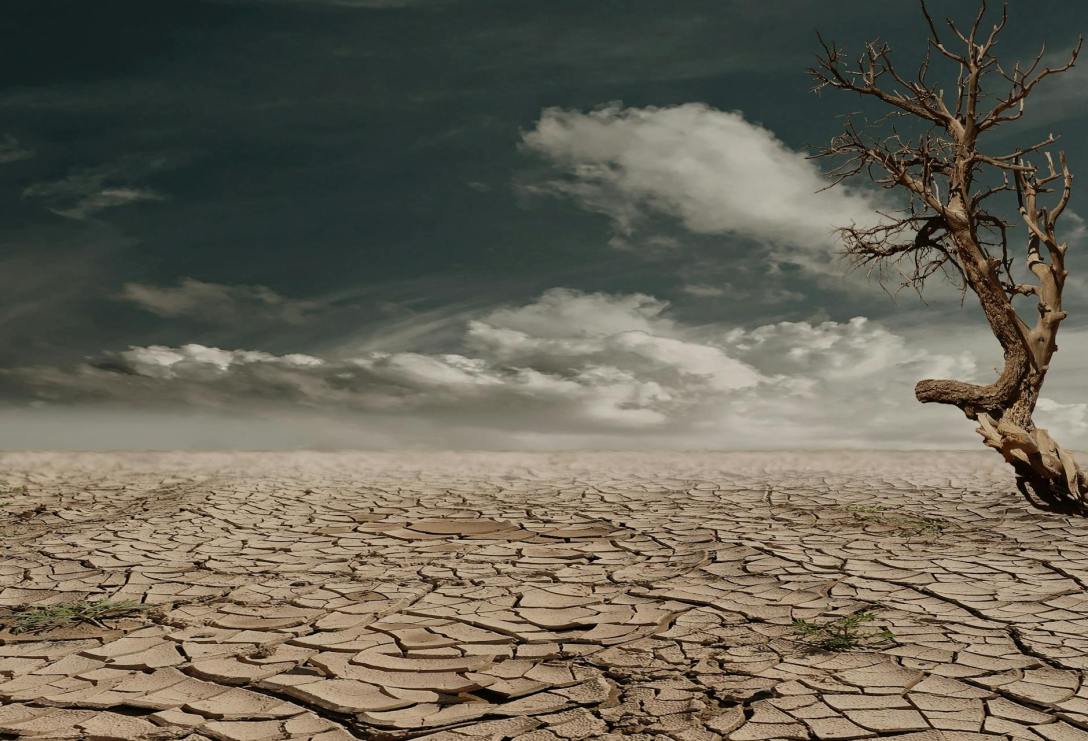
In an age when the earth had forgotten the taste of rain, there was a valley of farmers whose lives clung to the soil like fragile roots.
The land had once been generous. Rivers flowed like silver ribbons, and the fields bowed heavy with grain. But seasons turned, and the sky grew silent. The clouds passed without mercy, the rivers thinned into dust, and the ground cracked open like a weary heart.
The farmers did not abandon the land. Each morning, they walked into their fields with quiet determination, though their hands returned empty. They dug deeper wells, prayed to the sky, and rationed each drop of water as if it were life itself—because it was.
Their suffering rose—not in loud cries, but in quiet endurance.
And far beyond the human world, Kwan Yin heard them.
She heard the mother who gave her last cup of water to her child.
She heard the old farmer who pretended he was not thirsty so the young might drink.
She heard the unspoken fear that soon, even hope would dry up like the riverbeds.
Kwan Yin’s heart trembled with compassion—not as a fleeting emotion, but as a boundless vow.
“I will go,” she said, “not only to give relief, but to awaken what still flows unseen.”
And so, she descended once more to the human world.
She came not as a radiant figure, but as a humble woman walking along the dusty road that led into the valley. Her robes were simple, her face serene, her steps light as though guided by something deeper than the earth beneath her.
The farmers noticed her, but paid little attention at first. Strangers came and went, and none had brought rain.
Yet she did not speak of miracles.
Instead, she walked to the driest field and knelt down, placing her hand gently upon the cracked earth. She closed her eyes, as though listening—not to the sky, but to the ground itself.
A nearby farmer approached her, shaking his head.
“There is nothing left here,” he said. “We have tried everything. Even the wells have abandoned us.”
Kwan Yin opened her eyes and looked at him—not with pity, but with a deep, steady compassion.
“Has the earth abandoned you,” she asked softly, “or have you forgotten how to listen to it?”
The farmer frowned. “What is there to hear? It is dry. It is dead.”
Kwan Yin did not argue. She simply rose and asked the villagers to gather.
When they had come, tired and uncertain, she drew a small circle in the dust.
“Bring me what water you have,” she said.
They hesitated. What she asked felt impossible. Water was no longer something to give—it was something to guard.
But something in her presence stirred trust.
One by one, they brought what little they could: a half-filled cup, a small jar, a damp cloth wrung into drops. It was not much. It was barely anything at all.
Kwan Yin poured it gently into the circle she had drawn.
“This,” she said, “is not just water. It is your willingness to share life, even in scarcity.”
Then she took a simple branch and pressed it into the center of the dampened earth.
“Now,” she said, “care for this together—not as individuals, but as one body.”
The villagers were confused, but they obeyed.
Each day, they took turns offering a few drops of water to the small patch of soil. They shaded it from the harsh sun, loosened the surrounding earth, and sat quietly beside it—some in hope, others in doubt.
Days passed.
Then one morning, a child cried out.
A small green shoot had emerged.
It was delicate, almost too fragile to see—but it was alive.
The villagers gathered around it, their hearts stirring with something they had nearly lost.
Encouraged, they continued. They began to work the land differently—not digging blindly for water, but observing the flow of wind, the shape of the land, the hidden places where moisture still lingered beneath the surface. They shared labor, tools, and knowledge. What one discovered, all learned.
And slowly, the valley began to change.
It did not happen all at once. There was no sudden storm, no dramatic flood from the heavens.
But the earth, once hardened, began to soften. Dew gathered in the early mornings. Small channels guided what little rain fell into the soil instead of letting it vanish. The fields, once abandoned, showed signs of life again.
And the farmers, who had once endured in silence, now worked together—with care, with awareness, with a renewed sense of connection.
One evening, as the sun dipped low, the farmer who had first spoken to Kwan Yin approached her again.
“Who are you?” he asked quietly. “You have not brought rain, yet you have saved us.”
Kwan Yin smiled, her gaze resting on the small green field that had begun to spread across the valley.
“I did not save you,” she said gently. “You remembered how to live—with the earth, and with one another.”
The farmer lowered his head, understanding not fully, but enough.
The next morning, she was gone.
No one saw her leave. No footsteps marked the path.
But in the center of the valley, where the first shoot had grown, they found the branch she had planted—now blossoming, though no one had seen it flower before.
From that day on, the farmers told no stories of miracles.
Instead, they spoke of listening.
They spoke of sharing even when there was little.
They spoke of the quiet wisdom of the earth.
And sometimes, when the wind moved softly across the fields at dawn, they felt a presence—not seen, not heard, but known.
As though compassion itself had once walked among them… and never truly left.
Link: https://wisdomtea.org/2026/03/19/the-dry-earth-listens/

 Wisdom Tea