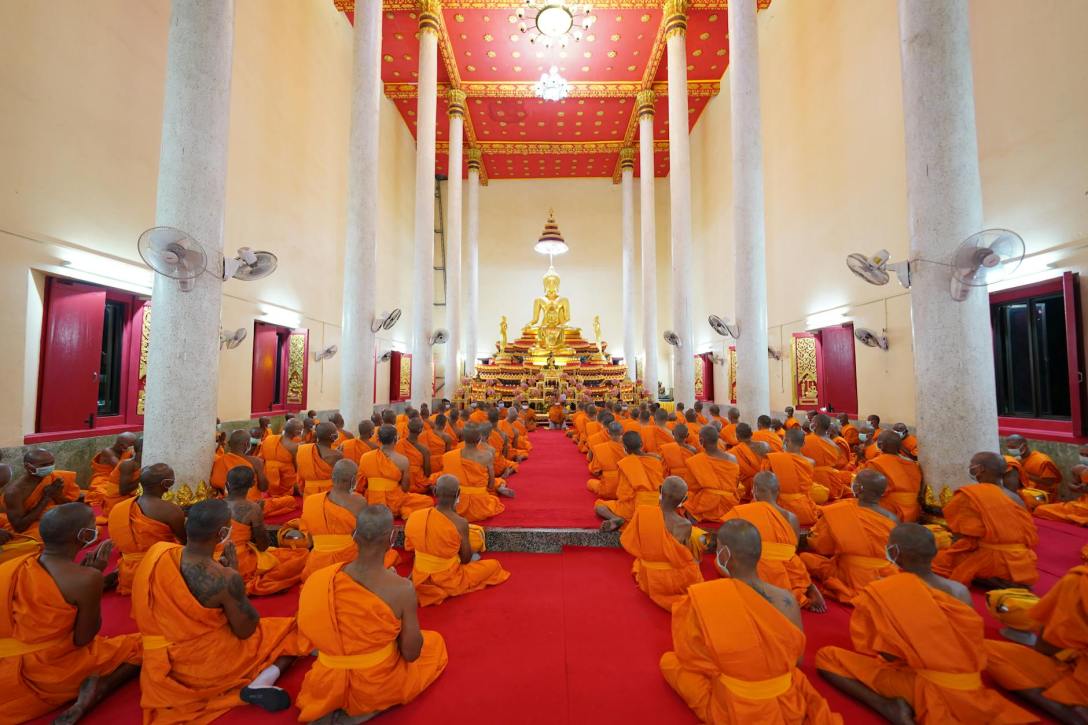
The Strengths of One Who Is Free

The Strengths of One Who Is Free

One quiet day, Venerable Sāriputta went to visit the Blessed One. The morning was cool, and the forest was alive with soft, scattered sounds—the faint chirping of birds, the rustle of leaves stirred by a passing breeze, the distant crack of a branch falling somewhere deep in the grove. The sunlight filtered through the tall sal trees, casting shifting patterns of gold and green on the forest floor.

When Sāriputta arrived, he bowed deeply, lowering his head in reverence, as one who has found a safe harbor bows to the one who showed him the shore. He then sat quietly to one side, folding his robe neatly, settling his body into stillness. The Blessed One regarded him with eyes full of calm and kindness, his presence like the steady warmth of the morning sun.

After a moment of silence, the Blessed One spoke in a voice that was neither hurried nor slow, but carried the weight of deep knowing.
“Sāriputta, tell me—how many strengths does a monk possess when his mind is completely free from all stains, all clinging, all defilements? Strengths that allow him to speak with unshakable certainty, ‘The defilements are ended in me’?”

Sāriputta’s face lit with respect, for he knew the question was not just about knowledge, but about living truth. “Lord,” he said, “there are eight such strengths. And when these are fully present, a monk can speak not from memory, not from hearsay, but from the direct, clear seeing of his own heart.”

He began to describe them, his voice unhurried, allowing the meaning to sink in.

He spoke first of the deep seeing of impermanence—the quiet but unshakable understanding that nothing in this world stands still. Every sight, sound, thought, feeling, and form is like a cloud drifting across the sky—changing shape, dissolving into something new. The seasons turn; the rivers flow without pausing; even the mountains, solid as they seem, are slowly wearing away. To see this truth with clarity is to loosen the grip of clinging, to stand on ground that no change can disturb.

He spoke of how one who has ended the defilements understands the nature of sensual desire. To those untrained, pleasures of the senses seem sweet and safe, like a bright fire on a cold night. But with wisdom, they are seen as dangerous, like embers that may look harmless yet will burn the hand that grasps them. This seeing does not come from fear, but from understanding; it is the calm knowledge that such pleasures cannot give lasting peace, and that reaching for them is like reaching for smoke.

Sāriputta’s words flowed like water over smooth stones as he spoke of the mind’s turning toward solitude. Such a monk delights in quiet places: the shade beneath a forest tree, the open expanse of a moonlit clearing, the hush before dawn when the world is still asleep. In seclusion, his heart feels light, unburdened, like a traveler who has set down a heavy load after a long journey. Noise and distraction hold no pull over him; renunciation is not a loss, but a gain beyond measure.

His mindfulness is steady, clear, and unbroken. He knows the body simply as it is—breathing, moving, changing—not as “I” or “mine,” but as part of the great stream of nature. He notices feelings—pleasant, unpleasant, and neutral—without clinging or pushing away. He watches the mind, knowing whether it is restless or calm, clouded or clear, and he understands the mental qualities that lead toward harm and those that lead toward peace. His awareness is like a lamp that continues to burn even in the wind—protected, unwavering, and bright.

Sāriputta spoke of the inner powers that such a monk develops: the power of aspiration that keeps his direction true, the power of energy that keeps him from laziness, the power of concentration that keeps the mind collected, and the power of wisdom that keeps it rightly guided. Together, they are like the firm pillars of a well-built house, holding everything in balance and security.

He spoke of the inner faculties—faith, energy, mindfulness, concentration, and wisdom—that have grown strong and harmonious. Faith steadies the heart like a deep-rooted tree in the wind. Energy moves him forward like a boat catching the right current. Mindfulness keeps him anchored in the present moment, concentration gathers his mind into stillness, and wisdom lights the way like a lantern in the night. Each faculty supports the others, like skilled musicians playing in perfect harmony.

He described the wholesome qualities that awaken the heart—mindfulness, investigation, energy, joy, tranquility, concentration, and equanimity. These grow within him like rare flowers in a well-tended garden, each with its own beauty and fragrance. Mindfulness opens the way, investigation sharpens understanding, energy keeps the path alive, joy refreshes the spirit, tranquility soothes the heart, concentration gathers the mind, and equanimity spreads a boundless calm over all experiences.

And finally, Sāriputta spoke of the noble eightfold path, fully lived and completed—right view, right intention, right speech, right action, right livelihood, right effort, right mindfulness, and right concentration. Together they are like the eight spokes of a perfectly balanced wheel, carrying the traveler smoothly to the far shore of liberation.

When these qualities are present, Sāriputta said, there is no doubt, no hesitation, no uncertainty. The monk knows for himself, as surely as one holding a clear jewel in his hand, “The defilements are ended in me.” And in that knowing, there is no pride, only peace—deep, steady, and unshakable.

The forest was silent when Sāriputta finished speaking, as if the trees themselves were listening. The Blessed One simply nodded, and in that moment, nothing more needed to be said.

Link: https://wisdomtea.org/2025/08/14/the-strengths-of-one-who-is-free/

Letting Go of Everything

Letting Go of Everything

Near the city of Sāvatthī, in a quiet forest grove, the Buddha was seated with a group of monks. It was a peaceful time. The air was calm, the trees gently swayed, and the birds sang softly in the distance. The Buddha was speaking, offering his teachings with clarity and compassion. He was guiding the monks toward the freedom of heart and mind, encouraging them to understand the path that leads beyond suffering. His words were kind and clear, filled with wisdom that pointed to release, to peace, to unbinding from all clinging.

The monks were sitting quietly, deeply focused. They listened not just with their ears, but with their whole being. Their hearts were open. Their minds were steady. They paid close attention to the Dharma, allowing the Buddha’s words to sink deep. They were present, fully engaged in the moment, undistracted and receptive.

Far from that serene place, Māra—the one who delights in restlessness and attachment—was watching. He saw the Buddha teaching. He saw the monks absorbing the Dharma. And he felt uneasy. He began to worry that these monks were slipping away from his control, that they were beginning to understand something that would carry them beyond his reach.

Māra thought of a plan. He decided to go to the Buddha and try to disturb his mind, to confuse his vision, to stop the flow of clarity. But he didn’t appear as himself. Instead, he disguised himself as a tired farmer. He carried a large plow across his shoulder and a long stick in his hand. His hair was unkempt, his clothes were rough and made of coarse fabric, and his feet were muddy, as though he had just come in from the fields.

Looking like an ordinary laborer, Māra approached the Buddha and asked if he had seen his missing oxen. The Buddha, calm and knowing, asked him what he meant by oxen.

Māra explained that the eye belonged to him, along with all the forms that are seen, and the awareness and contact that come through seeing. He said that the ear was his as well, along with all sounds. The nose and all smells were his too, as were the tongue and all tastes. The body and all sensations, the mind and all thoughts, all ideas and memories and plans—they all belonged to him. He claimed that wherever the senses operated, wherever there was contact, consciousness, and perception, that was his domain. And he insisted that there was nowhere the monk could go to escape his reach.

But the Buddha replied with deep peace and insight. He acknowledged that the senses and their objects did indeed belong to Māra in the world of ordinary experience. The eye, the forms, the awareness that arises from them, these were Māra’s. The same went for hearing, smelling, tasting, touching, and thinking. But he said there is a place beyond all that. A place where the eye does not arise, where forms are not perceived, where there is no contact, no feeling, no consciousness through the eye. And in that place, Māra cannot go. He explained that the same is true for the other senses. There is a state beyond sound, smell, taste, touch, and thought—a state beyond the reach of all sensory contact. In that state, there is no foothold for Māra. He cannot follow. He cannot touch what is beyond clinging.

Still trying, Māra argued that wherever people say “this is mine,” or cling to things as “me” or “mine,” he still has a way in. As long as someone holds to a sense of self, or ownership, or identity, Māra has power. If the mind is still grasping at anything, then escape is impossible.

But the Buddha had let go of all clinging. He did not claim anything as his. He did not identify with anything in the world. He did not speak from a place of self or ownership. He had gone beyond that. There was nothing Māra could grasp. No belief, no thought, no sense of “I” or “mine” remained. There wasn’t even a trace of a path to follow. No mental footprints left behind.

At that moment, Māra saw the truth. He realized that the Buddha saw him clearly, knew him completely, and had gone entirely beyond his reach. He had no power there. No influence. No way in.

Filled with disappointment and sorrow, Māra faded away. There was nothing more he could do.

Link: https://wisdomtea.org/2025/07/31/letting-go-of-everything/

Staying Steady Through the Day

Staying Steady Through the Day

There was once a monk named Anuruddha who, even while suffering from severe illness, managed to keep his mind calm and undisturbed. When other monks came to visit and asked him, “How are you managing to stay so peaceful in the middle of all that pain?” — he replied:

“I dwell with my mind grounded in mindfulness. That’s what keeps the pain in the body from invading the peace of the heart.”

That might sound like something reserved for monks in distant forests — but it’s actually something we can all apply, right here in our everyday lives.

It doesn’t mean we pretend pain isn’t there. It doesn’t mean we push it away or ignore it. It means we learn to stay with our experience — with gentleness, clarity, and perspective — so that the body might be hurting, but the heart doesn’t have to collapse around it.

Anuruddha practiced this through four kinds of mindfulness. First, by being present with the body. In your day, this might look like taking a few conscious breaths when you feel tension in your shoulders. It might mean noticing when you’re slumping in your chair or rushing through your steps. Feeling the weight of your feet on the ground while you stand in line. Bringing awareness to eating, walking, stretching — whatever the body is doing. Even when the body is tired or in pain, you can say: “This is what the body feels like right now — and it’s okay to notice it.”

Second, he was honest with feelings. This means simply noticing: “This feels pleasant.” “This feels unpleasant.” “This feels neutral.” Without needing to fix it, chase it, or reject it. In daily life, this could be feeling a pang of irritation in traffic and just naming it: “Irritation is here.” Or noticing how good a cup of tea feels and enjoying it fully — without clinging. Or recognizing loneliness or stress when it arises — and breathing with it. You don’t have to drown in your feelings or pretend they’re not there. You just stay with them like a kind observer: “This is what’s here right now. And that’s okay.”

Third, Anuruddha was curious about the mind. Throughout the day, you can check in with your own mind: Is it cloudy or sharp? Anxious or relaxed? Busy or still? You don’t have to “fix” it — just notice: “Ah, the mind is racing today.” “The mind feels heavy this morning.” “The mind is quite light right now.” Seeing the mind clearly helps us not take it so personally. It’s just weather — passing through the sky of awareness.

Fourth, he watched thoughts and tendencies come and go. This means noticing: “Oh, that’s a craving thought.” “Here’s anger arising.” “Here’s compassion, here’s patience — good seeds to water.” In daily life, we often act on autopilot. But when we pause and see a habit arise — whether helpful or harmful — we give ourselves a choice. “I don’t have to believe everything I think.” “I can meet this moment with more kindness, more awareness.”

When we ground ourselves in these simple kinds of mindfulness — body, feelings, mind, and mental patterns — something shifts. We start to respond instead of react. We stay steady in discomfort. We enjoy small joys more deeply. We catch unhelpful patterns before they take over. Like Ven. Anuruddha, we learn that even when life hurts — whether it’s physical pain, stress, or emotional difficulty — we can stay rooted. The storm might pass through the body, but it doesn’t have to knock down the heart.

Try saying this to yourself sometime today — maybe when you’re tired, frustrated, or just need a breath:

“I am aware of this body. I am aware of this feeling. I am aware of this mind. I see the patterns moving through me — and I am not swept away. I return to presence, again and again.”

One breath. One moment. One choice at a time. That’s how we dwell in mindfulness — even on ordinary days.

Link: https://wisdomtea.org/2025/07/24/staying-steady-through-the-day/

Quiet Moments, Clear Mind: Buddhist Insight for Busy Lives

Quiet Moments, Clear Mind: Buddhist Insight for Busy Lives

One day, the Buddha was speaking to a group of householders and said:o

“Friends, let me tell you about Sāriputta—not just as a monk, but as someone who mastered the mind in a way that any person, even a parent or family member, can learn from. His wisdom came not from escaping life, but from understanding it deeply, stage by stage.

Imagine a mother or father at home after a long day. The kids are finally asleep. For the first time all day, the house is quiet. They sit down in the living room. At first, their mind is still racing—thoughts about work, dinner, bills, school activities. But slowly, they take a breath, and feel a simple relief in the stillness.

That first feeling—relief from the chaos—is like the first stage Sāriputta entered: a peaceful joy that comes when we step back from constant demands. He noticed the thoughts, the relief, the planning mind—and how all of it came and went. Just like a parent realizes: “Wow, my mind was so busy all day. Now I can see it.” Sāriputta didn’t cling to the peace. He simply observed: this too comes and goes.

Next, Sāriputta settled deeper—like a parent who stops thinking altogether for a few minutes, just enjoying the quiet. Not planning tomorrow, not reliving arguments—just resting. That’s the second stage, where the mind becomes still not because of effort, but because it’s naturally quiet. And again, he noticed: even this calm is temporary. It rises, it fades. Don’t cling.

Then came the third stage—like when a parent no longer feels excited or stressed, but just sits peacefully with a warm heart. No highs, no lows—just a steady, balanced calm. Sāriputta noticed how this balanced state also shifts. He didn’t try to hold on to it. He let it pass, like a parent learning to enjoy peace without trying to make it last.

Then, he went even further—a fourth stage where even comfort and discomfort fall away. Imagine a parent who accepts the noise, the mess, the quiet, the stillness—all of it—with the same peaceful heart. There’s no “I wish it were different.” There’s just acceptance. Sāriputta saw: even this deep equanimity isn’t permanent.

And then—he let go of even the sense of “me.” Just like when a parent forgets themselves completely while watching a child sleep. In that moment, there’s no thought of being tired or busy—just space, just presence. That’s like entering the infinite space of awareness. But even that, Sāriputta saw, is just another experience. It too passes.

He moved beyond that—like when a parent starts to feel not just peace, but a deep knowing: “I am aware. I am conscious.” But even awareness itself, he saw, arises and passes away. It’s not permanent.

He went deeper still—to a state where there was a feeling of nothing at all. Like when a parent, totally burned out, feels empty—not sad, not happy, just… nothing. Even this, he examined and understood: this emptiness also has a beginning, middle, and end.

And then came the most subtle level—where even the sense of perception faded. Like the moment just before falling asleep, when you’re barely aware of anything. When he emerged from that, he looked back and clearly saw: every state of mind—joy, peace, emptiness, awareness—they all rise and fall. None of them are “me.” None are lasting. And because he saw this so clearly, he was free.

Finally, Sāriputta entered a state of complete stillness—no feeling, no perception—just pure rest. And when he returned from that, he knew without a doubt: there’s nothing more to chase. No more striving. He had arrived.

So I say to you, friends: if anyone is to be called truly wise, free in heart and mind, devoted not to wealth but to truth—it would be Sāriputta. And just as he walked the path with clear eyes, you too can practice this in your daily life. With each moment of awareness, you keep the wheel of truth turning.”

And when the Buddha finished, the people felt comforted and inspired—knowing that peace isn’t far away. It’s right here, in the middle of everyday life.

Link: https://wisdomtea.org/2025/07/04/quiet-moments-clear-mind-buddhist-insight-for-busy-lives/

Like Winds in the Sky

Like Winds in the Sky

One day, the Blessed One sat beneath a tree and spoke to a group of monks. With the serene clarity that only a Buddha can offer, he began by pointing to the vast sky above.

“In the sky,” he said, “winds of many kinds are always blowing. Some come from the east, others from the west. Some rise from the south, others descend from the north. There are winds that carry dust and winds that are clear. Some are cold, others hot. Some arrive with a gentle whisper; others roar with fierce force. The sky is not fixed to one kind of wind, nor does it choose one over another. It simply allows them to pass.”

In the same way, the Blessed One explained, feelings arise within the body. Sometimes they are pleasant and bring comfort. At other times, they are painful and difficult to bear. And in between these, there are neutral feelings—subtle, neither sweet nor bitter. All of them arise due to contact, like ripples spreading from a pebble dropped in water. They come, they linger for a time, and then they fade.

But the untrained, untaught person—unmindful and unaware—responds differently. When pleasure arises, he clings to it, hoping it will stay. When pain comes, he resists and recoils. When neutral feelings pass through, he grows bored and restless. He does not see feelings for what they are, but builds his identity around them. He constructs craving. He reinforces the sense of “I” and “mine.” And so, he suffers.

In contrast, the mindful practitioner—the one devoted to the Dhamma—regards feelings with wisdom. He sees each sensation clearly, just as it is. He understands that feelings are not permanent, not under his control, and not who he is. He watches joy as it arises and fades. He sees pain sharpen and then soften. Even neutral feelings, which often pass unnoticed, become part of his contemplation—like clouds drifting across a calm sky.

He is not drawn into elation nor dragged down by sorrow. Like a mountain standing tall beneath the changing heavens, he remains unmoved. Storms may pass; the sun may burn; but his mind remains serene, undisturbed.

Through diligent effort and deep inner clarity, he no longer claims feelings as “mine.” Instead, he sees them as mere events—arising conditions within a stream of experience. He likens them to leaves floating down a river, or to a bell that rings when struck by the wind.

By observing their birth and death, their emptiness and impersonality, he gradually unties the knot of attachment. With wisdom as his guide, he uproots craving from the heart.

In this very life, he becomes free. His heart is no longer bound by the fetters of greed, hatred, or delusion. Firm in understanding, grounded in the Dhamma, he walks the world released.

And when the time comes for his body to return to the elements—as all compounded things must—there is no fear, no confusion. The body dissolves, but the mind, ungrasping, has already passed beyond measure and beyond concept. Like a flame that has gone out for lack of fuel, or like boundless space, he is no longer confined.

The Blessed One continued, using the elements to teach:

Just as fire, once blazing, dies down when there is no more wood, so too the enlightened one, free of craving, leaves no smoke of rebirth. His passions have cooled. His chains have broken. There is no more fuel. No more flame.

As water, when still and undisturbed, becomes clear and pure, the mind that has been trained becomes capable of reflecting reality without distortion. It no longer clings to the images or ripples. It sees things as they are, not as the heart wishes them to be.

The earth bears all things without preference—filth and flowers, gold and refuse. Likewise, the sage endures praise and blame, gain and loss, without agitation. His patience is as vast as the plains.

The open sky cannot be stained by the clouds that drift through it. In the same way, the mind that has abandoned greed, hatred, and delusion becomes spacious and bright. His consciousness, freed from identity, shines from within like the moon freed from eclipse.

This person walks the Noble Eightfold Path. Right view gives him direction. Right effort gives him strength. Right mindfulness is his torch, and right concentration his refuge.

With right speech and right action, his behavior is gentle and harmless. With right livelihood, he takes from the world only what is needed and gives much in return. His life is simple, his needs few. He is like a deer resting peacefully in the stillness of the forest.

Such a one reflects, “This body is not mine, nor are these feelings, nor these thoughts. All arise due to conditions. When the causes end, so do the effects. There is no soul within, no self to defend. There is only a stream, flowing on until it fades.”

Because of this deep seeing, he does not cling to the past nor yearn for the future. He lives fully in the present, one breath at a time, his heart at peace and his hands free of grasping.

He has crossed the flood—while many still struggle, clinging to fragile rafts of belief or sinking in the mire of doubt. But with wisdom as his oar and virtue as his boat, he has reached the far shore. On this shore, there is no more fear.

Even if the sky were to fall or the earth split open, his peace would remain, unshaken. For he knows that nothing truly belongs to him. And he sees that the self the world clings to is like a mirage in the desert—appearing real, but empty upon approach.

So when his final breath is drawn, and the body is returned to the elements, there is no grief. No sorrow. No lamentation.

Like a bird flying free from a cage worn thin by time, his mind soars into boundlessness—directionless, measureless, at peace.

There is no more birth. No more becoming. No more bound existence.
What remains is only the unborn, the unaging, the deathless.

Such is the path of the one who sees.
Such is the journey from feeling to freedom.

Link: https://wisdomtea.org/2025/06/26/like-winds-in-the-sky/

Practicing the Dharma in Accordance with the Dharma

Practicing the Dharma in Accordance with the Dharma

At Sāvatthī, the Buddha said:

“A monk who truly practices the Dharma in the right way follows a natural and peaceful path. He does not rush or struggle, but gently trains the mind to see clearly and let go.

What is in harmony with this path is this:

He keeps reflecting on the body—what we call form. He sees that the body is made up of elements, always changing, never lasting. It is born, it ages, it gets sick, it dies. Sometimes it feels strong, other times weak. He realizes, ‘This is not who I am. This is not mine.’ And slowly, he stops clinging to it.

He also looks at feeling—pleasant, painful, or neutral. He notices how feelings arise when we see something, hear something, think something. But all feelings pass away. Even the best feelings don’t last. So he learns not to chase pleasure and not to fear pain. Instead, he watches all feelings with calm awareness.

Then he reflects on perception—how the mind labels and recognizes things. One day something seems beautiful, the next day boring. He realizes that perception shifts, depends on mood, memory, and conditions. So he doesn’t hold tight to how things appear. He sees that perceptions are just passing images, not fixed truth.

He looks at mental formations—his thoughts, habits, moods, plans, fears, and hopes. He sees how these arise from causes: from memories, from desires, from past actions. They are not solid. One moment he feels generous, the next irritated. These mental states come and go like clouds in the sky. So he watches them rise and fall, without holding on.

He also reflects on consciousness—the basic knowing of seeing, hearing, tasting, smelling, touching, and thinking. He sees that consciousness depends on contact: eye with form, ear with sound, mind with thoughts. It arises with conditions and fades when they change. Even consciousness, the thing that seems closest to ‘me,’ is not a lasting self.

By gently observing these five things—form, feeling, perception, mental formations, and consciousness—again and again, the monk grows disenchanted.

But this disenchantment is not gloomy or negative. It is peaceful. It’s like setting down a heavy load you’ve carried for a long time.

He begins to understand deeply. He sees the truth—not just with thought, but with direct experience. He sees clearly:
All things that arise, also pass away. They are not worth clinging to.

And because of this deep understanding, he lets go.

He is released from the burden of the body.
He is released from being driven by feelings.
He is released from illusions of perception.
He is released from restless mental activity.
He is released from identifying with consciousness.

And in that release, there is no more sorrow, no more grief, no more fear, no more confusion.

He is free. Truly free—from all suffering and stress.

This, dear monks, is what it means to practice the Dharma in accordance with the Dharma.”

Link: https://wisdomtea.org/2025/06/05/practicing-the-dharma-in-accordance-with-the-dharma/

The Farmer of the Mind: Cultivating Mastery Over Thought

The Farmer of the Mind: Cultivating Mastery Over Thought

I have heard that on one occasion the Blessed One was staying at Sāvatthī, in Jeta’s Grove, Anāthapinḍika’s monastery. It was the rainy season, and the forest hummed with the soft patter of raindrops falling upon leaves. The scent of wet earth filled the air, and a gentle mist curled around the trees.

A great assembly of monks had gathered, their saffron robes glowing in the dim light of dawn. They sat in deep silence, their hands folded in reverence, awaiting the Blessed One’s words. He gazed upon them, his serene face illuminated by the morning light, and addressed them:

“Monks!”

“Yes, lord,” the monks replied in unison.

The Blessed One spoke:

“When a monk is intent on the heightened mind, there are five themes he should attend to at appropriate times. Which five?

“There is the case where evil, unskillful thoughts—connected with desire, aversion, or delusion—arise in a monk while he is referring to and attending to a particular theme. He should attend to another theme, apart from that one, connected with what is skillful. As he does so, those unskillful thoughts are abandoned and subside. With their abandoning, he steadies his mind, settles it, unifies it, and concentrates it.

“But if those thoughts persist, he should reflect on their drawbacks: ‘These thoughts lead to suffering. They darken the mind. They are thorns in the path of peace.’ Just as a traveler carrying a heavy sack realizes that dropping the burden brings relief, so too should the monk see how abandoning unwholesome thoughts brings lightness to the heart.

“If even then the thoughts persist, he should withdraw his attention—he should give them no mind. As a man walking through a marketplace ignores the clamor of voices around him and focuses only on his path, so too should the monk disregard the noise of unwholesome thoughts.

“If they still do not subside, he should attend to the relaxing of thought-fabrication, gently calming the movement of the mind. Just as a potter, shaping a vessel, slows the turning of his wheel to smooth its edges, so too does the wise monk soften the momentum of thought, guiding it toward stillness.

“And finally, should all else fail, he should take up the final method—firm and resolute. With teeth clenched and tongue pressed against the roof of his mouth, he should subdue the mind with force, constraining and crushing the unwholesome impulses with clear awareness, as a strong man might subdue a wild beast.

The Parable of the Two Farmers

The Blessed One paused, then continued:

“Monks, this is like two farmers who inherited the same land.

“One farmer was negligent and careless. He did not prepare his field properly. He let weeds grow alongside the crops, believing they would not harm the harvest. When pests came, he did not chase them away, thinking they would leave on their own. When the sun was too hot, he cursed the sky but did not shade his plants. And when the rains came, he lamented his ruined field but had done nothing to build proper irrigation.

“In the end, his harvest was meager, his efforts wasted. He blamed the land, the weather, and misfortune, but never did he see that it was his own negligence that had led to his failure.

“The other farmer was diligent and wise. He knew the land required effort. He removed the weeds as soon as they sprouted, before their roots took hold. When pests arrived, he drove them away with patience and care. If the sun was too harsh, he adjusted his crops and provided shade. When the rains came, he had already prepared the channels to guide the water where it was needed.

“In the end, his harvest was abundant, his granaries full. When asked the secret to his success, he simply smiled and said, ‘I cared for my field, and in return, it cared for me.’

“Monks, the untrained mind is like the lazy farmer’s field—overrun by weeds of desire, pests of aversion, and floods of delusion. But the well-trained mind is like the diligent farmer’s field—protected, cultivated, and yielding the fruits of wisdom.

“Just as the wise farmer does not despair when weeds appear but instead removes them skillfully, so too should you train your minds.

“Do not be disheartened when unskillful thoughts arise. Attend to them wisely, knowing that a well-tended mind, like a well-tended field, leads to a bountiful harvest—peace, clarity, and liberation.

The Power of a Well-Trained Mind

The Blessed One looked over the assembly and continued:

“Monks, you may ask, ‘What is the fruit of a well-trained mind?’ I will tell you.

“It is like a still lake in the heart of the forest. The surface is clear and unmoving, reflecting the moon and the stars without distortion. When an animal approaches to drink, it sees its own reflection perfectly. In such a lake, the sky, the trees, and the mountains appear as they are, undisturbed.

“But an untrained mind is like a lake constantly churned by the wind. Its waters are muddy, and no reflection can be seen. Even if the stars shine above, they are lost in the restless movement of the waves.

“When a monk, by these five methods, steadies his mind, unifies it, and concentrates it, he becomes a master of thought sequences. He thinks only what he chooses to think, and does not think what he does not. He has broken the bonds of craving and aversion. He has seen through conceit, and with right view, has reached the end of suffering and stress.

“Monks, train yourselves well. Be like the diligent farmer. Master the field of your own mind. Be like the still lake, where truth is seen clearly. For in doing so, you will not only benefit yourselves but all beings who come into your presence.”

The Awakening of the Monks

As the Blessed One spoke, a great stillness settled over the gathering. Some monks felt their minds clear as if a veil had been lifted. Others, who had struggled with restless thoughts, felt their burdens lighten. Among them was a young monk who had long battled with doubt.

That night, he sat beneath a great tree, reflecting on the Blessed One’s words. He thought of the two farmers and saw himself in the lazy one. But now, he resolved to change. He would uproot his weeds, guard his field, and let no impurity take hold.

With renewed determination, he entered deep meditation. As the night passed, his mind grew still, and as the first light of dawn touched the horizon, insight arose within him. He saw the nature of thought, the impermanence of all things, and in that moment, a great joy filled his heart.

The next morning, when the monks gathered once more before the Blessed One, the young monk stepped forward, bowed deeply, and said, “Lord, the field of my mind is now tended. The weeds are gone. The path is clear.”

The Blessed One smiled, his eyes filled with knowing. “Then, monk, walk that path with diligence. For now, you have truly begun.”


That is what the Blessed One said. Deeply inspired, the monks rejoiced in the words of the Blessed One, and many resolved then and there to train with renewed vigor, knowing that mastery over the mind was the key to liberation.

Link: https://wisdomtea.org/2025/04/03/the-farmer-of-the-mind-cultivating-mastery-over-thought/

The Winds of Feeling and the Stillness of Wisdom

The Winds of Feeling and the Stillness of Wisdom

In the vast sky above, O monks, the winds are ever-changing.
From the far reaches of the earth, they arise—east and west, north and south—
Some sweeping across the land with dust in their grasp,
Others gliding clear and pure, unseen yet felt.
Some arrive with a scorching heat, parching all they touch,
While others whisper with a cool breath, soothing the weary.
Some rage with unbridled fury, shaking trees and stirring waves,
Others pass so gently that even the finest leaf remains still.
Thus, the sky holds within it the ceaseless motion of change,
A dance without beginning, a rhythm without end.

Likewise, monks, within this fragile body, feelings arise and pass away.
Pleasant feelings, like the cool breeze of dawn, bring delight,
Painful feelings, like the searing winds of summer, bring distress,
And neutral feelings, subtle and unnoticed, drift like a silent air.
Just as the winds do not ask permission to blow,
Neither do feelings seek consent before they arise.
They come and go, transient as the shifting sky,
Unbound by will, untouched by desire.

There are times when joy rushes in like a warm southern wind,
Caressing the heart, lifting the spirit, filling the mind with delight.
Like the gentle wind that carries the scent of blossoms,
It fills one’s being with sweetness, with contentment, with ease.
But as swiftly as it arrives, it fades,
Leaving behind only the memory of its touch.

At other times, suffering comes like a storm from the north,
A wind that chills the bones and darkens the sky.
It roars through the mind like thunder over the mountains,
Scattering thoughts, shaking resolve, leaving fear in its wake.
One may grasp at warmth, may plead for calm,
But the storm does not heed the cries of those who resist.
It will pass in its own time, as all things do.

And then there are moments when neither pleasure nor pain arises,
When the winds are still, when the sky is vast and untroubled.
Yet even in this calm, there is movement unseen—
The silent shifting of clouds, the quiet breath of the unseen air.
Such is the nature of neutral feeling, subtle and unnoticed,
Present, yet often ignored, like a whisper in the great noise of life.

But, O monks, the wise one does not cling nor recoil.
He observes as a traveler watches the shifting clouds—
Unmoved by their beauty, unshaken by their darkness.
With mindfulness sharp as a lamp in the storm,
He sees the winds of feeling for what they are:
Impermanent, empty, without a self to call their own.
Neither delighting in pleasure nor despairing in pain,
He remains steadfast, grounded in the Dharma’s way.

The fool, however, is like a man chasing the wind.
He runs toward pleasure, longing to catch it in his grasp,
Yet it slips through his fingers like sand through an open hand.
He flees from suffering, cursing the bitter wind that stings his face,
Yet the more he resists, the fiercer the storm becomes.
He clings to what is fleeting, he weeps for what is lost,
Unaware that all things are like the sky—
Boundless, shifting, beyond his control.

But if a monk, O wise ones, is ardent and does not neglect
To practice mindfulness and comprehension clear,
Then the nature of all feelings will he understand.
Like a great tree rooted deep in the earth,
He does not sway with every passing breeze.
Neither heat nor cold disturbs his stillness,
Neither joy nor sorrow binds his heart.

And having penetrated them, he will be taint-free in this very life.
Mature in knowledge, firm in the ways of the Dharma,
He walks the path beyond sorrow, beyond birth and death.
For he has seen the truth with wisdom’s eye,
And in knowing, he is free.

When once his life-span ends, his body breaks,
Like a leaf that falls when its time has come,
He clings to nothing, holds to nothing.
No longer bound by the illusions of self and suffering,
He transcends all measure, beyond all concept,
Unshaken as the boundless sky itself.

Thus, O monks, let the winds blow as they will.
Do not chase them, do not flee from them.
Simply see them, know them, and be free.

Link: https://wisdomtea.org/2025/03/20/the-winds-of-feeling-and-the-stillness-of-wisdom/

The Impermanence of Life

The Impermanence of Life

It is said that on one occasion, the Blessed One was residing near Sāvatthī, in the tranquil setting of Jeta’s Grove, within the monastery of the great lay disciple, Anāthapiṇḍika. The grove, known for its serene beauty, was a place where the gentle rustling of leaves harmonized with the distant murmurs of disciples in meditation. The air was cool and carried the faint fragrance of blossoming trees, as birds nestled into their branches, signaling the arrival of dusk.

That afternoon, Venerable Ānanda, after emerging from his period of solitary contemplation, felt a stirring within his heart—an inquiry that had long lingered in his mind. With reverence, he made his way toward the Blessed One, his robes flowing gently with each step. Approaching the Master, he bowed deeply, touching his forehead to the ground, before sitting respectfully to one side.

After a brief silence, he spoke. “It is truly astonishing, Blessed One,” he began, his voice carrying both wonder and solemnity. “It is beyond ordinary understanding how brief the life of your noble mother was. Just seven days after giving birth to you, she departed from this world and was reborn among the Contented (Tusita) devas. Such a profound event—one might wonder, why must it always be so?”

The Blessed One, seated in perfect stillness, his presence like the steady glow of a lamp in the darkness, turned his gaze toward Ānanda. A gentle smile played upon his lips, filled with both compassion and wisdom. “That is the way of things, Ānanda,” he replied with serene certainty. “It has been so for all bodhisattas. Seven days after giving birth, their mothers depart from this world and reappear among the Contented devas. This is not by chance, nor is it unjust—it is simply the unfolding of causes and conditions, bound to the nature of existence itself.”

Hearing this, Ānanda lowered his gaze, reflecting deeply. The inevitability of impermanence was a truth he had long understood, yet there was something profoundly moving about the fate of the Blessed One’s mother. She had carried the future Buddha within her, borne him into the world, and yet was granted only the briefest of moments to gaze upon her child before departing. What a poignant reminder of the fleeting nature of life!

Sensing the unspoken thoughts in Ānanda’s heart, the Blessed One continued, his voice steady and clear. “Ānanda, all that arises is bound to pass away. This truth is not new, nor is it sorrowful—it is simply the nature of all things. The wise do not grieve over what must change, but rather, they come to understand it, to see it as it truly is. Just as a river flows ever onward, never pausing for even a moment, so too does life, moving ceaselessly from birth to death, from form to formlessness.”

Ānanda listened intently, his heart absorbing the words like parched earth drinking the first drops of rain. The Blessed One’s wisdom was not meant to bring sorrow but liberation—an awakening to the truth that, when seen clearly, freed one from suffering.

Then, in that sacred moment, the Blessed One uttered verses that carried the weight of countless eons of wisdom:

All who have come to be,
And all who are yet to come,
Shall one day depart,
Leaving the body behind.

As a traveler moves from one land to the next,
So too does the being journey on,
Carrying only the weight of their deeds.

The wise, knowing this truth,
Understanding the fleeting nature of all things,
Should live the holy life
With diligence and unwavering resolve.

As these words were spoken, a deep stillness settled over the grove, as though nature itself had paused to listen. The trees swayed gently in the evening breeze, their leaves whispering secrets to one another, as if in agreement with the wisdom that had just been revealed.

Ānanda bowed his head once more, his heart filled with both reverence and renewed understanding. In that moment, he saw more clearly than before—the path laid out by the Blessed One was not one of despair but of awakening, not of loss but of liberation. Impermanence was not to be feared, for it was the very nature of existence. To grasp this truth was to be free from suffering, to walk the noble path with clarity and purpose.

As the sun dipped below the horizon, casting long shadows across the monastery grounds, the Blessed One remained in serene meditation, embodying the very truth he had spoken. His presence was like the still ocean—deep, vast, and unshaken by the passing winds of change.

And those who listened, those who truly understood, carried his words in their hearts like a lamp in the darkness, guiding them ever forward on the path to awakening.

Link: https://wisdomtea.org/2025/02/13/the-impermanence-of-life/

Wishes

Wishes

Once, the Blessed One, the Buddha, was residing near Sāvatthī, in Jeta’s Grove at the monastery donated by Anāthapiṇḍika, the great supporter of the Sangha. Jeta’s Grove was a place of great beauty and peace. The tall trees, their branches heavy with leaves, offered shade and shelter to monks seeking quiet and solitude. The air was cool, and the sounds of nature—the songs of birds, the hum of insects, and the gentle rustling of leaves—blended into a natural symphony of calm.

On this particular morning, as the sun began its slow ascent and golden light touched the forest floor, the monks returned from their almsround in Sāvatthī. With their bowls filled with the generosity of laypeople, they made their way quietly back to the monastery, their bare feet treading softly on the earth. After sharing their meal and completing their morning duties, the monks gathered under a large, ancient tree.

The Blessed One sat upon a simple seat prepared for him, his serene presence filling the space with stillness. Seeing his disciples seated before him—rows of saffron-robed monks, silent and attentive—the Buddha called out:

Monks!

Yes, Lord,” they responded in unison, bowing their heads respectfully.

The Buddha, his voice calm yet clear, began his teaching:

“Monks, dwell with pure virtue. Follow the Pāṭimokkha, the rules of discipline that preserve the holy life. Be careful and restrained in your conduct. Train yourselves diligently, and see danger even in the smallest faults. A monk who lives in this way will find great benefit, both in this life and beyond.”

The monks listened intently, their minds focused and still. Seeing their readiness to learn, the Buddha continued, explaining how pure conduct brings many blessings and fulfillments in a monk’s life.


The Ten Blessings of Pure Conduct

  1. Being Loved and Respected
    “If a monk wishes to be loved and respected by his fellow monks, let him be pure in his conduct. Such a monk inspires trust and admiration. He lives in harmony, free of quarrels and blame, like a calm lake that reflects the sky without distortion. He should meditate regularly, seeking peace in solitude. In quiet places, away from distractions, his mind becomes steady and clear. A monk who trains this way is loved not because he asks for it, but because his actions naturally inspire respect.”

The Buddha smiled slightly as he spoke, his gaze sweeping over the monks. “Reflect on this, monks: true respect cannot be forced; it arises naturally when virtue is perfected.”

  1. Receiving Life’s Necessities
    “If a monk wishes to receive food, robes, shelter, and medicine without difficulty, let him live a virtuous life. Laypeople see such a monk and feel confidence in supporting him. When they give, they know their offerings will be well used, bringing blessings to themselves and others.”

The Buddha continued, “Monks, remember: what we receive is given through the hard work and sacrifice of others. A virtuous monk accepts these gifts with gratitude and uses them wisely.”

  1. Bringing Benefit to Others
    “If a monk wishes the offerings he receives to bring great benefit to those who give, let him live purely and practice well. Gifts given to a pure monk bear great merit, like seeds sown in fertile soil. The giver reaps blessings long after the gift is given.”
  2. Helping Departed Relatives
    “If a monk wishes to bring blessings to his departed relatives, let him live a life of virtue and purity. Even those who have passed away are touched by the good deeds of their loved ones who remain. Like a lamp lighting a dark room, the pure life of a monk can bring peace to unseen realms.”

The monks reflected quietly on this, thinking of their own loved ones who had passed on.

  1. Finding Contentment
    “If a monk wishes to be content with what he receives—whether it be little or much—let him train his mind to be free from greed. Contentment is the greatest wealth. A monk who is satisfied with little will never feel poor, while one who chases after more will never be at peace.”
  2. Building Inner Strength
    “If a monk wishes to endure hardships—cold and heat, hunger and thirst, harsh words, or bodily pain—let him strengthen his mind. Like a great tree that stands firm in the wind, a monk trained in patience and virtue will not be shaken.”

The Buddha gestured to the great tree under which they sat. “See how this tree stands tall, unmoving, though the winds blow around it. In the same way, train yourselves to remain steady amidst the storms of life.”

  1. Overcoming Anger
    “If a monk wishes to overcome anger and irritation, let him train his mind in patience and kindness. Anger is like a fire that burns within, harming only the one who holds it. By practicing peace and forgiveness, a monk frees himself from this suffering.”
  2. Conquering Fear
    “If a monk wishes to overcome fear and dread, let him seek solitude and observe his fear. He will see it as a passing thought, without substance. Fear arises from delusion. By understanding this, a monk can let it go and dwell in peace.”
  3. Mastering Meditation
    “If a monk wishes to attain deep, peaceful meditation, let him live with pure conduct and train his mind in quiet places. With effort and dedication, he will find joy and calm, like a traveler who rests beneath a cool shade on a hot day.”
  4. Attaining Liberation
    “If a monk wishes to achieve the highest freedom—the end of all suffering—let him practice virtue, meditation, and wisdom with diligence. By following this path, he will realize the truth and be free.”

The Path to Peace

The Buddha looked kindly at his monks, his words resonating like a bell in their hearts.

“Monks, train yourselves well. Live with pure conduct and see danger even in the smallest faults. A life of virtue brings harmony, contentment, and strength. It leads to the highest freedom, Nibbāna, where suffering ceases completely.”

The monks sat in deep reflection, their minds uplifted and inspired. Some resolved to practice with greater diligence, while others silently rejoiced at the clarity and compassion of their Teacher’s words.

As the morning sun climbed higher into the sky, the grove seemed even more peaceful, the teachings of the Blessed One lingering like a soft echo among the trees.

From that day on, the monks at Jeta’s Grove renewed their efforts to live in purity, knowing that virtue was the path to peace, respect, and ultimate liberation.

Link: https://wisdomtea.org/2024/12/18/wishes/