Living with Dignity in a Modern Age

Living with Dignity in a Modern Age

To ask what it means to live with dignity might sound unusual today. In a world where most of us are racing to meet deadlines, pay bills, and juggle responsibilities, who has the time to reflect on something so abstract? Yet if we pause for even a moment, it becomes clear that this is not idle philosophy. The question cuts to the heart of what our lives mean, and even deeper, to the values shaping our culture. If dignity is impossible, then life has no higher purpose, and all that’s left is chasing quick thrills before the lights go out. But if dignity is possible, then we must ask whether we are living in a way that honors it, and whether our culture supports that pursuit.

At first glance, dignity seems simple. But the word has shifted over time. Older definitions emphasized “intrinsic worth” and “nobility of character,” while more recent ones lean toward prestige, status, or fame. When we talk about living with dignity, it’s that older meaning that matters: the conviction that life has inherent value, and that we carry within us the potential for moral excellence—something that resonates with the rhythm of nature and the vastness of the cosmos.

The pursuit of dignity isn’t fashionable anymore. Wealth, power, success, and celebrity dominate instead. This shift traces back to intellectual currents that challenged religious certainty: Darwin’s theory of evolution, Freud’s psychology of the unconscious, economic determinism, and even the computer model of the mind. Together, they’ve chipped away at the idea that human life has any special worth. Instead, we’re told we’re just clever animals, driven by selfish genes, navigating highways instead of trees.

These ideas have filtered into everyday culture. The free market reduces people to producers and consumers. Mass democracies turn individuals into faceless voters swayed by slogans and images. Cities sprawl into chaotic, dangerous landscapes where escape is sought in drugs or empty sex. Rising crime, corruption, fractured families, and environmental destruction all reflect not only how we treat each other but how we see ourselves. When dignity is eroded, society itself begins to unravel.

Amid this erosion of dignity, can the Dhamma help us recover a sense of meaning? The answer is yes, in two ways: by affirming our innate dignity and by showing us how to realize it. For Buddhism, human dignity doesn’t come from a relationship to God or an immortal soul. It comes from the unique place of human life in the cosmos. The Buddha teaches that the human realm is special because we have the capacity for moral choice. Though limited by conditions, we always possess a margin of freedom that allows us to change ourselves and, in doing so, change the world.

Human life, however, is not easy. It is complex, filled with conflict and ambiguity, offering enormous potential for both good and evil. This very complexity makes human existence fertile ground for spiritual growth. At each moment, we stand at a crossroads where we can rise to greatness or sink into degradation. The choice is ours.

While this capacity confers intrinsic dignity, Buddhism emphasizes the importance of acquired dignity. This is expressed in the word ariya, meaning noble. The Buddha’s teaching is the noble doctrine, aimed at transforming ordinary people into noble disciples through wisdom and practice. This transformation doesn’t come from faith alone but from walking the path, which turns weakness into strength and ignorance into knowledge.

Acquired dignity is closely tied to autonomy. Autonomy means self-mastery, freedom from passion and prejudice, and the ability to shape one’s own life. To live with dignity is to be one’s own master, guided not by craving or bias but by a thirst for truth and righteousness. The highest expression of this dignity is the arahant, the liberated one, who has broken free from greed, hatred, and delusion. Though most of us are far from that state, the path to it is already within reach: the Noble Eightfold Path. Right view shows us that our choices matter and carry consequences. Right conduct ensures those choices align with moral and spiritual excellence. Together, they lead to knowledge and liberation.

In today’s world, humanity is veering recklessly in two destructive directions: violent struggle and frivolous self-indulgence. Beneath their differences, both share a disregard for dignity—the first violates the dignity of others, the second erodes one’s own. The Buddha’s path offers a middle way, avoiding extremes. To follow it brings quiet dignity into our lives and answers the cynicism of our age with a note of affirmation.

Extending this reflection further, we can see how dignity applies not only to individuals but to communities and nations. A society that values dignity will prioritize justice, compassion, and sustainability over profit and power. It will recognize that human beings are not disposable units of labor but bearers of intrinsic worth. In practical terms, this means creating systems that support education, healthcare, and equality, while resisting the forces that reduce people to statistics or commodities. Dignity is not just a personal virtue; it is a collective responsibility.

Technology adds another layer to this challenge. In the digital age, our identities are often reduced to data points, our attention commodified, and our relationships mediated by screens. The pursuit of dignity requires us to resist being defined solely by algorithms or consumer profiles. It calls us to reclaim our humanity in spaces where efficiency and profit dominate. Even in the virtual world, dignity means treating others with respect, resisting exploitation, and remembering that behind every screen is a person with hopes, fears, and intrinsic worth.

Environmental crises also test our sense of dignity. To live with dignity is not only to honor ourselves but to honor the planet that sustains us. When we exploit nature recklessly, we undermine the dignity of future generations. The Buddhist emphasis on interdependence reminds us that dignity is inseparable from responsibility: our choices ripple outward, shaping the lives of others and the health of the earth.

Ultimately, dignity is both a gift and a task. It is something we possess by virtue of being human, but also something we must cultivate through conscious effort. The Eightfold Path offers a framework for this cultivation, guiding us toward wisdom, ethical conduct, and mental discipline. To walk this path is to affirm that life has meaning, that our choices matter, and that we can rise above the forces that seek to diminish us.

In an age of distraction, cynicism, and fragmentation, the call to live with dignity is radical. It challenges us to slow down, to reflect, and to act with integrity. It asks us to resist the reduction of human beings to consumers, voters, or data points, and to reclaim our place as moral agents capable of greatness. To live with dignity is to live with purpose, autonomy, and compassion. It is to recognize that even in the midst of chaos, we carry within us the seeds of nobility. And if enough of us choose to nurture those seeds, we may yet create a culture that honors the dignity of all.

Link: https://wisdomtea.org/2025/11/13/living-with-dignity-in-a-modern-age/
Unrepayable Love

Unrepayable Love

To live with integrity is to live in alignment with truth — not just the truth we speak, but the truth we embody. It’s a quiet, steady force that shapes our thoughts, words, and actions. Integrity is not about perfection or performance; it’s about consistency, humility, and the courage to live by our values, even when it’s inconvenient or uncomfortable.

At the heart of integrity lies a quality that is often overlooked in modern life: gratitude.

Gratitude is more than saying “thank you.” It’s a deep, inner recognition of the countless ways we are supported by others. It’s the awareness that we are not self-made, that our lives are woven from the care, labor, and love of those who came before us and those who walk beside us. Gratitude is the antidote to entitlement. It softens the ego, opens the heart, and reminds us that we are part of something larger than ourselves.

A person who lacks gratitude lives in a state of disconnection — from others, from the world, and from their own humanity. They may appear successful or self-sufficient on the outside, but inside, there is a hollowness, a sense of isolation. Gratitude, on the other hand, connects us. It roots us in relationship. It reminds us that every meal, every breath, every opportunity is a gift — not a guarantee.

Nowhere is this more evident than in our relationship with our parents.

From the moment we are conceived, our parents begin giving. They give their bodies, their time, their energy, their sleep, their dreams. They carry us, feed us, clean us, comfort us, teach us, and protect us. They make sacrifices we may never fully understand. Even when they are imperfect — and all parents are — the sheer magnitude of what they give is staggering.

And yet, in the rush of modern life, it’s easy to forget. We grow up, move out, build careers, start families of our own. We become busy, distracted, preoccupied. Sometimes we carry wounds from childhood, unresolved tensions, or misunderstandings. But even in the most complicated relationships, there remains a truth that cannot be erased: our parents gave us life. They gave us our first breath, our first nourishment, our first glimpse of the world.

To repay that gift is no small task. In fact, it’s said that even if we were to carry our mother on one shoulder and our father on the other for a hundred years — caring for them, feeding them, cleaning them, enduring every hardship — we still would not have repaid them. Even if we gave them the entire world, filled with treasures and riches, it would not be enough.

Why? Because what they gave us is beyond measure. They gave us the foundation of our existence. They gave us the chance to live, to grow, to awaken.

But there is a deeper form of repayment — one that goes beyond physical care or material offerings. If our parents lack spiritual grounding, and we help them find faith… if they struggle with ethical choices, and we guide them toward integrity… if they are closed off, and we inspire generosity… if they are confused or lost, and we help them discover wisdom… then we are offering them something truly transformative. We are not just repaying them — we are uplifting them.

This kind of repayment is not transactional. It’s not about balancing a ledger. It’s about love. It’s about honoring the sacred bond between parent and child. It’s about seeing our parents not just as caregivers, but as fellow human beings — with their own fears, hopes, and potential for growth.

In many spiritual traditions, honoring one’s parents is considered one of the highest virtues. It’s not just a cultural value — it’s a spiritual practice. It teaches us humility, compassion, and reverence. It reminds us that the path of awakening is not separate from the path of relationship. How we treat those who raised us is a reflection of how deeply we understand the teachings of love and truth.

Of course, not all parent-child relationships are easy. Some are marked by pain, neglect, or even harm. In such cases, honoring our parents may look different. It may mean setting boundaries, seeking healing, or offering forgiveness from a distance. But even then, the practice of gratitude can be a powerful force — not to excuse harm, but to acknowledge the complexity of our origins and the humanity of those who brought us into the world.

Living with integrity means remembering. It means not turning away from the people who made our lives possible. It means showing up — not just when it’s convenient, but when it’s hard. It means listening, forgiving, and offering what we can, even if it’s just our presence, our prayers, or our sincere wish for their well-being.

Gratitude is not a one-time act. It’s a way of life. It’s the lens through which we see the world — not as something we own, but as something we’ve been entrusted with. When we live with gratitude, we become stewards of kindness. We become bridges between generations. We become reminders that love is never wasted, and that every act of care ripples outward in ways we may never see.

In the end, integrity is not about grand gestures. It’s about the small, consistent choices we make every day. It’s about how we speak, how we listen, how we remember. And when we live with gratitude — when we truly honor those who gave us life — we become part of a sacred cycle of giving and receiving that sustains the world.

Link: https://wisdomtea.org/2025/11/06/unrepayable-love/

There are four kinds of people in the world.


There are four kinds of people in the world.

This may sound simple, but it holds profound truth. These four types are not defined solely by wealth or status, beauty or suffering. They are defined by the direction they choose to walk—toward darkness or toward light. Some begin in hardship and continue down a destructive path. Some begin in hardship and rise toward goodness. Some begin in privilege and fall into ruin. And some begin in privilege and choose to uplift themselves and others.

Let’s begin with the first: the person in hardship headed for more hardship. This is someone born into poverty, into a family that struggles to survive. Perhaps their parents work as scavengers, hunters, basket-weavers, or sweepers—jobs that are undervalued, overlooked, and often stigmatized. Their home is modest, maybe crumbling. Food is scarce. Clothes are worn thin. Shelter is fragile. Illness is common, and medical care is a luxury they cannot afford. Their body may bear the marks of suffering—deformities, chronic pain, or disabilities that make daily life even harder.

But the hardship isn’t just physical. It’s emotional. It’s social. This person is often ignored, judged, or dismissed by others. They are denied opportunities, excluded from circles of influence, and rarely shown compassion. And in response to this pain, they turn inward with resentment. They lash out. They lie, cheat, steal—not always out of necessity, but sometimes out of anger. Their words wound. Their actions harm. Their thoughts grow bitter. They become hardened by the world, and instead of seeking light, they sink deeper into darkness.

When their life ends, the suffering doesn’t stop. It continues in another form, in another realm—one shaped by the choices they made. This is the person in darkness headed for darkness. Not because they were born into pain, but because they let pain define them.

Now consider the second: the person in hardship who chooses light. This person’s beginning is just as difficult. They are born into poverty, into a world of scarcity and struggle. Their family may be marginalized, their body may be frail, and their life may be filled with obstacles. But something within them refuses to be broken. They carry a quiet strength, a sense of dignity, a spark of hope. They may not have much, but they choose to live with integrity.

They speak kindly, even when others are cruel. They act with compassion, even when they receive none. They think with clarity, even when the world tries to confuse them. They do not let their suffering become an excuse for harming others. Instead, they transform it into empathy. They help where they can. They forgive when it’s hard. They rise, not because the world lifts them, but because they choose to stand.

And when their life ends, they ascend. They move on to a realm of peace, of joy, of light. This is the person in darkness headed for light. Proof that goodness is not reserved for the privileged, and that the human spirit can shine even in the darkest places.

Then there is the third: the person in privilege headed for hardship. This person is born into abundance. Their family is wealthy, respected, and powerful. Their home is spacious, their meals are rich, their clothes are fine. They are healthy, attractive, admired. They receive gifts, enjoy luxuries, and are surrounded by opportunity. Education is available. Connections are plentiful. The world opens its doors to them.

But they take it all for granted. They become careless, arrogant, and cruel. They lie not out of desperation, but out of greed. They cheat not to survive, but to dominate. They harm others not because they are hurting, but because they are indifferent. Their privilege becomes a shield that disconnects them from empathy. They exploit. They manipulate. They indulge in excess while ignoring the suffering around them.

And when their life ends, the consequences follow. They descend into a realm of suffering—not because they were born into privilege, but because they wasted it. This is the person in light headed for darkness. A reminder that wealth and status do not guarantee goodness, and that power without compassion leads to ruin.

Finally, we meet the fourth: the person in privilege who chooses light. This person also begins life with every advantage. Their family is rich, their body is strong, their future is bright. They are surrounded by comfort, beauty, and support. But they do not let it make them complacent. They live with gratitude. They understand that privilege is not a reward—it is a responsibility.

They use their resources to help others. They speak with humility. They act with generosity. They think with wisdom. They build bridges instead of walls. They listen to those who are unheard. They lift those who are struggling. They do not see themselves as better—they see themselves as blessed, and they choose to share that blessing.

And when their life ends, they rise even higher. They move on to a realm of deeper peace, greater joy, and lasting light. This is the person in light headed for light. A reminder that privilege can be a force for good, when paired with compassion and integrity.

These are the four kinds of people you’ll find in the world. Not defined solely by where they begin, but by the choices they make. Not judged by wealth or poverty, beauty or hardship, but by the direction they walk—toward darkness or toward light.

And perhaps the most important truth is this: No one is locked into their category. The person in darkness can choose light. The person in light can fall into darkness. Circumstance may shape us, but it does not define us. Every moment is a chance to turn, to rise, to choose again.

So ask yourself—not where you began, but where you’re headed. Not what you have, but what you give. Not how the world sees you, but how you treat the world. Because in the end, it’s not the light around you that matters. It’s the light within you—and whether you choose to follow it.

Link: https://wisdomtea.org/2025/10/23/there-are-four-kinds-of-people-in-the-world/

Five Ways to Let Go of Hatred

Five Ways to Let Go of Hatred

Hatred is a heavy emotion. It tightens the chest, clouds the mind, and distorts our perception of others. When left unchecked, it can poison relationships, erode our peace, and keep us trapped in cycles of blame and bitterness. But hatred is not inevitable. It’s a reaction, not a destiny—and we have the power to transform it.

When you feel hatred rising toward someone, it’s a signal. Not a signal to lash out, but a signal to turn inward and ask: What is this feeling trying to teach me? What part of me is hurting, threatened, or unresolved? And more importantly, how can I respond in a way that brings healing rather than harm?

There are five profound ways to meet hatred with wisdom and dissolve its grip. These are not quick fixes or emotional bypasses. They are practices—gentle, deliberate, and transformative.

The first is kindness. When you feel hatred toward someone, try to cultivate goodwill. This may feel counterintuitive, even impossible at first. But kindness is not about liking someone—it’s about choosing not to hate them. You can start small. Silently wish them peace. Imagine them free from suffering. You don’t have to say it aloud or even believe it fully yet. Just plant the seed. Over time, kindness softens the edges of resentment and opens the door to empathy.

The second is compassion. Hatred often arises when we fixate on someone’s flaws or offenses. But what if we looked deeper? What pain might they be carrying? What unmet needs or past wounds might be driving their behavior? Compassion doesn’t mean excusing harm—it means understanding its roots. When we see others as fellow human beings, shaped by their own struggles and limitations, our hatred begins to lose its grip. Compassion reminds us that everyone is doing the best they can with the tools they have—even when that best falls short.

The third is equanimity. This is the practice of emotional balance. It’s the ability to observe without being overwhelmed, to feel without being consumed. Equanimity says, “I see what’s happening, and I choose not to be shaken.” It’s not indifference—it’s grounded presence. When hatred arises, equanimity helps you step back and breathe. It reminds you that your peace is not dependent on someone else’s behavior. You can remain steady, even in the face of provocation.

The fourth is disengagement. Sometimes, the most compassionate act is to walk away. You don’t have to give your energy to every person who triggers you. You don’t have to fix them, confront them, or even think about them. You can simply choose not to engage. This isn’t avoidance—it’s clarity. It’s recognizing that your attention is precious, and you have the right to protect it. By redirecting your focus, you reclaim your mental space and free yourself from unnecessary suffering.

The fifth is reflection on karma. This is the understanding that everyone is the heir to their own actions. You might remind yourself: “This person is the result of their choices. They will experience the consequences of what they’ve done, whether good or bad. I don’t need to carry the burden of judgment.” This perspective helps you release the need to control or punish. It allows you to trust that justice, in its own way, will unfold. You can let go—not because you’re weak, but because you’re wise.

Together, these five practices—kindness, compassion, equanimity, disengagement, and reflection—form a powerful path to freedom. They don’t require perfection. They require intention. Each time you choose one of these responses, you take a step toward peace. You reclaim your power. You honor your own well-being.

And perhaps most importantly, you create space for healing—not just for yourself, but for the world around you. Because every time you choose love over hate, understanding over judgment, and peace over conflict, you ripple that choice outward. You become a source of light in a world that desperately needs it.

So the next time hatred arises, pause. Breathe. Remember these five ways. And choose the one that feels most possible in that moment. Even the smallest shift can begin to change everything.

Link: https://wisdomtea.org/2025/09/25/five-ways-to-let-go-of-hatred/

When Violence Came to Peace

When Violence Came to Peace

Once upon a time, the Blessed One was staying near Sāvatthī, in Jeta’s Grove, at Anāthapiṇḍika’s monastery.

In those days, within the realm of King Pasenadi, there lived a notorious bandit named Angulimāla. He was fierce and merciless, taking lives without hesitation, showing no compassion for living beings. He destroyed villages, ruined towns, and left the countryside empty and desolate. After each killing, he would cut off a finger from his victim, stringing them together into a dreadful garland that he wore around his neck.

One morning, the Blessed One dressed, took up his robe and alms bowl, and entered Sāvatthī for his food. When he had finished his meal, he returned, put his lodging in order, and then set out along the very road that led to Angulimāla’s lair.

As he walked, some cowherds, shepherds, and farmers saw him. Alarmed, they called out:
“Don’t go that way, contemplative! On that road is Angulimāla, ruthless and violent, with no mercy in his heart. He destroys villages, devastates towns, and lays waste to the countryside. He murders again and again, wearing a garland of human fingers. Even groups of ten, twenty, thirty, or forty men have gone down that road, and none have returned. Please, turn back!”

But the Blessed One walked on in silence.

A second time they warned him. A third time they begged him. Still, without a word, the Blessed One kept walking forward.

From a distance, Angulimāla saw him coming and thought in amazement:
“How strange! How astonishing! Groups of ten, twenty, thirty, or forty men have not escaped me. Yet here comes this contemplative, walking alone, without fear, without a companion. Why shouldn’t I kill him too?”

So Angulimāla seized his sword and shield, slung his bow and quiver over his shoulder, and rushed after the Blessed One.

But the Blessed One, through the power of his mind, made it so that although Angulimāla ran with all his might, he could not catch up with him. The Blessed One continued to walk at his normal pace, calm and unhurried.

Startled, Angulimāla thought:
“This is incredible! In the past, I have chased and caught swift elephants, horses, chariots, even deer. Yet now, though I run with all my strength, I cannot overtake this contemplative who only walks calmly. How amazing!”

At last he stopped and shouted:
“Stop, contemplative! Stop!”

The Blessed One turned and said:
“I have stopped, Angulimāla. Now you stop too.”

Link: https://wisdomtea.org/2025/09/11/when-violence-came-to-peace/

The Seed You Plant, the Life You Grow

The Seed You Plant, the Life You Grow

When a person starts off with a wrong way of seeing—holding harmful beliefs, thinking in ways that lead to trouble, speaking with harshness or dishonesty, acting in ways that hurt, earning a living through harmful means, putting effort into destructive things, paying attention to what is unhelpful, training the mind in the wrong direction, misunderstanding how life works, and letting go of things in an unhealthy way—then everything they do flows from that starting point.

Their actions follow that view.
Their words follow that view.
Their thoughts, plans, promises, and projects all grow from that same soil.

And no matter how much energy they put in, the results lean toward what is unpleasant, unwanted, and full of stress.

Why is that?
Because the starting point—their view—is unhealthy.

It’s like planting a bitter seed. Imagine putting a neem tree seed, a bitter vine seed, or a bitter melon seed into rich, moist soil. You can water it every day, give it sunlight, protect it from pests—but no matter how much care you give it, it will still grow into something bitter. The soil and water will only help it become more bitter, because that’s its nature from the very beginning.

Life works the same way. If the seed of your thinking is wrong, everything that grows from it—your words, your choices, your habits—will carry that same bitter taste.

But when a person starts with a right way of seeing—holding wholesome, beneficial beliefs, thinking in kind and wise ways, speaking with honesty and care, acting in ways that bring no harm, earning a living honestly, putting effort into what is good, paying attention to what truly matters, training the mind toward peace, understanding life as it really is, and letting go in a healthy way—then the same pattern works in the other direction.

Their actions follow that view.
Their words follow that view.
Their thoughts, plans, promises, and projects all grow from that same soil.

And the result is a life that leans toward peace, kindness, and joy.

Why is that?
Because the starting point—their view—is healthy.

It’s like planting a sweet seed. Think of sugarcane, grapes, or fragrant rice. You put the seed into fertile soil, water it, give it sunlight, protect it from harm—and everything it takes in makes it sweeter and more nourishing. The outcome is set from the beginning, because the seed itself is good.

In the same way, if your understanding is clear from the start, every word, action, and thought will carry that same sweetness. It’s like cooking with fresh, pure ingredients—whatever you make will taste better because you began with what was good.

So the question is:
What seed are you planting in the soil of your mind?
Because bitter seed, bitter fruit.
Sweet seed, sweet fruit.

Choose the right seed, and let your life grow in the direction of peace.


Reflection for daily life:
Every day, we plant seeds in the soil of our mind. Some seeds are planted on purpose—through our choices, our values, and our intentions. Others are planted without us even noticing—through the company we keep, the media we consume, and the thoughts we allow to linger.

A bitter word we speak plants a seed.
A kind smile we offer plants a seed.
A moment of anger plants a seed.
A patient breath plants a seed.

These seeds don’t stay as they are—they grow. And what they grow into depends on their nature, not just on how much we water them.

If we spend our days planting seeds of resentment, worry, and greed, we will eventually walk through a garden filled with those same thorns and weeds. But if we plant seeds of kindness, patience, and understanding, our garden will be a place of shade, rest, and sweetness.

Changing the garden begins by changing the seed. This is why right view matters—it is the seed from which the whole tree of our life grows. Right view guides right thought. Right thought guides right speech. Right speech guides right action. And step by step, the whole path unfolds.

So each morning, before the busyness begins, pause and ask:
“What seed am I about to water today?”
Notice the mood you are carrying. Notice the thoughts you are feeding. If you find you are holding a bitter seed, set it down. Plant a new one—through a kind intention, a gentle word, or a mindful breath.

At first, the change will be small—just a sapling among the weeds. But with steady care, the weeds will thin, the sapling will grow, and in time, the whole garden will be transformed.

And when that day comes, the sweetness will not only be for you—it will be shared with everyone who walks through your garden.

Link: https://wisdomtea.org/2025/08/07/the-seed-you-plant-the-life-you-grow/

Darkness

Darkness

The Four Paths of Life

There are four kinds of people in the world. What are these four?
One lives in darkness and is heading deeper into darkness.
One lives in darkness but is moving toward light.
One lives in the light but is falling into darkness.
And one lives in the light and is growing brighter still.

1. In Darkness, Headed Toward Darkness

Imagine someone born into deep poverty — not just financially, but emotionally and spiritually.
They grow up in a broken home, in a neglected neighborhood where violence is common and opportunities are rare. The schools are failing. The role models are missing. Food is often whatever can be found or afforded — rarely healthy, never enough.

This person carries the weight of early trauma — abuse, abandonment, discrimination. They may suffer from chronic illness, physical disability, or mental health issues, and access to help is limited or nonexistent. On top of that, they’re judged by their appearance — maybe disfigured or differently abled in a way society doesn’t accept.

Over time, pain hardens into anger, and anger becomes action. They turn to crime, to addiction, to destructive relationships. They lie, steal, manipulate, or lash out. Their trauma turns outward, damaging others. They trust no one. They hurt others before they can be hurt. And so they descend — deeper into loneliness, into despair, into self-destruction.

This is someone living in darkness, walking toward greater darkness.

2. In Darkness, Headed Toward Light

Now, picture another person born into a similar situation — same poverty, same hardship, same lack of support. The world doesn’t see them. They’re dismissed, ignored, maybe even pitied.

They too have known pain — hunger, judgment, rejection. They too may carry visible or invisible scars. But somewhere, somehow, a small light begins to flicker inside them. Maybe it’s a book they found in a library, a teacher who took a moment to care, a grandparent who offered wisdom, or just a quiet inner voice that said, “There must be more.”

Instead of falling, they fight. Instead of choosing bitterness, they choose kindness. Instead of retaliating, they reflect. They work hard, not for praise, but because they believe something better is possible. They help others even when no one helps them. They strive to be honest, to be thoughtful, to be good — not because it’s easy, but because it’s right.

Though the road is long and steep, they walk it with purpose. They rise, slowly but surely.

This is someone in darkness, walking toward the light.

3. In Light, Headed Toward Darkness

Then there is the person born into wealth, safety, and comfort. They grew up in a beautiful home, with access to education, health care, mentors, and every advantage. Their family is respected; they travel, explore, and are told they can do anything.

They are praised for their looks, their charm, their talents. Opportunities fall into their lap. People listen when they speak. Doors open for them.

But over time, entitlement grows. They stop seeing others as equals. They mock those who struggle, ignore those in pain, and begin to believe they’re above consequence. They cheat, lie, use others for personal gain. Compassion fades, replaced by arrogance. What was once light turns hollow — shiny on the outside, empty within.

They may still be admired by society, but inside, they’re losing their way. Their choices start to corrupt them. Relationships break. Peace vanishes. And eventually, they begin to fall — perhaps quietly, even invisibly — into darkness.

This is someone in light, headed toward darkness.

4. In Light, Headed Toward Light

Finally, there’s someone also born into comfort, privilege, and opportunity. But they are taught gratitude. They are encouraged to listen, to question, to care. They know their advantages, and instead of clinging to them, they use them to lift others.

They study, not just to succeed, but to understand. They serve, not for applause, but out of empathy. They are honest, humble, and aware. When they make mistakes, they own them. When they see suffering, they respond.

They build meaningful relationships, create beauty, and foster growth in others. With each act of integrity, with each gesture of kindness, their inner light grows stronger. And as they shine, they help others shine too.

This is someone in light, walking deeper into light.


These are the four paths.
Each person walks their own.
But here’s the truth: where you begin does not determine where you end.

Every step, every choice — toward kindness or cruelty, toward truth or deceit, toward compassion or indifference — shapes the path beneath your feet.

No matter where you are, the direction you walk is always yours to choose.

Link: https://wisdomtea.org/2025/04/10/darkness/

Urgent

Urgent

The Three Urgent Duties

There are three urgent duties of a farming householder. What are these three?

There is the case where a farming householder, wise and diligent, does not delay in preparing his field. He knows that time waits for no one, and that a farmer who hesitates when the season arrives may find himself without a harvest.

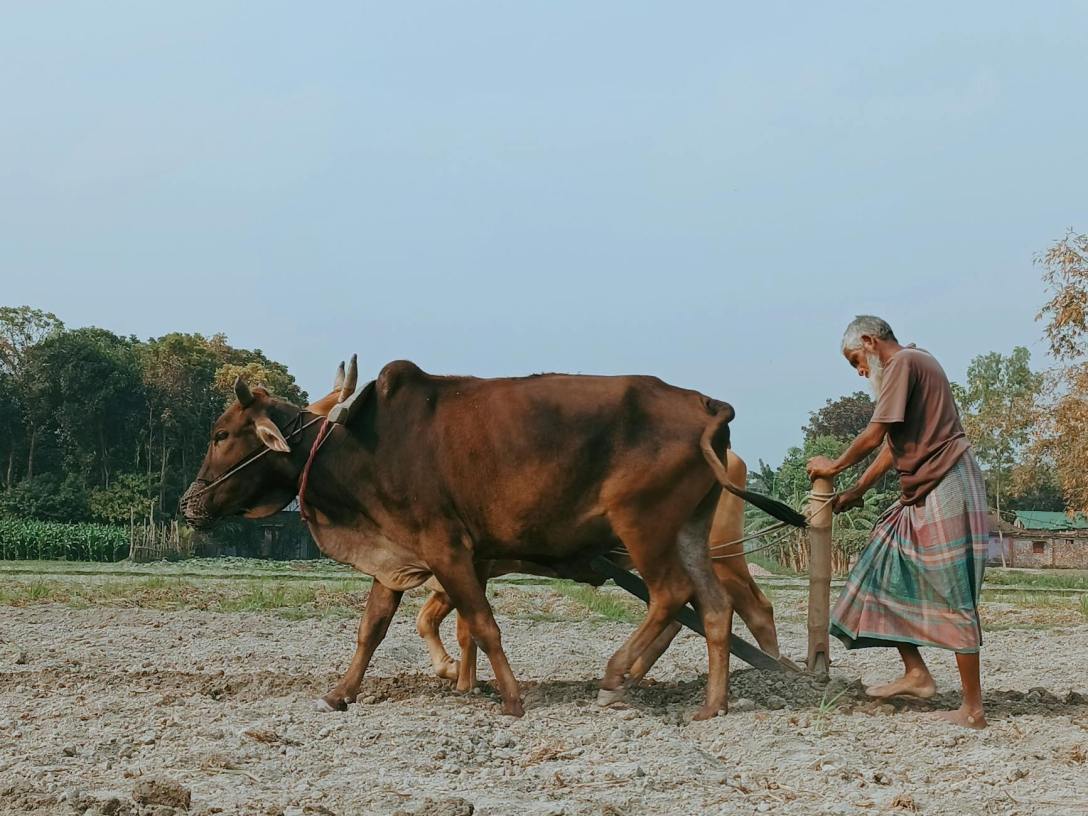
With determination, he takes up his plow and guides his oxen across the land. The sharp blade cuts deep into the earth, turning the soil, breaking apart clumps of hardened dirt, and exposing the rich nutrients hidden beneath. He labors under the sun, wiping sweat from his brow, but he does not falter. He understands that a well-prepared field is the foundation of a good harvest.

Having plowed the field, he does not stop there. He takes up his harrow and smooths the soil, breaking apart the rough clods, making the ground soft and welcoming for the seeds. He removes the weeds and stones, ensuring that nothing will hinder the young sprouts when they emerge. Only when the land is well-prepared does he proceed to the next task.

Then, with care and precision, he takes the best seeds he has—grains that are full, unblemished, and capable of yielding a strong crop. He sows them evenly, ensuring they are not too deep, nor too shallow. He does not rush, for he knows that carelessness in planting will lead to poor growth. He watches the sky, mindful of the winds and the rains, choosing the right time for each step.

Yet his work is not done. Once the seeds are in the ground, he must tend to the water. If the soil is dry, he directs the channels to let water in, ensuring that the young plants will have enough to drink. But he is also wise—he does not flood the field, nor does he allow the water to stagnate. When the time is right, he drains it out, keeping the balance so that the roots do not rot.

However, despite all his efforts, the farming householder does not possess the power to command nature. He cannot say, “May my crops sprout today, may the grains appear tomorrow, and may they ripen the next day.” Such things do not obey human will. But he knows one truth: if he fulfills his duties with care and perseverance, then when the time is right, the crops will sprout, the grains will appear, and they will ripen according to their nature.

The Three Urgent Duties of a Monk

In the same way, monks, there are three urgent duties of a monk. What are these three? The undertaking of heightened virtue, the undertaking of heightened mind, and the undertaking of heightened discernment.

Just as the farmer prepares his field with diligence, so too must a monk cultivate his virtue. A monk’s virtue is the foundation upon which wisdom and liberation grow. If his conduct is impure—if he allows deceit, unkindness, or heedlessness to take root—then his practice will be like a field overrun with weeds, where no wholesome crop can flourish.

Thus, a monk diligently undertakes the practice of virtue. He observes the precepts carefully, refraining from harming living beings, from false speech, from taking what is not given, from indulgence in intoxicants, and from engaging in unwholesome desires. He guards his actions and speech, just as a farmer guards his field from wild animals and pests. He knows that without this foundation, no progress can be made.

Once virtue is well established, the monk undertakes the training of the mind. Just as the farmer sows his seeds, the monk sows the seeds of concentration. Through meditation, he steadies his thoughts, quiets the restless chattering of the mind, and cultivates inner stillness. He does not allow distractions to overtake him, just as a farmer does not allow weeds to overrun his field. He remains steadfast, training his awareness to be sharp and unwavering, like a flame undisturbed by the wind.

Then, just as the farmer tends to his crops by managing water flow, the monk nourishes his wisdom. Through deep contemplation, study, and insight, he fosters discernment, allowing the truth to reveal itself naturally. He reflects on the impermanent nature of all things, understanding that clinging leads to suffering. He examines the causes of desire, aversion, and delusion, and through insight, he loosens the bonds that keep him tied to the cycle of suffering.

Yet, just as the farmer cannot command the crops to ripen on demand, the monk cannot will his mind to be freed from all attachments overnight. He does not have the power to declare, “May my mind be released from all clinging today, tomorrow, or the next day.” Such things unfold according to their own nature, ripening when the conditions are right.

But the monk does not despair. He knows that just as a farmer who plows, sows, and waters his field with patience will one day see the golden grains swaying in the wind, so too will the diligent practitioner, through perseverance, come to see the fruits of his practice. When the time is right—when his virtue is strong, his mind is steady, and his wisdom is deep—liberation comes as surely as the harvest follows the planting.

The Path to Liberation

Thus, monks, you should train yourselves:

“Strong will be our desire for the undertaking of heightened virtue.
Strong will be our desire for the undertaking of heightened mind.
Strong will be our desire for the undertaking of heightened discernment.”

This is how you should train yourselves.

A wise monk does not rush or seek immediate rewards, just as a farmer does not demand that his crops ripen in a day. Instead, he follows the natural path, understanding that progress is gradual. He remains diligent, unwavering, and patient, knowing that true wisdom and liberation are not forced, but arise naturally when the conditions are right.

And so, just as the diligent farmer reaps a plentiful harvest, the diligent monk will one day reap the fruits of his practice—the freedom from suffering, the end of all clinging, and the peace that surpasses all understanding.

Link: https://wisdomtea.org/2025/03/27/urgent/