The Five Rewards of Walking Meditation

The Five Rewards of Walking Meditation

There are the five rewards for one who practices walking meditation. Which five?

First, he becomes one who can endure traveling on foot.
The path is no longer a burden but a companion. Step by step, the body grows accustomed to distance, and the mind learns patience. Just as a seasoned pilgrim does not shrink from winding roads or rugged hills, so too the one who walks in mindfulness carries his journey lightly. Neither heat nor cold, neither dust nor distance overwhelms him, for his strength lies not merely in the body but in the steadiness of his heart. Like a tree that weathers the seasons, rooted deep and unshaken by wind, he endures the miles with calm perseverance.

Second, he becomes one who can endure exertion.
Effort no longer crushes him, but is received as a training of the spirit. Just as the great river flows tirelessly, winding over rocks and plains, never pausing, never exhausted, so too his energy continues. The strong horse bears its load without complaint; the sun pours forth its light without weariness; the mountain stands without shifting, though the rains strike it day after day. In this way, the practitioner, trained in walking meditation, is not undone by fatigue but carries effort as though it were his natural breath.

Third, he becomes free from disease.
The steady rhythm of walking renews the body. The limbs grow supple, the breath deepens, the blood flows smooth and clear. Just as a fresh wind sweeps away clouds of dust, leaving the sky wide and open, so does the motion of mindful walking cleanse away stagnation and heaviness. The forest deer, wandering freely through glades and meadows, moves with ease and keeps its health; likewise, the one who walks with mindfulness preserves well-being and strength. Sickness finds little dwelling place in a body made harmonious through balanced motion.

Fourth, whatever he has eaten and drunk, chewed and savored, is well digested.
Food, when received, does not weigh upon him, but nourishes and sustains. Just as the earth receives the rains, neither clinging to them nor rejecting them, but turning them into rivers, harvests, and green abundance, so too his body accepts what is given, transforming it into energy and vitality. The fire that is tended with care burns cleanly, consuming all that is placed upon it; so too digestion, kindled by walking, works steadily, without obstruction. Thus, the practitioner is light, untroubled, and his strength is preserved for the path ahead.

Fifth, the concentration he gains while walking meditation endures for a long time.
The mind, once gathered, does not scatter easily. Just as a flame protected from the wind burns bright and unwavering, so the collected heart shines steadily. Step by step, awareness flows like an unbroken stream; thought by thought, mindfulness deepens like a river that does not dry. The mountain lake, still and clear, reflects the stars without distortion; in the same way, the practitioner’s concentration endures, long-lasting and luminous. Not only while sitting does he abide in steadiness, but even in motion, his meditation remains as firm as the roots of the ancient oak.

Thus are the five rewards for one who practices walking meditation: endurance of the path, endurance of exertion, freedom from disease, ease of digestion, and long-lasting concentration.
These are treasures gained not by chance, but by steady steps upon the earth, where each footprint is planted in mindfulness, and each breath is companion to the path.

Link: https://wisdomtea.org/2025/08/28/the-five-rewards-of-walking-meditation/
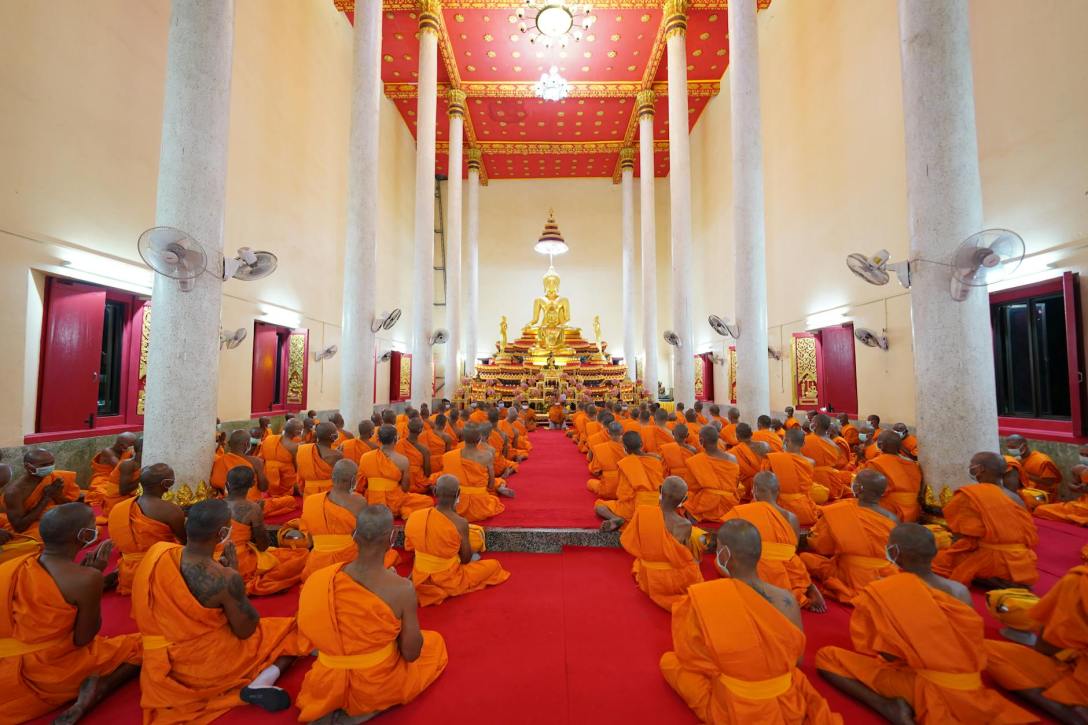
The Five Qualities of a True Teacher

The Five Qualities of a True Teacher

Once upon a time, the Blessed One, the Buddha, was staying in the great city of Kosambī, at the peaceful Ghosita’s monastery. The monastery stood just outside the busy town, surrounded by trees and open spaces, a place where monks and lay people often came seeking quiet, guidance, and the company of wise friends.

On one particular day, Venerable Udāyin was sitting in the shade of a large hall within the monastery grounds. Around him was gathered a great crowd of householders—men, women, young and old—who had come to hear the Dharma. They sat close together, some on mats, some on the bare ground, their eyes fixed on him with curiosity and respect. Udāyin spoke with energy, explaining the teachings, answering questions, and holding the attention of the assembly.

Venerable Ānanda happened to walk by and saw this scene. He noticed how Udāyin sat surrounded by such a large gathering of lay people, sharing the Buddha’s words. A thought arose in Ānanda’s mind: “It is good that people wish to hear the Dharma, but teaching many at once is not an easy task.” With this thought, he decided to go directly to the Blessed One to report what he had seen.

Ānanda went to the Buddha’s dwelling. When he arrived, he bowed deeply in respect, then sat quietly to one side, as was the custom. After a moment of silence, he said:

“Lord, Venerable Udāyin is there, surrounded by a large assembly of householders, teaching the Dharma.”

The Buddha listened carefully, and then replied in a calm and steady voice:

“Ānanda, it is not an easy thing to teach the Dharma to others. Speaking about the truth requires more than words. It requires patience, understanding, and the right intention. One should teach the Dharma only when five qualities are well established in oneself. Without these, teaching may confuse more than it clarifies. And what are these five qualities?”

The monks seated nearby leaned in a little closer, and even Ānanda, who knew the Dharma well, straightened with attention.

“First,” the Buddha said, “when teaching the Dharma, one should think: ‘I will speak step by step.’ Do not hurry, and do not overwhelm people with too much at once. Just as one climbs a staircase one step at a time, so too should the teaching be given gradually, beginning with what is simple and clear, and then rising toward the deeper truths.

“Second, one should think: ‘I will explain the sequence of cause and effect.’ People should see how things are connected—how our thoughts shape our actions, how actions bear fruit, how wholesome actions bring happiness and peace, and unwholesome actions bring sorrow and difficulty. If cause and effect are not explained, the teaching will not take root in people’s hearts.

“Third, one should think: ‘I will speak out of compassion.’ The words of the Dharma are not for showing off knowledge or for gaining praise. They should come from a heart of kindness, with the intention to ease suffering and to guide others toward peace. Without compassion, the words may sound empty, sharp, or self-serving.

“Fourth, one should think: ‘I will not speak for the sake of material gain.’ If one teaches with the desire for money, fame, or personal advantage, then the Dharma is misused. The purity of the teaching is lost when it is spoken for the sake of wealth or recognition.

“Fifth, one should think: ‘I will speak in a way that does not harm myself or others.’ The Dharma should never be taught with harshness, arrogance, or anger. True teaching is like a gentle rain that nourishes all it touches, not a storm that breaks branches. It should uplift the listener, bring steadiness to the heart, and offer benefit to both speaker and listener alike.

“So, Ānanda,” the Buddha concluded, “it is not an easy thing to teach the Dharma to others. The Dharma should be shared only when these five qualities are firmly established within the teacher.”

As the Blessed One spoke, the monks reflected silently, some remembering times when they had spoken too quickly, or without compassion, or with hidden motives. Others felt encouraged, understanding more clearly how to approach their own teaching. And Ānanda himself bowed deeply, realizing that the act of teaching was not merely passing on words, but a practice of patience, kindness, and wisdom.

From then on, those who heard this teaching carried it with them—whether they were monks guiding others, or lay people sharing words of kindness at home—remembering that the Dharma shines brightest when it is spoken step by step, with clarity, compassion, and sincerity.

Link: https://wisdomtea.org/2025/08/21/the-five-qualities-of-a-true-teacher/

The Strengths of One Who Is Free

The Strengths of One Who Is Free

One quiet day, Venerable Sāriputta went to visit the Blessed One. The morning was cool, and the forest was alive with soft, scattered sounds—the faint chirping of birds, the rustle of leaves stirred by a passing breeze, the distant crack of a branch falling somewhere deep in the grove. The sunlight filtered through the tall sal trees, casting shifting patterns of gold and green on the forest floor.

When Sāriputta arrived, he bowed deeply, lowering his head in reverence, as one who has found a safe harbor bows to the one who showed him the shore. He then sat quietly to one side, folding his robe neatly, settling his body into stillness. The Blessed One regarded him with eyes full of calm and kindness, his presence like the steady warmth of the morning sun.

After a moment of silence, the Blessed One spoke in a voice that was neither hurried nor slow, but carried the weight of deep knowing.
“Sāriputta, tell me—how many strengths does a monk possess when his mind is completely free from all stains, all clinging, all defilements? Strengths that allow him to speak with unshakable certainty, ‘The defilements are ended in me’?”

Sāriputta’s face lit with respect, for he knew the question was not just about knowledge, but about living truth. “Lord,” he said, “there are eight such strengths. And when these are fully present, a monk can speak not from memory, not from hearsay, but from the direct, clear seeing of his own heart.”

He began to describe them, his voice unhurried, allowing the meaning to sink in.

He spoke first of the deep seeing of impermanence—the quiet but unshakable understanding that nothing in this world stands still. Every sight, sound, thought, feeling, and form is like a cloud drifting across the sky—changing shape, dissolving into something new. The seasons turn; the rivers flow without pausing; even the mountains, solid as they seem, are slowly wearing away. To see this truth with clarity is to loosen the grip of clinging, to stand on ground that no change can disturb.

He spoke of how one who has ended the defilements understands the nature of sensual desire. To those untrained, pleasures of the senses seem sweet and safe, like a bright fire on a cold night. But with wisdom, they are seen as dangerous, like embers that may look harmless yet will burn the hand that grasps them. This seeing does not come from fear, but from understanding; it is the calm knowledge that such pleasures cannot give lasting peace, and that reaching for them is like reaching for smoke.

Sāriputta’s words flowed like water over smooth stones as he spoke of the mind’s turning toward solitude. Such a monk delights in quiet places: the shade beneath a forest tree, the open expanse of a moonlit clearing, the hush before dawn when the world is still asleep. In seclusion, his heart feels light, unburdened, like a traveler who has set down a heavy load after a long journey. Noise and distraction hold no pull over him; renunciation is not a loss, but a gain beyond measure.

His mindfulness is steady, clear, and unbroken. He knows the body simply as it is—breathing, moving, changing—not as “I” or “mine,” but as part of the great stream of nature. He notices feelings—pleasant, unpleasant, and neutral—without clinging or pushing away. He watches the mind, knowing whether it is restless or calm, clouded or clear, and he understands the mental qualities that lead toward harm and those that lead toward peace. His awareness is like a lamp that continues to burn even in the wind—protected, unwavering, and bright.

Sāriputta spoke of the inner powers that such a monk develops: the power of aspiration that keeps his direction true, the power of energy that keeps him from laziness, the power of concentration that keeps the mind collected, and the power of wisdom that keeps it rightly guided. Together, they are like the firm pillars of a well-built house, holding everything in balance and security.

He spoke of the inner faculties—faith, energy, mindfulness, concentration, and wisdom—that have grown strong and harmonious. Faith steadies the heart like a deep-rooted tree in the wind. Energy moves him forward like a boat catching the right current. Mindfulness keeps him anchored in the present moment, concentration gathers his mind into stillness, and wisdom lights the way like a lantern in the night. Each faculty supports the others, like skilled musicians playing in perfect harmony.

He described the wholesome qualities that awaken the heart—mindfulness, investigation, energy, joy, tranquility, concentration, and equanimity. These grow within him like rare flowers in a well-tended garden, each with its own beauty and fragrance. Mindfulness opens the way, investigation sharpens understanding, energy keeps the path alive, joy refreshes the spirit, tranquility soothes the heart, concentration gathers the mind, and equanimity spreads a boundless calm over all experiences.

And finally, Sāriputta spoke of the noble eightfold path, fully lived and completed—right view, right intention, right speech, right action, right livelihood, right effort, right mindfulness, and right concentration. Together they are like the eight spokes of a perfectly balanced wheel, carrying the traveler smoothly to the far shore of liberation.

When these qualities are present, Sāriputta said, there is no doubt, no hesitation, no uncertainty. The monk knows for himself, as surely as one holding a clear jewel in his hand, “The defilements are ended in me.” And in that knowing, there is no pride, only peace—deep, steady, and unshakable.

The forest was silent when Sāriputta finished speaking, as if the trees themselves were listening. The Blessed One simply nodded, and in that moment, nothing more needed to be said.

Link: https://wisdomtea.org/2025/08/14/the-strengths-of-one-who-is-free/

The Seed You Plant, the Life You Grow

The Seed You Plant, the Life You Grow

When a person starts off with a wrong way of seeing—holding harmful beliefs, thinking in ways that lead to trouble, speaking with harshness or dishonesty, acting in ways that hurt, earning a living through harmful means, putting effort into destructive things, paying attention to what is unhelpful, training the mind in the wrong direction, misunderstanding how life works, and letting go of things in an unhealthy way—then everything they do flows from that starting point.

Their actions follow that view.
Their words follow that view.
Their thoughts, plans, promises, and projects all grow from that same soil.

And no matter how much energy they put in, the results lean toward what is unpleasant, unwanted, and full of stress.

Why is that?
Because the starting point—their view—is unhealthy.

It’s like planting a bitter seed. Imagine putting a neem tree seed, a bitter vine seed, or a bitter melon seed into rich, moist soil. You can water it every day, give it sunlight, protect it from pests—but no matter how much care you give it, it will still grow into something bitter. The soil and water will only help it become more bitter, because that’s its nature from the very beginning.

Life works the same way. If the seed of your thinking is wrong, everything that grows from it—your words, your choices, your habits—will carry that same bitter taste.

But when a person starts with a right way of seeing—holding wholesome, beneficial beliefs, thinking in kind and wise ways, speaking with honesty and care, acting in ways that bring no harm, earning a living honestly, putting effort into what is good, paying attention to what truly matters, training the mind toward peace, understanding life as it really is, and letting go in a healthy way—then the same pattern works in the other direction.

Their actions follow that view.
Their words follow that view.
Their thoughts, plans, promises, and projects all grow from that same soil.

And the result is a life that leans toward peace, kindness, and joy.

Why is that?
Because the starting point—their view—is healthy.

It’s like planting a sweet seed. Think of sugarcane, grapes, or fragrant rice. You put the seed into fertile soil, water it, give it sunlight, protect it from harm—and everything it takes in makes it sweeter and more nourishing. The outcome is set from the beginning, because the seed itself is good.

In the same way, if your understanding is clear from the start, every word, action, and thought will carry that same sweetness. It’s like cooking with fresh, pure ingredients—whatever you make will taste better because you began with what was good.

So the question is:
What seed are you planting in the soil of your mind?
Because bitter seed, bitter fruit.
Sweet seed, sweet fruit.

Choose the right seed, and let your life grow in the direction of peace.


Reflection for daily life:
Every day, we plant seeds in the soil of our mind. Some seeds are planted on purpose—through our choices, our values, and our intentions. Others are planted without us even noticing—through the company we keep, the media we consume, and the thoughts we allow to linger.

A bitter word we speak plants a seed.
A kind smile we offer plants a seed.
A moment of anger plants a seed.
A patient breath plants a seed.

These seeds don’t stay as they are—they grow. And what they grow into depends on their nature, not just on how much we water them.

If we spend our days planting seeds of resentment, worry, and greed, we will eventually walk through a garden filled with those same thorns and weeds. But if we plant seeds of kindness, patience, and understanding, our garden will be a place of shade, rest, and sweetness.

Changing the garden begins by changing the seed. This is why right view matters—it is the seed from which the whole tree of our life grows. Right view guides right thought. Right thought guides right speech. Right speech guides right action. And step by step, the whole path unfolds.

So each morning, before the busyness begins, pause and ask:
“What seed am I about to water today?”
Notice the mood you are carrying. Notice the thoughts you are feeding. If you find you are holding a bitter seed, set it down. Plant a new one—through a kind intention, a gentle word, or a mindful breath.

At first, the change will be small—just a sapling among the weeds. But with steady care, the weeds will thin, the sapling will grow, and in time, the whole garden will be transformed.

And when that day comes, the sweetness will not only be for you—it will be shared with everyone who walks through your garden.

Link: https://wisdomtea.org/2025/08/07/the-seed-you-plant-the-life-you-grow/