The Fearless and the Fearful
Janussonin, a learned brahman, had long pondered the nature of death. Though he had wealth, status, and knowledge of the sacred texts, the question of what lay beyond this life troubled him deeply. One day, driven by an unshakable need for clarity, he set out to visit the Blessed One, the teacher renowned for his wisdom and understanding of the Dharma.
Arriving at the serene grove where the Blessed One resided, Janussonin approached with reverence. The air was calm, carrying the faint scent of blossoming trees. A group of monks sat nearby in quiet meditation, their faces reflecting a deep sense of peace.
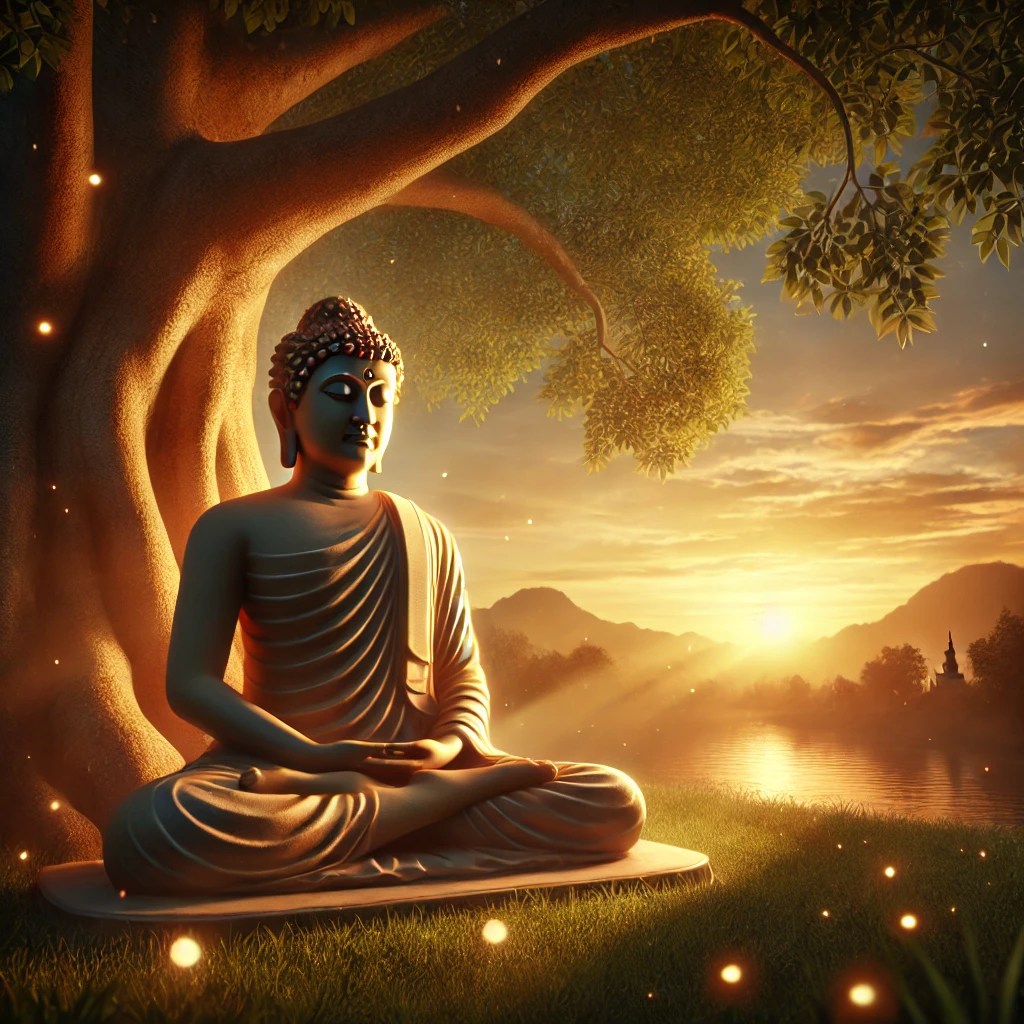
Janussonin bowed respectfully before the Blessed One, who sat beneath a great tree, radiating an aura of stillness. After exchanging polite greetings, the brahman seated himself to one side and spoke:
“Master Gotama, I have long reflected on the nature of death. I hold the view that no one, knowing that they must die, is free from fear. Surely, when the final moment comes, every being trembles before the unknown.”
The Blessed One looked at Janussonin with kindness and replied, “Brahman, there are indeed those who, knowing they are subject to death, are afraid and in terror of it. But there are also those who, though subject to death, do not fear it, nor do they tremble in its face. Listen carefully, and I shall explain.”
The Fear of the Clinging Heart
The Blessed One continued, his voice steady like the flow of a gentle river:
“Who, then, is afraid of death?
“Consider the one who is attached to sensual pleasures, bound by passion, desire, and craving. This person spends their life indulging in fleeting joys, believing them to be the source of happiness. When illness strikes and death approaches, their heart wails: ‘Oh, my beloved pleasures will be taken from me! I will be torn from all that I hold dear!’ They grieve, they lament, they weep, and they suffer.
“Furthermore, there is the one who clings to the body, seeing it as their true self. They gaze upon their reflection and think, ‘This is me; this is mine.’ But when disease takes hold and their strength fades, they despair: ‘Oh, this body, which I have nourished and cherished, will soon be no more!’ Such a person, Brahman, is tormented by the thought of death.
“Then there is the one who has lived unrighteously—one who has harmed others, spoken falsely, acted with cruelty, and been consumed by greed. They may have deceived many in life, but in the face of death, the truth cannot be ignored. As their final breath nears, they think: ‘I have done what is evil. My deeds will bear fruit, and I know not what awaits me.’ Fear grips their heart like a tightening noose, and their mind is consumed by terror.
“And lastly, Brahman, there is the one who has spent their life in doubt, unsure of the path, wavering between beliefs, questioning but never seeking, hearing but never understanding. When death approaches, they are lost in confusion, thinking: ‘What is my fate? Have I walked the right path? Have I wasted my life?’ Such a person, too, is afraid and in terror of death.”
As Janussonin listened, he nodded, for he had seen such fear in the eyes of many—wealthy merchants clutching their gold as they lay dying, rulers who trembled at the loss of power, and even scholars who, despite all their learning, were uncertain of what lay ahead.
The One Who Walks Without Fear
The Blessed One continued, “But Brahman, who is the one who, though subject to death, is not afraid?
“Consider the one who has abandoned craving for sensual pleasures. This person, knowing that all things are impermanent, does not lament when the body weakens. When illness comes, they do not grieve, for they understand that just as the seasons change, so too does life. Their heart remains calm, like a still lake untouched by the wind.
“Consider the one who does not mistake the body for the self. They have realized, ‘This body is but a vessel, subject to decay. It is not truly mine.’ When sickness arises, they do not weep, for they have let go of attachment. Like a traveler discarding old garments for new, they meet death with serenity.
“Then there is the one who has walked the path of virtue, who has done what is good, acted with kindness, protected those in fear, and lived with generosity. As death approaches, they reflect: ‘I have done what is right. My actions will bear good fruit.’ With a heart untroubled, they do not fear death, for they know that goodness leads to peace.
“And finally, there is the one who has seen the truth of the Dharma, whose heart is steady in wisdom. When the end draws near, they do not waver, for they think: ‘I have no doubt, no perplexity. I have walked the path with understanding.’ Such a person meets death as a traveler stepping onto a well-lit road, without hesitation, without fear.”
Janussonin sat in deep contemplation. The words of the Blessed One were like a clear mirror reflecting his own thoughts and fears. He realized that it was not death itself that caused terror, but the attachments, regrets, and doubts carried in one’s heart.
After a long silence, he bowed low before the Blessed One and spoke with great reverence:
“Master Gotama, truly, you have illuminated the Dharma, like one who sets upright what was overturned, reveals what was hidden, shows the way to the lost, or lights a lamp in the darkness so that those with eyes may see. Today, I understand what I had not seen before. The fearless do not escape death, but they walk towards it without chains.
“From this day forward, I take refuge in the Blessed One, in the Dharma, and in the Sangha. May you remember me as a lay follower, devoted to the path, for the rest of my life.”
The Blessed One nodded with a gentle smile, his gaze filled with compassion. And as Janussonin departed, the setting sun cast golden light upon the path before him, as if nature itself was guiding his steps toward a newfound clarity.
Link: https://wisdomtea.org/2025/02/27/the-path-beyond-fear/

 Wisdom Tea