The Four Pillars of Liberation

The Four Pillars of Liberation

When a monk is endowed with four radiant qualities, his path is firm, his direction clear, and his heart steady in the face of all temptations and distractions. Such a monk becomes incapable of falling away from the noble path. He stands not far from the final goal—Unbinding, the full release from suffering, the cessation of becoming. These four qualities are the cornerstones of his training, the guardians of his peace, and the lights by which he walks the ancient way.

The first is the perfection of virtue. A monk who is consummate in virtue is like a clear lake—untainted, undisturbed, and able to reflect the moon of wisdom perfectly. He does not simply follow precepts; he lives them. His virtue is not performed for praise or out of fear, but arises naturally from a deep reverence for truth and compassion for all beings. He avoids harming, speaks truthfully, lives simply, and cultivates restraint in all his bodily and verbal acts. With every precept observed, he strengthens the foundation of his inner stillness. He knows that even a small crack in moral discipline is like a hole in a water jar—left unattended, it will empty. And so, he carefully attends to the precepts, even in subtle matters, out of love for the path and trust in its fruits. His conduct inspires confidence. His presence brings peace.

The second is restraint of the sense faculties. Just as a skilled charioteer holds the reins of a spirited horse, the wise monk holds his attention at the gates of the senses. When he sees forms with the eye, hears sounds with the ear, smells scents with the nose, tastes flavors with the tongue, feels tactile sensations with the body, or perceives mental phenomena with the mind, he remains anchored in mindfulness. He does not allow the senses to roam freely, chasing after the pleasant or recoiling from the unpleasant. He sees the arising of feeling, recognizes the tendency to grasp or resist, and lets go. He is aware that the senses are not to be suppressed, but to be understood and guided. Like a fortress with well-guarded gates, he admits only what is useful and refuses entry to what disturbs the peace of the heart. He does not take delight in appearances, nor fear their passing. Through such wise restraint, the flames of desire, aversion, and delusion are gradually cooled.

The third quality is moderation in nourishment. A monk who understands food reflects wisely before each meal. He does not eat out of greed, not for indulgence, entertainment, or vanity. He does not use food to escape from unpleasant feeling or to cling to pleasant sensation. Instead, he regards food as medicine for the body, a condition for sustaining life, a support for the holy life. He thinks, “I will consume this not for pleasure, but to support this body, to maintain energy for practice, to prevent collapse, and to live a life free from blame. I take this food to end old hunger and to avoid creating new suffering through overindulgence.” In this way, eating becomes an act of mindfulness, not of craving. He eats with gratitude, aware of the labor behind the food and the generosity of donors. Such a monk maintains balance—he is neither emaciated from neglect nor dulled by excess. He walks the middle path between indulgence and deprivation, steady in energy, clear in mind.

The fourth quality is devotion to wakefulness. A monk who is dedicated to wakefulness values each moment of the day and night as an opportunity for practice. He does not let time pass idly, nor is he caught in distraction or sloth. During the daylight hours, he alternates between sitting in meditation and walking mindfully, purifying his heart, watching the flow of thought, sensation, and feeling. In the first watch of the night, he continues this effort, calming the restless waves of the mind, deepening his inner stillness. In the middle watch, he lies down mindfully on his right side in the lion’s posture, resting not in forgetfulness but in full awareness, intending to rise with alertness and purpose. And when the final watch of the night arrives, he awakens and returns to his seat or walking path, continuing his effort with diligence. For him, sleep is not indulgence but restoration; wakefulness is not exhaustion but joy. Such a monk shines in the darkness like a lamp, never letting the flame of effort go out. His dedication to wakefulness is a protection against complacency and a friend to insight.

Thus, when a monk is well established in virtue, guards his senses with wisdom, nourishes his body with moderation, and devotes himself to wakefulness, he is like a well-constructed ship on the ocean of samsara—able to withstand winds and storms, moving steadily toward the far shore. He does not waver. He does not regress. He stands close to the final freedom, the cooling of the fires, the unbinding from all becoming.


Verses of the Noble Path

The monk who walks in virtue’s light,
whose senses are restrained,
whose hunger is tamed by wisdom’s eye,
and whose nights are free from heedless sleep—
such a one walks the path of peace,
shining quietly, steadfast and strong.

He guards the gates through which distraction creeps,
he watches hunger’s whisper without bowing to it,
he sits in stillness when others slumber,
and in his heart, the roots of craving loosen.

The world pulls, but he does not sway.
Pleasure calls, but he does not answer.
Fear rises, but he meets it with calm.
He sees birth and death as passing waves
and sails beyond them toward the deathless.

He delights in vigilance,
finds joy in discipline,
sees danger in negligence,
and remains unmoved by praise or blame.

Such a monk, dwelling with resolve,
is incapable of falling away.
He is not far from the unconditioned.
He walks hand in hand with liberation.

Link: https://wisdomtea.org/2025/06/12/the-four-pillars-of-liberation/

The Farmer of the Mind: Cultivating Mastery Over Thought

The Farmer of the Mind: Cultivating Mastery Over Thought

I have heard that on one occasion the Blessed One was staying at Sāvatthī, in Jeta’s Grove, Anāthapinḍika’s monastery. It was the rainy season, and the forest hummed with the soft patter of raindrops falling upon leaves. The scent of wet earth filled the air, and a gentle mist curled around the trees.

A great assembly of monks had gathered, their saffron robes glowing in the dim light of dawn. They sat in deep silence, their hands folded in reverence, awaiting the Blessed One’s words. He gazed upon them, his serene face illuminated by the morning light, and addressed them:

“Monks!”

“Yes, lord,” the monks replied in unison.

The Blessed One spoke:

“When a monk is intent on the heightened mind, there are five themes he should attend to at appropriate times. Which five?

“There is the case where evil, unskillful thoughts—connected with desire, aversion, or delusion—arise in a monk while he is referring to and attending to a particular theme. He should attend to another theme, apart from that one, connected with what is skillful. As he does so, those unskillful thoughts are abandoned and subside. With their abandoning, he steadies his mind, settles it, unifies it, and concentrates it.

“But if those thoughts persist, he should reflect on their drawbacks: ‘These thoughts lead to suffering. They darken the mind. They are thorns in the path of peace.’ Just as a traveler carrying a heavy sack realizes that dropping the burden brings relief, so too should the monk see how abandoning unwholesome thoughts brings lightness to the heart.

“If even then the thoughts persist, he should withdraw his attention—he should give them no mind. As a man walking through a marketplace ignores the clamor of voices around him and focuses only on his path, so too should the monk disregard the noise of unwholesome thoughts.

“If they still do not subside, he should attend to the relaxing of thought-fabrication, gently calming the movement of the mind. Just as a potter, shaping a vessel, slows the turning of his wheel to smooth its edges, so too does the wise monk soften the momentum of thought, guiding it toward stillness.

“And finally, should all else fail, he should take up the final method—firm and resolute. With teeth clenched and tongue pressed against the roof of his mouth, he should subdue the mind with force, constraining and crushing the unwholesome impulses with clear awareness, as a strong man might subdue a wild beast.

The Parable of the Two Farmers

The Blessed One paused, then continued:

“Monks, this is like two farmers who inherited the same land.

“One farmer was negligent and careless. He did not prepare his field properly. He let weeds grow alongside the crops, believing they would not harm the harvest. When pests came, he did not chase them away, thinking they would leave on their own. When the sun was too hot, he cursed the sky but did not shade his plants. And when the rains came, he lamented his ruined field but had done nothing to build proper irrigation.

“In the end, his harvest was meager, his efforts wasted. He blamed the land, the weather, and misfortune, but never did he see that it was his own negligence that had led to his failure.

“The other farmer was diligent and wise. He knew the land required effort. He removed the weeds as soon as they sprouted, before their roots took hold. When pests arrived, he drove them away with patience and care. If the sun was too harsh, he adjusted his crops and provided shade. When the rains came, he had already prepared the channels to guide the water where it was needed.

“In the end, his harvest was abundant, his granaries full. When asked the secret to his success, he simply smiled and said, ‘I cared for my field, and in return, it cared for me.’

“Monks, the untrained mind is like the lazy farmer’s field—overrun by weeds of desire, pests of aversion, and floods of delusion. But the well-trained mind is like the diligent farmer’s field—protected, cultivated, and yielding the fruits of wisdom.

“Just as the wise farmer does not despair when weeds appear but instead removes them skillfully, so too should you train your minds.

“Do not be disheartened when unskillful thoughts arise. Attend to them wisely, knowing that a well-tended mind, like a well-tended field, leads to a bountiful harvest—peace, clarity, and liberation.

The Power of a Well-Trained Mind

The Blessed One looked over the assembly and continued:

“Monks, you may ask, ‘What is the fruit of a well-trained mind?’ I will tell you.

“It is like a still lake in the heart of the forest. The surface is clear and unmoving, reflecting the moon and the stars without distortion. When an animal approaches to drink, it sees its own reflection perfectly. In such a lake, the sky, the trees, and the mountains appear as they are, undisturbed.

“But an untrained mind is like a lake constantly churned by the wind. Its waters are muddy, and no reflection can be seen. Even if the stars shine above, they are lost in the restless movement of the waves.

“When a monk, by these five methods, steadies his mind, unifies it, and concentrates it, he becomes a master of thought sequences. He thinks only what he chooses to think, and does not think what he does not. He has broken the bonds of craving and aversion. He has seen through conceit, and with right view, has reached the end of suffering and stress.

“Monks, train yourselves well. Be like the diligent farmer. Master the field of your own mind. Be like the still lake, where truth is seen clearly. For in doing so, you will not only benefit yourselves but all beings who come into your presence.”

The Awakening of the Monks

As the Blessed One spoke, a great stillness settled over the gathering. Some monks felt their minds clear as if a veil had been lifted. Others, who had struggled with restless thoughts, felt their burdens lighten. Among them was a young monk who had long battled with doubt.

That night, he sat beneath a great tree, reflecting on the Blessed One’s words. He thought of the two farmers and saw himself in the lazy one. But now, he resolved to change. He would uproot his weeds, guard his field, and let no impurity take hold.

With renewed determination, he entered deep meditation. As the night passed, his mind grew still, and as the first light of dawn touched the horizon, insight arose within him. He saw the nature of thought, the impermanence of all things, and in that moment, a great joy filled his heart.

The next morning, when the monks gathered once more before the Blessed One, the young monk stepped forward, bowed deeply, and said, “Lord, the field of my mind is now tended. The weeds are gone. The path is clear.”

The Blessed One smiled, his eyes filled with knowing. “Then, monk, walk that path with diligence. For now, you have truly begun.”


That is what the Blessed One said. Deeply inspired, the monks rejoiced in the words of the Blessed One, and many resolved then and there to train with renewed vigor, knowing that mastery over the mind was the key to liberation.

Link: https://wisdomtea.org/2025/04/03/the-farmer-of-the-mind-cultivating-mastery-over-thought/

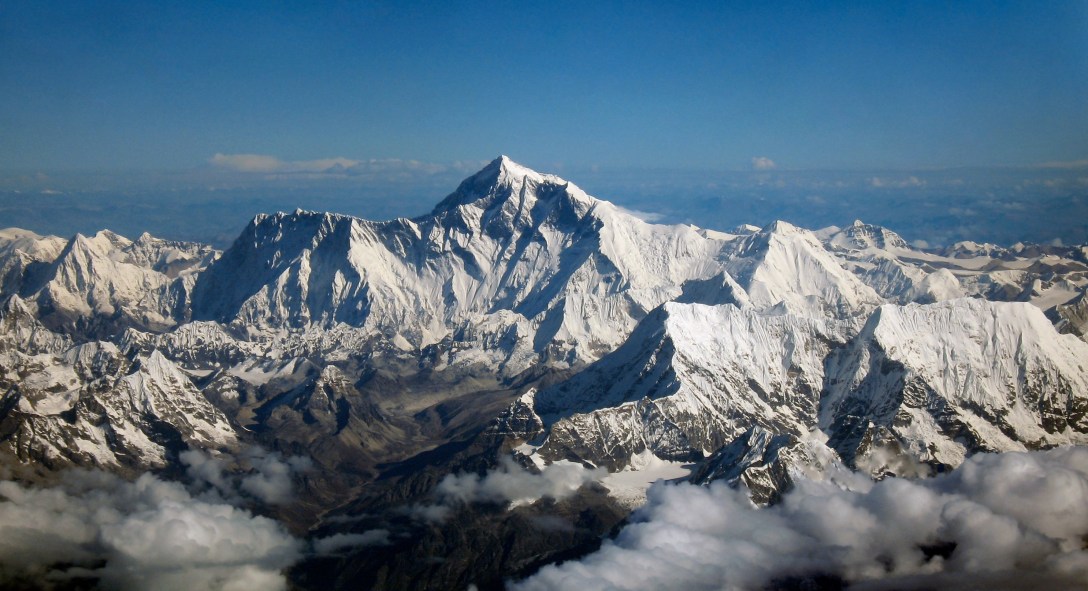
Mt. Everest, Nepal

Mt. Everest, Nepal

The Sherpas and Tibetans worship Everest as Chomolongma, or “Mother Goddess of the Earth.” Luckily you don’t need to actually climb the 29,000 feet to the “Top of the World” to experience its magnificence and the beauty of the surrounding valleys and forests.

Mt. Everest, Nepal
Mt. Everest, Nepal
Mt. Everest, Nepal

Mt. Everest, Nepal

Link: https://wisdomtea.org/2021/09/19/mt-everest-nepal/

#Everest #Nepal #travel #Nature

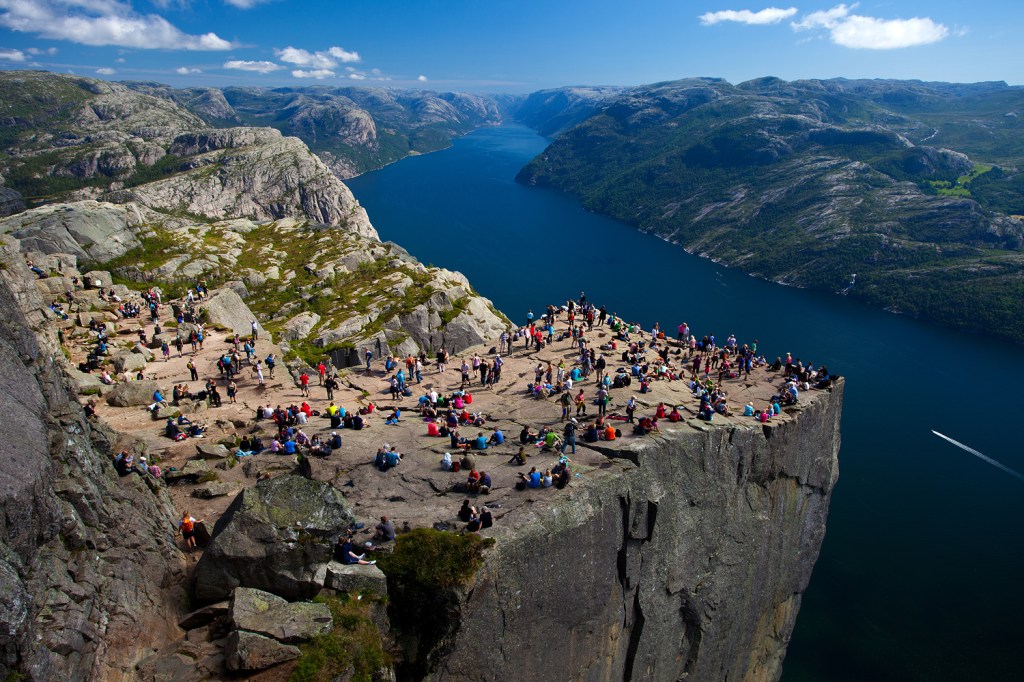
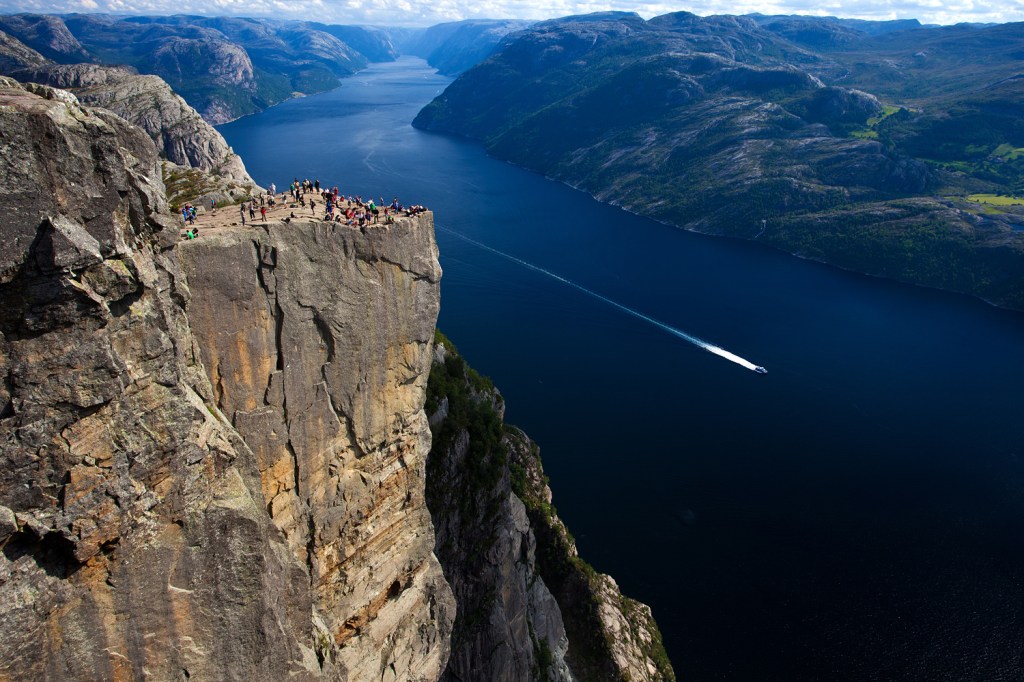
Pulpit Rock, Preikestolen, Norway

Pulpit Rock, Preikestolen, Norway

Preikestolen or Prekestolen (English: ‘The Pulpit Rock’, ‘Pulpit’, or ‘Preacher’s Chair’) is a tourist attraction in the municipality of Strand in Rogaland county, Norway. Preikestolen is a steep cliff which rises 604 metres (1,982 ft) above Lysefjorden. Atop the cliff, there is an almost flat top of approximately 25 by 25 metres (82 ft × 82 ft). Preikestolen is located near the Western part of the fjord, and on its North side.

Tourism at the site has been increasing in the early 21st century, with between 150,000 and 200,000 visitors in 2012, making it one of the most visited natural tourist attractions in Norway. BASE jumpers often leap from the cliff. Due to its increased popularity, the most used path to the site (an 3.8-kilometre (2.4 mi) long hike) was improved by Nepalese Sherpas in 2013.

Pulpit Rock, Preikestolen, Norway

Pulpit Rock, Preikestolen, Norway

Link: https://wisdomtea.org/2021/09/16/pulpit-rock-preikestolen-norway/

#PulpitRock #Preikestolen #Norway